Thursday, 22 August 2013

Eastern Smelting Company (ESCOY)

From the book, The Chinese in Penang. A Pictorial History by Tan Kim Hong, page 103 (Areca Books, 2007). 

The pioneer Chinese tin smelter of Penang was Lee Chin Ho (Li Zhenhe 1863-1939). He was the son of Lee Pean Peh (Li Bianping). Lee Chin Ho was a Hokkien from Changjiang She, Shandu in Haicheng District in China. He founded the Seng Kee Tin Smelting Works in 1898 at 73 Dato Kramat Road in Penang. In 1907, it became the Eastern Smelting Company (ESCOY). Many tin miners of the FMS (Federated Malay States) sat on its Board of Directors (BoD).

Lee Chin Ho contributed significantly to his community. He was a member of the Penang/Georgetown Municipal Board, member of the Chinese Advisory Board, trustee of the Rubber Trading Association, trustee of the Chinese Town Hall, trustee of the Chung Hwa Confucian School, and trustee of the Chinese Recreation Club. He was the Chairman of Penang's Lee Kongsi (Lishi Zongci), President of the Penang Buddhist Association and Vice-President of the Penang Chinese Chamber of Commerce.

Lee Chin Ho passed away at age 76, 2 years before WWII broke out in Malaya. The reason for his demise is unknown but it is possible that he died of old age.


Page 103 shows 3 photographs of the old smelting furnaces, the main engines used for smelting tin into ingots (tin ingots), and a full view of the smelting works at 73 Dato Kramat Road in Penang - which had one tall brick chimney amidst low lying village buildings, all sited in a valley.

- . - . - . - . -
- . - . - . - . -

From the book, Penang Trams, Trolley Buses & Railways. Municipal Transport History 1880s-1963 by Ric Francis & Colin Ganley, pages 91-95 (Areca Books, 2006).


Page 91 shows a photograph of the Eastern Smelting Company (ESCOY) railway, with the rail cars (wagons) being pulled by a Bo type locomotive No. 2 which had 2 vertical poles in front. The train was travelling along Weld Quay. Photo courtesy of ESCOY.


Page 92 shows a photograph of an ESCOY train passing in front of the buildings at Weld Quay. Electric lamp posts can be seen near the buildings - this photo would be after 1904. Photo courtesy of Malcolm Wade.

The ESCOY (Eastern Smelting Company) was established in 1898 at (73) Dato Kramat Road in Penang. It was Penang's, Malaya's and Malaysia's longest-running and largest tin smelting works. 

The electric trains were initially part of the George Town Municipal Tramways but were later operated by the George Town Municipal Transport Department. The locomotives initially had single vertical poles and later double vertical poles which supplied electricity from the overhead electrical lines. The first two electric locomotives were obtained in 1920 - they were purchased from an American company (there is no mention of the company's name but it could be the same supplier of trams used in downtown San Francisco).

The tramway with single pole was closed in 1936 (after existing for 16 years), and was replaced by the trolleybus system with dual poles for overhead electricity supply.


Page 93 shows 3 photographs and an 1893 map (modified in early 1900s). The ESCOY deployed the Penang Municipality's electricity to bring tin ore in wagons from the jetty to its smelting works in Dato Kramat Road. 

The first photo shows the E.S.C. No. 15 train returning with purified shiny tin ingots to the harbour. The Penang Harbour Board's diesel locomotives then pulled the wagons to Swettenham Pier for the tin ingots to be loaded onto ships for export to Britain. A 2-funnel ship awaits by the pier - it probably has the name Malaya Singapore (?). Photo courtesy of Malcolm Wade.

The second photo shows 4 tramlines converging and criss-crossing near the clock tower (probably after 1912). A warehouse was nearby and a boat was waiting by the harbourside. There were steps leading up to a white platform near the clock tower. The railway or tramlines probably ended just before the clock tower. This view could be down King Edward's Place viewed from a ship or watch tower.

The third photo shows 2 trains (E.S.C 14 and unknown) being pulled by 2 locomotives in tandem at Weld Quay, some distance from Swettenham Pier. An RSJ trolleybus No. 33 can be seen passing between the trains and two parked Model-T Fords.


Page 94 shows an enlarged photo inside one of the ESCOY storage sheds at the jetty. The shiny tin ingots were being loaded onto the wagon E.S.C. No. 12 and would be taken down to the godowns at the jetty. Each labourer carried a tin ingot on his bare right shoulder. The men were dressed in long shorts and without shirts and shoes (barefoot). A cloth is tied around the wait as belts and for added strength. Some had belts. The 2 supervisors (mandor) wore white shirts and long pants.

The Municipal Tramways owned the electric railway system and locomotives. The ESCOY owned 25 wagons which were attached to the locomotives. The trains ran a stretch of 1.7 miles from the jetty to the ESCOY in Dato Kramat Road. ESCOY had 150 yards of railway in its compound. Diesel locomotives operate at Swettenham Pier.

Each locomotive could pull 25 tons of load. There were 5 wagons attached to each locomotive. This means that each wagon carried 5 tons of load (tin ingot or tin ore). The speed limit was 5 mph, for safety and slow enough so that the rickshaws could follow the trains.

The locomotives gave way to the trolleybus. When the locomotive travelled on the trolleybus route, the vertical pole on the trolleybus is pulled down to allow the bus to pass.


Page 95 shows 2 photos at 2 different locations.

The first photo shows 2 men near 2 locomotives (No.1 and No. 2) and 2 ESCOY wagons in tow, with a shed behind the train at the ESCOY compound in Dato Kramat Road. Both locomotives had 2 poles to link to the overhead powerline. One man was dressed in singlet and kain pelikat but was barefoot. The other man who stood nearby was in uniform - they were probably discussing. A Morris Minor (number plate P 5874) is parked near the shed - it probably belonged to the boss of ESCOY at the time. The man in uniform was probably waiting for the locomotive driver; he maybe the wagon guard who usually sits on the load in the first wagon after the locomotive. He probably is the one who is in-charge of connecting the wagons either to the electric locomotives at ESCOY and at the diesel locomotives at the harbour. Photo courtesy of ESCOY.

The second photo shows locomotive No. 3 pulling 4 wagons to the jetty. It showed 5 people doing various activities. A man in shorts walked along the 5-foot pathway. A locomotive driver in uniform stands in engine No. 3. A man in short khaki uniform, with scarf and hat sit atop the load in the first wagon. A man wearing a hat and withhis back to the camera was working on a nearby lorry(?). A Caucasian man in shirt and short and without a hat, crosses near the end of the last wagon pulled by No. 3. A trolleybus is some distance behind the train. There are many different types of buildings. The biggest building is of brick and with ceramic roof tiles. There is a big attap building with four smaller attap buildings by the roadside. There were many big trees behind the attap buildings and near the big brick building. The photo was probably taken in the late afternoon since the photo was very bright but the shadows were long. Photo courtesy of ESCOY.

The railway in Penang was continued to be used by the Japanese during WWII (1941-1945). However, the Japanese used soft soap to lubricate the axle. What an ingenious way to be do things!

For whatever the reasons maybe, sadly, the railway was closed down in December 1956. (The trolleybuses became a new mode of transport.)

On 1 January 1957, the motor transport department took charge of the railway track which was still in good condition. 

According to Tok Chu, the ESCOY was replaced by flats.

The ugly looking yellow Scamell scarab is displayed at Penang Museum but there is no further information about its use in the early smelting works in Penang, except that it pulled wagons of iron ore from the jetty to the smelting works.

Scamell scarab at Penang Museum - this triple-wheeler hauled tin ore from the Weld Quay jetty to the smelting plant at 73 Dato Keramat Road. Tin ingots were returned to the jetty. Ships exported tin to Britain.

Friday, 16 August 2013

Professor Eric Tagliacozzo

Professor Eric Tagliacozzo will be at the conference, "Penang and the Hajj 2013", 17-18 August 2013, which will be held at the E & O Hotel in George Town, Penang.

Eric is a Professor of History at Cornell University. His interests include research on Southeast Asia. He has written 2 good books:-

1. Southeast Asia and the Middle East. Islam, Movement, and the Longue Duree (2009, NUS Press).

2. The Longest Journey. Southeast Asia and the Pilgrimage to Mecca (2013, Oxford U. Press)


Prof Eric Tagliacozzo of Cornell University

Eric teaches Studies on Southeast Asia and Islam, focusing on culture, traditions and literature of the various communities. He is in charge of the Asian Studies at Cornell University.

He is also editor for Indonesia Journal which is available online. He is Director of the Digital Archives for Indonesia Journal, which offers digital archive of all issues (published bi-annually). These issues are available by subscription and are freely accessible after 5 years from date of publication.
http://cip.cornell.edu/DPubS?service=UI&version=1.0&verb=Display&page=past&handle=seap.indo

Wednesday, 14 August 2013

Obituary: Dr Robert TJ Bates

B. Z. has left a new comment on the post "The Last Of The Great Doctors of Kota Bharu": 

Sad to inform that Dr. Bates has just passed away today. May he Rest in Peace. 


Steve has left a new comment on the post "The Last Of The Great Doctors of Kota Bharu": 

We are all sadden to say that Dr. Roberts Bates was called home to be with the Lord on Tuesday 13 August 2013 at around 13 30 hours. Let's pray for his soul...SCRC.


Internet pics

My notes:
Dr Bates was an Australian general practitioner (GP) in Kota Bharu, Kelantan. When we came to live in Pengkalan Chepa and bought food, especially bread from the Cold Storage in Kota Bharu, we would pass by 2 clinics - the Dispensary (later Merican Dispensary) and the Bates Dispensary. There was another clinic, Aziz Dispensary in the 1970s near the bus station and the first nasi briyani shop in Kota Bharu (Rahim Briyani?).


Friday, 9 August 2013

Dr Haji Abbas bin Haji Alias (1914-2004)


His biography in Biography of the Early Malay Doctors 1900-1957 Malaya and Singapore
https://www.facebook.com/

This is a re-post from the blogspot: http://groups.yahoo.com/group/dunia-politik/message/2421

Mengenang Dr Abbas Alias (1914–2004)
Monday, September 06 @ 16:41:59 MYT


Oleh Ahmad Lutfi Othman

SELALUNYA apabila dirujuk sejarah perkembangan PAS, ramai – bahkan ahli-ahli PAS sendiri -- tidak mengenali pemimpin besar parti itu, terutama sebelum era Dr Burhanudin Al-Helmy – Zulkifli Mohamad. Malah kalau ditanya siapa presiden terdahulu PAS, yang terlintas di fikiran, selain kedua-dua tokoh tadi, ialah Almarhum Asri Muda, Yusof Rawa dan Ustaz Fadzil Mohd Noor.

Sedangkan asas kekuatan PAS di peringkat awal penubuhannya diusahakan, antara lain, oleh Almarhum Dr Abbas Alias, Yang Dipertua Agung PAS kedua. Bagi mereka yang mengikuti sejarah, beliau sering diingati kerana sumbangan besarnya di waktu parti Islam itu melalui saat-saat kritikal selepas Haji Ahmad Fuad meletakkan jawatan pada 26 September 1953 ekoran pertikaian sama ada mahu menyertai rundingan kemerdekaan anjuran UMNO dan MCA (National Convention) ataupun Dato’ Onn Jaafar (National Conference).


Majoriti pimpinan PAS yang bermesyuarat di pejabat agung PAS ketika itu, Madrasah Masriyah, Pulau Pinang, cenderung kepada National Convention, sedangkan Yang Dipertua Agung, Ahmad Fuad yang merupakan penyokong paling setia Onn memilih National Conference. Keputusan dibuat melalui pengundian.

Pemimpin yang baik


Kepimpinan PAS terpaksa dipegang oleh Dr Abbas, Timbalan Yang Dipertua Agung, yang ketika itu berada di New Delhi kerana menghadiri satu seminar anjuran WHO. Beliau hanya tahu Ahmad Fuad meletakkan jawatan sekembalinya ke tanahair. Almarhum Asri Muda menyifatkan “Dr Abbas adalah seorang yang baik, yang boleh diberikan kepercayaan sebagai seorang pemimpin. Tetapi oleh sebab beliau berkhidmat sebagai pegawai kerajaan, maka beliau tidak dapat memberikan khidmat sepenuh masa.”


Timbalan Presiden PAS, Ustaz Hassan Shukri menyifatkannya sebagai “penyelamat”. Ini kerana Dr Abbas meletakkan asas kukuh buat PAS menghadapi cabaran sengit selepas itu terutama bila beliau berjaya mendaftarkan Persatuan Islam Sa-Malaya (Pan Malayan Islamic Party) beberapa minggu sebelum pilihanraya 1969. Difahamkan beliau mendapat bantuan dari kenalan baiknya, berbangsa India, ketua kerani di Pejabat Pendaftaran Malaya, di Pulau Pinang, yang kebetulan pernah dirawatinya.


Ketika mula dilantik mengetuai PAS, dengan rendah diri beliau berkata: “Saya mengambil tempat ini kerana saya ingin melihat pergerakan berasaskan agama ini maju dan berkekalan.” Dalam masa sama, beliau memuji sikap Ahmad Fuad, yang walaupun meninggalkan parti tetapi tidak pernah mengeji PAS. Ternyata beliau tidak senang jika ahli-ahli PAS secara sembrono mengecam bekas ketua PAS itu.


Bagaimanapun pastinya ramai tidak mengetahui pendirian tegasnya menolak pelawaan bekas Menteri Besar Selangor kedua (1949-55) dan Gabenor Pulau Pinang (1957-67), Raja Tun Uda Raja Mohamad (ketika itu Setiausaha Kerajaan Negeri Selangor), bagi mempelopori penubuhan UMNO di negeri itu, pada lewat 1940-an. Namun tidak dapat dipastikan jemputan itu atas inisiatif peribadi Tun Uda ataupun sebagai mewakili Tunku Abd Rahman.


Menurut anak sulungnya, Taib Abas -- bekas wartawan yang juga penulis buku-buku mengenai Freemason, sebuah gerakan sulit Yahudi -- Dr Abbas menolak secara lembut pelawaan itu sambil menegaskan dia hanya tahu politik Islam. “Corak politik lain (seperti dibawa UMNO), saya tak tahu,” kata Dr Abbas. Maknanya, sejak awal Dr Abbas dapat membayangkan kecenderungan masa depan politik UMNO yang tidak diasaskan kepada ajaran Islam.

Jika tidak, mungkin Dr Abbas dilantik MB Selangor yang pertama selepas Merdeka! Nyata beliau tidak memilih kedudukan dan kuasa, sebaliknya menurut nuraninya yang mahu bersama pertubuhan yang hanya memperjuangkan politik Islam.
“Melihatkan banyaknya buku-buku tentang penubuhan negara Pakistan di rumah, saya kira arwah mendapat inspirasi dari sana. Pendeknya, dia hanya tertarik dengan politik Islam,” cerita Taib. “Semasa kecil beliau bercita-cita menjadi peguam, tetapi tidak dipersetujui ayahnya, Hj Alias, Kadhi Setiawan,” kata Taib. “Datuk saya kata, peguam banyak cakap tak betul,” tambahnya, sambil ketawa kecil.

Malaya kepunyaan bangsa Melayu

Sikap dan pendirian tegas PAS di bawah Dr Abbas (walaupun tempohnya pendek, tiga tahun dua bulan) khususnya mengenai rundingan kemerdekaan dan kelayakan mengundi terakam baik dalam sejarah. Asas ketuanan Melayu dalam sebuah negara merdeka ditekankan oleh PAS kepada Rombongan Merdeka ke London. PAS mengingatkan rombongan itu, “janganlah sama sekali melupakan bahawa Malaya atau Tanah Melayu ini kepunyaan bangsa Melayu dan bangsa Melayu berhak terhadap untung nasibnya.”

PAS juga membantah prinsip Jus Soli yang dicadangkan Perikatan yang memudahkan rakyat asing mengundi. UMNO dilihat mempertaruhkan maruah dan kehormatan Melayu semata-mata kerana mahu merdeka.

Mengenai kesediaan PAS menyertai rundingan Merdeka tajaan UMNO, Asri menyimpulkan: “Ia merupakan satu sejarah bagaimana kerjasama antara PAS dengan parti-parti lain dapat diadakan bila-bila masa saja, terutamanya apabila menghadapi sesuatu masalah yang besar, yang hendak diperjuangkan.” Dr Abbas digantikan oleh Dr Burhanuddin Al-Helmi sebagai YDP PAS ketiga, pada 25 Disember 1956, dalam muktamar ke-5.

Beliau mendapat pendidikan di Universiti Singapura, seterusnya mengikuti kursus lanjutan di London. Beliau pernah mendalami ilmu pentadbiran kesihatan di bawah Rancangan Colombo, di Kanada. “Meskipun beliau seorang profesional tetapi jiwanya melekat kukuh kepada perjuangan Islam, yang dipelopori ulamak,” kata seorang aktivis PAS yang pernah berkempen untuknya ketika Dr Abbas bertanding di Titiwangsa.

“Beliau sentiasa mendalami ilmu-ilmu agama, hampir setiap malam dia mengikuti kuliah agama di masjid-masjid, tabiat yang dimulakan ketika muda sehingga ke usia lanjutnya. Banyak amalan yang diamalkan setiap hari diperolehi dari kuliah-kuliah berkenaan,” kata Taib lagi. “Dia bukan hanya mendengar tetapi sentiasa membawa buku catatan. Beliau mengingatkan saya, dalam politik Islam tiada istilah pencen. Sebab itu beliau bersedia dilantik AJK PAS Pusat kemudiannya walaupun pernah menjadi tokoh no. 1 PAS.”

Sekitar tahun 50-an dan 60-an, Dr Abbas kerap ke Makkah, mengetuai rombongan perubatan jemaah haji, sehingga digelar “Dr Haji”. Beliau menubuhkan ‘cawangan’ PAS di sana, yang dianggotai orang-orang Melayu yang bermastautin di Makkah.

Merintis jalan

Meskipun terikat dengan Peraturan Am Kerajaan, ke mana saja Dr Abbas bertugas, yang pastinya beliau akan menyediakan tanah yang subur buat perkembangan PAS di situ. Beliau pernah menjadi ketua perubatan dan kesihatan di Terengganu, Perak, Pahang dan Melaka. Malah PAS menemui tapak kukuhnya di Kelantan terutama mempengaruhi tok-tok guru pondok terkemuka ketika era Dr Abbas. Dua ranting PAS di Johor berjaya ditubuhkan pada tahun 1954.

PAS yang bermula di Perak dan kemudian berkembang ke Pulau Pinang mendapat laluan mudah ke Terengganu ketika Dr Abbas berkhidmat sebagai Ketua Pegawai Perubatan Terengganu. Dalam buku “Memoir Politik Asri”, bekas YDP PAS itu mencatatkan: “Maka dengan kerjasama Dr Hj Abbas, saya mendapat banyak kemudahan untuk mengembangkan PAS di Terengganu. Banyak kesempatan mengadakan penerangan secara terbuka daan dengan langkah yang dijalankan secara rapi, PAS memperoleh beberapa pemimpin tempatan.”

Mungkin golongan profesional yang kini membanjiri PAS dapat mengambil iktibar dari pengalaman Dr Abbas itu. Beliau bijak memperuntukkan masa antara kerjaya sebagai pegawai perubatan dengan kerja-kerja jamaah, terutama pada peringkat mengasaskan kekuatan di kawasan-kawasan baru.

Dr Abbas pernah menjadi Yang Dipertua Persatuan Bola Sepak Melayu Selangor. Almarhum dilantik Pengerusi Jawatankuasa Masjid Jamek Kuala Lumpur, yang merupakan masjid terulung ketika itu, yakni sebelum terbinanya Masjid Negara. Beliau meninggalkan seorang balu, Toh Puan Azizah Hassan dan 12 anak. Seorang darinya mengikut jejak beliau sebagai doktor, iaitu Dr Siti Fathimah, radiologis di Hospital Besar Melaka.

Pembaca setia Harakah

“Di akhir usianya, beliau tetap setia mengikuti perkembangan parti melalui Harakah. Malah ketika uzur beliau meminta anak bongsunya membaca untuknya,” kata Taib. “Bila mendengar cadangan PAS menimbang keanggotaan bukan Islam sebagai ahli bersekutu, katanya, itu cadangan yang baik.”


Saya amat bersetuju dengan cadangan awal untuk mengabadikan nama Almarhum Dr Abbas pada mana-mana sekolah, dewan, atau pusat tarbiyyah PAS sebagai mengenang jasa, ketokohan dan sumbangan beliau terhadap pemantapan asas politik Islam di negara ini. Al-Fatihah buat tokoh profesional ulung PAS yang berjiwa ulamak itu. - zs

Source:
https://groups.yahoo.com/neo/groups/dunia-politik/conversations/topics/2421

External link:
Dr Siti Fathimah bt Datuk Dr Haji Abbas Gmail LinkedIn

Thursday, 8 August 2013

Conference of SM&HO 1957

Conference of State Medical & Health Officers and Ancillary Department Heads
Office of the SMHO, Negeri Sembilan, Seremban. 2 Dec 1957

Photo:
1-3 Unknown 4. Dr Abbas Alias 5-10 Unknown 11 Dr Abdul Ghani Mohammad
12-13 Unknown 14 Dr Abdul Karim Nawab Din 15 Dr C Nadarajah (Ag SMHO NS)
16 Unknown 17 Dr Din Ahmad 18 Dr MJ Che Lah (SMHO Pahang)

MMA GM 1964 @ UM

Malayan Medical Association, General Meeting at the University of Malaya, Kuala Lumpur, 1964.
Attended by 76 doctors.

Red dots are identified doctors.
Back row, from L to R: 10. Dr Ariffin Ngah Marzuki.
Standing middle row, from L to R: 9. Dr MJ Che Lah 10. Dr Hj Mohamed b. Mohamed Ibrahim 21. Dr Devaraj 22. Dr Abraham.
Seated, from L to R: 6. Dr Megat Khas 7. Dr Abdul Ghani Mohammad 8. Dr Teh Lean Swee 12. Dr Abdullah Ahmad 13. Dr SMA Alhady 14. Dr Din Ahmad 21. Dr Omar Din 25. Dr S. Parampalam.

The main (first) photo was obtained from Dr MJ Che Lah's private collection. Dr Abdul Ghani's daughter, Fadzilah Ghani also sent the same photo, but with more details written by her father, Dr Abdul Ghani bin Mohammad. Photos 2 & 3 are derivatives of the first photo - I have enlarged the faces so it is easy to see them without a magnifying glass.

MMA photo 1
MMA photo 2
MMA photo 3

Saturday, 3 August 2013

Penang

International Conference:

Penang and the Hajj, 17-18 August 2013
The E&O Hotel, George Town, Penang, 9am-5pm
E&O Hotel
Register before 9 August 2013
More at:


Penang Heritage Trust (PHT)

Contact Us:
Penang Heritage Trust
26 Church Street (26 Lebuh Gereja)
George Town
10200 Penang
Malaysia
info@pht.org.my
Tel: +604 264 2631
Fax: +604 262 8421
GPS Coordinates: 5.417915, 100.341557


Good photos of Penang & Miscellaneous:

Photos & text by iGeorgetown

Photos by tourists
http://www.worldisround.com/home/brecky/penang/index.html

Masjid Kapitan Keling
http://www.penang-traveltips.com/kapitan-keling-mosque.htm

Penang hospitals
http://www.penang-traveltips.com/penang-general-hospital.htm

Penang Global City Centre (PGCC)
http://en.wikipedia.org/wiki/Penang_Global_City_Centre

Penang Monthly Archive
http://penangmonthly.com/archive/

Penang foundation stone at Northam Road, George Town. The state name Penang comes from the Malay word buah pinang (refers to the areca nut) but just the word pinang suffice, and becomes Penang. The island once had many areca nut palms which preferred the well-drained hilly and sandy soil and salty sea breeze for optimum growth.
The 1918 influenza, plague and cholera almost decimated the inhabitants of Penang. This scene was along Weld Quay, where junks and medium-small ships came to berth right at the waterfront. The presence of an electric tram indicates 1904 onward. Bullock carts were the main mode of transport.
Batu Ferringhi beach, in North Beach and in north bay ... a place where the Portuguese landed in Penang - could be before 1511, before they attacked Malacca in 1511. The Malacca people called them Orang Peringgit. In Penang, Ferringhi could be an Arab word since there is no letter P in Arabic. Ferringhi could also be derived from the Tamil word Ferringhiar or similar.
Old shophouses and godowns at Ghat Lebuh Aceh in George Town, Penang. These are now dilapidated but some have been restored and are in use.
KOMTAR, once the only landmark of Penang. Now we also have the Penang Bridge. 
KOMTAR occupies the former site of the Chowrasta Malay School (before relocation to Jalan Hatin/Hutton Lane).
Indian cloth shop in Little India, George Town in Penang
Masjid Jamek Melayu Aceh, George Town in Penang
Masjid as above
The Quran School at Masjid Jamek Melayu Aceh, which evolved to become the famous Al-Mashoor School we have today.
Masjid Kapitan Keling, built in 1802 on the land of Kapitan Keling, an Indian Muslim headman and mosque founder Cauder Mohideen (Kader Mydin), who endowed his land (waqf land) for Muslim usage (tanah wakaf).

Fort Cornwallis

George Town as a capital city

The Malays called the city Tanjong Penaga after the large hardwood trees that grew aplenty here. The British called it Cape Penaigre and mapped it as such in early maps of Penang. This was initially renamed after the ruling British monarch and was spelled as George Town, then as Georgetown, and now we are reusing the initial spelling, George Town, and sometimes initialled as G.T.

Fort Cornwallis as a non economical and wasted British fortress

Fort Cornwallis is a British fort in Penang at Tanjong Penaga. It was made partly using the blasted remains of the Malacca fort, A Famosa. The fort is not so high but high enough than the average Malay man. It is not that imposing or scary and does not make the hair stand. It is quite a benign fort, and looks neat in place.

The main entrance to the fort faces the padang. There is an amphitheatre in the centre which was built later, and the walls all round the fort have an earthern platform (ramparts). The convict cells are on ground level and are nearest the clock tower and Light Street. The chapel is at the corner nearest the court building outside. There is an access door at Fort Road, and another small access door facing the Esplanade - they were probably for bringing in convicts or goods, or getting rid of the dead in the secrecy of the night. There are a few wagons and big wagon wheels on display inside the fort.

Francis Light had the fort built without first obtaining consent from Lord Minto in India. Francis Light went ahead to have the fort built by the newly arrival of Indian convicts. He did not wait for Lord Minto's reply to his request. He was impatient and disregarded company rules when he built the fort. Even after the fort was ready and Lord Minto visited to see the fort for himself, he thought is was a waste of money of the East India Company coffers. Lord Minto was displeased with Francis Light and the fortress.

Francis Light and his mistress Martina Rozells lived in a house near Church Street before moving to another house whose grounds are now occupied by the St Xavier's Institution. Suffolk House is further up on Ayer Itam Road, beside the Methodist Boys' School (MBS), and close to the Al-Mashoor Boys' School. Francis Light and Martina Rozells had five children, including William and Mary. William resembled his father; Francis Light's statue is actually that of his son. This was because there was no photo of Francis Light when his statue was to be made, and sculptors had used his son's photo to create the father's statue.

After Francis Light died of malaria on Penang island, Martina Rozells remarried to another English man. The wedding took place in the chapel inside the fort. It was the first marriage there.

Francis Light is interred at the Christian cemetery at Northam Road in George Town, quite close to the sea. There are various graves here. Francis Light's cuboid grave bears his name. Most of the graves here are run down and uncared for.

Seri Rambai the Dutch VOC canon

An elaborate Dutch VOC canon is also present at one corner of the fort, nearest the Esplanade and Town Hall. There are Jawi inscriptions on the Dutch VOC canon. I tried to decipher but can't get the story right. If I understand it right - it seems that the Dutch VOC canon was gifted (menghadiahkan) to the Malay sultan (Maharaja Sri Sultan) and his warriors (panglima). But who was the sultan then in Malacca during Dutch VOC era? Were the Dutch communicating with any of the Malay sultans?

Why was the name Seri Rambai given to the Dutch VOC canon? Buah rambai is a tropical fruit and the fruits appear in clusters. The buah rambai flesh is see-through - like fetus in amniotic fluid! Yes, they look like fetus in amniotic fluid!
Meriam Seri Rambai - a beautiful Malay name for the Dutch VOC canon
The Seri Rambai Dutch VOC canon seated solo, facing North Beach and North Bay, Penang, which opens beyond to the vast Indian Ocean, and Thailand, Burma and northern India.
Affandi tried to decipher the Jawi inscription on Seri Rambai, the Dutch VOC canon
Seri Rambai, the Dutch VOC canon at Fort Cornwallis in Georgetown, Penang; did it come from A Famosa in Malacca?
VOC emblem on the 17th Century canon, Seri Rambai - this is such a beautiful canon.
Mysterious Jawi inscription on the Dutch VOC canon. The bigger story behind the Jawi inscription tells the canon was gifted to the Sultan of Johor and was brought to Batavia in Java. It was to be brought back to Malaya when the Johor ship carrying the canon ran aground in the Straits of Malacca. The canon was later recovered by the British and was laid here at Fort Cornwallis. There maybe other versions of this story.

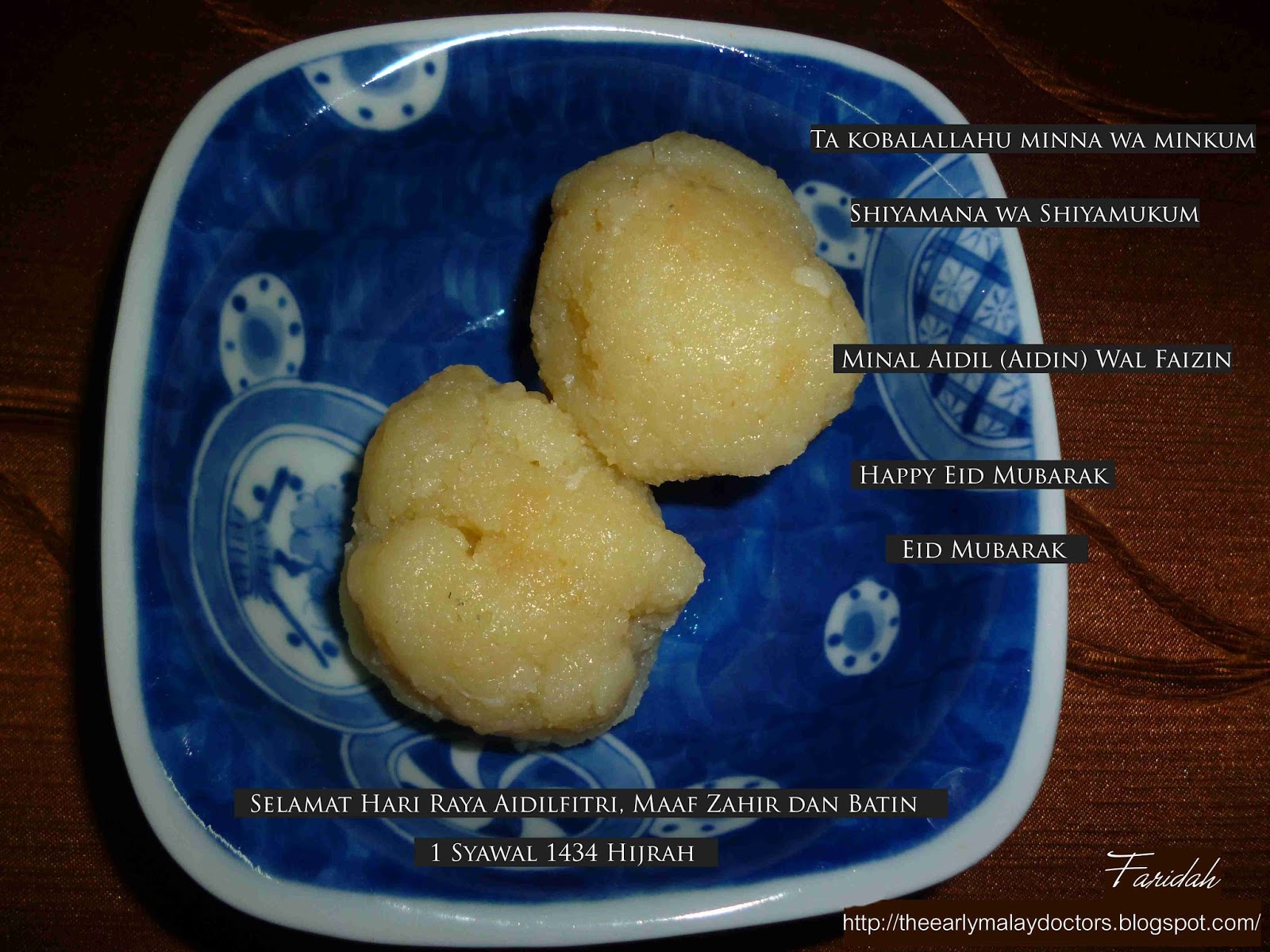
Salam Aidilfitri 1 Syawal 1434 Hijrah


Note:
  1. The greeting "Ta kobalallahu minna wa minkum" was what Nabi Muhammad SAW said.
  2. The greeting "Shiyamana wa Shiyamukum" was a friend's response to what the Prophet said.
  3. The greeting "Minal Aidil (Aidin) Wal Faizin" is commonly heard from the Indonesian Muslims.
  4. The greeting "Happy Eid Mubarak" or "Eid Mubarak" is commonly used in English worldwide.
  5. In Malaysia, we commonly greet with "Selamat Hari Raya Aidilfitri, Maaf Zahir dan Batin". Aidilfitri must be emphasized since it is about being 'born again clean without sins' and it is different from Aidiladha which is about sacrifice. "Maaf Zahir dan Batin" means "Forgive me physically (physical self and actions) and emotionally (soul and actions)". With this greeting, it is thought that the person has asked for total forgiveness and thus purifies himself from all wrongdoings to the person he greeted. 
  6. This is the English version of the Arabic doa, which I learned from Dr Syed at Um Qurra University, Madinah, Saudi Arabia and edited a bit: I would like to wish every Muslim a very warm and happy Eid. May Allah SWT accept all our good deeds performed in the Holy month of Ramadan and continue to bless all of us with His infinite blessings. InsyaAllah. Amin.

All these greetings support peace among the Muslim mass (Ummah).

Friday, 2 August 2013

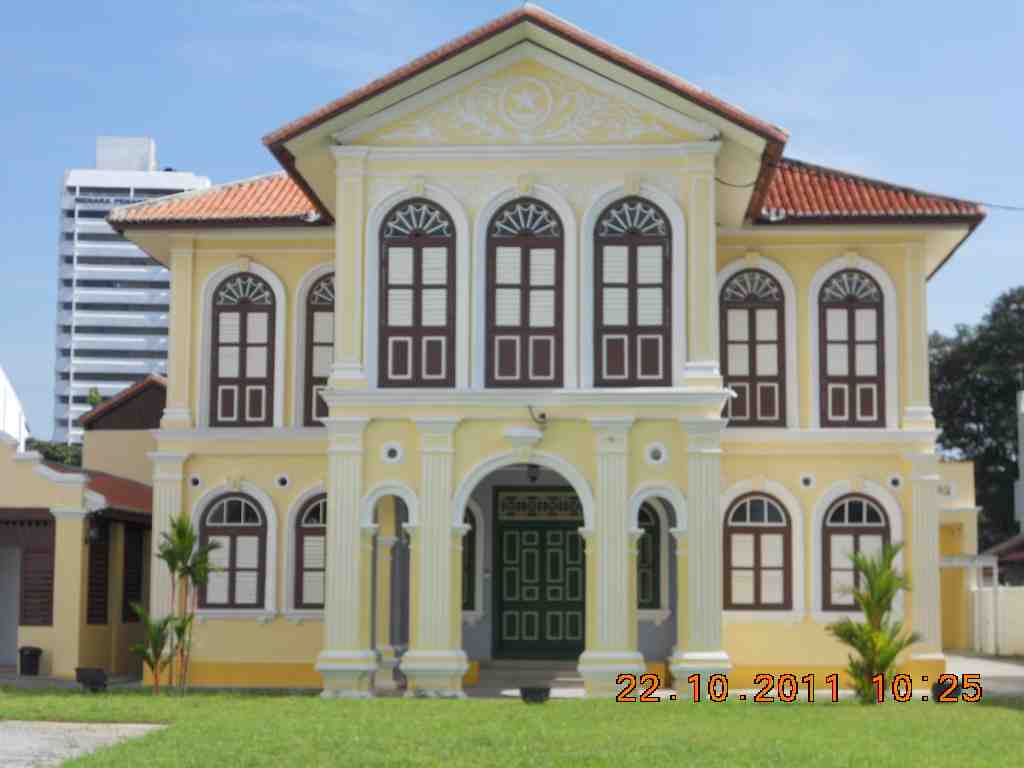
Floral Tea Mansion

Galeri Warisan Melayu Pulau Pinang
Penang Malay Heritage Gallery
138 Hutton Lane, Penang


I hope to display some of my work on The Early Penang Malay Doctors at this gallery, with the help of Jabatan Warisan Negara. Please come and visit this gallery when it opens.

Update 17 December 2013:
Unfortunately the gallery is still not ready by December 2013 and the roof needs repairs. It is hoped that the gallery will open in March 2014.

Update 2 May 2014:
En Muhammad b Wal wrote that he has moved department in the ministry, and someone else is taking over from him. The new person will let me know when the gallery will open.

Update 9 May 2015:
I still have no update on the display in this gallery.

External links:
http://ryankai1989.blogspot.com/2013_07_01_archive.html
Rumah Teh Bunga

Tuesday, 30 July 2013

Indonesian Independence

Proklamasi

The Proclamation of Indonesian Independence (Indonesian: Proklamasi Kemerdekaan Indonesia, or simply Proklamasi) was read at 10.00 a.m. on Friday, August 17, 1945. The declaration marked the start of the diplomatic and armed-resistance of the Indonesian National Revolution, fighting against the forces of the Netherlands and pro-Dutch civilians, until the latter officially acknowledged Indonesia's independence in 1949. In 2005, the Netherlands declared that they had decided to accept de facto 17 August 1945 as Indonesia's independence date.

The document was signed by Sukarno and Mohammad Hatta, who were appointed President and Vice-president respectively the following day.

Source:
Wikipedia http://en.wikipedia.org/wiki/Proclamation_of_Indonesian_Independence

Logan Heritage

According to retired Professor Suryadi Samin from Riau Province, Indonesia, the name "Indonesia" itself was coined by James Richardson Logan, a British lawyer based in Penang. 

In Penang history, Logan sided with the locals and often assisted them. Once he helped a local win a lawsuit against the East India Company.

A building complex at Beach Street was recently restored and is named Logan Heritage in his honour. Logan Heritage is separated from Standard Chartered building by Union Street. Both open onto Beach Street.

Dato' Dr Yee Thiam Sun

Datin Dr Sharifah Mariam bt Tan Sri Syed Hassan Aidid is married to Dato’ Dr Adam Yee Thiam Sun and their sons are Isa and Dr Ilias. 

Dato' Dr Adam Yee Thiam Sun, the St John Ambulance of Malaysia (SJAM) Penang State Commander, was conferred the Darjah Yang Mulia Pangkuan Negeri (DMPN) by the Penang State Governor in conjunction with TYT Yang di-Pertua Negeri Pulau Pinang 74th birthday on 14 July 2012.[1,2]

Isa Dato’ Adam Yee is the Chief Executive Officer at CRUiSE GPS Systems Sdn. Bhd. 

Dr Ilias Yee is the Clinical Coordinator at the Centre of Excellence for Research in AIDS, University Malaya.

[1] The Council of Dato' Dato' State of Penang (Majlis Dato' Dato' Negeri Pulau Pinang) http://www.datopenang.org/congratulations.php Accessed 30 July 2013

[2] http://www.thestar.com.my/News/Nation/2012/07/14/Chief-Justice-heads-Penang-honours-list-of-1138-people.aspx


From the Sun Yat Sen Museum in Penang:
http://www.sunyatsenpenang.com/?page_id=151
Dr. Sun Yat Sen first arrived in Penang on 19 July 1910. Five days later, on July 24 he wrote to his revolutionary partner Huang Xing mentioning that he will stay in Penang for 3 or more months, and move the Nanyang Tongmenghui Headquarters from Singapore to Penang. As a result of this strategic move, Dr. Sun Yat Sen was able to convene the “Penang Conference” in 1910 and organize the planning of the Canton Uprising and China Revolution.
One hundred years later, our Organizing Committee, chaired by Dr. Yee Thiam Sun (chairman of Min Sin Seah) was able to organize from July 23 to 25 2010, a series of activities at the Sun Yat-sen Memorial Hall, such as the Road To Dawn Charity Premier, Malaysia Cultural & Tourism Promotion, The “Penang Conference” 100 Years Historical Gallery as well as a Cultural Excursion around Taipei. With this, we have kicked off Sun Yat Sen’s “Penang Conference” Centennial Celebration in Taipei. [3]
[3] See more at: http://www.sunyatsenpenang.com/?page_id=151#sthash.bbUGEBkc.dpuf

From Kuda Ranggi blogspot:
There is mention of the Aidid family, Tan Sri Syed Hassan Aidid, and where he had lived, and Isa's marriage held at the LUTH complex in Bayan Lepas, Penang.
http://kudaranggi.blogspot.com/2006_02_01_archive.html

From Pusat Sejahtera USM, Penang:
Pusat Kesihatan di USM dikenali sebagai Pusat Sejahtera USM. Pusat ini diketuai oleh Pengarah pertamanya Dr Azizi Aiyub Ghazali (1973-1989; 16 tahun). Seterusnya diterajui oleh Dr Sharifah Mariam Syed Hassan Aidid (1989-2003; 14 tahun). Kini Pusat ini dipimpin oleh Dr Nurulain Abdullah Bayanuddin (2003-2013; semasa). Pusat ini  telah disambung ke rangkaian E-Klinik pada 1999 dan kini mempunyai seramai 66 orang staf.

Contact Us:
Pusat Sejahtera (Kesihatan & Pergigian)
11800 Universiti Sains Malaysia
Pulau Pinang, Malaysia
T: +604 - 653 3888 ext: 4937 / 4938
F: +604 - 653 4942
E: dir_pk@usm.my

Pusat Sejahtera USM Penang

Monday, 29 July 2013

Mencari Bako

Mencari Bako (1983) is written by Abdul Aziz Ishak. http://id.wikipedia.org/wiki/Aziz_Ishak I bought the book at the 6th family reunion at Vistana Hotel, Penang on 2 June 2013. Mencari Bako explains that Dato' Jenaton and Dato Setia are brothers.


Abdul Aziz bin Ishak, author of Mencari Bako
In a family tree sheet (Silsilah Keluarga) that was given to me by Tok Chu in 2013 (see earlier post on Tok Chu), I understand that Dato' Jenaton married the sister of Dato Setia. If that is true, how can Dato' Jenaton and Dato Setia be brothers?

Dato Setia is Dato Setia Payakumbuh, way back in Pagarruyung in the highlands of West Sumatra. They were cousins, and not brothers. As I understand it, Ismail @ Nakhoda Kecil, Haji Muhammad Saleh @ Nakhoda Nan Intan, Dato'Setia Pagarruyung, and Gadih Suri were siblings. They were cousins of Dato' Jenaton. Dato Jenaton then married Gadih Suri as his first wife. He then married 2 more, one at Batu Bara and another in Penang - Sharifah 'Aini (a Penang-Arab). Sharifah 'Aini had 4 children - Abdullah, Muhammad (died early after marriage), Hamidah and Fatimah. All of Sharifah 'Aini's children married and had children.


KETURUNAN ABDULLAH BIN DATO' JENATON

According to Mencari Bako, Abdullah had a son named Ahmad. Ahmad merajuk (sulked) and went away to live in Terong (Trong) in Perak. He was a good marksman and knew every inch of his farm. He shot deers on his farm (kebun), and then sembelih according to Islamic rites, and had rendang rusa.

Ahmad bin Abdullah bin Dato' Jenaton was Abdul Aziz's paternal grandfather. 

From the book, Dato' Jenaton. Catatan Salasilah Keluarga Melayu di Malaysia dan Indonesia (2013) by (Prof.) Ahmad Murad Merican:

Ahmad bin Abdullah bin Dato' Jenaton had 7 children: 1. Haji Alias 2. Harun (deceased) 3. Mahmud/Mohamad 4. Ishak 5. Kalsom 6. Rapiah, and 7. Sulaiman.

Ishak bin Ahmad bin Abdullah bin Dato' Jenaton married Aishahtun/Aishah Tun bt Haji Aminuddin (Taiping, Perak), and had 9 children: 1. Yusof/Yusoff (first President of Singapore) 2. Laili Zubaidah 3. Abdul Aziz (author of Mencari Bako) 4. Laila Latifah 5. Salbiah 6. Ramli 7. Zohara (author of another family book due out at end of 2013) 8. Abdul Rahim, and 9. Alma Azizah.

Abdul Aziz bin Ishak married Wan Shamsiah bt Pawanteh (Pengurus Utusan Melayu Cawangan Kuala Lumpur), and they had 5 children: 1. Rahmah 2. Zakaria 3. Zabidah 4. Zulkifli, and 5. Zahrah.

Abdul Aziz bin Ishak
Abdul Aziz Ishak's eldest brother, Yusof bin Ishak https://en.wikipedia.org/wiki/Yusof_bin_Ishak was the Managing Director of Utusan Melayu in Singapore, before he (Yusof) became the first President of Singapore. 
Yusof bin Ishak

Tuesday, 23 July 2013

Conference Call and Public Lecture

1. Conference:
CONFERENCE on PENANG AND THE HAJJ, 17 & 18 August (Saturday & Sunday), 9.00am-5.00pm at E & O Hotel.

2. Public lecture:
PENANG STORY LECTURE, Keynote Lecture: The Material World of the Hajj in Colonial-Era Southeast Asia by Eric Tagliacozzo, 18 August (Sunday), 3.30pm-5.00pm at E & O Hotel.
  •  It will be held in conjunction with a two-day conference on “Penang and The Hajj”.
  • The Penang Story Lecture is open to the public and limited to 160 persons.
  • Pre-registration is required for both events.
  • Register for package A or B (see below).
  • Download registration form here.
More at:
http://www.pht.org.my/?page_id=1949

From Berita Harian, 29 July 2013:
(sent by Hjh Sharifah Hj Abdul Rashid, CAP)