Wednesday, 8 August 2012

Search 46


SEARCH 46
28 July 2005

It is Thursday, 8.40 pm.

Dr. M. Bakri Musa mentioned to search for Alhady. I searched Google for Alhady and found a book authored by Alhady (128 pp, 5x7.25", illustrated by 13 plates, priced at US$17.82). I wrote to En. Ramli Abdul Samad, Perpustakaan Hamzah Sendut (PHS) 1, USM Penang to enquire. En. Ramli wrote back on 27 May 2005 that PHS1 had the book among its collections. I filled in the interlibrary loan form on 29 May 2005 and submitted it to En. Amran Mamat in the library on USM Health Campus as I did previously. I waited and received the book on 12 June 2005 (USM library call number: DS 594 A478).

"Malay Customs and Traditions" is a small blue book and  deals with the general and royal Malay customs and traditions in two parts. The same author's name was spelt differently on the hardcover and on the title page. The hardcover had his name as Syed Alwi bin Sheikh Al-Hadi but the title page had his name as Alwi bin Sheikh Alhady. It was first published in Singapore in 1962 by Donald Moore for Eastern Universities Press, Ltd. It was reprinted in 1967 by Donald Moore Press Ltd. What does the word Eastern Universities imply? Does this mean there were more than one university in Singapore in 1962? Who was Donald Moore? The book was printed by Ho Printing Co., Singapore. Does the printing company still exist today? Would it have records of all the printed matters it printed? The Foreword was written by En. Ismail bin Abu Bakar, Dato' Penghulu Isti'adat, Johore. This gave me an impression that Johore was well-established and probably had good records kept of its Malay courts (istana). I was just wondering whether the Johore Malay Customs department had anything to do with the early Malay doctors, or would the early Malay doctors have anything to do with the Malay courts. En. Ismail addressed the author as Tuan Syed Alwi bin Sheikh Alhady, a salutation for a man of Arab descent (Syed Alwi). So, the Arabs were involved in the Johore Malay courts in 1962. Alwi bin Sheikh Alhady was born in 1895 in Rhio and came to Singapore at age 13 in 1908.

It is interesting to note  from this small book the meaning of rare Malay words. Chindai emas refers to a type of fabric with gold flowers. Khasa bunga emas refers to a muslin cloth with gold flowers.Kain antelas refers to satin. These fabrics give the impression that there were different cloths which were used among the Malay community then. The fact that muslin was used indicates an advanced textile industry existed and was connected with the Malays. Textile would be a key link between the community and a hospital in its vicinity. Naturally, a Malay court would have a good link with a local textile supplier for its fabric needs, and a hospital would be nearby too for the same reason. So, doctors would have something to do with the Malay courts.

There are also other words which may help toward a better understanding of the Malay culture and lifestyle, and which I feel both Malay and non-Malay medical students and doctors must learn to familiarize themselves with if they have not already done so.

Masjid is a mosque and not a temple. Mukim is a district round a mosque; every district has a mosque. Siak is the caretaker of the mosque. Bilal is the person who cries the call to prayer (azan). When the azan is heard, the Muslim stops talking, remains silent and listens to it attentively and replies to it in his heart. The volume on the TV or radio is also turned down (or simply muted) so that theazan is heard above everything else. I must say it is very enchanting to hear the azan when everything else is turned down. Imam is a leader of a congregational prayer. Lebai is a clergy. There are no priests or priesthood in Islam.  Sembahyang refers to prayer. Sembahyang jemaah is a congregational prayer held either at home or in the mosque. A minimum of two persons is needed to qualify a prayer as sembahyang jemaah. Do'a refers to prayer. A do'a precedes everything that a Muslim plans or wishes to do, including examining a patient. Do'a selamat is a prayer for blessing and thanksgiving. It is usually held before someone or a company embarks on a big plan or something new, for example, going for further studies, opening a new project or factory. Maulud (maulid; maulidur rasul) is the birth of the Prophet Muhammad S.A.W. (peace and blessings of Allah be upon him).

Bergotong-royong is communal assistance and often applies to villagers working together in an activity, for example, in cleaning their village or preparing for a feast. Kenduri is a quasi-religious feast and often involves inviting the entire village. Jamuan just refers to feast. Hidangan is a tray of dishes served in a feast. Each hidangan serves 5 adults. There are many types of feasts in the Malay community! Some imply payment while others do not; you have to ask (I have to ask sometimes). The implied minimal payment is now roughly RM10 per adult in Kelantan. Even if you get an invitation but cannot make an attempt to attend, you may still want to make a small contribution of roughly RM10 as a gesture of generosity. Do it with sincerity.

With regard to music, only percussion instruments are allowed such as kompang (hand drum or tamborine). The serunai (flute) is not preferred as it is a wind instrument.

Haji is a Muslim male who has performed the pilgrimage to Mekah (Mecca; Makkah; Makkahtul Mukarramah). Hajah is a Muslim female who has performed the pilgrimage to Mekah. It is not compulsory nor necessary to use the title Haji or Hajah but most people prefer to use it. 'Alim is a religious scholar. Khatam Quran marks the completion of reading Al-Quran. It indicates an educational milestone of any Muslim, regardless of rank and birth. Many Muslim children are able to read Al-Quran by age 6 and complete the entire Al-Quran by age 12, before puberty. So, if a doctor asks his patient, "Have you Khatam Quran?", and the reply is "Yes, at age 9", then the doctor should immediately know that he is dealing with an intelligent child. Most children can recite well before they attend formal school, i.e., before age 7.

Some other words have to do with the Malay childbirth practices and closely mimick the Indian practices. Many doctors may be aware of these already but I was not when I first had my own child and I had to learn from many people, in order to earn the respect of the Malay society I lived in. Bersalin is childbirth or delivery. Bidan is a medicine-woman who sees to women folk. Bomoh is a medicine-man who sees to both men and women. Nasi kunyit is cooked glutinous rice and is often used as an offering (I am not too sure to whom). Berteh is parched or par-boiled rice which resembles rolled oatmeal. Setawar are leaves of a type of plant. Air tepung tawar is spell water prepared by the bidan or bomoh using plain water, for the patient to take home to drink daily; it can only be taken by the patient for whom the water was specially prepared. Berpantang is taboo during confinement and must be observed for forty-four days. Bertungku is the application of a heated hearth stone (roughly about the size of an ostrich egg) to the abdomen of the mother for about 30 minutes to 1 hour once or twice daily, to rapidly reduce the abdomen to pre-pregnant state. This works is a few mothers but not in many; it did not work for me! Berdiang is medicinal heating of the mother's abdomen and back alternately by charcoal fire placed beneath the mother's rattan bed, for about 30 minutes to 1 hour also once or twice daily. This is the equivalent of a sauna bath except that it is a dry bath. My late mother once said this was a painful procedure and not to try it. Mandi bunga is a bath with flower petals, fragrant pandanus leaves and rose water, to refresh the mother's body and mask the smell of blood. Mandi tolak bala is a bath to dispel harm and misfortune. Mandi pelepas is a ritual bath to break the evil spell between a mother and her newborn (or child) so that they will bond well and the child is freed from afflictions. I did this bath when my last child was afflicted with severe ringworm (tinae capititus) and she lost so much hair. Her scalp was covered with pus all over. It came to a hopeless point and I was desperate; the child was simply crying from so much pain to her scalp. The bidan used chewed areca nut and spat on my child's raw scalp - it worked! I never went back to study the details of her procedure. It sure took the antibodies a long time before my child was able to fight her affliction. But all is well now. Kacip is areca-nut slicer which resembles a blunt pruning shears. Sintok is bark of a tree used for cleaning the hair. It is agitated vigorously in river or well water to yield a fragrant shampoo. Limau purut is a medicinal lemon; the juice is used to overcome body odours. It is also used for the dead. Betan is recurrence of illness due to the violation of a taboo. Tangkal is talisman (and this is forbidden in Islam).

Death is respected and the onus is on the community to proceed with full burial rites. Islam enjoins that the burial of a dead body should not be unnecessarily delayed for more than 6 hours after death. Thus, this means that the dead body must be buried before the upcoming prayer or immediately following it. The following words may have to do with Community Medicine, Pathology and the mortuary. Mayat is dead body or corpse. Hantu is ghost. Syaitan is devil. Iblis is evil spirit. Setanggi gaharu is joss-stick with sandalwood or agilawood incense prepared by bomoh. Tukang mandi mayat is the person who bathes the dead body. Kain kapan or kapan mayat is two pieces of white cotton cloth or grave clothes. Kapan is to enshroud. Kubur or tanah perkuburan is graveyard which usually adjoins a mosque. Sembahyang mayat is congregational prayer before burying the dead (before interment). Men and women can perform the sembahyang mayat. Talqin is a short prayer read by a clergy for the dead soon after burial while still at the grave. It is also a reminder for those left behind by the dead (that we all come from Allah and that will all die one day, and therefore return to Him). Tahlil is praising Allah and is held during kenduri arwah. Kenduri arwah is a night feast held in the honour of the dead. It is held in the house of the dead for a week and is repeated weekly, fortnightly, monthly and then on the 100th day of death. Only men are involved in the tahlil. Dinner is provided by the family of the dead; neighbours sometimes assist with the dinner preparation. We should know that Islam never enjoins any feast to help the dead in the hereafter.

In the Appendix lies a great surprise! It did not have anything concerning the early Malay doctors but it carried a brief biography of Engku Mai, a woman of the royal Malay court. Engku Mai was born in Kuala Linggi, Malacca as Raja Maimunah binti Raja Hassan ibni Almarhum Raja Abdullah. Rajah Abdullah was Tengku Panglima Besar and son-in-law to Almarhum Sultan Muhammad. Sultan Muhammad ruled Selangor from 1826 to 1856. Who ruled Selangor from 1857 onward? Were the Malay courts of Selangor and Johore close? Did they share the same doctors? Engku Mai was 15 at the time of the Battle of Raja Mahdi in Selangor. When did this battle occur? What was this battle about? Who took care of the wounded? Engku Mai was more than 120 years at the time the book was written (1962). Thus, we now have evidence that the longest surviving woman was a Malay, and not French as the world understands.

I had to stop writing for a while as my brother in-law came knocking on our front door asking for urgent help. His youngest son aged 2 has a bead stuck in his nose and he could not get it out. My husband told him to rush the son to hospital before the bead goes down any further. He is heading for HKB.

It is 10.05 pm.


Acknowledgement

Malay Customs and Traditions
Syed Alwi bin Sheikh Al-Hadi (hardcover)
Alwi bin Sheikh Alhady (title page inside)
First published in Singapore in 1962 by Donald Moore for Eastern Universities Press, Ltd.
Reprinted in 1967 by Donald Moore Press Ltd.
(USM library call number: DS 594 A478)

Encik Ramli Abdul Samad
Perpustakaan Hamzah Sendut (PHS) 1
Universiti Sains Malaysia
11800 USM, Penang
Malaysia
Tel: 04-6533888-3705
E-mail: ramli.as@notes.usm.my

Dr. M. Bakri Musa
bakrimusa@juno.com


Telehealth Research Group
http://www.medic.usm.my/rnd/telehealth
School of Medical Sciences, Universiti Sains Malaysia

Search 47


SEARCH 47
28 July 2005

It is Thursday, 10.08 pm.

En. Fadli Ghani e-mailed on 1 June 2005 to inform me that he would be in Kota Bharu but I could not find the time to meet and discuss with him.

Prof. Nor Hayati Othman, Deputy Dean (Research) e-mailed on 8 June 2005 to enquire whether I knew the names of Malay doctors who are active in doing creative writing (past and present); she only knew Tun Mahathir. I replied to her that I would need time to read their biographies first and then compile the needed information. But she needed the information urgently within a week! I referred her to the Telehealth website  on the early Malay doctors. But she said there was no specific mention of their literacy. This need for information really makes me wonder whether our early Malay doctors took up any creative writing. Did they? I need help here.

I had to stop writing again as an ex-classmate called to enquire. We dispersed after the completion of the Malaysia-Cambridge Exams (MCE) in 1975. So it was 30 years since we last saw each other. Thanks Halimatun Aziz for calling. Sorry, I didn't recognize your voice! I told her I am writing this book and she immediately mentioned Arkib Negara! I will inform my fifth formers so that everyone can help me with writing and this big article.

It is 10.45 pm.


Acknowledgement

En. Mohd. Fadli Ghani
(writer & PhD student)
Pengarah Akademi Kajian Kota, Kuala Lumpur

Professor Nor Hayati Othman
Deputy Dean (Research)
School of Medical Sciences
Universiti Sains Malaysia
hayati@kb.usm.my

Puan Halimatun Aziz
ex-TKC75
Tunku Kurshiah College (MCE 1975)


Telehealth Research Group
http://www.medic.usm.my/rnd/telehealth
School of Medical Sciences, Universiti Sains Malaysia


Search 48


SEARCH 48
28 July 2005

It is Thursday, 10.46 pm. The whole world around me is sleeping. Rufina should be at her sister's house in Kota Bharu. I have not met her. I heard from the TKC75 e-mail that she is in town.

I am going through Dr. M. Bakri Musa's e-mail dated 8 June 2005. This time his e-mail is like a time bomb. I only have time to digest it today after more than a month incubation!

Dr. Bakri informed that his friend was in Malaysia and met Tan Sri Dr. Abdul Majid Ismail @ "Coco Majid" at the old Coliseum (is this stadium Merdeka?). Coco Majid has a son, Dr. Aljafri Majid, a cardiac surgeon and Head of Department, in University Malaya (UM). Dr. Bakri (in Silicon Valley, California) had tried to contact Dr. Aljafri (in UM, Malaysia) but failed. Dr. Aljafri led the first intern walkout in UM in 1976 (I was either in Methodist Boys School, Penang or in California State University, Chico). What was the exact date of this walkout? Coco Majid had just retired as director-general (DG).

So, Coco Majid was 55 in 1976? Was Coco Majid born in 1921? Check the date of birth of Coco Majid. When did he enter KEVII? When did he graduate from KEVII? Did he graduate in 1951? When did he become DG? The exact date of retirement would give his date of birth. Back calculation can point to his graduating class.

From Search 15, Tan Sri Dr. Abdul Majid Ismail, ex-Chief Director of Health Malaysia noted that he had received treatment from Dr. Abdul Latiff in GHKL in 1937. If Coco Majid was born in 1921, then he was only 16 when he met Dr. Abdul Latiff in GHKL in 1937. Is this correct?

I will need someone to contact Dr. Aljafri Majid in Cardiology, UM and get the right details about his father. I will also need someone to follow up on Coco Majid at the old Coliseum. Dr. Bakri mentioned that his memory may be slightly off but he is still mentally alert. So, time is precious.

Dr. Bakri recalled reading about Dr. Majid being the first Malay Queen scholar in medicine to do postgraduate work in Orthopaedics in the United Kingdom (UK). Dr. Bakri also came across Dr. Majid's paper on the destructive effect on tendon with local steroid injection when he (Dr. Bakri) was doing his residency in Canada.

Dr. Bakri also mentioned a new name, Dr. Awang* from Johor Bahru (JB). He was the Malaysian Ambassador to Australia and then Governor of Penang. Dr. Awang has two sons who are surgeons,Dr. Yahya Awang and Dr. Hussein Awang. Dr. Yahya Awang was former head of Institut Jantung Negara (IJN) and he did the first heart transplant in Malaysia. Dr. Yahya was Dr. Bakri's medical officer (MO) in JB. Dr. Hussein Awang is a urologist and performed kidney transplants at GHKL. He is now at Tawakkal. I have yet to meet both of them to clarify the details concerning their father. What was Dr. Awang's father's name? Mother's name? How many children does he have? When and where was he born? When did he enter KEVII? When did he graduate from KEVII? Where did he practise? When did he retire?

Dr. Bakri mentioned Dr. Ariffin Marzuki (Search 25) and another Malay doctor in Obstetrics & Gynaecology (O&G). Dr. Bakri could not recall his name. Dr. Bakri described him as a real professional because he dealt only with medicine and he did not get involved in politics. Dr. Bakri happened to meet him while serving GHKL from 1976 to 1977.

Dr. Bakri recalled he read Dr. Ariffin's thesis on baby prams.

Dr. Bakri mentioned he came across Dr. Ungku Omar's paper in the Journal of Physiology while he (Dr. Bakri) was doing research in transplant immunology in Canada, and that he was very excited to see a Malay name, so he promptly wrote to him. Dr. Bakri described him as 'very nice' because he replied immediately which is very unusual for Malaysians (includes me)! Following this, Dr. Ungku Omar recruited Dr. Bakri to Universiti Kebangsaan Malaysia (UKM). Dr. Bakri recalled while he was on a holiday trip to Malaysia, he heard Dr. Ungku Omar's radio programme on health and found it very informative. However, by the time he returned to Malaysia the following year, Dr. Ungku Omar had died suddenly apparently from jogging (I would query sudden death).

Dr. Bakri mentioned another name, Dr. Hussein Salleh. He was the first Malay Professor of Surgery at UKM. Dr. Bakri did not get to meet Prof. Hussein as when Dr. Bakri came to replace Prof. Hussein in January 1976, he had already left for Australia. Coco Majid appointed Dr. Bakri to take over Prof. Hussein's place in UKM when he was DG. Dr. Bakri stated clearly that he only got the job but not the title nor the pay. He noted something about appointment in UKM.

Dr. Bakri wrote he came across Coco Majid's paper in the British Journal of Surgery on liver surgery. He was excited to see a Malay name in a prestigious professional journal. Dr. Bakri requested for a reprint but never received a reply. While in Kuala Lumpur (KL), Dr. Bakri noted Coco Majid's reputation was 'less than sterling' among his trainees and associates.

Dr. Bakri ended his e-mail with two suggestions to this website. He wanted me to reduce the graphics as it took very long to download this page. He asked if it is possible for me to post some of  the early papers by these early Malay doctors; he would love to read them. I cannot promise anything but I will first need to search and compile and send, just as I did for UM's Primary Health Care database.

Lastly, Dr. Bakri wrote "Best of luck in your work". Well, I will surely need this as this big project has finally found a printer who has kindly offered to print this humble research. I will update readers on this later.

*My husband says the name is Dr. Awang Hassan. Our ex-neighbour, the late Pak Cik Hassan knew him. Pak Cik Hassan's son-in-law is Dr. Ahmad Khairuddin in Institut Jantung Negara (IJN).

My son has just returned from UiTM in Macang and I have to check that he locks the front door. I have to stop to go to sleep. I am very hungry as I skipped dinner so that I could have time to write.

It is Friday, 29 July 2005, 12.23 pm.


Acknowledgement

Dr. M. Bakri Musa
bakrimusa@juno.com

Dr. Arifin Ngah Marzuki (Class of 1953)
First VC of UKM.
According to Dr. Arifin Ngah Marzuki, there were only 13 Malay doctors in the entire peninsular Malaya in 1953.


Telehealth Research Group
http://www.medic.usm.my/rnd/telehealth
School of Medical Sciences, Universiti Sains Malaysia


Search 49


SEARCH 49
29 July 2005

It is Friday, 11.35 pm.

There is a lovely love story "Kelmarin Bukan Untuk Esok" (yesterday is not for tomorrow) playing on TV2. My favourite characters are in it - Jasmin Hamid, Hans Isaac, and Catriona Bahrin Ross. It has a beautiful soundtrack "Sekiranya Ada Cara" and surprisingly very good lyrics by Ebby Saiful. My husband wants me to watch it! So, I am writing this article while watching TV! Just soon after the love story ended, Ferhad appeared and sang a Malay soul song, "Katakan Saja". It is very difficult to concentrate on writing because the lyrics are very good.

My husband pointed to me this news article which was what I was writing earlier in Search 8. An article in Berita Harian, Tuesday, 5 July 2005, the section under Agama, page 12, sub-sectionEnsiklopedia Nusantara by Wan Mohd. Shaghir Abdullah reads "Sejarah perubatan dunia Melayu perlu diperkenal kepada masyarakat", and the sub-title reads " Kitab perubatan karya Syeikh Ahmad al-Fathani tidak banyak diketahui oleh generasi sekarang". The article carried the same image of a page from the book "Thaiyibul Ihsan fi Thibbil Insan" written by  Syeikh Ahmad al-Fathani on 3 Zulhijjah 1312 Hijrah (28 May 1895) in Makkah which En. Fadli Ghani had e-mailed to me earlier. The article discussed herbal medicine. According to this article, it is believed that Syeikh Ahmad al-Fathani was the first Malay to learn medicine (orang Melayu yang pertama belajar perubatan). He studied medicine from the time of Ibnu Sina (Avecenna) up to his time. He also wrote the book "Qanun Ibnu Sina" in Arabic (no date was mentioned). His other books were "Hadiqatul Azhar war Rahayin" and "Luqthatul 'Ajlan".

It is Saturday, 12.12 am.

Jalaluddin Hassan is acting in "Orbit Cinta Berjamin" (orbit of guaranteed love) on TV2.


Acknowledgement

Berita Harian
Tuesday, 5 July 2005
page 12, Agama, Ensiklopedia Nusantara
"Sejarah perubatan dunia Melayu perlu diperkenal kepada masyarakat. Kitab perubatan karya Syeikh Ahmad al-Fathani tidak banyak diketahui oleh generasi sekarang".
Written by Wan Mohd. Shaghir Abdullah


Telehealth Research Group
http://www.medic.usm.my/rnd/telehealth
School of Medical Sciences, Universiti Sains Malaysia


Search 50


SEARCH 50
30 July 2005

It is Saturday, 12.14 am.

I received a surprise e-mail from En. Mohammad Shidek Nazaran on 14 July 2005. The subject was "Hamzah Hj. Taib". His e-mail appeared among my >80 pieces of junk mail but somehow the name Hamzah Hj. Taib struck me and I opened it. I was very surprised by the content of his e-mail as En. Mohammad Shidek Nazaran is the grandson of Dr. Hamzah Hj. Taib (Search 24).  So here is his story of his grandfather, one of the early Malay doctors. This is a very important piece of information to fill in the gap. It is very timely.

En. Mohammad Shidek Nazaran said he read about this research project with great interest as one of the 13 early Malay doctors happened to be his grandfather! He has never met his grandfather, Dr. Hamzah Hj. Taib. En. Mohammad Shidek Nazaran was born in 1964 while his grandfather had died in 1955.

According to En. Mohammad Shidek Nazaran, Dr. Hamzah Hj. Taib was probably born in 1900 in Muar. From my calculation, Dr. Hamzah b. Hj. Taib was probably born before 1900. He was probably born in 1894. He probably entered KEVII in 1918 at age 24. He graduated from KEVII in the Class of 1923 (Searches 1 and 4) at age 29. I will need to know his date of birth from formal records, for example, from his birth and death or marriage records, records for the registration of his clinic which may have his date of birth. Most Muslims do not record the date of birth on the tombstone (batu nesan).

Dr. Hamzah Hj. Taib attended Muar High School which was formerly known as Government English School. He worked for a short while in the Government Hospital in Muar before setting up his own practice as he strongly opposed British discrimination of the Malay doctors. There is not much information of his practice. He opened his own clinic first in Muar, then in Segamat, and finally in Johor Bahru. He was known to juggle clinic practice with political activities which eventually became his priority. He was the founder of several Malay organizations together with his father Hj. Taib and his eldest brother Hj. Abdullah. They tried to instill awareness about education and political rights among the Malays in Johor. What were the names of the organizations? Are any of them still in operation today? They may have some records of him.

En. Mohammad Shidek Nazaran mentioned that a brief information about his grandfather appeared in the Malayan Branch of the Royal Asiatic Society (MBRAS), Monograph No. 8 (undated). It described him as a Malay chauvinist as he had strong sentiments against the British and foreign immigrants (unspecified) during the pre-Merdeka days (i.e., before 31 August 1957).

Dr. Hamzah Hj. Taib married first to Hjh. Sapiah bt. Dato' Hj. Abdullah. She was the daughter of Dato' Hj. Abdullah bin Abdul Rahman, a former Yang Dipertua Jabatan Agama Johor. They were blessed with 9 children. En. Mohammad Shidek Nazaran's mother was their 7th child. What was the exact date of marriage? This may help trace his date of birth. When was En. Mohammad Shidek Nazaran's mother born? Her birth certificate (if any records were kept at that time) would have her father's age when he registered her birth. Her siblings may remember hers or her father's date of birth.

Dr. Hamzah Hj. Taib then married Khadijah bt. Sidek (refer to Search 4 on Puan Khadijah bt. Sidek). Khadijah was detained in a Singapore prison after fleeing Sumatera. She was involved in political activities against the Dutch Occupation of Indonesia. Khadijah was the first Wanita UMNO (United Malay National Organization) Chief. She was later expelled by Tunku Abdul Rahman as she was outspoken towards Tunku. She later joined PAS. She won the election for Dungun (undated).

This confirms my earlier communication with En. Fadli Ghani (Search 4), that Puan Khadijah bt. Sidek was the wife of Dr. Hamzah b. Taib (Class of 1923. See Searches 1 and 4). Khadijah was ex-Ketua Wanita UMNO, ex-Member of Parliament Dungun, ex-Ketua Muslimat PAS.

Puan Khadijah may have kept records of her husband's date of birth and some biodata. It will be worth trying to search her records. When did she serve as Wanita UMNO Chief? When did she serve as Member of Parliament Dungun? When did she serve as Ketua Muslimat PAS?

Dr. Hamzah Hj. Taib had died of diabetes in 1955 (probably at age 61) in Hospital Sultanah Aminah in Johor Bahru. His death record can be checked at Hospital Sultanah Aminah in Johor Bahru as all hospitals keep the birth and death records of their patients. His hospital records might have gone into the inactive records section since they have been inactive for more than 10 years. Most hospitals with modern hospital information systems (HIS) adhere to this procedure. A good thing to do is to write to the hospital director and seek permission to view his records on historical grounds.

Dr. Hamzah Hj. Taib was buried in Tanah Perkuburan Mahmodiah Johor Bahru. Most Muslim graveyards are tendered to by the grave digger himself or his family members and they are usually attached to a nearby mosque. Grave diggers are required by law and the police to obtain the death permit from the deceased family before burial can take place. So the grave digger or his family must have his death record. I am not too sure whether the police keeps a copy of the death certificate or burial permit. Whatever it is, I surely hope that one day someone can give us this piece of information.

En. Mohammad Shidek Nazaran did not furnish his correspondence address nor contact number. I replied to his e-mail only last week. I hope I have done justice in writing this article about his grandfather for him.

It is 2.01 am. The price of Petronas Super petrol is RM1.64 per litre as of 1 July 2005.


Acknowledgement

En. Mohammad Shidek Nazaran
Grandson of Dr. Hamzah Hj. Taib

Dr. Hamzah Taib (Class of 1923)
Dr. Hamzah Taib was an important politician in Johore. His biodata as a politician has been recorded in a book "Sumbanganmu Dikenang" by Professor Ramlah Adam.


Telehealth Research Group
http://www.medic.usm.my/rnd/telehealth
School of Medical Sciences, Universiti Sains Malaysia


Where & how to order

This is where to order the book, Research on the Early Malay Doctors 1900-1957 Malaya and Singapore:

Tuesday, 7 August 2012

501452 Hardcover and softcover

The 501452 hardcover and softcover books arrived today via USPS. I didn't hear the van outside my home but my husband and youngest daughter did; they got the parcel for me. I had thought it was an early Raya present! LOL. This is what came in the post/mail today.

UPS parcel from the printer in USA. The parcel felt very light, and I had thought it was a dress!! LOL
501452 Paperback (left) and hardcover (right) books.
The paperback spine was a bit damaged but the book is good.
Another shot of the damaged spine. A lot of glue to hold the broken spine in place.
Page 203 has a row of upside-down icons. The icons are: Facebook, Email, smartphone, open book, and house.
Paperback with a nicely pressed spine impression.
Hardcover is a blue book with a jacket. The blue book spine says 'Rashid' and the title.
Hardcover 'blue book' and its jacket (at right).
Jacket for the hardcover.
My collection of small book (501452) materials: 3 books, 5 posters, 50 order forms, 50 bookmarks and 50 business cards. These will disappear in no time as the children are after the bookmark and business card as souvenirs.
Close-up, same as above, from left: books, order form (picture postcard, ppc), bookmark (long black one), business card (cutest of them all). The posters are underneath. My USM business card is near the one that Xlibris printed.

Published date: 17 July 2012
The inside pages are black and white.
Link to Faridah Books


How to Order from Xlibris
How to Order from Amazon.com
How to Order from BN.com

If you wish to buy, please buy from Amazon.com or BN.com within 1 year of publication (17 July 2012-17 July 2013) as they offer the cheapest price. After that the book is only available from Xlibris but at a higher price.

Xlibris will continue to sell my book even after I die and for 100 years before my book will enter public domain (which means you can download it for free 100 years after I'm dead). The 100 years duration is according to US Copyright Laws. In Malaysia and elsewhere, it is only 50 or 75 years. 

Monday, 6 August 2012

Technical Note - Photo Resolution

How to enhance photos for printing (eg checking and increasing image resolution).

For things to do with resolution, especially for photos, there is one choice which is a free program. This is the Zoner Photo Studio.

Zoner Photo Studio
http://www.zoner.com/ww-en/photo-editor-viewer-manager
  1. Zoner Photo Studio has 2 panes, the View pane and the Editor pane.
  2. Click the View tab to view images/photos.
  3. Click the Editor tab to do editing.
  4. There are many functions in Editor, one is for checking size and resolution.
  5. To check the size or resolution, click Editor tab.
  6. Click Edit, then select Resize. Set the desired resolution in dots per inch (dpi).
  7. For print purposes, set the resolution to 300 dpi. Click OK.
  8. Then click File, select Save. Now the file is ready to meet printing needs.
  9.  Note: Archives may require higher resolutions, eg 400 dpi or 600 dpi.
This is an image (or photo). Double-click the image to view it in  Zoner Photo Studio.
This is the image in Zoner Photo Studio. This is the View pane or window. Then click the Editor tab.
This is the image in Zoner Photo Studio, but in the Editor pane or window. Click Edit, select Resize.
This is the Resize control box for the image. The resolution of the image is presently 96 dpi. Increase the resolution using the upper small pyramid icon till it displays 300. Then click OK. Now the image resolution is 300 dpi, and the photo size will re-adjust to meet that higher resolution. Now view the image (click View tab) and click the magnify (+) button to see the image at higher resolution.

Technical note - compressed files

How to create compressed files and how to open them.

There are many programs for creating compressed files but I only used 2 such programs, one is WinZip and the other jZip. Both are easy to learn and use. They are useful when you want to send many files as a big file (called archive, packed files or stack).

WinZip
http://download.cnet.com/WinZip/3000-2250_4-10003164.html

  1. Follow the instructions online
  2. The program may still be/may not be free now. Use it if it is free or locate and download the free version.
  3. Download and install. Just double-click whatever you downloaded and it will self-install. Follow the instructions on screen.
  4. To create a zip file, first create an empty folder. Drag some of your files into the folder (not exceeding 200MB total size). Then right-click on the folder. In the menu, select Apply to archive.... This will create a zip file of that folder. By zip file, it means all the contents of that folder are now packed as a single file, and with the same name. Rename and save the zip file.
  5. You can then send the zip file to sendspace.
  6. Gmail does not allow you to send zip files.


jZip
http://www.jzip.com/

  1. jZip is fast but quite tricky to use. The zip action takes place so fast that you wonder whether your files have been zipped or not.
  2. If you think you want to try jZip, then download and install.
  3. To create a zip file, first create an empty folder and name it. Drag some files into that folder. Then right-click on the folder and select jZip from the menu, and Add to jZip in the adjacent selection panel. Two things will pop up, one is the Add message box, the other is the jZip window. 
  4. To create a new zip file, click New. Your compressed file will show up in the jZip window. You will be able to see the icon and name of your compressed file.
  5. If you wish to add more files to the same jZip window, click Insert. All the files are viewable in the jZip window. That's it.
  6. To open a zip file using jZip, click View and select the file you wish to open. That's it.


Will edit the instructions later ...

Technical Note - Sending large files

How to send large files (eg digital photos; single file vs archive or zip) - PowerPoint (PPT) 5Aug2012

There are 2 programs for sending large files, one is YouSendIt and the other is sendspace. Both are good but have certain limitations. They are useful for sending photos and manuscripts.

YouSendIt
  1. Maximum file size: 20MB
  2. Limitation: cannot send zip file
  3. This program is free
  4. I have used YouSendIt since 2009. 
  5. YouSendIt is for instant download. It doesn't keep the files on the server for very long.
  6. Start with this program first and if this program is limiting, try sendspace next.
  7. Always start by sending a file to yourself. If it works, it will work for others.

sendspace
  1. Maximum file size: 200MB (sometimes 300MB)
  2. Limitation: cannot exceed total file limit size (1 GB)
  3. This program is free
  4. Good point: can send compressed files (zip files)
  5. Good point: files remain on the sendspace server for approx. 1 month, with constant reminder of time left (1 week) before files will be automatically deleted.
  6. Always start by sending a file to yourself. If it works, it will work for others.

How I have used sendspace:
  1. In 2012, when I wanted to send the manuscript to Xlibris, I also had 400+ photos to send. I could not use YouSendIt as it would not allow me to send that many files and such a huge volume of contents. I wanted to send compressed files (zip files) to save time. Xlibris suggested me to use sendspace to send my files to my editors. So I learned how to use sendspace (trial and error). When that worked ok, I then sent my files using sendspace. The files were downloaded by the IT Dept at Xlibris and then distributed to 2 depts - copy-editors and production team. 
  2. Sendspace became very essential for my work. Else I would have to spend a lot of money to send my manuscript and photos by courier to Xlibris for printing my books. I didn't have to buy tons of pendrives or any extra external harddisk. Learning how to use sendspace helped me a lot.
  3. I have prepared a PowerPoint (PPT) for how to use sendspace but give it a try first. Let me know if you get stuck and I will email the PPT to help you out. The PPT is gratis.
  4. You can send individual files or zip them first and then upload to sendspace. I will write a technical note for how to create compressed files.
  5. Read the sendspace instructions online carefully and follow strictly. 
  6. Just a note of warning: there is an advertisement button at the sendspace website. Do not click on that button. If you accidentally clicked on it, it will ask for your hp#. Do not fill in. Leave the application and go back (track back). You will lose about RM24 of you entered your hp# and find out later that it is a scam.

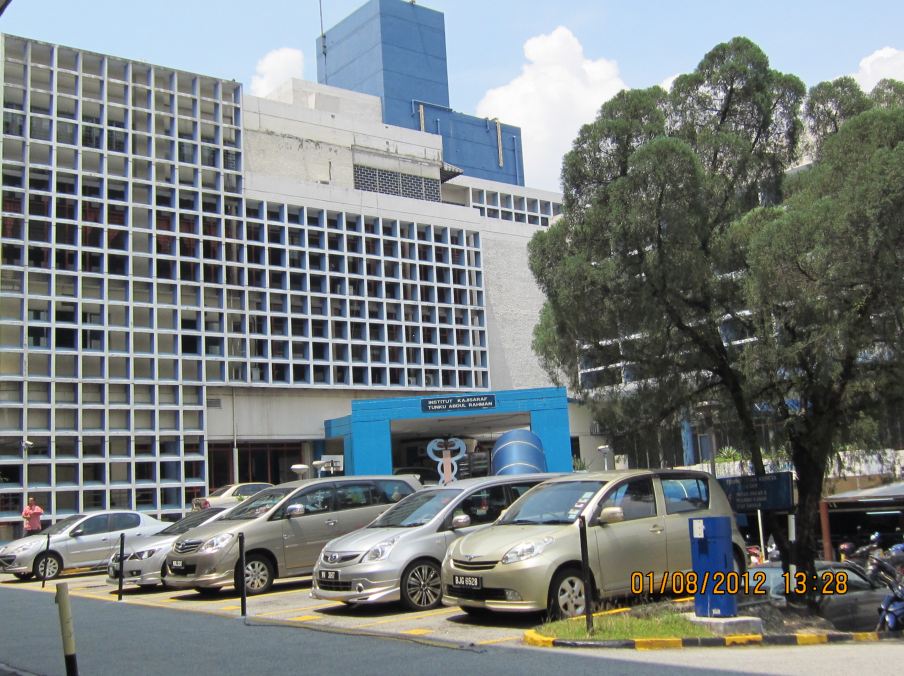
Hospital Kuala Lumpur (HKL)

Photos of Hospital Kuala Lumpur (HKL).

All photos of HKL below were kindly supplied by Dr Lim Ju Boo from his personal collection. All photographs were taken by Dr Lim Ju Boo.

HKL plaque
Front facade of HKL
Urology & Nephrology, HKL
Accident & Emergency (A&E) Department, HKL
A&E, HKL
Entrance to A&E at HKL
Ambulance at A&E, HKL
HKL: towards the A&E Dept and Main Block
HKL: New Specialist Block, former site of Blood Bank
HKL: same as above
Institute of Neurology, HKL

Sunday, 5 August 2012

Technical Note - Topics Covered

I will now guide readers wrt the technicalities involved behind the scene for The Early Malay Doctors. It may be useful/useless for some. Some of you maybe able to cope/not be able to cope with the technicalities. Anyone can learn.

Here are some tentative topics which I plan to write about/explain:
  1. How to send large files (eg digital photos; single file vs archive or zip) - PowerPoint (PPT) 5Aug2012
  2. How to create compressed files.
  3. How to enhance photos for printing (eg checking and increasing image resolution).
  4. How to prepare a composite digital portrait from existing old photos - KIV
  5. How to touch up old photos (torn or missing bits) - KIV
  6. What to do with very small images - KIV
  7. How to capture individual faces from a group photo - KIV
  8. How to do a line-up of portraits for a person (facial profiling) and determine a person's age by approximation. - KIV
  9. How to prepare maps - KIV
  10. How to check what day it was for any given date.
  11. How to double-check a newspaper publication.

Saturday, 4 August 2012

Malay-Hindustani

I was wondering what Malay-Hindustani was so I clicked on a song in YouTube and got this song by Lata Mangeshkar: Sekuntum Mawar Merah. The lyrics are Malay but the melody is Hindustani.

This is another of her song but with Hindustani lyrics: Dil to pagal hai (The Heart is Crazy). It was sung in Hyderabad in 2002. It is a famous song, and I can sing along but I don't know the meaning at all. I heard the song in a Hindustani movie. Dil to pagal hai in Wikipedia.

From the time I grew up and attended school in Kedah and Kelantan, I listened to such songs. Indian grocery shops also tuned in to Hindustani songs. Even though I am a Sindhi descendant, I don't understand any of the lyrics. My Sindhi relatives all spoke their mother tongue (Urdu?) at a wedding. I could not make out what language my relatives used but they spoke to my mother in English.

Hyderabad is connected to Malaya because a few of the ancestors of the early Malay doctors were from Hyderabad. They include the ancestors of Dr Che Lah bin Md Joonos (Penang), Dr Abdul Karim bin Nawab Din (Taiping). The ancestors made their way from the Deccan plateau to the port of Madras, and then sailed from Madras to Malaya. There are no details of the voyages yet.

These ancestors were Muslims and they were originally from the northern provinces of undivided India. They were from the Sindh, now Pakistan. They were known as Sindhi (now Pakis or Pakistani). I don't have the details of the north-south transmigration from the Sindh down to Darjeeling highlands in the Deccan plateau. It seems that many migrants-to-be followed this route before eventually reaching Madras and finally sailing forth to Malaya. Even people from Surat on the west coast came to the Deccan plateau first and then travelled onward to Madras, before sailing to Malaya.

Madras is Chennai today.

Just recently, Hyderabad was featured in TV AlHijrah / OASIS (can't recall what it was) on ASTRO in August 2012, around Aidilfitri. It showed the important buildings/places in Hyderabad such as the Hyderabad Mosque and the biggest restaurant named Paradise.

Hyderabad Mosque is an intricate old mosque but it is important as over the ages, the Nizam of Hyderabad Mosque was specially picked from among noted and respected clergy or imams. One of the early Nizams of Hyderabad had also contributed a large piece of diamond to the British Queen for her wedding. Paintings of the British Queen featured this diamond piece from the Nizam of Hyderabad. Try look up the Kooh-i-Noor diamond.

Paradise is a special restaurant in that it started as a small eatery, then it expanded and today it is a multi-storey restaurant and caters for all castes of the Indian populace. There are different spaces and settings for the different castes and groups so everyone can eat without feeling awkward. It also has a take-away section. It seems from the documentary that the Indians loved to buy their food from the Paradise take-away section (for breaking the fast in Ramadan). The workers of Paradise are well-looked after in terms of staff welfare, even the families' insurance are paid by Paradise management. Paradise provides very good work opportunities for boys from poor families.

Kuala Lumpur

What do we know about Kuala Lumpur (KL)? What does Kuala Lumpur mean? How did KL history begin? Who opened KL? How many people lived in KL in the 1700s? 1800s? 1900s? 20th century? Today? What attracted people to KL?

Why are there few Malays in KL? Why isn't the sultan's palace in KL? How far is KL from Klang?

How was KL connected to the other cities in the past 400 years? What is the significance of KL in Malaysian history? If there was no KL, would there be a Malaysia today?

KL is connected to the Chinese. Why? What attracted the Chinese to KL? When?

Who were the early Chinese of KL? Where are the families today?

What was KL initially? How did KL develop? How were roads paved in KL? Who erected the buildings in KL? What are some of the famous landmark buildings in KL? What are the buildings that have remained till today? What are some of the important structures in KL today?

How many hospitals were built in KL over the past 400 years? Whom did the hospitals serve? How were the hospitals managed in KL? Who were the early doctors who served in the hospitals in KL? What photos of old KL hospitals have survived?

Friday, 3 August 2012

British Malacca

British Malacca was quite recent. British Malaya ended with the Malayan independence on 31 August 1957. British Malacca is limited to Malacca while British Malaya affected the entire kingdom of the Malay peoples. British Malacca restored some faith among the people of Malacca but British Malaya practically robbed Malaya so much so that by the time Malaya eventually gained its independence, it was such a poor country! The Malays were so poor that they could not enjoy life at all; many could not go to school or complete tertiary education. The Malay people were so poor at the time of the Malayan independence. Let's not forget that.

Back to British Malacca...

Malacca was a good point of focus for the British. They obtained Malacca from the Dutch. Three things the British did right for Malacca were they blasted the Dutch-protected Portuguese fort to pieces and left just the gate we see today. They painted the red buildings white. They build a fountain after Queen Victoria right in the heart of the red square in Banda Hilir. Many photos taken before the fountain was built point to this era.

There were other buildings made by the British, and a lot have remained to this day. These include all the schools in Banda Hilir and its vicinity, and also the Malacca General Hospital, which was the third hospital in Malacca. Other things they did for Malacca was to run a post office, which operated as a bank. I still have my trust account book from that time. A small airport operated at Batu Berendam. I still have photos of that time at the airport.

Why was Malacca special to Britain?

Malacca was a Straits Settlement, and so were Penang and Singapore. Why was Malacca special? Malacca was obtained by exchange, and not through any war. The last war fought on Malacca soil was between the Dutch and Portuguese in 1641. So Malacca was 'peaceful' since 1641. Malacca was passed on to the hands of yet another European colonial master, a 'better' master that managed Malacca well but still put the Malays at a disadvantage. The British used Malacca for its missionary expansion to spread Christianity while it knew that the Malays were Muslims. Many churches were built in Malacca but hardly any mosque were built by the British for the people of Malacca.

Even today, Malacca still cannot portray its initial Islamic image as it has so many churches and convents, etc. We should remember that the Malacca Sultanate went from Hindu to Islam and remained at that when the Portuguese attacked Malacca. Now that all the 3 colonial masters have returned to their homelands, it is time to manage Malacca properly and give it its long overdue Islamic image that was there before European colonialism.

What we need to do is to critically assess the damages done by the colonials in Malacca's history, clear up all the mess and return the clean image that Malacca once had. Remember, Malacca flourished as the world's trading port at a time when it was under the Malacca Sultanate. The Malacca Sultanate can be restored because there are many who qualify to step up to the throne and be Malacca's new sultan in the post-colonial era. It is just us eggheads who can't think straight who cannot see what is happening to Malacca. The Malay rulers can sit and discuss who should be Malacca's new ruler (Sultan Melaka).

We can forget the colonials altogether because they damaged our reputation. I don't think they even cared about our local customs and tradition. Similarly with Penang - return it to Sultan Kedah. Similarly with Singapore - return it to Sultan Riau-Lingga. That is how I look at the region and its people.

Back to the question of why was Malacca special?

The British acquired Malacca first, then the other states. It was in Malacca that the Malays got together to deal for Malaya's independence. Why didn't they discuss in Kuala Lumpur? Kuala Lumpur may sound Malay but it was a Chinese city opened by the Chinese people when they were forced out of Klang, then a Malay stronghold and where the Malay Sultan of Selangor had his palace. So Malacca bravely dealt for the Malayan independence.

After the Japanese war (1941-45), in the late 1940s, our parents were probably just teenagers. There were already loyal Malays who dealt for our nation's independence. Who were they? Many were people from Malacca or related to Malacca or had connections with Malacca. Tunku himself was married to a Malacca lady - Sharifah Rodziah, a lady born of noble birth and from a good Muslim family. Malacca had high regards for her. I still remember her. When Tunku was successful in dealing for the Malayan independence, of course he returned to Malacca and pronounced the Malayan independence first at Padang Melaka and later at Stadium Merdeka in Kuala Lumpur. I will upload some photos of that historical event from my grandfather's collection later.

When Henry Syers sought assistance from the Malay quarters, he took Malays from Malacca and moved them to Kuala Lumpur. These Malacca people were relocated to a place called Kampong Baru in Kuala Lumpur. Among some of the famous people from Kampong Baru in Kuala Lumpur was Tan Sri Abdul Majid bin Ismail (Coco Majid). His parents were originally from Malacca.

Why was Kampong Baru special?

Kampong Baru was special as it was a trusted Malacca community. It was a community that was relocated into the heart of Kuala Lumpur (then a Chinese community) and became the heart of Kuala Lumpur. Thus, you can see the role that the people of Malacca played in bringing up Kuala Lumpur. Of course as a transplated community, Kampong Baru people were poor (Malays were never rich under the colonials anyway). The best that the Kampong Baru people could do was to excel in their studies when the opportunity arose. They became the community leaders, and almost all of them were Malacca people born and bred in Kuala Lumpur. Of course the language points to their Malacca heritage. There is no language difference between the Malays of Kampong Baru and the people of Malacca.

What can we conclude about Malacca now?

So in conclusion, is British Malacca important? Yes, it was a turning point at least. Is Malacca special? I think so yes, it was a source of hope for a new beginning of a new nation. Will Malacca shine again? If we restore what was there before colonialism, yes, it should rise to fame as before. That's how I look at Malacca, my hometown and birthplace. I will never forget Malacca and its people.

Thursday, 2 August 2012

Dutch Malacca


Dutch VOC vs Malay Courts of Tanah Melayu - Nazli Aziz

After the Portuguese ruled Malacca, the Dutch came and fought against the Portuguese and won. Malacca became Dutch. Under Dutch rule, the Dutch used the same Portuguese fort for protection and added a few buildings, including a hospital, the governor's office row, a clock tower(?), and a church. The Dutch structures were painted a very striking bright red.


I remember as a pre-school child, being at the 'red square' and I asked my mother, why 'the place was red'. I didn't know the buildings then but I remember all the buildings around me were a glaring red colour. I didn't feel easy - I didn't like being at the 'red square'. I was used to black walls of wooden Malay houses and the red colour of the Dutch buildings in Banda Hilir stood totally out of place!

Now as an adult, and after studying photos of buildings in Banda Hilir taken by the Malay people, I noticed that the Malay people would take photos of the Dutch buildings but they avoided certain features, and especially capturing the cross on the church building. The Stadhuys didn't matter but the church did. A strange thing is there is no mosque in the heart of Banda Hilir, a Malay town and the name says it in Malay. There are many churches but not even a single mosque in Banda Hilir. Why? Have we been blind for hundreds of years, and not noticed that there in no masjid in the centre of Banda Hilir? Where do the Muslims pray if they are shopping in Banda Hilir? Where are the public prayers spaces?

The mosque that my ancestors build in Jalan Parameswara in Banda Hilir (further up towards the Portuguese Settlement and the Gurney School), is the only mosque in this weird place! And a weird thing I find is that Masjid Banda Hilir is never highlighted for its importance at all, never in the history of Malacca. People talk and write about all the other mosques, but they sure fail to even notice the earliest of the mosques at the periphery of Banda Hilir.

When Masjid Banda Hilir was built, it was very near to the sea; I remember walking down from the mosque to the beach in the early 1960s. The beach had soft white sand and the sea was crystal blue. Today, the beach is far away from the mosque, after so much land reclamation.

Were the Dutch better than the Portuguese conquerors? I don't know. My maternal grandmother and her generations were all Dutch-Sinhalese extracts - they were Burghers. Burghers aside, I feel the Dutch left a very lasting impression on the Malacca people, especially in architecture, not so much cuisine or apparels, and maybe a bit of the language and the Christian faith for some. We had Dutch doors and Dutch louvered windows covers for our house in Banda Hilir, which was possibly built during the Dutch era by my great-grandfather, or possibly there was another house on the same site before the one I had lived in, which was approx. 150 years old in the early 1960s. I remember discussing the age and antiquity of our Banda Hilir house with my father in the early 1980s.

So do we still need the red Christ Church, Stadhuys and clock tower in Bandar Hilir today to remind us of our Dutch conquerors? I don't think so. My feeling is we must learn to accept defeat, happily remove the red structures which weren't ours anyway, and build our own lovely Malay structures. I think a mosque, a big public eatery, a multipurpose hall, a garden, and good parking spaces are better - no A&W, no Hungry Jacks, no bowling alley, etc, and don't paint any structure red. The colours of Banda Hilir as I remember were white and green, not white and red. Red is for the Red Warriors - the powerful Kelantan football team! Red means 'ong' (good fortune) for the Chinese.


External links:
http://www.expatgomalaysia.com/article/1773/revenge-conquest-and-a-murder-plot-learn-more-about-melakas-turbulent-history

Muslim marriages during Dutch Malacca
http://www.tanap.net/content/archives/archives.cfm?ArticleID=208#voc

Wednesday, 1 August 2012

Portuguese Malacca

Now I will write a bit about my hometown, Banda Hilir in Malacca. The images are not mine but are from the Internet.
This is an ancient map of the Portuguese fort in Malacca built in 1511, on a Macau 40 cents stamp. I don't know the currency used in Macau. The characteristic curved bridge is on the left.


Both Macau and Banda Hilir were Portuguese trading ports and ports of call of the Portuguese tradeships. The fort is laid down like a tortoise with the head pointed towards the sea and the 4 legs stretched out. It was a pentagon when it was built. Notice that the sea reached up to the fort's front facade. So the fort was surrounded by land on 3 sides and the Straits of Malacca on two sides (front sides). Malacca hill is where the word 'Malaca' is written on the stamp. Notice that the spelling is with only one c, not two cc's as we spell it now. So the Portuguese name was spelled as Malaca. Today, we use Malacca (which is quite wrong as it is not pronounced as Malak-ka but Me-la-ke, with a very light intonation on the letter k). I still think we need to correct the English spelling and go back and re-use the Portuguese spelling, which translates better to Melaka (pronunciation, Me-la-ke).


Fortaleza de Malaca

The fort walls are clearly outlined, prominent and thick. Notice the curved bridge again. And to the left is written Banda Malaca (Banda Melaka). There is a church icon further up the river bank. There is a lighthouse on the left coast after the curved bridge. There is a big river labelled as Rio de Malaca (Malacca river or Sungai Melaka). To the northeast, there is written Banda Ilher (Banda Ilir) - that was where my ancestors lived for 8 generations. If you head 700m in that direction, you will come to Masjid Banda Hilir, the only surviving mosque in Malacca from our colonial history. The Malacca govt dated Masjid Banda Hilir to 1820, ie during the Dutch era. I would date the mosque to mid-1730s, just like Masjid Batu Uban in Penang. Notice that there are rocks or stones drawn in the southeast aspect - land reclamation? More later.

Macau stamps 1, Macau stamps 2
Map of modern Malacca (from Asia Web Direct)

Remains of the 1511 Portuguese fort, A Famosa. This is the Porta Santiago, a massive but crooked gate. If you look closely at the brick wall, you will notice massive red rocks.

A close look at the brick material used to build the fort brings a rather unexpected find - the red volcanic rocks were actually bricks from the mosques in Banda Hilir which were demolished by the Portuguese conquerors. Why did the Portuguese arrive and destroy the mosque(s). They used the bricks from the mosque(s) to build A Famosa. Was this a good or bad move? Of course it was a bad move and so the Muslim people of Malacca fought back - the wanted their mosque back. 

In the meantime, only one mosque survived to this day - Masjid Banda Hilir. Why then do the Malays have this pantun line: Kalau roboh Kota Melaka, papan di Jawa akan ku dirikan...? Why do we still let A Famosa survive till today when it should be a large mosque that was there initially? It could also be the very site of the lost Malacca Sultanate palace that everybody is looking for. Usually, if there is a sultan's palace, then there is an associated mosque for the sultan and his people to pray. 

Early Malacca was frequented by Arab and Chinese Muslims. Where is the 'old' mosque in Banda Hilir before the Portuguese arrived? Where is the sultan's palace before the Portuguese arrived? It is a serious offence to demolish a mosque and build something else on its former site. If a mosque must be reconstructed (with the A Famosa demolished), which direction is Qiblat? Qiblat would be facing the curved bridge. Masjid Banda Hilir is about the only mosque that has kept its secrets for a long time, since 1800s. There could possibly be just a small prayer place initially (refer to history of Masjid Sultan in Singapore and Masjid Kapitan Keling in Georgetown, Penang).

Why has attention focused on Masjid Tranquerah, and not Masjid Banda Hilir? Masjid Banda Hilir is an Arab-Minangkabau mosque. Masjid Tranquerah is a Chinese mosque and where Indian Muslims were imams. Masjid Tranquerah is not a Malay mosque - it was built either during Portuguese or Dutch era. The last sultan of Singapore, Sultan Hussein was buried here at Masjid Tranquerah.

If you read about Alfonso de Albuquerque, his suffix Albuquerque comes from the Arabic word Al-buque or Al-baqah, which means 'the terrible' or even 'razed to the ground, and left no trace! Why was Alfonso called the Terrible? Alfonso or Aphonso, must have been so terrible to the Arabs (Muslims) that they labelled him as such and that goes into our history books. We can pen him down as Alfonso The Terrible, just like we did for Ivan the Terrible and also Nero. Albuquerque just sounds nice as it is Arabic but still the meaning is he was terribly terrible. More on Alfonso in Wikipedia.

Alfonso the Terrible. Image from Wikipedia.
If we have to remove A Famosa, and rebuild a sultan's palace and a sultan's mosque in Banda Hilir, what would the structures look like? It would possibly have a low-lying Minangkabau-styled palace and mosque, with Chinese brickwork. It would use only teak for the beams and no nails.

Do we still need A Famosa? I don't think so. It is a symbol of our failure to defend Banda Hilir and therefore Malacca, against the Portuguese conquerors.

What else needs to go? The big ship - the model of the Portuguese ship, Flor de la Mar. It was Flor de la mar then but not today. The Malays can build better ships and even luxury yatchs - these should be there at Sungai Malacca, and not the Portuguese galleon. I remember visiting Banda Hilir and seeing the replica ship for the first time - my heart sank! How can we even consider re-building a replica ship of our first conqueror! Where is our jati diri? Where is our spirit of Sejati Berdiri? I cried for the shame of seeing this galleon in Banda Hilir. It broke my heart that someone even built it to remind us we were defeated for the first time in our Malay history, and for a long time to come. It is a shame to have that galleon build in Banda Hilir. To me, it is just an empty maritime museum that brings a lot of shame. And worst of it all, my son made a full multimedia of that galleon for his final year project without telling me. But it was a blessing that his multimedia project failed to materialise at the 11th hour. His Flor de la Mar project crashed unexpectedly one strange night and I was sent an SOS to help. That was when I found out he was designing the Flor de la Mar. Of course I refused to help because it was Flor de la Mar! I would help if it was some other battleship.

A parked Flor de la Mar, a maritime museum in Banda Hilir, Malacca.
My son's rendition of the Portuguese galleon, Flor de la Mar in 2012.
The Encyclopedia of Malaysia
Muzium Negara

http://www.mbras.org.my/monograph45.html

Conference Call

International Conference:

Title: Penang in the Malay World
Date: 19-21 November 2012
Time: 8 am - 5 pm
Venue: Auditorium INFORMM, Universiti Sains Malaysia (USM), Penang

Download pamphlet