Tuesday, 17 April 2012

The Japanese war in Malaya and Singapore 1941-1945

The Japanese war means different things to different people. I was born 13 years after the war ended so I wouldn't feel much but reading helps me to understand. I understand it was an ugly war. Which war was pretty?

I watched TV documentaries of the Japanese capture and officers. I haven't read any Japanese accounts because I can't read Japanese text (my late mother lived by her Japanese books instead of her English books. My mother never had Malay books).

From my research on the early Malay doctors, only three Malay doctors served in the Japanese Military Administration. They were Dr Mustapha bin Osman, Dr Che Lah bin Md Joonos and Dr Haji Abbas bin Haji Alias. There maybe more doctors who served the Japanese.

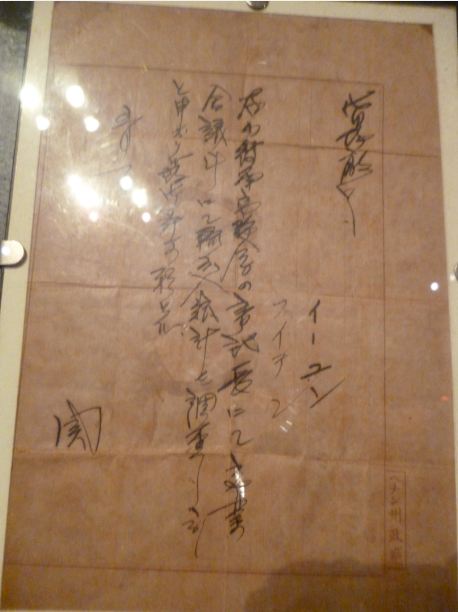
When I visited the Penang Museum in Georgetown, my husband said I must come and take a look at the Japanese documents and I did. I have never seen those Japanese documents before. They were travel documents, the same ones that Dr Abdul Wahab wrote about in his book which was published in 1987. 

When I was there a team of Japanese tourists had arrived and I could hear them conversed in Japanese which I didn't understand. I wanted to ask them about the war but decided not to as I had no first hand experience of that otherwise painful war.

I once had a Japanese grandmother in Penang when I was growing up. She was old and almost bent double. She spoke Malay. [Please refer to my post on Ami Aziz.]

These photos below are from the Penang Museum display at the Japanese section and also from the Governors section.




The Japanese surrendered at City Hall in Singapore on 12 September 1945. Another signing ceremony was held at the Victoria Institution in Kuala Lumpur on 15 September 1945. Thus, there are 2 dates recorded for the Japanese surrender in Asia.

History of Singapore

Singapore was the last British stronghold in Asia before its capitulation and the final Japanese takeover. As I read accounts of Singapore's downfall, I could not help but shed tears for its very difficult and fierce fight to defend all it could. I have 7 books on the war itself even though I am not a soldier nor do I work in the army. I have never joined any society that wears a uniform. I don't believe in war. I am a peaceful person.

As I read about Singapore and watched all the gory photos and also TV, I must say that the island of Singapore is very special. Its people too are very special. They will defend that island tooth and nail.

I also read that Colonel Adnan lost his life in the Malay Regimen, trying his best to defend Singapore.

A very sad photo that I often saw was a woman crying near her dead child, behind a rickshaw. Every time I saw that photo, I too would cry as it reminded me of Che-che who lost her 2 daughters and her husband through the war.


Cenotaph in Singapore
History of Singapore
Battle of Singapore (8-15 February 1942)
Civilian War Memorial
Kranji War Memorial
Former Indian National Army Monument The words inscribed on the war memorial were its motto, which is Unity (Ittefaq), Faith (Etmad) and Sacrifice (Kurbani).

Cenotaph in General

Madrasah Al-Mashoor

Who was Al-Mashoor/Almashoor? What is Almashoor? Where is Almashoor?

The Almashoor is an Arabic suffix and commonly connected to Islamic learning at the madrasah in Penang. The madrasah learning began at Masjid Melayu Aceh in Acheen Street. The madrasah was attended by mainly children as this was the preferred form of early education by the Malays (the other being education at Christian schools). Thus, the number of students grew and a new venue was needed and the madrasah shifted a few premises. 

The first headmaster of Madrasah Almashoor was Dr SMA Alhady's grandfather, Syed Sheikh al-Hadi.

Teachers at the latter more established Almashoor school included:

1. Dr SM Baboo, father-in-law of Dr Abdul Wahab bin Mohd Ariff.

2. Shaikh Sulaiman bin Bakar Rafee (born 1916, Makkah, Saudi Arabia-died 2004, Gelugor, Penang) - publisher, printer, bookshop owner, thinker, and Islamic educator. He taught Quran and Arabic at Al-Mashoor School.

The photos below are from Penang Museum display.

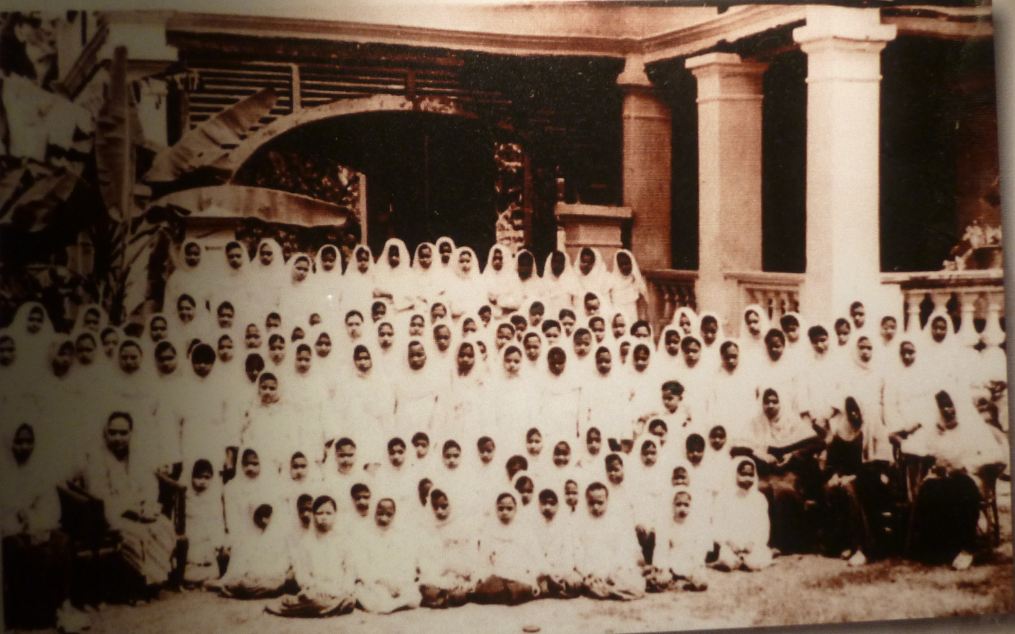
Early group photo of Madrasah Al-Mashoor in Penang (120 students and teachers)
History of Al-Mashoor School


In 1916, the Madrasatul Al-Quran was established in Acheen Street by Arabs for the purpose of teaching the tenets of Islam and the Quran to other Muslims. In 1918, this religious school shifted to Kampong Jawa Lama and changed its name to Madrasah Al-Mashoor Al-Islamiah. This school had shifted a few times to cater for the increasing number of students and is presently known as the Al-Mashoor Secondary School.


Pada tahun 1916, Madrasatul Al-Quran ditubuhkan di Lebuh Acheh oleh orang Arab khusus untuk mengajar Al-Quran dan Fardhu Ain. Pada tahun 1918, sekolah agama ini berpindah tempat ke Kampong Jawa Lama dan bertukar nama kepada Madrasah Al-Mashoor Al-Islamiah. Madrasah ini telah berpindah tempat beberapa kali bagi menampung bilangan pelajar yang meningkat dari masa ke semasa dan kini dikenali sebagai Sekolah Menengah Al-Mashoor.
Another venue of Madrasah Al-Mashoor. Looks like Tunku Abdul Rahman (centre) being accompanied by Dr SM Baboo (on Tunku's left).

External link

Dato Keramat

Who was Dato Keramat? Why was he called Dato Keramat? What is the significance about Dato Keramat? 

Dato Keramat was a saint/sage in Penang. He died long ago and is buried in Kubur Dato Keramat in Jalan Perak, near Jelutong. Tanah Perkuburan Jalan Perak is an ancient expansive Muslim graveyard.

Links for Dato Keramat:
Malik is a descendant of Dato Keramat. He can be contacted in Facebook:
https://www.facebook.com/max.ben.5/photos


Where is Dato Keramat?

Dato Keramat is also the name of the locality at the edge of Georgetown that leads on to the Botanical Gardens. Dato Keramat is a large and busy main street. In the old days, the tram line runs the length of Dato Keramat Road (Jalan Dato Keramat). The tram station was also in Jalan Dato Keramat. There is an old building there today which could have been the tram HQ for the trolleys. The tram was discontinued when buses became available in Penang.

Dato Mohamed Anwar Fazal Mohamed has more on the trams in Penang. I learned about the trams in Penang from Dato Anwar Fazal, who was once my grandfather's neighbour.

Links for Dato Anwar Fazal
Blog
YouTube
Wikipedia
USM


Tram in Penang back then. Photo from Penang Museum display.

Jalan Dato Keramat in Penang today (April 2012). Photo by me.

Baba Nyonya

Who are the Baba Nyonya? What is Baba? What is Nyonya? Where are they found?

I have 3 Nyonya aunts and they have descriptive names - Nyonya Elok (nice lady), Nyonya Cantik (pretty lady), and Nyonya smthg (tall lady). 

Who are the Baba and Nyonya? They are a hybrid generation formed from the Chinese and Malay. They are characteristically Chinese but with a Malay-word but Chinese-sounding lingua.

The dressing is slightly different from the typical Malay but there are similarities. Cuisine inclines towards the Chinese but can be eaten by the Malay, for example kuih lapisbubur cha cha and kuih kapit.


These photos below are from the Penang Museum display at the Baba Nyonya hall.

Nyonya kebaya labuh and kain sarong. The kebaya is worn with kerongsang. The Malay baju kurung is also long and is joined in front and needs no chained kerongsang except for a tiny piece to hold the neck pieces together. The Malay baju kebaya labuh is the same as the Nyonya baju kebaya labuh and uses a chained kerongsang. A metal belt is used to hold the sarong in place. The metal belt is used by women throughout Malaya and Indonesia.
Long brocade kebaya, possibly a precursor of the Malay baju kurung or kebaya labuh
Short see-through kebaya and kain sarong. This type of kebaya is worn with a camisole or some lighter undergarment. There were no bras at the time and the Chinese and Nyonya sewed and wore the kutang (a form of Chinese bra). The kutang is a white cotton undergarment and is usually made of cotton material as it is highly absorbent. It has tie strings and no hooks as the modern bra. Most Chinese and Nyonya ladies prefer the kutang rather than the modern bra. The kutang is fine for ladies with small breasts but it will not serve its function for large breasts. I learned of the kutang from my grandfather's Chinese maid and also from my father. It is a taboo to mention the word kutang.
Embroidery is done manually using a table-top sewing machine. I remember my grandmother also had this sewing machine in our Banda Hilir house.
Ceremonial burial dresses worn by Baba Nyonya

Francis Light

Who was Francis Light? What did he do for Penang?

He went to school in Britain. He and his friend scratched their names on a school glass window. This glass piece is on display at the Penang Museum. Was he a naughty boy? It was difficult to view the name inscription as the lighting was off the glass block. With insufficient lighting, glass on a wooden block just appears dark brown.

Francis Light was a young British gentleman who came to obtain a trading post for the British East India Company. He could speak English, Siamese and Malay fluently. Mastery of the 3 languages was his strongest skill and led to him winning an important island for the British - Penang. 

Some Malays and many others still hold the view that he 'stole' Penang from the Malays as he had no proper papers to say he had obtained a trading post legally from the Kedah sultan. Penang was then part of the Kedah Sultanate.


When Francis Light arrived in Penang, there were already many areca (nut) palm planted for commerce. Light then named the island Penang, after the highly prized areca nut. The Malay word for the arena nut is buah pinang (meaning penang nut or fruit). Thus, the island became known as Pulau Pinang (island of the areca nuts and of course the areca nut palm). The Penang flag bears the areca palm.


So visitors after Francis Light should expect to see a lot of the areca nut palms grown on the island. Do we still have areca nut palm on Penang island today? Yes, we still can see a number of these palms all over the island. The areca nut palm is both a commercial and a garden palm. The areca fruit is green and turns a bright orange when ripe. [Please read my other post on the areca nut.]

Francis Light named a few structures in Penang. He named 4 roads - Light Street, Beach Street, Chulia Street and Pitt Street. Chulia Street was formerly Malabar Street. Pitt Street is now Jalan Masjid Kapitan Keling.

Francis Light left a long Will. I did not read his Will at the Penang Museum as I did not have time. In my opinion, if he had obtained the trading post in Penang illegally then all his documents are also illegal and his Will is also null and void.

The other great person in Penang who also left his Will was the founder of Masjid Kapitan Keling, Cauder Mohinuddin or Kader Merican, the founder of the famed Merican clan in Malaya. I have a copy of his Will and have read it. His Will is valid in the civil court and also in Syariah court. The original Will may have been in Tamil and may have been translated for a specific purpose.

External link

Penang Free School

Tuesday, 17 April 2012


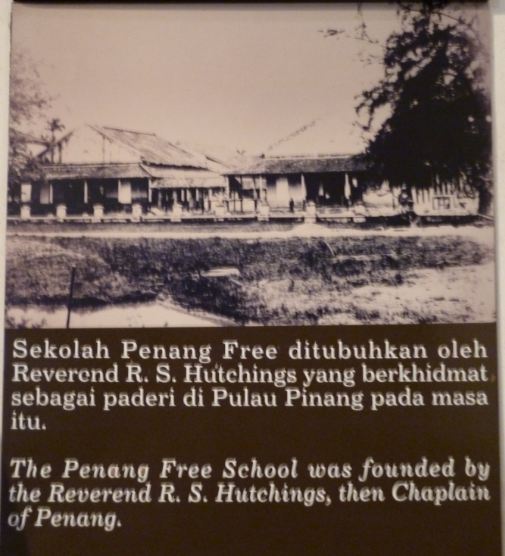
Penang Free School has a long history. It began in Georgetown in a brick building that looked like a castle in a quaint town. It existed there from 1816 to 1927 and a new school complex was then built in Green Lane when the old complex was overcrowded. Part of the old school complex/building (a half wing) was bombed in the Second World War. The remaining building of that bombed complex was renovated/restored and converted into the Penang Museum.


PENANG FREE SCHOOL IN GEORGE TOWN

Then ... (Photo from Penang Museum display)
In 2012
Then ... (Photo from Penang Museum display)


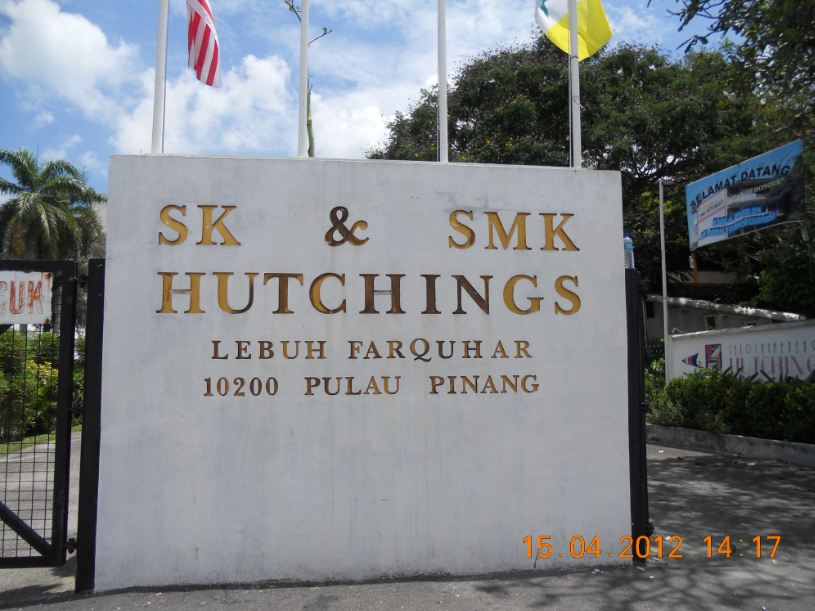
PENANG FREE SCHOOL IN GREEN LANE in 2012

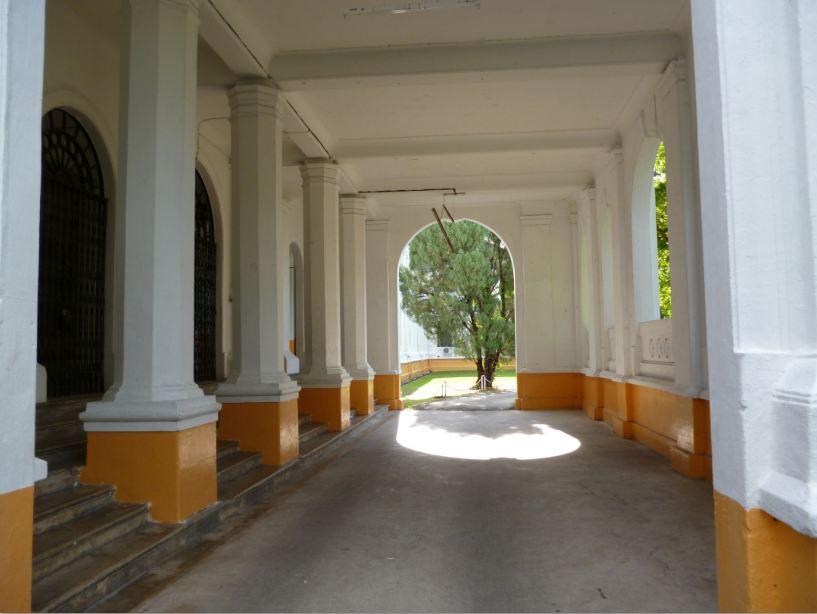
I requested permission from the security to enter and photograph the school in Green Lane (now Jalan Masjid Negeri). Here are some photos of the school at Green Lane. This was the first time I entered Penang Free School grounds to do photoshoot. Photos were taken by me with a Lumix digitalcam.


Sesqui-centenary (150 years) celebration of the PFS 1816-1966

-----
Update from me (2 August 2016)

Penang Free School will be celebrating its 200th anniversary on 21 October 2016 (1816-2016).

-----
Update from Lim Wee Seong (2 August 2016) via Blogger comments:

Good evening Dr. Faridah.
Penang Free School will be celebrating her 200th anniversary in less than 80 days.
The school has a fresh coat of paint since you last photographed it.
There is now a team of 6 4WD making their journey from PFS, Penang to Dittisham(UK), village of Rev. Robert S.Hutchings.
There will be a ceremony to commemorate PFS's founding father.
There is a Facebook page on the journey if you're interested. The team is now in China driving thru mountains, some close to 5000 meters above sea level.
Do visit the PFS archive if you hv the opportunity. There are artifacts, material, books that could possibly be the only one in existence.

Warm regards,
Wee Seong (batch '87)
Fortis Atque Fidelis
------
PFS in Facebook
https://www.facebook.com/edboardpfs/
The Editorial Board of Penang Free School
19 October 2013
The Grand Old Lady turns 197 years old in a couple days. 
The Editorial Board of Penang Free School
21 October 2014
The Grand Old Lady celebrates her 198th anniversary today (21/10/2014)
------
PFS Bicentenial Overland Drive in Facebook
https://www.facebook.com/groups/1237685622938241/