Thursday, 18 October 2012

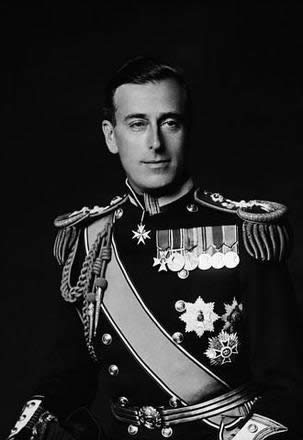
Louis Mountbatten

Q1. Who was Lord Louis Mountbatten?
http://en.wikipedia.org/wiki/Louis_Mountbatten

Admiral Louis Mountbatten (1900-1979)
(From Wikipedia: Admiral of the Fleet Louis Francis Albert Victor Nicholas Mountbatten, 1st Earl Mountbatten of Burma, KG, GCB, OM, GCSI, GCIE, GCVO, DSO, PC (1900–1979) was a British admiral, Viceroy of India and statesman.) Photo originally from the UK Government.

He served in the British navy in the Mediterranean, Burma, and India. Along with his father, they were the only father and son to hold the highest post in the British admiralty. Sir Winston Churchill liked him but Mountbatten made one remark against Churchill and that severed their ties.


Q2. What role did he play in this region?
He was the last British Viceroy in India before India's independence. He helped India to unite while setting Pakistan free. He worked with Indian leaders including Mahatma Gandhi, Pandit Jawaharlal Nehru and also Muhammad Ali Jinnah.

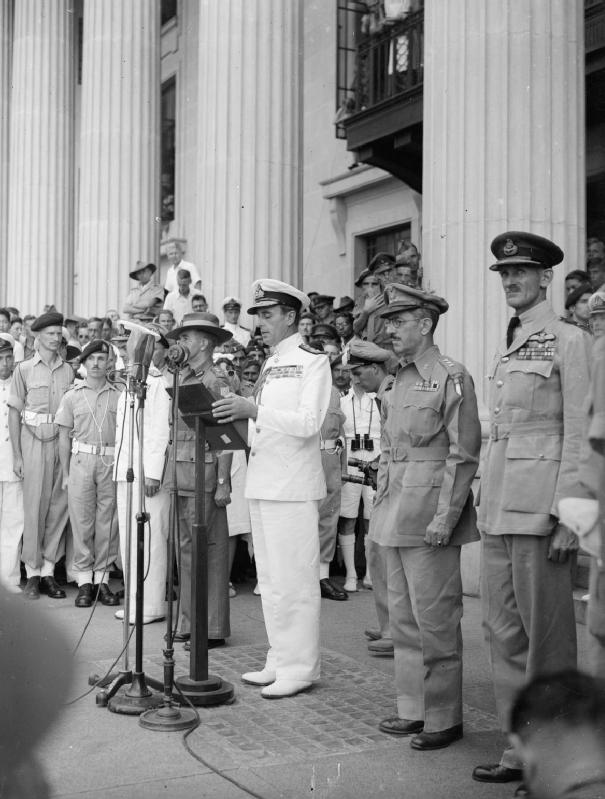
At the end of World War II, Mountbatten returned to Singapore as the Supreme Commander of the South East Asia Command to receive the surrender of the Japanese at City Hall on 12 September 1945. Even though he attended to Singapore's freedom, he was serving the interest of Britain. The British returned to reoccupy Singapore after the war - for another 18 years!


Prince Edward had visited Singapore before he ascended to the British throne. In Prince Edward's entourage was Louis Mountbatten. [What year?]


Admiral Louis Mountbatten addressing the Japanese surrender in Singapore in 1945. He is at the mike and in white. Photo from Wikipedia Mountbatten_address%2C_Singapore_1945.jpg
Photo was originally from the Imperial War Museum, Britain.

Q3. What happened to him?
He survived a bomb blast (while on his boat with his family) but he died before reaching shore.

Q4. Who planned his murder?
The IRA.

Q5. Did he have a family?
Yes, he had a wife, Edwina (Lady Mountbatten), and 2 daughters, Patricia and Pamela.

Q6. Where was he from?
Battenberg, Hesse in Germany. He was related to the British monarchs.

Wednesday, 17 October 2012

Independence of British, Spanish & Japanese Colonies in SEA


QUESTION 1

It is interesting to reflect on why Malaya achieved its independence 9 years later than nations which achieved their independence in the late 1940s. Have you ever wondered why? Why? Why was Malaya slow in achieving its independence? What actually went on or went wrong?

Philippines' independence: 12 June 1898 (from Spain)

Indonesian independence: 17 August 1945 (from Japan)

India's independence: 15 August 1947 (from Britain)

Malayan independence: 31 August 1957 (from Britain)

Singapore's independence: 31 August 1963 (from Britain); 9 August 1965 (from Malaysia)


QUESTION 2

Who were the people behind Malaya's independence?

1) Mustapha Hussain (second person in KMM; his youngest daughter is Insun Sony Mustapha Fenner. Insun Sony is in Facebook. Insun Sony wrote 5 books about her father.)

2) Yusof bin Ishak (he was the first President of Singapore; a relative of Mustapha Hussain; both were descendants of Datuk Jenaton)

3) Burhanudin Helmy (he was KMM leader; he was an early Malay doctor)

4) Other??


QUESTION 3

What was the origin of the Malay reformers for the Malayan independence?

1) Datuk Jenaton (Datuk Jenaton group is in Facebook. The history of Datuk Jenaton is at a different website given in Insun Sony's Facebook.)

2) Pagarruyung (the Pagarruyung palace was razed to the ground in the battle called Perang Paderi. Many Malay princes escaped to Malaya at that time.)

3) West Sumatra (the Arab descendants of the Minangkabau princes could have come from Aceh. The Arabs of Aceh had significant control over the region before the arrival of the Dutch East India Company.)

4) Other??

Saturday, 13 October 2012

The Nizam of Hyderabad

I first came to know of the Nizam of Hyderabad when I wrote the biography of Dr Ismail Mohamed Ghows, an early Malay doctor from Taiping, Perak. Dr Ghows was descended from the Khatibs of the mosque of the Nizam of Hyderabad.

Who was the Nizam of Hyderabad? He was the ruler of Hyderabad. He was once the richest man in Hyderabad. He had a huge palace called the Taj Falaknuma Palace, which means 'Mirror of the Sky' or Heaven on Earth, where he entertained his guests including durbar. The palace is sited 2000 feet above, fronting the sprawling city of Hyderabad below. However, the Nizam did not live here but somewhere else.  Hyderabad joined India in September 1948, and the Nizamhood ceased to exist. The last Nizam was the 8th. It was the 6th Nizam who came to stay in this place one afternoon and liked it and bought it for himself. Today, the grandson of the 8th Nizam is there to show the diamonds and emeralds to visitors.

There are more than 60 suites in the Taj Falaknuma Palace Hotel, Hyderabad. The most expensive is the Nizam Suite. There is a library upstairs which has the Guest Book of visitors to the Taj Falaknuma Palace from 1901 to 1951. This is a treasure chest of who's who in the 50 years of the Taj's existence then. The interior is Italian and is filled with Italian furniture, curtains, decor. The lamps and chandeliers are beautiful fittings. The dining room fits 100 guests and the Nizam himself, making it 101 people at a sitting. The dining table is beautifully laid out with lovely fresh bouquets of white and pink flowers and leaves.The metal drinking vessels and cutlery are Indian, with intricate carving. The Taj logo resembles that of the British East India Company, with 2 tigers holding the crest. The metal plates also bear the Taj logo.

The azan (call to prayer) can be heard in the background when dining at dusk on the deck at Taj Falakhuma Palace Hotel. That is probably from the mosque of the Nizam. I'm not sure whether it is the Mecca Mosque in Hyderabad or some other mosque where Dr Ghows ancestors had served. How many mosques belonged to the Muslim Nizam of Hyderabad?

When Hyderabad joined India, there were 22 districts - 12 went to the new state, 10 belonged to Nizam and one was French. Hyderabad was a strong and well-structured state and with a good economy. It had a market, a huge entrance gate to the city, a train station, and mosque(s). There were parades, etc. Hyderabad was a bustling and peaceful place. Its wealth was Hyderabad had the world's largest deposits of diamonds. So that was how rich Hyderabad was and how wealthy the Nizams who had control of the diamonds.

The 8th Nizam of Hyderabad's coronation was in 1967 but the Nizamhood fell apart. The Nizam escaped to Western Australia and lived on a vast piece of land that he bought. It gave him peace and reminded him of life in the Deccan. He lived in the outback, to escape everything that went on in Hyderabad. The Taj collectibles were auctioned off. Relatives had their share of the takings. But the Nizam didn't care about it - he wanted some peace in his life. One day, he told his secretary in his Perth office that he was going to the mosque. He went to the mosque and then went missing. Nobody ever found him.

It should be remembered that for many of the early Malay doctors, their ancestors came from Hyderabad. As far as I have researched, none belonged to any of the Nizam's family or relatives. It would be good news to hear if they are related. Then we can go to Hyderabad and explore the possibilities of a genealogical link.

Please take a look at this huge palace of the Nizam of Hyderabad in the video links below. It is now a hotel and is open to the public after 10 years of renovation. It is now restored to its original grandeur.

Friday, 12 October 2012

Dr Mustapha bin Osman

I received a message in Geni.com dated 13 August 2012 but I only read it tonight. The message was from Iszham Idris, whose granduncles were brothers Mohd Arshad bin Osman and Dr Mustapha bin Osman.

Iszham Idris also provided a family photo of Dr Mustapha bin Osman, which he obtained from his aunt, Aishah bt Mohd Arshad. I downloaded the photo from BOX tonight. It had Dr Mustapha bin Osman, his wife and daughter, posing outside a brick building, in the sunshine. The photo was taken in London. No other information was provided; the photo was undated and the occasion unknown.

Dr Mustapha bin Osman graduated from Hong Kong University in 1924. Dr Mustapha returned to Malaya in 1931. I would guess the photo was taken after 1924 and circa 1931, before WWII (1941). He served in the Japanese administration during the Japanese occupation in Malaya. Nothing is mentioned about his family (wife and children) during the war. Only his siblings were mentioned - they held posts in the Japanese administration during the war. He was in charge of the Lady Templer Hospital in Kuala Lumpur in 1952. It is not known how many times he returned to London.

His date of marriage is unknown but I had guessed a date from other sources. If he got married circa 1924, then the daughter would be at least 6 years old in the photo, but she looked older than age 6. If he got married circa 1931, then the daughter would be approx. 10 years old at the break of WWII (1941).

His daughter was already a big girl in the photo, probably around 10-12 years old. It is not known where and when his daughter was born, so it is difficult to date the photo. The photo was probably between 1935 and WWII (1941). That's my best guess.

Tuesday, 9 October 2012

Research on the Early Malay Doctors

Xlibris Book ID: 501452

Book Title:
RESEARCH ON THE EARLY MALAY DOCTORS 1900-1957 MALAYA AND SINGAPORE
Author: Faridah Abdul Rashid
Published date: 18 July 2012

Total no. of pages: 392
Wt of paperback = 0.71 kg


Cover  (17 May 2012)

Description of contents: 
This book tells how research was done for The Early Malay DoctorsA detailed account of the meaning of the word ‘Malay’ is given, in due recognition of the high status accorded to Malay Civilisation in the Malay annals and Chinese chronicles. The lives of the early Malay doctors were traced over nine years in modern Malaysia and Singapore. The techniques deployed to trace them are also masterfully explained. The sources of the doctors’ biographies are aptly described, which include interviews, narratives, family accounts, newspapers, publications, and contacting their former institutions, friends and associations. Apart from a brief one-page biography for each doctor, there are thirty appendices that contain tabulated information about these doctors, information about the early schools, medical institutions and hospitals at the time. A glossary and a list of index appear at the end. This book is a good resource for researching about how to research on The Early Malay Doctors. It indirectly teaches strategies and techniques which researchers may otherwise overlook.

Copyright (C) 2012 Faridah Abdul Rashid
Library of Congress Control Number: 2012903532
ISBN 13: Softcover:   978-1-4691-7243-9
ISBN 13: Hardcover: 978-1-4691-7244-6
ISBN 13: eBook:       978-1-4691-7245-3

Website:
http://www2.xlibris.com/books/webimages/wd/anz/501452/index.html
(temporary link)

http://www.earlymalaydoctors.com/
(official website, valid for 6 Sept 2012-23 Sept 2013; will cease by 23 Sept 2013)

Facebook:
http://www.facebook.com/pages/Research-on-the-Early-Malay-Doctors-1900-1957-Malaya-and-Singapore

Complimentary copy:
To request a complimentary paperback review copy, contact the publisher at 1-800-618-969. 

Booksellers (for resale)/Penjual buku:
To purchase copies of the book for resale, please fax Xlibris at (02) 8282-5055 or call 1-800-618-969. 

Online purchase:
Xlibris books can be purchased at Xlibris bookstore, Amazon and Barnes & Noble:
How to order from Xlibris
How to order from Amazon.com
How to order from BN.com

For more information, contact Xlibris at 1-800-618-969 or on the web at www.Xlibris.com.au.

Xlibris Corporation
1-800-618-969
www.Xlibris.com.au
Orders@Xlibris.com.au

Business card

Note to all readers:
This book is available for sale to anyone. There is no restriction for its sale. Anyone can buy this book anywhere, in Malaysia and outside Malaysia. This book can be purchased online wherever you are where you have Internet access. If you wish to sell this book in your bookshop, book fairs, or buy in bulk (beli banyak untuk penjualan semula), please email directly to Xlibris and request for discounted price. There is no fixed price for this book. The prices vary on the Internet because the currencies vary for different countries. Please check whether the book price is quoted in AUD$, USD$, Canadian$, Euro or UK pounds. You can sell this book at whatever price you wish. For Muslim resellers, you cannot sell above the 30% profit that Islam defines under sale of goods. Please do not exceed the 30% profit margin. All the books are mailed by air freight by the printer assigned by Xlibris. For 100 copies, the air charges are approximately AUD$345. All orders are paid by credit card. The books are only printed after you pay (Xlibris will call you, so have your credit card ready). Please check your orders when you receive the books, especially for any damages to the books - torn spine, torn cover, missing pages, etc and immediately inform Xlibris. The name of the printer varies (depending on your location) and is printed in the back pages of the book in fine print. When informing Xlibris of damages, please also mention the name of the printer, so you can rapidly get replacement for damaged goods. Also, please take pictures of the damaged goods that you receive, and email them to Xlibris for action. Do not keep quiet if you are unhappy.

Xlibris is now under Penguin Books, the largest book producer.

Tuesday, 2 October 2012

Maximum Reality


This blog has reached its maximum capacity - maximum # of pages, maximum # of photo uploads, etc. I cannot do much more beyond this free capacity that comes with Blogger. If I want to continue to upload photos, I will need to pay for server space, etc. What I can do now is remove some of the photos and also remove some of the posts.

Please download whatever info you need before I click DELETE, and check back here when you have time. I can create another blog like this but it will be too much work to maintain and update. I have altogether 37 blogs on Blogger.

This blog is more than 3 years old and now I can't grow it anymore. I will just maintain this blog for as long as it is useful and till I can get hold of the remaining early Malay doctors, wherever they are and wherever their families are today. I am still looking for 12 more early Malay doctors. I was able to contact one family 2 days back and am continuing to correspond - the family member contacted me through Facebook.

Since a major part of searching has been completed and I have published 2 books about the early Malay doctors, it is time for me to move on to do other things and help out with other research projects.

TQ all for your shared interest on the topic of THE EARLY MALAY DOCTORS.

Prof Faridah

Monday, 1 October 2012

Leprosy

I have written a post before about leprosy but I didn't have much resources then. This is an update on the resources. The link on Sg Buloh has the names of the British doctors who served at Sg Buloh from 1928 onward. A few of the early Malay doctors also served at Sg Buloh.

Resources on leprosy

CDC
http://www.cdc.gov/nczved/divisions/dfbmd/diseases/hansens_disease/technical.html#clinical

Stanford
http://www.stanford.edu/class/humbio103/ParaSites2005/Leprosy/index.htm

International Leprosy Association - Global Project on the History of Leprosy
http://www.leprosyhistory.org/english/gallery/gallerylepmuseum.htm

Culion Sanatarium, Culion Palawan 5315, Philippines

Dr Windsor Wade's collection of old books - Wade's Library

India map - Route of Commission

Indian leprosy gallery

Leprosy Settlement, Sg Buloh, Selangor, Malaysia (1930-present)

History of leprosy and research at Sg Buloh

Leprosy Sanatarium, Pulau Jerejak (1828-1969)

Leprosy Academic Network

Friday, 28 September 2012

The haunts of an old British barrack in Pengkalan Chepa


I lived at one of the lecturers' quarters at Maktab Perguruan Perempaun Melayu (MPPM) at Pengkalan Chepa in Kelantan, from May 1969 to December 1971. The college was a previous British army barrack which was first built and used by the British till the war broke out. It was then used by the Japanese army from 1941 till it surrendered in 1945.

My father was a lecturer at MPPM in the post-war, from May 1969 to January 1972. There were very few teachers then as I remember - (Tan Sri Dr) Yahya Ibrahim, Mr Ibrahim (deceased), Dr Sharifah, Mr ____ (Taufik's father), Mr ____ (Mimi's father), Mr Khalid (quiet family), Mr Jamaludin (deceased, Dr Faezah's father and my neighbour), Madam ___, etc. I didn't know what my father taught but probably Maths and/ Malay.

Anyway, when it was my turn to teach here on weekends for the Open University Malaysia (OUM) chemistry course, I thought to walk around and see the place for myself, and feel for myself how my father had worked here. I was slotted for the Sept/Dec classes, which were scheduled during the heavy monsoon period. Despite the rain and the perilous road conditions, I had to brave myself and drive through torrential rain and also zero visibility, to arrive for my classes on time. I could have died on the road, speeding at 90 km/h or more, in heavy rain. For such a high risk and weekend work, I was paid RM700-RM1,200/mo.

OUM now has a recently renovated blue-silver building in Lundang, in front of Balai Islam. Here are some old photos of the British barrack where I taught chemistry on weekends from 2005/6 to 2007/8. These are pre-war buildings, some are more recent though.

old big hall
new modern buildings and corridors
modern corrugated stunted Doric columns
old corridor with round metal poles, post-war, 1960s
ancient corridor with square wooden poles on base, old roof, pre-war
classrooms
a typical home of a British/Japanese army officer/college lecturer
modern surau and free parking

Thursday, 27 September 2012

What's up?

I am waiting for my 2 books to be printed. The delay is because the previous book representative at Xlibris left without my knowing and a new person took over as of yesterday. The books didn't get printed on time (intended for Aidilfitri 2012). I hope they will be printed in time for Aidiladha 2012. To those of you whom I have promised to send you the books (gratis), I will do that once I get them. I would prefer you to come to my house and pick up the books because then you get to select what you want (hardcover or softcover) and I can sign the book(s) for you. If you can't come, then I will mail them out to your work or home address, whichever is convenient. Once you get the book(s), please read it/them and provide me some feedback, especially errors/typos/etc so that when I do the next printing (insyaaAllah), I would have done the corrections (insyaAllah). I want to take this opportunity to thank everyone for their help and support of the research on the early Malay doctors and the 2 books. I have made many lifetime friends and I will keep fond memories of everyone I met and corresponded with. You can write to me and keep in touch in Facebook or other. If I forget you in future, it only means I'm getting old, so forgive me.

Those of you who are in medicine and allied health, you can send your biodata/CV and photos to me so I can upload a story about you here in this blog. The more students read about others, the better they can decide on what they want to be and make changes in life towards their goal. Otherwise, it is quite difficult to change our society without solid evidence of successes from predecessors. Transformation is a big word but means nothing if the means are not there. So I'm using this blog to move our society one step ahead, and by-passing politics, etc. I hope this blog is useful for many students who are grappling and groping, and parents who want the best for their children. I am a mother of 6 kids and bringing them up without good examples for them to follow was difficult but I had used Sherlock Holmes stories and had some success somewhat. Please come forward and let's help the children of today by giving them true information of our successes so they can see for themselves and follow suit. The young follow their parents. Parents can learn from other parents. A good society is one where everyone is learning from everyone else. Fighting about our differences gets us nowhere but builds more anger (sakit hati) and that can crumble any society. We are fortunate to live in Malaysia (or Singapore) as this is a peaceful country. But let us not forget that we must educate ourselves, our young and our society if we want to maintain this peace and harmony and live as loving human beings.

Monday, 24 September 2012

Views of USM Health Campus

These are views of the USM Health Campus from the 8th floor (top floor) of the USM hospital building, Hospital USM (HUSM). The land surrounding the campus is flat. It is flat for miles, right up to the South China Sea. Because it is this flat, it floods easily everywhere except for built-up areas, hillocks, hills, foothills,  and the central mountain range in Jeli (~2 hours from Kota Bharu).

These views were taken while my daughter was admitted for tympanoplasty, to patch her eardrum, after she cleaned her left ear so hard and it bled from the burst eardrum. She had gone swimming at a ladies swimming pool in Bangalore, India. The surgery and recovery took 4 hours. So I took photos instead to kill time. I am no heroine when it comes to heights, so my husband had to hold me and direct me where to point the camera. I am scared of heights! My office was on this floor too back in 1983/84, in the left wing or Wad 8 Selatan. I was 3rd in rank for looking after the administration for this hospital then. Then I left for Australia to do my PhD in Feb 1985.

It was also on this top floor, in east wing (Wad 8 Timur), that Prof Salem and I taught programming to HUSM staff. That was the beginning of laboratory computerisation and hospital information system (HIS) for us. Today, we have our own in-house LifeLine for HIS and also for electronic medical records (EMR). We are presently on to the Case-Mix System from UNU-IIGH, despite the cons of the Case-Mix System. We think we can design a better Case-Mix System later but that needs a lot of discussion, and that is another story. I will be fully retired.

Big roofs in the foreground are those of the present (old) A&E Dept (a new one will open soon). The USM Dental School is the white-orange building with a blue dome. A covered bridge (at left) links the Dental School to the Medical School complex. The water tower is next to the surau (can see its minaret, top left corner). The pink roof (top left corner) is the old Sports Complex.
USM Medical School complex, Phase II, built in mid-1990s. The end of the campus is Sg Datu (near the skyline). The hexagon roofs are the lecture theatres. There are 3 such roofs and 5 lectures theatres. The 2 parallel roofs in the foreground are lecturers rooms. The long blue plastic strip joins the roofs. On the right are the rooms above the old Oren Mall. The previous shops of Oren Mall have now been renovated and converted to USAINS spaces for private ventures.
HUSM Students' Exam Block (big roofs), kitchen (lower roof with air vents), dhobi and incinerator (with long chimney). The north wing (Wad Utara) of HUSM can be seen at left edge of the photo. The airport in Pengkalan Chepa is towards the skyline and to the right.
A new shopping place called the Kubang Kerian Square is in front of USM Health Campus. There is Mydin and everything else. You can get everything here. All food is halal in Kubang Kerian except at a few ethnic eateries. This new shopping place is convenient for both USM staff and the patients' families. There is no need to stay in Kota Bharu. Kubang Kerian and Kubang Kerian Square have many places to stay. The roofs in the foreground are the Students' Exam Block. The lower roof beyond that (with exhaust fans and vents) is the recently renovated hospital kitchen.

Other photos of USM Health Campus

Close-up of the students' hostels viewed from the Medical School bridge to the library. The water tower is behind the students' hostel.

Distant view of the students' hostel from Medical School at the bridge to the library
Dewan Utama, the main hall for most public lectures on campus
School of Medical Sciences, USM Health Campus in Kubang Kerian, Kelantan since 1990
The Director of Campus office has moved to a new complex near the new playing field in early 2012
Old photo of the water tower in 2010. The students' old hostel block is behind the water tower. The campus surau is to the left of the water tower (not in pic). A new block of students' hostel was later built adjacent to the water tower and was commissioned in September 2012.

Courses offered at USM Health Campus:
http://www.usm.my/images/stories/pdf/Health_Campus.pdf

Sungai Datu

This river is behind USM Health Campus. The river swells during the monsoon season and appears as in the photos below during off monsoon season. Many have used photos of the river for book covers, etc. There was talk of building a bridge from USM to the other side of the river but that has not materialised. The concrete slabs you see are for the intended bridge. Since it was known that the bridge was going to be build, many people bought land on the other side of the river, for setting up homes. However, since the bridge has been built, the landowners are frustrated. Land across this river is no longer cheap. The other side of the river is low lying and floods easily, and not many people know, so they buy up. When it floods, the water reaches waist deep. I don't see any point in purchasing land on the other side of the river and prospective buyers should know. To buy land in Kelantan, it is worth coming here during the monsoon months and then decide. There is no point crying after buying. A rule of thumb when buying land here is to look for the nipah palms. These palms thrive in marshland and signifies a waterlogged land. So don't buy land where you can clearly see the nipah palms unless you don't understand what they signify.

The present USM Campus is sited on very high grounds. If I recall correctly, they had to top up the land to about 50 feet high and then build the hospital buildings, the teaching complexes, etc. It does not flood on campus but the river water overflows and floods its river banks. My brother-in-law's family lives on the other side of the river. They were cheated into buying land there under the poor families scheme (PPRT). He has 10 kids, and during the flood, they all have to wade in waist deep water to go elsewhere. It is terrible to have to cope that way.

View of Sg Datu from USM Health Campus. There are nipah palms lining the river banks. The concrete slabs are meant for the proposed bridge.
Clear blue waters of Sg Datu. I have heard of crocodiles thriving in this river.
Another view of the Sg Datu river from USM Health Campus

Working definition of Malay

I'm copying this here from my old Zimbra Inbox before I lose it.

----- Forwarded Message -----
From: "Prof Faridah Abdul Rashid" <faridah@kb.usm.my>
To: "Akademik" <akademik@warga.kck.usmnet>
Sent: Wednesday, November 10, 2010 10:38:28 AM GMT +08:00
Subject: [akademik] Working definition of 'Malay'

Salam
Back to the definition of Malay.
This is my working definition of the term 'Malay':
1) Has a Malay or Muslim name
2) Speaks Malay most of the time
3) Eats Malay food most of the time
4) Dresses to cover most part of the body
5) Professes Islam as a religion and way of life; the male goes for Friday prayers
6) Has Malay/Indian/Chinese parents born within the Malay World who are also Muslims
7) Has pan-Asian facial features with flat/high nose bridge
8) Has fair to dark complexion determined by his/her genes
9) Has black/brown/hazel-coloured iris depending on genes inherited
10) Has short stature, about 5 feet but not higher than 6 feet
11) Has black/brunette/pale orange (warna sireh) straight/wavy/frizzy hair depending on genes inherited
12) Greets by salam gesture (holds the palms of the friend in his/her palms for a few seconds) or similar
13) Has a headgear most of the time - the ladies wear a scarf, serban or tudung and the males wear a black songkok, white kopiah or serban
14) Observes Ramadan fasting most of the time
15) Goes for hajj pilgrimage at least once in a lifetime
16) Eats halal foods and avoids non-halal foods (pig products and alcoholic beverages)
17) Does not advocate gambling, prostitution and free sex
18) Marries a wife and can possibly have up to 4 wives at a time but does not have mistresses or call girls and the like
19) Has a halal source of income
20) Pays zakat of mainly 2 kinds - zakat fitrah and zakat harta\

Kota Jembal, Kelantan

If you reach the Kubang Kerian traffic lights, and proceed towards Bachok (beach), you will pass by a place named Kota Jembal. As you approach the traffic lights at the Kota Jembal junction, the marketplace will be on your left. Why is Kota Jembal important in Kelantan Malay history?

Kota Jembal was one of the many 'kingdoms' or 'rajadom' in the early vast Malay kingdom in Kelantan. Kota Jembal is a region on the eastern bank of Sungai Pengkalan Datu. As a landing place or pengkalan, it was (may still be) a place of trade. Pasar Kota Jembal is the present marketplace in Kota Jembal, an ancient Malay city. Its architecture is a mark of the ancient Malay architecture, very unique to the Kelantan Malay craftmanship of this region, and I don't think it is found outside Kelantan - I have not seen it outside Kelantan.

Next time you come and visit Kelantan, come and visit this ancient princely city of Kota Jembal and see its marketplace, Pasar Kota Jembal (they didn't have malls in ancient cities). I have not been around on foot in this city, but my vibes tell me, this place is 'very ancient'. Looks spooky too but I didn't see any big blood-shot eyes. That's ancient legend.

The people of Kota Jembal were religious people (Hindu in ancient times but now Muslims) and some of the descendants of that early kingdom are still around and rule this state. They are related to the other Malay royalties of a large Malay kingdom in this region. The ancient Malay kingdom spreads from southern Siam (now Thailand) to Kota Jembal and beyond. Sungai Pengkalan Datu opens into the South China Sea. There is an artificial sandbar built by the villagers to dampen the waves, to avoid erosion of the beach front. Many Malays settle at this rivermouth (muara). The homes are wooden and built high on stilts as this rivermouth is flooded during the monsoon season. Malay people from Cambodia and also from Malacca probably came to Kota Jembal via this rivermouth. The Malacca migrants settled at Pulau Melaka (a large sandy island in Sungai Pengkalan Datu) and others settled on the river bank at Kota Jembal. Both cities are princely cities. I would say that this part of the Malay region probably contains inhabitants who are descended from ancient Malay royalties, and thus we see the prefix 'Raja' and 'Puteri/Putri' in their names. Most have dark skin as they are descended from ancient Indian forebearers. However, the ones descended from the Cambodian Malays have fair skin - they carry the prefix 'Wan' in their names.

Prayer place at the entrance to the Ramadan bazaar adjacent to Pasar Kota Jembal.
I can't make out what the buildings are. The Ramadan bazaar is in the centre.
Ramadan bazaar in full swing in 2012
After the Ramadan bazaar, after the fasting month was over, back to normal.
Fenced marketplace, this is Pasar Kota Jembal. Note the unique architecture. Looks like a lodge or a princely residence. This is an example of fine Malay architecture. I like it very much.

There is a meeting of the royals of Kota Jembal on 6 November 2012(?).

eBook

The eBook is very cheap, at USD$3.79 per download.

Research on the Early Malay Doctors 1900-1957 Malaya and ... 
http://ebookstore.sony.com/ebook/faridah-abdul-rashid/research-on-the-early-malay-doctors-... 
Jul 1, 2012 ... Research on the Early Malay Doctors 1900-1957 Malaya and Singapore. by Faridah Abdul Rashid; Avg. Rating: Not yet rated; Publish Date: ... 

Sunday, 23 September 2012

It's gadgets time again!

It is time for me to try different gadgets for this blogspot/website. Sometimes this entire blog will disappear. Do not panic. I am not an expert blog developer but it pays to try a few things. I will add a few things. So far this website is not worth as much as my other website, which is worth USD1mil. So don't panic. Stay calm and come and visit another time when this website is doing fine. I will make a copy of this blog before I venture into gadgets. Usually I will destroy my entire blog when I fall asleep, only to discover I have lost my blog when I wake up! It happens. So don't expect it doesn't happen. Unexpected things happen. My eldest daughter keeps reminding me to save a copy of this blog - I have never done it. I will now save a copy just in case this entire blog disappears. There's always a 3-month's grace in anything electronic before it totally gets deleted from the Blogger server, so there is still a safety margin or grace there in itself. Tak payah nak takut-takut nak cuba sesuatu yang baru,. That is what IT is to me. You don't try the unexpected, you will never get anywhere unexpected.

How to export/import a blog & How to save (backup) a blog:
http://www.youtube.com/watch?feature=player_embedded&v=2A2NATnKhss

I have saved this blog as an XML file, which is 6.76MB.
There are altogether 734 posts, of which 64 are drafts and 670 are published.
Published comments 164
Pageviews today 278
Followers 17
This blog has existed for 3 years, 3 months and 3 days.
The blog hit is presently 73,825.
This blog ranks at 5,382,401 (#1 is best).

I have created the TEMD Toolbar using Alexa, but it only works in Firefox and IE.
You can write a review about this blog (click the Alexa review button at right).

Resources on Accessible Web Design:
http://www.washington.edu/doit/Resources/web-design.html

Ismail bin Abu Sittee

I was browsing the USM collection of videos hosted by the Engineering Campus and saw this Hari Raya 2012 video. I decided to give it a try to see if the video runs on my laptop. It does run in HTML mode. It doesn't seem to work in the FLV mode (wonder why).
http://u-channel.eng.usm.my/videos/1406/klip-raya-kampus-kesihatan-2012

Anyway, half-way through the video, I saw my former schoolmate/classmate(?) from Std 1 at Sultanah Asma Primary School in Alor Star, Kedah - that was 1965. She is Asma bt Ismail, now Prof Asma Ismail.

I managed to write to her just before my book went to print. I was hoping to fix a passage for her in my book but maybe because I was hurrying through the last stages of editing, I totally omitted her info about her father. Who was he?

Asma's father, Encik Ismail, as he was known, was an educated man who served in Jitra, together with Tan Sri Dr Raja Ahmad Noordin (arwah). Tan Sri had requested me to find out about one man who appeared twice in 2 of his photos. At the time, it was a difficult request to fulfill and I thought it would be next to impossible to locate a man from 1965 today. His features would change and he may not look like he did in the photos that Tan Sri gave me. I was worried but I promised myself I would search for the man and made a photographic imprint of him so I could spot him if I saw him (a very big hope).

One day, I was going through a list of my schoolfriends from childhood; there were a few I remembered from 1965, in Std 1. One was Fauzaih Fakaruddin. Another who I knew much later at Tunku Kurshiah College (TKC) in 1974 and right through Form 6 at Methodist Boys' School in 1976, was Asma Ismail.

Asma's mother worked for my maternal grandfather, Dr Che Lah bin Md Joonos, a Penangite from Jelutong. I met the mother on a trip to the community clinic (Klinik Desa) at Sungai Dua. She worked there. When I met her she asked if I was Dr Che Lah's granddaughter and I replied yes. I had never met her before.

I later visited Asma and her family at home. I met her mother again, her 2 brothers and herself (eldest). Her father was not at home when I was there but for a brief time. Then her father returned and that was the first time I met him. He looked a bit like Tunku Abdul Rahman and I got confused. Why would Tunku appear in Asma's house? Then I was told that he was the father. In case you haven't noticed, the men in those days, they all wore their pants up high on the waist - I think it was a trend at the time.

Mr Ismail, as I remember him, was a quiet man of few words. He didn't say much. I probably told him who I was and he knew. Then I left. Her 2 brothers were my brothers' friends.

When Tan Sri Dr Raja Ahmad Noordin requested for me to search for a 'Mr Ismail', I hadn't the faintest idea that he was Asma's father. Time was a factor and he had changed. I couldn't figure out that this Mr Ismail, father of Asma, was the same man that had worked with Tan Sri Dr Raja Ahmad Noordin at the RHTC in Jitra, Kedah. It was only when I emailed Asma to ask about her father that we both discovered the missing link! That was after 9 email exchanges. It was great news for me but I could not get the new info in time into my books on The Early Malay Doctors. Asma's father died in 1992.

This is Asma's description of her father:

My father was Ismail bin Abu Sittee. He was the chief public health inspector of Penang. While in the Health Centre in Jitra Kedah he served as phi and health trainer under Raja Nordin and then under Siti Hasmah. My father was at Jitra till we transferred to Penang in 1969 when I was in Std 3. not in 1964. He was transferred to pg to take up the post of chief phi. He was a health trainer, a very good one at that. My public speaking ability in all probability followed his footsteps. I cannot make out the pictures sent. Pls resend. I have his pictures at home but would not be able to find the old pictures. My father was at Trengganu but never in Kelantan. He was big in malaria eradication but am not aware of yaws. He hardly spoke of yaws. I am privy to work done by my father in malaria since he brought home the gurus in the field from WHO. I met them all. I hope have shed some light on my father. Thank you for re living nostalgic memories. Pls ensure that the facts are right difficult as it is to dig up the past. Raja Nordin punya son Norman may shed more light. We played as kids in the Health Centre at Jitra. Don't think he remembers me. wassalam. 
Asma

Asma's father had also worked with Tun Dr Siti Hasmah in Kedah. I guess he would be in some of her earlier pictures taken in Kedah, before 1969. I have to ask Arkib Negara Malaysia if it can search for Encik Ismail, formerly at RHTC, and later as Chief Public Health Inspector in Penang. I will also need to search my grandfather's old photos for Encik Ismail.

Asma's father, Encik Ismail bin Abu Sittee (left) and Norman's father, Dr Raja Ahmad Noordin, at the RHTC in Jitra, circa early 1960s.

Dr Raja Ahmad Noordin is seated at the table edge. Encik Ismail bin Abu Sittee is standing at left, helping out with filming of the Malayan Yaws Campaign in Kelantan, in early 1960s.
Portrait of (Tan Sri) Dr Raja Ahmad Noordin bin Raja Shahbuddin, in 1965 when he went to UC Berkeley to  complete his MSc in Public Health. His Academic Supervisor was Prof Beryl Josephine Roberts.

Asma's mother, Hjh Aminah bt Yusoff, is linked to the first Malay doctor, Dr Abdul Latiff bin Abdul Razak.

Hjh Aminah Yusoff (photo was obtained from an A4 collage of female descendants of the Bugis Daeng warriors contributed by Zainuddin Dato Yahya). Dr Abdul Latiff was Hjh Aminah's granduncle.
Prof Asma Ismail (photo frame created from USM Aidilfitri 2012 video made by Zamri et al, UKAST). Her great-granduncle was Dr Abdul Latiff.

RAWATID

Assalamualaikum w.w.


KLINIK RAWATAN ISLAM DAN TRADISIONAL PUSAT ISLAM KAMPUS KESIHATAN (RAWATID)

Sukacita dimaklumkan Klinik Rawatan Islam Dan Tradisional Pusat Islam Kampus Kesihatan (RAWATID) telah dibuka pada setiap minggu mengikut maklumat seperti berikut:

Hari : Setiap hari Sabtu (9.30 pg hingga 12.30 tgh)
Tempat : Masjid Kampus Kesihatan USM

Warga kampus dan masyarakat sekitar yang mempunyai masalah penyakit terutamanya yang berkaitan dengan penyakit kerohanian dan gangguan makhluk halus dipelawa untuk mendapatkan rawatan tersebut. Rawatan ini adalah dengan kerjasamasa Darussyifa’ Kelantan. Klinik ini tidak menetapkan sebarang bayaran. Hanya Tabung Derma disediakan bagi pesakit yang ingin menyumbang derma ikhlas. Untuk mendapatkan rawatan bolehlah terus datang pada waktu klinik dibuka atau bagi mendapatkan maklumat lanjut bolehlah menghubungi Pusat Islam Kampus Kesihatan USM di Ext: 1067/ 1068/ 013-2331150 (Ustaz Rosdian)

Rosdian Hassan
Penyelaras Klinik

Malay beliefs and concerns

I will share with you some of the emails I received re Malay beliefs and their concerns. I cannot interpret them nor do I understand everything but I will share them here with you. You can interpret them.

[1] 8 December 2010

sekadar bertanyakan pendapat..

kebanyakan bpendapat,org tua2 dulu banyak 'memakai' dan bnda tu manjadikan beliau susah nak meninggal dunia kena 'pelepas' dengan barbagai cara.Sejauh mana benda ni benar dan bagaimana pula dengan isu 'menteri' dan 'main makyong' itu ..adakah benda ini blh diambil kira atau secara kebetulan??Pohon penjelasan dari yang lebih arif...nauzubillah drpd dilaknati Allah. 


[2] 8 December 2010

Tak kalamulo, sebutkato muluk, sederak pado hati, 
melaye pepeh, bogolek mari, jatuh kemano, jatuh kemato  melerat ke hati,
asal titeh anak rajo mudo, mano mari asal segunung tujuh, tujuh puteri,
puh kane, puh kiri....

Ilmu ore dulu-dulu. Ado (Banyak tahyul+ khurafat)
Memakai tu Wajib...Kalau tak pakai itu HARAM.. (tak tutup aurat)..
Keyakinan kepada Allah lebih utama.
(Ilmu hitam dan janji Iblis pengoda yang akan menyesatkan umat Anak Adam sehingga akhir zaman).


[3] 8 December 2012

Tengok keadaan
Makyong ,menora, wayang, kulit, selampit adalah sejenis hiburan terdapat juga unsur khurafat.
Mainteri, bageh tu untuk rawatan sah guna makhluk halus

orang dulu-dulu orang biasa pun "memakai" lebih-lebih lagi ahli dalam bidang tersebut diatas.
Ada kumpulan makyong sekarang ini menyatakan mereka tidak mengamalkan unsur khurafat.
mereka cuma lakonkan sahaja upacara-upacara yang diamalkan oleh orang lama-lama.


[4] 8 December 2010

Kita tak leh blame orang lama, kerana itu aje ilmu yang digalakkan oleh Inggeris selama 500 tahun. Orang baru ni patut dipersalahkan, kerajaan kita dah banyak membantu. Tapi yang balog liat tu dok macam tu juga.


Alam Melayu

Back in 2010, I was still struggling with the definition of the word 'Malay' or 'Melayu'. I visited ATMA UKM website and studied about the Malays there (online). This is the ATMA UKM Site Admin's email to me at the time. It is a good site and has a lot of stuff about the Malays.


Subject: Malaycivilization.ukm.my Portal Transformation
Sent By: "malaycivilization portal" <malaycivilization.portal@gmail.com>  
On: November 20, 2010 3:17 AM
To: Prof Faridah


Dear Faridah Abdul Rashid,

Greetings of the Day!

Pleased to inform you that Malaycivilization.com portal has been transformed successfully. This portal was developed by the Institute of the Malay World and Civilisation (ATMA), Universiti Kebangsaan Malaysia in 2002 to meet the information needs of local and international researchers in Malay world studies. It is now ready to be accessed by users at its URL address malaycivilization.ukm.my with lots of content and interactive features like blog, discussion, review etc.

Please explore it and provide your valuable feedback or suggestions.

Thanks & Regards,
Site Administrator

Useful links:
Institute of Malay World and Civilisation (ATMA): http://www.atma.ukm.my
Prospectus ATMA: https://smp.ukm.my/kemasukan/gsb/pdf/ProspectusATMA.pdf
SARI (ATMA journal): http://www.ukm.my/sari/

Contact:
Director
Institut Alam dan Tamadun Melayu (ATMA),
Universiti Kebangsaan Malaysia, 
43600 UKM, Bangi, Selangor Darul Ehsan
Tel : 603 8921 5254 / 5280 Faks : 603 8925 4698
Website : http://www.atma.ukm.my
E-mel : pghatma@ukm.my

USM Convex 46

Here are the photos of the promotion for the book, Research on the Early Malay Doctors 1900-1957 Malaya and Singapore at the USM Convex 46 in Penang on 19-23 September 2012. The students did the promotion (Fatihin - Science Forensic 2, Zaki - Biomedicine 2, Aiman - Sports Science 2, Shaada - Medic 2 and Vani - Medic 2). This is the first public display and promotion of the book. Will be doing more promotions in future, insyaAllah.

Contact person:
Ahmad Fauzan Zainal Bakri
Year 2 Medicine
USM Medical School
16150 Kubang Kerian, Kelantan, Malaysia
syabab_addeen@yahoo.com


USM Health Campus booth
Theme: Alternative Medicine


Book on display at the first booth, Introductory Booth ...