Sunday, 15 April 2012

Penang, Pearl of the Orient

What is Penang? Where is Penang? Why is it Penang? How did it become known as Pearl of the Orient?


I visited Penang Museum today, 15 April 2012. I have never been inside this particular museum because I did not know its correct address, location and building. I read about it and wondered but never dreamed I would even step foot inside this tiny museum. Today, my husband and I bravely made our first visit to this museum.

Background of Penang Museum. (Photo from Penang Museum display)

At the museum, I discovered that Penang was first called Pulau Ka Satu (meaning the first island). I would have certainly named it Pulau Pertama. Why did they call it Pulau Ka Satu when they were referring to it as the first island?

Penang lies at the northern entry point into the narrow shipping lane called the Straits of Malacca. It is the only island and the largest island at the northern tip of this shipping lane. Early traders used it to bring commodities from Sumatra. The Indians arrived at the island and traded spices, gold and fabrics. The British also arrived at its shores when in search of a suitable trading post in the far east. Are we really in the 'far east'?


What else do we expect to see or find in Penang? There are a lot of things for the tourists to see and admire. By tourists I mean people who have never visited the island, not stayed on the island, and have not done much walkabout or footwork on the island. 


Penang must be seen on foot and the eyes and neck must be prepared to see and be prepared for some neck twisting because some of the buildings and the clock tower are high structures. Don't try to look up at the structures if you have neck injury. You must have good vision and be able to see normal colour (ie not colour blind). Penang is really colourful and you will need 2 cameras or 2 battery packs if you don't want to photoshoot twice. You must be prepared and already learnt to do 'white photography' because many buildings are painted white, and they shine brightly under the hot sun. If you have done 'snow photography' that will help. If you have a slow-capture camera, your images will be blurr. I use my new Lumix camera at 14 megapixels and each photo is 5MB. My old Nikon camera at 12 megapixels cannot capture what I captured on my Lumix. The Lumix is a fast camera and very good for photography, even from a moving car.


Initial E and O Hotel (Photo from Penang Museum display)


The present Eastern and Oriental Hotel (E & O Hotel), Jalan Sultan Ahmad Shah, Georgetown, Penang. The E and O was the first hotel built on the island by the British. Two early Malay doctors were involved with the E and O. Dr Che Lah's last 2 children got married at the E & O in the 1980s. Dr Abdul Wahab's only son died in a motorcycle accident after crashing into a part of the E and O Hotel.

The Victoria memorial clock tower in Georgetown, Penang. (Photo from Penang Museum display)

The Victoria memorial clock tower today

Convent Light Street, Georgetown, Penang

Court building, Georgetown, Penang
Dewan Sri Pinang, Georgetown, Penang
Fort Cornwallis, Georgetown, Penang

[Little India in Georgetown, Penang is a separate post.]

Saturday, 14 April 2012

Visit to General Hospital Penang (Hospital Pulau Pinang)


I returned to Penang today, 13 April 2012. My husband and I pushed off from our house in Kubang Kerian, Kelantan and we reached Penang (island) at 3.30 pm. I went home to perform Zohor prayer and to fill up my water bottle straight from the kitchen tap. Penang has chlorinated domestic water supply and my sister says it is safe for drinking from her kitchen filter.

I then left my late mother's (now my sister's) Penang home and headed for General Hospital Penang (GH Penang). When we arrived at the traffic lights in front of my late grandfather's old clinic, Glugor Clinic - now Teh Dental Surgery, I called Mr Tan Hock Chuan from my handphone (h/p). I informed him I was in Penang and was heading towards GH Penang. I told told him I knew half the route to get there. He said to go around the racecourse and take a right turn to GH Penang. I had no idea of the roads and names so we decided to try our instincts.

From Jalan Sultan Azlan Shah we went down Jalan Masjid Negeri (old street name was Green Lane) and took the flyover to Jalan Air Itam. We went past my old school, Methodist Boys School, and stopped at the first traffic lights and the 4-junction. We didn't know where to go from there. But there was an ambulance just in front of us and it turned into Jalan York on the left at the traffic lights and we jumped at the idea to follow the ambulance. Where else would the ambulance go if not to GH Penang? When the traffic lights turned green, we turned left into Jalan York and saw the ambulance again. There was one car between the ambulance and our car. We waited for the traffic lights to turn green and the ambulance sped into the road after it turned right. It was lost from our sight. I noticed familiar surroundings. We were already by GH Penang by chance!

Main entrance and Block A, Hospital Pulau Pinang.

'But where could the main entrance be', I wondered. My husband said we'll go down this way and he swerved the car left into a small entrance (main gate) of GH Penang. I didn't know whether it was public entrance or not as I didn't have time to read the notices, if any. I had thought we came in the wrong way. We went straight down the road in front of Block A trying to find an empty parking lot. We went right to the back and side of Block A to the pink block next to it. I called Mr Tan Hock Chuan to inform I had arrived in the parking lot and asked him where should I park my car. He was already waiting for me in the parking lot at the end of the Ambulatory Care Centre (ACC) and asked for my car details. I said my car is a silver-pink Toyota Altis DBJ 7113. He said he was in the carpark too. I noticed him in light green shirt - he was on the phone and I quickly got down from the car to meet him. I waved at him and he knew it was me. He found a parking lot for my car and that relieved our problem instantly. It was hot out in the parking lot. Mr Tan and my husband exchanged greetings and we quickly went inside the pink building where Mr Tan works.

Mr Tan brought us to the 4th floor to show us some old photo frames in the hallway. I took a close look at all the photos on the wall and guess what I found? There was a group photo that had Dr Ahmad Ezanee Merican! Can you believe that?! A photo of a young Dr Ahmad Ezanee Merican, smiling among his friends. he appeared so healthy that I find it hard to believe that he had passed away of three cancers.


Mr H. C. Tan
Affandi and Mr Tan
Dr Ahmad Ezanee Merican (27) is standing at 2nd right. Photo from GH Penang, circa 1956-57. Reproduced with permission of GH Penang, 13 April 2012.
Biodata of Dr Ahmad Ezanee Merican: He was born on 17 April 1929, in Penang to Dr AO Merican and Che Pok bt Abdullah. Dr Ahmad Ezanee Merican graduated from the University of Malaya, Singapore, with MBBS in 1956. He was popularly known as Dr Ezanee Merican. Following graduation, Dr Ezanee Merican served at the Penang General Hospital for his housemanship (1956-57). He married in Johor on 12 December 1957. He quit government service to practise privately at his late father's dispensary in Kota Bharu, Kelantan.

Mr Tan then brought us to the 3rd floor. He introduced me to the guard at the entrance to the directors' offices. We went to see the director but she was busy with a meeting. We talked to the girls at the director's office. Then we sat down to wait. Another man in blue shirt came to ask about my work (writing) so I told him about my work. I told him I had collected information about 43 early Malay doctors and prepared their biographies, and that I researched them for 9 years. 

At the entrance to the directors' offices. Mr Tan is at right.
Juliana Mat Lazim and Mr H. C. Tan
We then sat down to wait to see Dr Yasmin. In the meantime, I called and spoke to En Mohd Hashim. Juliana had asked for my business card and I gave her my last card to give to the director. Then I was called in to see the director. Both my husband (Affandi) and I went in with Mr Tan. We were pleasantly received by the director. We sat to talk about my work and she was very excited indeed to meet me. After we had discussed a phone call came for the director. In the meantime, Mr Tan and I got ourselves ready for a photoshoot with the director. When she was done with answering the phone I requested a photo with her and Mr Tan. She agreed.

With Dr Yasmin bt Sulaiman, Director, Hospital Pulau Pinang. I'm standing with Mr H. C. Tan. Photographed by Haji Affandi bin Haji Hussien.

We had to quickly exit because the director was 10 minutes late for her tender board meeting that evening. We thanked her for her courtesy and kindness in accepting a rather awkward visit without an appointment. We also thanked her courteous staff and we left. 

Mr Tan walked us down to the car park and made sure we were safe inside the car. We thanked him for his courtesy for accepting our surprise visit, for his kindness in accompanying us on this once in a lifetime visit, for providing a lot of information about GH Penang, and for helping us meet everyone including the director.

I enjoyed the pleasant trip to your hospital and meeting everyone. You are special and wonderful people. Thank you everyone. I hope to get to come and visit you again.

Prof Faridah Abdul Rashid
Flamingo Hotel by the Beach, Penang
Room 717
1:37 a.m.


Comments:
It was very interesting for me to read that blog. Thanks the author for it. I like such topics and everything that is connected to them. I would like to read more soon.-Jacob, 14 April 2012

Friday, 13 April 2012

British Reoccupation of Singapore 1945

http://www.iwm.org.uk/collections/item/object/205022934


BRITISH REOCCUPATION OF SINGAPORE, 1945
BRITISH REOCCUPATION OF SINGAPORE, 1945© IWM (IND 4817)

BRITISH REOCCUPATION OF SINGAPORE, 1945
BRITISH REOCCUPATION OF SINGAPORE, 1945© IWM (SE 4641)

BRITISH REOCCUPATION OF SINGAPORE, 1945
BRITISH REOCCUPATION OF SINGAPORE, 1945© IWM (IND 4798)

BRITISH REOCCUPATION OF SINGAPORE, 1945
BRITISH REOCCUPATION OF SINGAPORE, 1945© IWM (IND 4826)

BRITISH REOCCUPATION OF SINGAPORE, 1945
BRITISH REOCCUPATION OF SINGAPORE, 1945© IWM (IND 4799)

More photos at Imperial War Museum
------

IWM Non Commercial Licence
The media for this item are free to reuse for non-commercial purposes under the IWM Non Commercial Licence. Video, sound and images can be embedded with the code we offer here, and images can also be downloaded.

By downloading any images or embedding any media, you agree to the terms and conditions of the IWM Non Commercial Licence, including your use of the attribution statement specified by IWM. For this item, that is: © IWM (IND 4817)

British India

How long did the British rule India? Who preceded the British? When did India gain its Independence.


INDIAN PROVINCES
At the turn of the 19th to 20th century, British India consisted of eight provinces that were administered either by a Governor or a Lieutenant-Governor.

The major provinces are:

The Indian subcategories of Indian between 1891 and 1931 are given by Charles Hirshman’s publication of 1987 which appears in Dr Farish Ahmad-Noor’s book What Your Teacher Didn’t Tell You, The Annexe Lectures (Vol. 1, 2009, pp. 76–77).

There were ten Indian subcategories by race in 1931: Tamils, Telegu, Malayali, Punjabi, Indians from United Provinces, Burmese, Bengali, Indians from Bombay, Bihari, and Nepali. The Indians from the United Provinces and Bombay were not specified but they could be Maharashtrians or other.

Tanmil Nadu - Tamils
Telegu --> Telegu?
Malayalam --> Malayali
Punjab --> Punjabi 
Indians from the United Provinces --> who are they? /Madras/Chennai = HQ of British East India Coy.
Burma --> Burmese
Bengal --> Bengali
Indians from Bombay/Mumbai --> who are they? = Marathas, Kunbis, Konkanis and Marathas NOS
Bihar --> Bihari
Nepal --> Nepali
 
BOMBAY
The population of Bombay was 25.5 million in 1901. By faith Bombay had Hindu, Muslim, Jain, Zoroastrian and Christians. The Bombay people comprised the Marathas (predominant caste), Kunbis, Konkanis and Marathas not otherwise specified (NOS).

UNITED PROVINCES
The United Provinces became a province of the newly independent India in 1947; upon the coming into force of the new Constitution of India on 26 January 1950, it became a state by the name of Uttar Pradesh. In 2000 part of the state was detached to form the new state of Uttaranchal, since renamed as Uttarakhand.

United Province


Thursday, 12 April 2012

Lapong vs Lampung vs Bengkulu/Bencoolen

Lapong

Where is Lapong? What does lapong mean? What is beras lapong?

http://www.binisaya.com/cebuano/lapong
http://en.mapatlas.org/malaysia/Pool/Lubok_Lapong_Gua/37647/road_and_satellite_map
http://www.getamap.net/maps/malaysia/terengganu/_laponggua_lubok/
http://members.virtualtourist.com/m/tt/8d4bb/
http://www.weblagu.com/mp3-beras-lapong-page.html

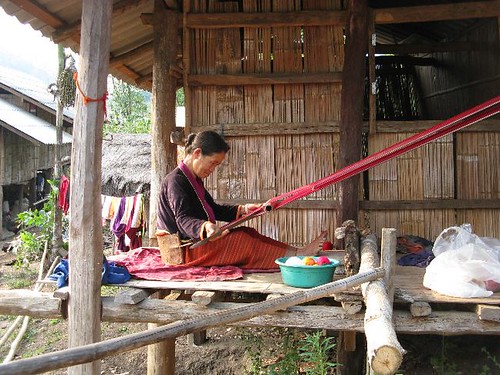
Lapong weaving
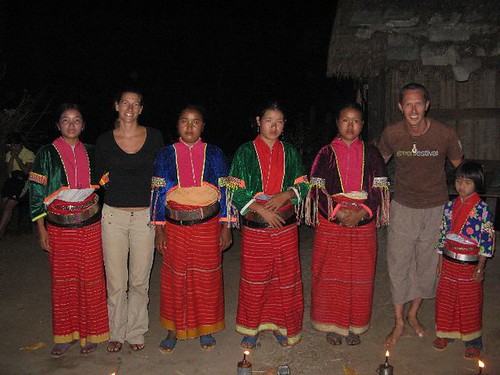
Lapong Village Women
Lapong village girls
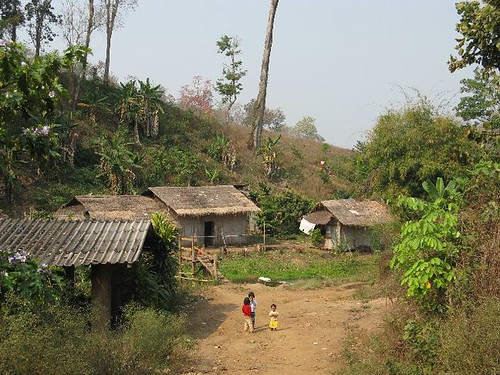
Lapong Village

Lampung

Lampung is a province of Indonesia. It is located on the southern tip of the island of Sumatra and borders the provinces of Bengkulu and South Sumatra. Lampung is the original home of the Lampung people, who speak a distinct language from other people in Sumatra and have their own alphabet. Its capital is Bandar Lampung. The province had a population of 7,596,115 at the 2010 census. Three quarters of the current population of Lampung is descended from migrants from Java, Madura, and Bali. More on Lampung in Wikipedia.

Bengkulu (Bencoolen)

Bengkulu (also known as Southwest Sumatra) is a province of Indonesia. It is on the southwest coast of the island of Sumatra, and borders the provinces of West Sumatra, Jambi, South Sumatra and Lampung. The capital and largest city is Bengkulu city. It was formerly the site of a British garrison, which they called Bencoolen. The province also includes Enggano Island. More on Bengkulu in Wikipedia.

There is Beccoolen St and Bencoolen Mosque in Singapore.

Simulo seaquake

Simulo Seaquake, off Aceh, off west coast of Sumatra
Wednesday, 11 April 2012


A seaquake measuring 8.7 Richter occurred in the evening ~500km off the west coast of Sumatra, at Simulo near Aceh. Indonesians panicked to save themselves and fled to safer grounds. Some fainted in the chaos and were taken to hospital.

The tremor was felt in India (Chenai, Bangalore), Burma, Thailand (Phuket), Singapore and Malaysia.

A check on Singapore replied nothing happened.

In Malaysia, Perak, Kedah, Perlis, and Penang experienced tremors. The tremor was felt in KL in high-rise buildings. In Penang people were asked to stay off from beaches at Gurney Drive, Batu Ferringhi and Balik Pulau. In Langkawi, the police patrolled the beaches and people were warned to stay off all beaches. Ferry service to Langkawi left 30 min earlier and was halted at 8.30pm. The tsunami alert was called off by 10.15 p.m.

What happened this time:
There is no tsunami this time as the tectonic plates only rubbed against each other instead of jolted into each other as occurred in 2004.

Source: 
RTM TV1, 8 p.m. prime time news

14 Agong

Installation of the 14th Agong.

Event: Installation of the 14th Agong of Malaysia
Date: Wednesday, 11 April 2012
Venue: Old Istana Negara, KL
Protocol: Adat Istiadat Pertabalan SPBYD Agong

Name of Agong: Tuanku Abdul Halim
Consort: Tuanku Aminah (1st wife Tuanku Bahiyah deceased 2003)
PM: Datuk Mohd Najib bin Tun Abdul Razak (Pekan, Pahang)
DPM: Tan Sri Muhyiddin Yasin (Johor)

Audience:
Raja Perlis & wife: Tuanku Syed Sirajuddin & Tg Rashidah Tg Abdul Hamid (sister of Tg Anis of Kelantan)
Sultan Pahang & wife: Sultan Ahmad Shah & 2nd wife (1st wife deceased)
6th PM & wife: Datuk Mohd Najib & Datin Rosmah Mansur
5th PM & wife: Tun Abdullah Ahmad Badawi & Tun Jean
4th PM & wife?
Wife of 3rd PM?
Wife of 2nd PM?

Significance of event:
  1. This is the second time that Tuanku Abdul Halim ascends the throne as Agong. He is 84 years old.
  2. Previous Agong who also became Agong for a second time was Sultan Salahuddin (Selangor) and Tuanku Abdul Rahman (NS).
  3. A dinner banquet was held for all dignitaries.

Monday, 9 April 2012

Zakiah Koya

Zakiah Koya. 2000. “Malaysia’s ‘Longest’ Political Detainee [Kamarulzaman Teh]” Malaysiakini.com. November 2.http://www.malaysiakini.com/news/20001102001020.php

Khatijah Sidek

Publications on Khatijah Sidek:

1. Khatijah Sidek. 2001. Memoirs of Khatijah Sidek: Puteri Kesatria Bangsa. Bangi: Penerbit UKM.

2. Khatijah Sidek. 1995. Memoir Khatijah Sidek: Puteri Kesateria Bangsa. First printing. UKM Bangi.

Available via Interlibrary Loan from UKM library

3. Jendela Selatan, Bil. 7, Disember 2003/Syawal-Zulkaedah 1424. This copy of Jendela Selatan was provided by En Aris bin Abdul Aziz, Johor (deceased on 8 March 2012).


Khatijah bt Sidek was featured in Jendela Selatan, Dec 2003. 
Khatijah bt Sidek as featured in Jendela Selatan, Dec 2003.
Khatijah bt Sidek
Khatijah was featured at a blog which described her as the first Wanita UMNO. Some reports said she was the third Wanita UMNO.

Khatijah Sidek was born in 1918 in Pariaman, West Sumatra in Indonesia. She was the youngest of ten siblings and the only girl. Her birth was as a result of her mother's long prayers for a girl after she had nine boys. As such, she was termed anak niat or anak nazar.

She was from a Minangkabau family that followed the matrilineal heritage system of the family's wealth. It should be noted that this kind of tribal practice of inheritance is against what Islam defines under the Islamic system of inheritance called the faraid.

She was against polygamy. However, in 1948, Khatijah bt Sidek married to Dr Hamzah bin Mohd Taib, an early Malay doctor from Johor, as his second wife. It was Dr Hamzah's second marriage. At the time of their marriage, Dr Hamzah was Naib Yang Dipertua Lembaga Kesatuan Melayu Johor. She assisted with activities of the LKMJ's lady's wing. She established HIMWIM which was active in Singapore and Malaya. HIMWIM advocated for better social status of women who were like her - as second wife. Khatijah was arrested under the Emergency Act, for two years - from the end of 1948 to early 1950. Khatijah had three children with Dr Hamzah, the eldest was a girl born while she was under detention.

After she was freed, she joined UMNO in 1953 as the first leader of its women's group. She fought for the equal status of man and women at the Persidangan Agung UMNO in 1953. She wanted women to be allowed to vote, and for better representation of women at the national level. As such, she became a controversial political figure, against a conservative male-dominated UMNO leaders. To UMNO, she painted a picture that was misaligned against UMNO's aims.

In 1956, Khatijah suggested to establish Kesatuan Wanita but this suggestion was not supported by Ibu Hajjah Zain who advised Khatijah to be patient and support the nationalistic goals of UMNO.

PAS President, Dr Burhanuddin al-Helmi invited Khatijah Sidek into joining PAS. Khatijah joined then Parti Islam Se-Tanah Melayu in October 1958. She won the elections for PAS in 1959, and served PAS as its Ahli Dewan Rakyat for Dungun in Terengganu for one term (1959-64).

When she served as the first Wakil Rakyat Muslimat PAS and Ketua Dewan Muslimat PAS (1964-65), again Khatijah faced the conservative men and became a controversial figure. She blamed the party's attitude which was state-based, then under Dato' Asri bin Haji Muda. She was an Indonesian and serving in Terengganu.

In 1964, Khatijah was appointed as Pesuruhjaya PAS Negeri Johor. In this way, PAS flung her out of Terengganu and Kelantan which were PAS domains and strongholds. In the 1964 general elections, Khatijah lost to Dato' Dr Ismail bin Dato' Abdul Rahman (an early Malay doctor) for the Johor Timur constituency which she represented.

After Dr Burhanuddin al-Helmi passed away in 1969, there was no support for Khatijah's efforts and she sadly left PAS. She contested as a free agent in the 1969 general elections for Kota Bharu Hulu constituency against Dato' Mohammad Asri bin Haji Muda but lost. Following her loss in the 1969 general elections against PAS, Khatijah kept away from politics but was not oblivious to political changes and progress.

The 13 May incidences ensued two days following the 1969 general elections. The elections were on 11 May 1969 and the bloody racial masacre started on 13 May 1969, after the election results were out. At the time Tun Abdul Razak bin Datuk Hussein was the second prime minister and Dato' Dr Ismail bin Dato' Abdul Rahman was the deputy prime minister. Following the 13 May incidences, changes were instituted by UMNO in many areas including economy, education and social, in order to strengthen Malay stronghold.

Seeing the changes in UMNO, Khatijah re-applied to join UMNO and was accepted in 1972. She was fifty-four and aging. She was not so active in politics as before. She later passed away in 1982 at age sixty-four.

Making Sense of Malaysia

Donna J. Amoroso. Review Essay / March 2003. Making Sense of Malaysia
http://kyotoreview.cseas.kyoto-u.ac.jp/issue/issue2/article_246.html

Amoroso, Donna. 1998. “Dangerous Politics and the Malay Nationalist Movement, 1945-47.” South East Asia Research 6, no. 3 (November).

Islam in Malaysia

Azmi AZIZ & SHAMSUL A. B. The religious, the plural, the secular and the modern: a brief critical survey on Islam in Malaysia. Inter-Asia Cultural Studies, Volume 5, Number 3, 2004. http://ptarpp2.uitm.edu.my/silibus/RelPluSec.pdf


This is my comment on how Islam came to be in our country:

There are 2 sides to the coin. With regard to who or what brought Islam to southeast Asia, we have 2 contrasting ideas and both can be true.

  1. One school says the traders were Muslims and they came to trade as well as spread Islam.
  2. The other school says the Sufi people came and spread Islam. Sufi is a diverse group but they share some common practices and also have dissimilar practices. The Sufi are rich people (millionnaires and billionnaires). There is no such thing as a penniless Sufi.

Having come this far in life and meeting so many Muslims from the 4 Schools and a number of Tariqats, I will conclude that both Muslim traders and Sufi people came to our Malay lands. The traders got busy trading but did not lose track of their daily prayers and rites and kept as close as possible to their Sufi brothers. In the meantime, the Sufi brothers also had their own businesses, maybe selling Quran and Islamic books as well as items and clothes. They have strict routines which they must stick to and missing any procedure means they will need to catch up before proceeding. As the Muslim traders and Sufi brothers prospered, they constructed mosques and started religious teachings for young children. These early stage of Islamic teaching at the mosques is called madrasah. We still see some of these early madrasah today. In Kelantan, madrasah is pronounced as malassah, which is a bit dangerous because wrongly pronounced, it can be malas-lah! The lower madrasah is madrasah ulum and the higher one sanawi? Now, since the area was still largely Indian and Hinduism prevailed, the learned among the early Muslim traders and Sufi Sheiks travelled many places to spread Islam. They also served as tutors to the Hindu royalties. The Hindu royals denounce their Hindu faith and converted to Islam. Their consorts and children followed suit too. Thus, the sultanate converted from a Hindu Sultanate to a Muslim Sultanate. A lot of things had to transform and change - laws, marriage, names, living quarters, trade, etc. Now that the State is Muslim, the populace also followed suit and embraced Islam. Thus, the Malay lands transformed from the originally Hindu-strong land to an Islam-backed land. A few things did not change though - the name of our country, honorifics and name prefixes. Also our preferences for colours did not change much. We still prefer brightly coloured clothes of the Indians and we revere the yellow colour as our royal colour.

The process of transforming from an Indian land to a Muslim land is ongoing and will continue for many more hundreds of years. We cannot expect people to easily give up the practices, cultures and traditions of their ancestors. Even the Diffusion of Innovation Theory tells us that some may be quick to react positively and change to conform but there will be many who still do not want to change their old ways and move out of their comfort zone. Thus, we see many waves of Muslims, and changes in the clothes, appearances and the way they greet and speak. A lot of Arabic words and phrases have crept into Malay speech and soon, many will be speaking and writing Arabic. Children nowadays rush to go to Islamic classes in blue jeans, dress and a scarf. It looks odd dressing up children that way but that is the gradual process of change. Soon we will see the jubah and then the black jubah and that will revert to mini-skirts once again. So what we see of Islam today is that the people are still learning and adapting, to what is perceived and believed as correct in Islam. We will often find people and hear those who say exposing aurat is haram, and on the other hand find that there are clergy Muslims whose wives are happy walking in public and working without a scarf or shawl to cover the hair and breasts. So transformation means different things to different Muslim people and therefore we see a lot of variations, both in thought and physical appearance. There is a lot more to the essence of Islam than just thought and appearances. I tend to like the story of a non Muslim warrior who killed 99 Muslims and after he killed the 100th Muslim, and heard his sister reading the Quran which melted his heart and he converted to Islam. Isn't that great? So Islam is about becoming a better person (Surah at-Taubah). And I like this phrase of becoming a better person because it has a lot of bearing on Human Development and Human Resource Training.

Sunday, 8 April 2012

Reproductive Ageing


This is a nice podcast:

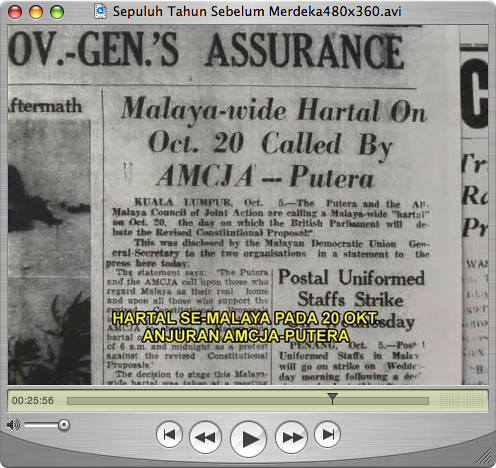
PUTERA-AMCJA

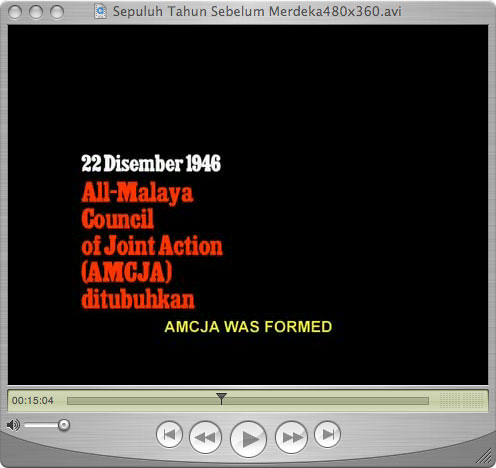
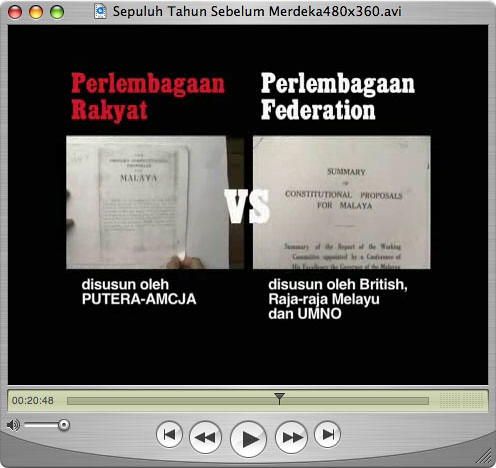
PUTERA-AMCJA = PUTERA and the All-Malaya Council of Joint Action

Blog, Flickr and YouTube videos by filmmaker Fahmi Reza:

http://www.youtube.com/view_play_list?p=C3476003550E3781

Download at: http://10tahun.blogspot.com/2007/10/download-10tahun-dari-rapidshare.html

scene10-amcja

scene13-pr-vs-pf

scene15-isytiharan-hartal

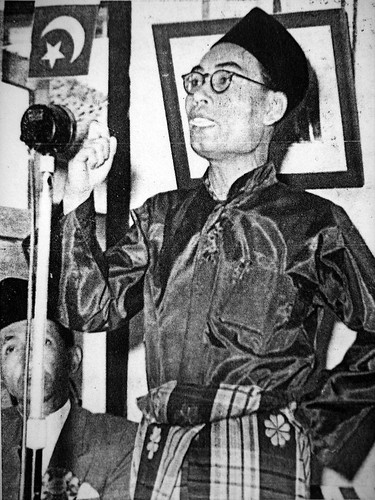
Dr. Burhanuddin Al-Helmy (1911-1969)
Dr Burhanuddin Al-Helmy
Yang Dipertua Parti Kebangsaan Melayu Malaya (PKMM) 1946-1950

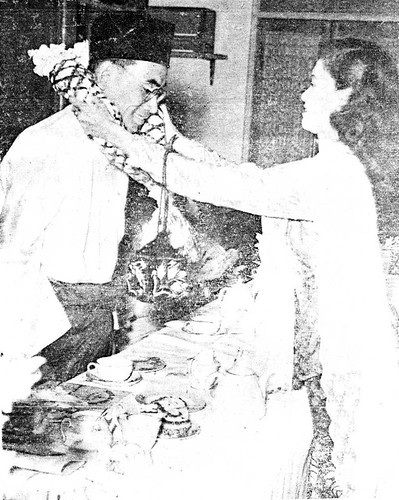
Dr. Burhanuddin Helmy & Pak Sako
Dr. Burhanuddin Helmy & Pak Sako 
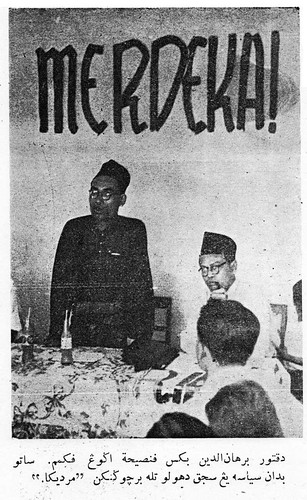
The Jawi text reads: Doktor Burhanuddin Bekas Penasihat Agung PKMM.
Satu badan siasah yang sejak dahulu telah bercogankan "Merdeka". 

Dr. Burhanuddin Helmy
Dr Burhanuddin Al-Helmy
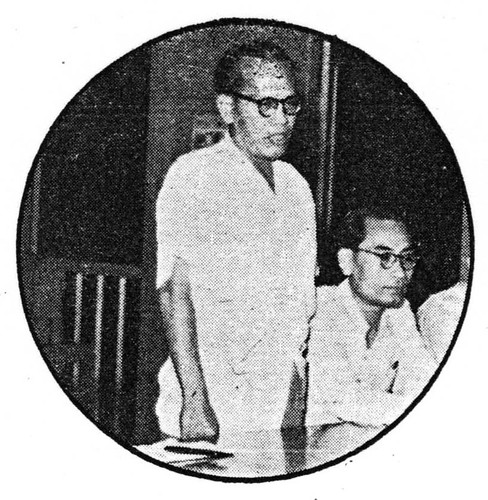
Pak Sako
Pak Sako and Dr Burhanuddin Al-Helmy
Kongres Kedua PKMM
Second PKMM Congress (above)
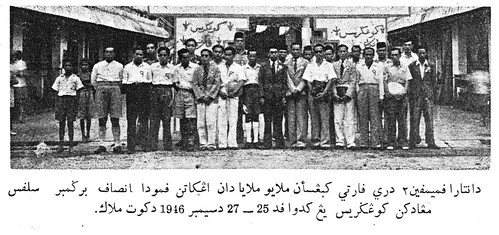
The Jawi text reads: Di antara pemimpin2 dari Parti Kebangsaan Melayu Malaya dan Angkatan Pemuda Insaf bergambar selepas mengadakan kongres yang kedua pada 25-27 Disember 1946 di Kota Melaka. 
Kongres Ketiga PKMM
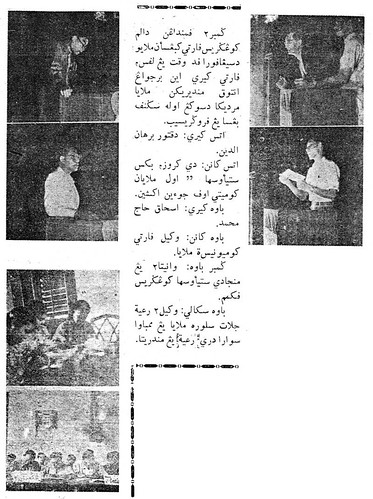
Third PKMM Congress (above and below).
The top left photo is also kept by Arkib Negara Malaysia (also blur).
Kongres Ketiga PKMM
Third PKMM Congress
Istana Kampong Gelam, Singapore

The palace or istana is the building in the background.
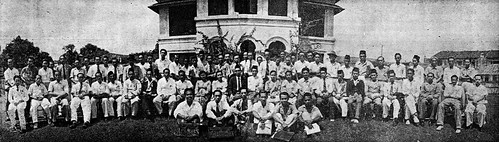
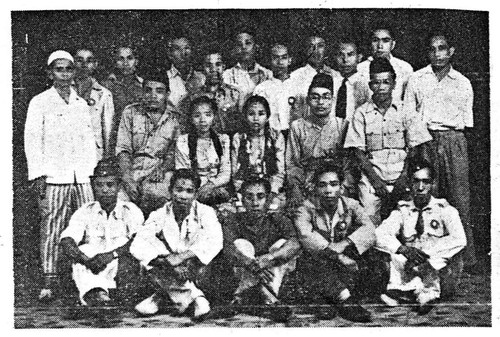
PKMM
PKMM
Parti Kebangsaan Melayu Malaya (PKMM).
Dr Burhanuddin is seated in second row at second right.
Ahmad Boestamam is seated in second row at extreme left.

Also, please read Mokhtar Petah's article on Parti Komunis Malaya (PKM) at:

Saturday, 7 April 2012

Haji Zul Tiger

Haji Zulkifli bin Zahari @ Haji Zul Tiger in Facebook.

Haji Zul Tiger contributed a lot of information and photos of the King Edward VII School in Taiping.


He is in the class of MCE 1977.

Awang Goneng

Wan Ahmad Hulaimi @ Awang Goneng

I bought his book, Growing Up in Terengganu (2007) by Monsoon Books Pte Ltd, Singapore. I just found out his name today. I always wondered why a person wanted to be known as Awang Goneng. I know he's from Terengganu but I just read today that he's now residing in London (that's what it says in the book). 

I rediscovered he is the one who wrote on Terengganuspeak. I started writing on Kelantanspeak and Malaccaspeak. I totally forgot I had read his writings from early on. I kept wondering who wrote about Terengganuspeak. His blog started in November 2004. This is his blog http://kecek-kecek.blogspot.com/2004_11_01_archive.html

Terengganuspeak is important as it is similar to Kelantanspeak. Also, both Terengganuspeak and Kelantanspeak are needed for helping patients from the east coast who have speech disorders. There was talk in USM about compiling Kelantanspeak but I have yet to see that materialise for hospital use.

Wan Ahmad Hulaimi's wife is Zaharah Othman. His children are Rehana, Nona, Hafiz and Taufiq.

On page 274, he mentions that Mr Chung Chee Min was a teacher at the Victoria Institution (VI) where he attended school in KL.

So, now I know Mr Chung Chee Min was a schoolteacher at VI during Awang Goneng's time (?) and now he is a webmaster for the VI website.

I used to write to Mr Chung Chee Min and addressed him as Dr Chung Chee Min.

There is another guy from Terengganu, Assoc Prof Dr Mat bin Zakaria who was a Chemistry lecturer at UKM in 1972. At first I had thought this Dr Mat was Awang Goneng. I had also wrongly addressed him as Dr Mat Zakaria, assuming that was his name, only to find out later he had a short 3-letter name. I must have written to him once. Dr Mat is also an active writer about life in Terengganu and has a lot of useful old photos which are educational material.

Tuesday, 3 April 2012

Dr Mohamed Din bin Ahmad

Tan Sri Dr Mohamed Din bin Ahmad was our first Director-General of Health, Ministry of Health, Malaysia. I had obtained information about Tan Sri Dr Mohamed Din from Mr Chung Chee Ming, a webmaster who operates the Victoria Institution website.

VI website: http://www.viweb.cjb.net/
Wikipedia Victoria Institution: http://en.wikipedia.org/wiki/Victoria_Institution

Mr Chung Chee Ming resides in Vancouver, Canada. At first I had thought he was joking but it is true, he resides in Vancouver. We communicate by e-mail. He was the first person (and a very resourceful person) who helped me obtain the names of the first 11 early Malay doctors from the King Edward VII College of Medicine old bulletins which are still lying around in the homes of Victorians/KE VII graduates/ex-workers.

With Mr Chung Chee Ming's help, I was able to contact Shahriza Hussein (author of the novel Legacy), another Victorian who is a cousin of Tan Sri Dr Mohamed Din. Shahriza gave me the link to Tan Sri Din's eldest son, architect Haji Kamal Din. Shahriza died soon after we corresponded. His youngest daughter informed of Shahriza's death. I was horrified!! Shahriza was gone for good but he left me an important contact.

I contacted Ar Haji Kamal Din. I called his half office to fix an appointment to interview him about his father. The girl at the office said it is hard to locate Tuan Haji Kamal Din as he was involved with a lot of construction projects - the most recent are the IJN extension project and another was a residential tower project near KL Sentral. He could be at any of the construction sites, and there were other sites too. I had no idea about constructions in KL so I didn't know what to do and how else to meet with Ar Haji Kamal Din. I asked the girl whether Tuan Haji Kamal Din was young or old. She said neither!! Ha ha ha.... I asked her again "Dia tua ke muda?" Again she said it is hard to tell. She said he is both old but looks young!!! Ha ha ha ....!!! How do you think I must fix an appointment with a man who is both old and yet looks young? I can help but laugh. I asked her for Ar Haji Kamal Din's mobile. I then passed her an e-mail and Tan Sri Dr Mohamed Din's biography for her to print and to pass on to Ar Haji Kamal Din if he comes in to office. I waited till I got a positive response from Ar Haji Kamal Din and then fixed an appointment date for us to meet and discuss his father's biography (at last).

---
The information below is from a contributor (Sellene @ Mohd Izrin Muaz bin Adnan, a former Research Officer with USM) who gave me a link and info from a website that contained Tan Sri's biography which I circulated earlier to the family members for checking. The write-up looks better in Malay.

From Sellene:
May i respectfully refer you to this link below? There is information on the above personality that you might find useful.


Ketua Pengarah Kesihatan pertama

Lahir di Siputeh Kinta,Perak pada tahun 1913 dan bersekolah di Sekolah Victoria Institution, Kuala Lumpur. Beliau melanjutkan pelajarannya ke Raffles College Of Medicine di Singapura dan telah berjaya memperolehi ijazah Doktor Perubatan dengan cemerlang. Kemudian beliau bertugas sebagai Pegawai Perubatan di Hospital Daerah Kuala Kangsar, Hospital Taiping, Pegawai Perubatan Negeri di Ipoh dan di Kuala Terengganu. Kemudian beliau ditukarkan ke Kuala Lumpur sebagai Pengarah Perubatan.

Kesungguhan beliau memikul segala tanggungjawab dalam apa juga keadaan telah memantapkan keperibadian beliau sebagai seorang Pegawai Perubatan dan pemimpin yang berupaya. Dalam konteks Negara yang baru mencapai kemerdekaan pastinya banyak proses perubahan berlaku dan inilah waktu dan ketikanya anak-anak bangsa diberi kepercayaan untuk mengambil alih jawatan jawatan penting daripada pihak-pihak penjajah yang pernah memerintah Negara ini. Lantas itu allahyarham telah dilantik untuk mengambil alih jawatan sebagai Ketua Pengarah Kesihatan Malaysia yang pertama daripada anak bangsa Melayu. Kecemerlangan beliau memimpin Kementerian Kesihatan ini telah mendapat pengiktirafan yang sangat terpuji dan telah menerima enam bintang Dato' dan Dato' Seri. Justeru, beliau telah dianugerahkan bintang tertinggi Tan Sri oleh D.Y.M.M Yang Di Petuan Agong.

Ibu beliau Hajah Esah binti Hussin dari Siputih, Perak adalah keturunan Talu dan ayahnya Haji Ahmad JP juga orang Talu. Isteri pertama beliau, Puan Sofia binti Abdullah memperolehi lapan orang anak seperti berikut Pn. Halimah (M), En. Kamal Md. Din (64), Datin Mahanom (63), Pn. Jamaliah (62), En. Jamal Md. Din (M), Pn. Zarina (58), Maimunah (M) dan En. Rosman Md. Din (55). Isteri beliau yang kedua Puan Sri Kamsiah binti Ali mendapat dua orang anak seperti berikut, En. Rahim Md. Din (50), dan Pn. Noraini (48). Allahyarham Tan Sri Dr. Mohamad Din bin Haji Ahamd teIah kembali ke rahmahtullah di Kuala Lumpur ketika berusia 87 tahun 2000. Semoga Allah mencucuri rahmat ke atas rohnya. Amin...
---
He was a School Prefect and a School Captain in 1930 at the VI.
Photo from Mr Chung Chee Min, ex-VI and VI webmaster

Dr Mohamed Din bin Ahmad graduated with LMS from the King Edward VII College of Medicine, Singapore in 1937. Subsequently he joined the British Malayan colonial Government service in 1937 as a Medical Officer (MO) and served mainly in Perak and Terengganu. 

In the post-war, he was the first Malay Queen's Scholar as well as an NAPT Scholar in 1949 and pursued his postgraduate studies for 2 years in the UK (1951-52). [NAPT is National Association for the Prevention of Tuberculosis.] He eventually obtained a Diploma in Public Health (DPH) from Edinburgh University, UK (1950). He also obtained a Diploma in Tropical Medicine and Hygiene (DTMH) from the London School of Tropical Medicine and Hygiene, UK (1951). 

 
Dr Mohamed Din bin Ahmad (1912-1999)
Portrait from Mr Chung Chee Ming, ex-VI and VI webmaster.
Biodata in The Who's Who in Malaysia 1963
Biodata in The Who's Who in Malaysia 1965 (continued below)

Receiving the PMN award (which carries the title Tan Sri) from DYMM SPB YDP Agong, Raja Perlis on 4 January 1961. Photo from his sons.

Immediately after Independence, he was appointed the first Director of Medical Services. Later, he was promoted and appointed the first Director-General of Medical Services, Malaysia (6 December 1967-71) and Permanent Secretary. He was succeeded by Tan Sri Dato’ Dr Haji Abdul Majid bin Ismail as second DG (1971-76). Photo from NewspaperSG, National Library Singapore. I read the terms that it will cost S$1,500 for single use of this photo. I think this is too expensive.
He was appointed as Clinical Professor of Public Health at University of Hawaii in May 1968.
Photo from his sons.
As elected First Master of the Academy of Medicine, Malaysia (AMM) 1966-69.
Photo from AMM.

University of Malaya awarded him an Honorary Doctorate in Medicine (MD) in September 1972. Photo from his sons.

FAMILY

First marriage to Sophia Abdullah, Perak
Photo from his sons.
Second marriage to Kamsiah bte Mohd Ali , KL.
Second marriage for both of them.
Photo from his sons.
Ar Haji Kamal Din, the eldest son of Tan Sri Dr Mohamed Din bin Ahmad.
I interviewed him on 30 December 2008. Photo by me.

His daughter Fatimah Dinna bt Tan Sri Mohd Din is a Senior Lecturer in the English Language at UiTM.

I have not met the rest of the children of Tan Sri Dr Mohamed Din, not even the one who e-mails me the photos on behalf of the family. He is Rosman Din. His brother tells me he's busy with work. What is important is the sons write very well about their father. They supplied a lot of anecdotes which I included in my book. These liven up the book and give a lovely feeling to what Malaysian life was like in the good old days. We don't get them this nice today. Life today is a whole lot different from what it was in the past.

Legacy by Shahriza Hussein
Biodata of Shahriza Hussein. From VI website.
Shahriza Hussein. From Star Magazine.

Mak Iti pula di-adu ka-PSC
- Tan Sri (Dr.) Mohamed Din bin Haji Ahmad
  Setiausaha Tetap, Kementerian Kesihatan
- Siti Hawa Zain (better known as Mak Iti) suffered from diabetes, hypertension and heart disease.
  She had complained directly about the rough treatment accorded to her at GHKL, 
  the plate and glass were dirty and there were a lot of mosquitoes.