
View Larger Map
Wednesday, 9 February 2011
Masjid Sultan, Singapore
3 Muscat Street, Singapore 198833 +65 6293 4405
+65 6293 4405
http://www.sultanmosque.org.sg/
View Larger Map
View Larger Map

Tuesday, 8 February 2011
Masjid Khadijah in Singapore
583 Geylang Road, Singapore 389522
Tel: +65 6747 5607 Fax: 65-6747 5929
http://www.khadijahmosque.org/aboutus/gen2.htm
View Larger Map
Two names are recorded at the Masjid Khadijah website:
Who was "Chishty S.A. Saleem"?
Syed Saleem Chishty and Syed Ahmad Chishty were the grandsons of Dr HS Moonshi.
Accessed website: 13 February 2009
Moinudeen Chishty
http://wsany.tripod.com/id11.html
Tel: +65 6747 5607 Fax: 65-6747 5929
http://www.khadijahmosque.org/aboutus/gen2.htm
View Larger Map
Two names are recorded at the Masjid Khadijah website:
1. Dr Hafeezuddin Sirajuddin Moonshi
2. Chishty S.A. Saleem
Who was "Chishty S.A. Saleem"?
Syed Saleem Chishty and Syed Ahmad Chishty were the grandsons of Dr HS Moonshi.
Syed Saleem Chishty passed away in 2001 and Syed Ahmad Chishty passed away in 2010.
Accessed website: 13 February 2009
Moinudeen Chishty
http://wsany.tripod.com/id11.html
Kapitan
Kapitan = headman (Malay, ketua)
Kapitan Kling refers to Cauder Mohideen / Kader Mydin / Kadir Merican of George Town, Penang.
He was responsible for the construction of Masjid Kapitan Keling.
The hot & spicy Kari Kapitan served in Penang is named in his honour.
His younger brother is Noordin Merican (sometimes written as Merican Noordin)
The Bangunan Noordin within the grounds of Masjid Kapitan Keling is named after Cauder's younger brother, Noordin.
Kapitan China refers to Yap Ah Loy of Kuala Lumpur. He was a mining tawkey and was responsible for the development of early KL.
Kapitan Melayu refers to Tengku Syed Hussain Idid (sometimes spelled as Aidid) of Kampong Melayu, Acheen Street (Lebuh Acheh), Penang, an Acehnese prince who donated (wakaf) his land for the construction of Masjid Melayu (Jamek) at Malay Town in Penang.
Kapitan Kling refers to Cauder Mohideen / Kader Mydin / Kadir Merican of George Town, Penang.
He was responsible for the construction of Masjid Kapitan Keling.
The hot & spicy Kari Kapitan served in Penang is named in his honour.
His younger brother is Noordin Merican (sometimes written as Merican Noordin)
The Bangunan Noordin within the grounds of Masjid Kapitan Keling is named after Cauder's younger brother, Noordin.
Kapitan China refers to Yap Ah Loy of Kuala Lumpur. He was a mining tawkey and was responsible for the development of early KL.
Kapitan Melayu refers to Tengku Syed Hussain Idid (sometimes spelled as Aidid) of Kampong Melayu, Acheen Street (Lebuh Acheh), Penang, an Acehnese prince who donated (wakaf) his land for the construction of Masjid Melayu (Jamek) at Malay Town in Penang.
Siam/Thai, Malay and Kelantan/Klate
There are many words which the Malay language and Kelantan accent (Klate) share with Siamese or the Thai language. Malay and Siam/Thailand history have a lot of things in common. Thai words are on the left.
Chana
Chana = ChenokChana
Thepa
Thepa = TibaSaba Yoi
Saba Yoi = SebayuNong Chik
Nong Chik = Nong Chik, a male nameHat Panare
Hat = had, boundary or limitPanare = Penarik
Sai Buri
Sai Buri = Telube or Selindung Bayu(?)Yaring
Yaring = Jambu(?); jering or buah jering is a fruit used by the Malay people for controlling diabetesKapho
Kapho = Kapur(?)Hat Talokapur
Hat = had, boundary or limit Talokapur = Teluk Kapur means chalk cove
Hat Khae Khae
Hat = had, boundary or limitKhae Khae = gege (Klate) means loud noise or noisy
Palas Market
Palas = palas is a small palm. The young unopened palas fronds (daun palas) are used for making a triangular festive delicacy called ketupat tiga segi
Patatimo Village
Patatimo = Patatimo (Klate) or Pantai Timur means east coastYarang Ancient Town
Yarang Ancient Town is thought to be the ancient kingdom of Lanka SukaYarang refers to jambu(?) or jering
Ra-ngae
Ra-ngae = Legeh
Sources:
http://en.wikipedia.org/wiki/Pattani_Province
http://en.wikipedia.org/wiki/Pattani_%28region%29
Satun and Ku Den Ku Meh
Origin of Satun
Satun or Sentul could have originated from the word sentol, seto (Klate) which refers to the yellow mangosteen-like fruit with thick furry skin which contains a sticky thick white latex. The white flesh (pulp) is eaten fresh or the entire fruit with skin removed is preserved as jeruk seto.
---
History of Satun
---


---
Family Relations
From Wan Mohd Nasserudin bin Wan Noordin. (Ayah Wan Merican Noordin on Facebook - deceased 19 Dec 2014)

---------------
Siti Kalthum AlHabshee was born to Sheikh Abdul Rahman AlHabshee and Sona Bee. Siti Kalthum was married three times, first to MM Noordin, then her second husband and lastly to Tengku Baharuddin @ Tunku Kudin. Her children with MM Noordin were Che Rajah and Aladin Merican Noordin (Ayah Wan Merican Noordin's grandfather). Her grandchildren were Pak Wan Noordin (Ayan Wan Merican Noordin's father), Noorlaila, Noraini and Khairudin. Noorlaila married to Hamzah and has seven children.
Tunku Rahimah Tunku Mohd Radin @ Tengku Besar Rahmah was born to Siti Kalthum AlHabshee and Tengku Kudin. She married to Dr SM Baboo and had nine children.


---
From my book, Biography of the Early Malay Doctors 1900-1957
Satun or Sentul could have originated from the word sentol, seto (Klate) which refers to the yellow mangosteen-like fruit with thick furry skin which contains a sticky thick white latex. The white flesh (pulp) is eaten fresh or the entire fruit with skin removed is preserved as jeruk seto.
---
History of Satun
Satun is one of the four provinces of Thailand which have a Muslim majority: 67.8% are Muslim and 31.9% are Buddhists. Most of the Muslims have some ethnic-Malay ancestry, though only 9.9% of the population claims to be ethnically Malay. The Malay dialect used in Satun is distinctly different from Pattani Malay and is much closer to the Kedah dialect of Malay, with a significant admixture of Thai influences.
Since Satun had belonged to the Kedah Sultanate, which had a strong relationship with both Ayutthaya and Siam under the Chakri dynasty, its Malay Muslims commonly intermarry with Thai Buddhists without serious religious hesitation. This custom has created a distinct social group known as Samsam, meaning a mixed person. Most Samsams, if not all, are Muslims.
Unlike the other Muslim majority provinces in Thailand, Satun does not have a history of political confrontation with the central power in Bangkok or of tension with the Buddhist population which makes up the majority of Thailand as a country. Malay Muslims in Satun are substantially assimilated and rarely sympathise with separatism from Thailand, in contrast to the Malay Muslims in Pattani, Narathiwat and Yala.
Satun Cuisine
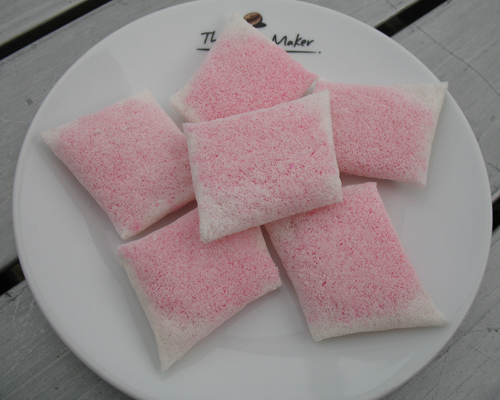 |
| Bunga Kuda - A Malay traditional dessert common in Satun, Thailand and in Perlis, Malaysia. (Wikipedia pic) |
---
Governors of Satun
Kuden bin Kumae
Phya Phuminatphakdi (Kuden bin Kumae) was the Governor of Satun from 1898 to 1916.
- Phya Phuminatphakdi (Kuden bin Kumae) was the Governor of Satun from 1898 to 1916.
- Phya Samantaratburin (Tui bin Abdullah) was the Governor of Satun from 1914 to 1932.
Kuden bin Kumae
Phya Phuminatphakdi (Kuden bin Kumae) was the Governor of Satun from 1898 to 1916.
 |
| Phya Phuminatphakdi (Kuden bin Kumae)? |
 |
| Phya Phuminatphakdi (Kuden bin Kumae)? |
--
Ku Din Ku Meh (from Amir Azahari Al-Saadi in Facebook)
Ku Din Ku Meh (from Amir Azahari Al-Saadi in Facebook)
Ku Din Ku Meh was born in 1848 at Anak Bukit. At age 14, he worked as a Prison Warder for Kedah. He was fluent in Malay and Thai. He wrote many books on law circa 1894. His wrote in Jawi. He was the Governor of Satun or High Comissioner of Setul (Satun). His book are kept at the Thai National Archives in Bangkok.

---
---

---
Tunku Kudin (from Wan Mohd Nasserudin bin Wan Noordin @ Ayah Wan Merican Noordin on Facebook - deceased 19 Dec 2014)
Tengku Baharuddin @ Tunku Mohd Radin @ Tunku Mat Radin @ Tengku Kudin @ Tunku Kudin @ Kuden, was the Governor of Satun and owned Kuden Mansion in Satun, southern Thailand.
Tengku Kudin married Siti Kalthum AlHabshee and their daughter was Tunku Rahimah Tunku Mohd Radin @ Tengku Besar Rahmah.
  |
| Tengku Baharuddin @ Tunku Kudin. (Photo from Wan Mohd Nasserudin.) |
Ku-den Mansion (Satun National Museum)
Ku-den Mansion was the official residence of Phya Phuminatphakdi, the Governor of Satun from 1898 to 1916. It was later used as an official residence for guests, then Japanese army headquarters in the Second World War, a municipal office, the City Hall, the District Office, the school building of Satun Municipality and the Office of the Internal Security Operation Center (ISOC), respectively. The style of the mansion is a combination of European architecture and Islamic art.

The building was originally built to be a royal palace for King Rama V on his visit to the South, and an official reception house for important guests. Its construction was completed in 1902, and commonly called as ''Kuden Mansion", after the name of the ruler of Satun, Kuden bin Kumae (Phraya Phuminatphakdi).The building was used as a provincial hall and an administration centre of Satun during 1947 to 1963.Villagers thus called it 'Sala Klang Kao' (an old provincial hall). The Fine Arts Department registered it as an ancient place, which was gazetted on 14 February 1989.- Tourism Authority of Thailand.
The building was originally built to be a royal palace for King Rama V on his visit to the South, and an official reception house for important guests. Its construction was completed in 1902, and commonly called as ''Kuden Mansion", after the name of the ruler of Satun, Kuden bin Kumae (Phraya Phuminatphakdi).The building was used as a provincial hall and an administration centre of Satun during 1947 to 1963.Villagers thus called it 'Sala Klang Kao' (an old provincial hall). The Fine Arts Department registered it as an ancient place, which was gazetted on 14 February 1989.- Tourism Authority of Thailand.
 |
| Kuden Mansion or Satun National Museum (Wikipedia pic) |
 |
| Kuden Mansion or Satun National Museum. (Photo by Muhammad Nizam bin Omar of Serdang, Selangor in Malaysia, 3 Dec 2014) |
---
Segara Ninda


---
Phya Samantaratburin's house
This house was built as the official residence of Phya Samantaratburin (Tui bin Abdullah), the Governor of Satun from 1914 to 1932. The house was built on high wood piles.
Phya Samantaratburin's house
This house was built as the official residence of Phya Samantaratburin (Tui bin Abdullah), the Governor of Satun from 1914 to 1932. The house was built on high wood piles.
 |
| Phya Samantaratburi's official residence. |
Family Relations
 |
| Wan Mohd Nasserudin bin Wan Noordin @ Abang Chel (1957-2014) |
Siti Kalthum AlHabshee was born to Sheikh Abdul Rahman AlHabshee and Sona Bee. Siti Kalthum was married three times, first to MM Noordin, then her second husband and lastly to Tengku Baharuddin @ Tunku Kudin. Her children with MM Noordin were Che Rajah and Aladin Merican Noordin (Ayah Wan Merican Noordin's grandfather). Her grandchildren were Pak Wan Noordin (Ayan Wan Merican Noordin's father), Noorlaila, Noraini and Khairudin. Noorlaila married to Hamzah and has seven children.
Tunku Rahimah Tunku Mohd Radin @ Tengku Besar Rahmah was born to Siti Kalthum AlHabshee and Tengku Kudin. She married to Dr SM Baboo and had nine children.
 |
| Tunku Rahimah bt Tunku Mohd Radin |


From my book, Biography of the Early Malay Doctors 1900-1957
From TEMD research, Dr SM Baboo was Dr Shaik Mohamad Baboo bin Ahmad Albakish (1894-1964), an early Malay doctor in Penang. Dr SM Baboo married Tunku Rahimah Tunku Mohd Radin and had nine children.


---
External links:
http://en.wikipedia.org/wiki/Satun_Province
Syed Zainal Abidin
His house in Gelugor, Penang
Tunku Kudin and Klang War / Selangor Civil War
---
External links:
http://en.wikipedia.org/wiki/Satun_Province
Syed Zainal Abidin
His house in Gelugor, Penang
Tunku Kudin and Klang War / Selangor Civil War
Monday, 7 February 2011
Pattani / Patani Darul Makrif / Patani Darussalam
Pattani
Pattani = Patani (in Malay) or Pattani (derived from Jawi: ڤتنا) is pantai ini or pata ni (Klate) and means 'this beach'. Pattani province was previously the centre of the Malay Sultanate of Patani Darul Makrif that paid tribute to the Siamese kingdoms of Sukhothai and Ayutthaya. The Malay Muslims make up 88% of the population of Pattani and they speak the Patani Malay language which is similar to the Kelantan accent (loghat Kelantan or Klate).
Patani Raya, or "Greater Patani" is a term that has been used to describe a region comprising the southern Thai provinces of Pattani, Yala (Jala), Narathiwat (Menara), and parts of Songkhla (Singgora), together with much of the northern part of modern peninsular Malaysia.
Patani is historically similar to sultanates such as Singgora (Songkhla), Ligor (Nakhon Si Thammarat), and Lingga (near Surat Thani).
Patani came under Thai rule briefly during the Sukhothai period, and more extensively during the later Ayutthaya period.
South Thailand Insurgency
Tengku Mahmud Mahyuddin, a prominent Pattani leader and the son of the last Raja of Pattani, allied with the British and launched guerilla attacks against the Japanese during WWII.
In 1945, a petition by Malay leaders led by Tengku Abdul Jalal demanded that Britain guarantee independence for the southernmost provinces of Thailand. At the war's end, the Greater Malay Pattani State (Negara Melayu Patani Raya) flag did fly briefly in Pattani. However, since the British had no power over Thailand, the Thai continued to rule over Pattani, while the British kept Thailand stable as a counterweight to the communist insurgency in Malaya. This led to the formation of several insurgent groups seeking the independence of Pattani.
During World War II, along with the Greater Patani Malay Movement, led by Tengku Mahmud Mahyuddin, another resistance force under the leadership of Islamic scholar Haji Sulong Tokmina also fought against the Japanese. Their stated goal was to create an Islamic republic in Patani, which frequently put it at odds with Prince Tengku Mahmud who wanted to reestablish the Pattanese Sultanate.
Today, the goals and ideas of Haji Sulong Tokmina are still carried on by minor resistance groups interested in creating an Islamic republic. After the war, though, British and Thai policies essentially removed the possibility of an independent republic in Pattani.
Patani separatist groups, most notably the Patani United Liberation Organization (PULO), began to use violent tactics in 2001. There have been suggestions of links between PULO and foreign Islamist groups, such as al-Qaeda and Jemaah Islamiyah. A number of Pattani Muslims are reported to have received training at al-Qaeda centres in Pakistan, and the Pattani insurgents have forged links with groups such as the Moro Islamic Liberation Front in the Philippines and the Free Aceh Movement (GAM) in Indonesia.
Sources:
http://en.wikipedia.org/wiki/Pattani_Province
http://en.wikipedia.org/wiki/Pattani_%28region%29
A reader gave this link on Patani History.
Pattani = Patani (in Malay) or Pattani (derived from Jawi: ڤتنا) is pantai ini or pata ni (Klate) and means 'this beach'. Pattani province was previously the centre of the Malay Sultanate of Patani Darul Makrif that paid tribute to the Siamese kingdoms of Sukhothai and Ayutthaya. The Malay Muslims make up 88% of the population of Pattani and they speak the Patani Malay language which is similar to the Kelantan accent (loghat Kelantan or Klate).
Patani Raya, or "Greater Patani" is a term that has been used to describe a region comprising the southern Thai provinces of Pattani, Yala (Jala), Narathiwat (Menara), and parts of Songkhla (Singgora), together with much of the northern part of modern peninsular Malaysia.
Patani is historically similar to sultanates such as Singgora (Songkhla), Ligor (Nakhon Si Thammarat), and Lingga (near Surat Thani).
Patani came under Thai rule briefly during the Sukhothai period, and more extensively during the later Ayutthaya period.
South Thailand Insurgency
Tengku Mahmud Mahyuddin, a prominent Pattani leader and the son of the last Raja of Pattani, allied with the British and launched guerilla attacks against the Japanese during WWII.
In 1945, a petition by Malay leaders led by Tengku Abdul Jalal demanded that Britain guarantee independence for the southernmost provinces of Thailand. At the war's end, the Greater Malay Pattani State (Negara Melayu Patani Raya) flag did fly briefly in Pattani. However, since the British had no power over Thailand, the Thai continued to rule over Pattani, while the British kept Thailand stable as a counterweight to the communist insurgency in Malaya. This led to the formation of several insurgent groups seeking the independence of Pattani.
During World War II, along with the Greater Patani Malay Movement, led by Tengku Mahmud Mahyuddin, another resistance force under the leadership of Islamic scholar Haji Sulong Tokmina also fought against the Japanese. Their stated goal was to create an Islamic republic in Patani, which frequently put it at odds with Prince Tengku Mahmud who wanted to reestablish the Pattanese Sultanate.
Today, the goals and ideas of Haji Sulong Tokmina are still carried on by minor resistance groups interested in creating an Islamic republic. After the war, though, British and Thai policies essentially removed the possibility of an independent republic in Pattani.
Patani separatist groups, most notably the Patani United Liberation Organization (PULO), began to use violent tactics in 2001. There have been suggestions of links between PULO and foreign Islamist groups, such as al-Qaeda and Jemaah Islamiyah. A number of Pattani Muslims are reported to have received training at al-Qaeda centres in Pakistan, and the Pattani insurgents have forged links with groups such as the Moro Islamic Liberation Front in the Philippines and the Free Aceh Movement (GAM) in Indonesia.
Sources:
http://en.wikipedia.org/wiki/Pattani_Province
http://en.wikipedia.org/wiki/Pattani_%28region%29
A reader gave this link on Patani History.
Oath of a Muslim Doctor
The oath of a Muslim doctor is different from that read at most medical schools around the world. The oath is read by final year students prior to graduation. They will swear to do their best as doctors. Below is the oath of a Muslim doctor used at the School of Medical Sciences, Universiti Sains Malaysia.
Source: Academic Office, School of Medical Sciences, USM
 |
| Oath of a Muslim doctor |
Source: Academic Office, School of Medical Sciences, USM
Friday, 4 February 2011
Urdu / Sindhi / Arabic / Malay
I = hum, saya, chek, kawe, ana
you = aap, awak, kamu, demo, anta (lelaki), anti (perempuan)
me = saya, ana / dalam bahasa arab, 'me' yg mana kata ganti nama objek cuma ditambahkan huruf 'ya' yang dibunyikan 'ee'/'ii' . Cth : buku saya = kitabii/kitabee
we (all of us) = kita semua, kami, nahnu
they = dia, dia orang, depa, hom/hum
he = woh, dia, si anu, huwa
she = woh, dia, si anu, hiya
yes = ya, na'am (bahasa fasohah), aiwah (loghat/bahasa pasar)
no = tak, bukan, la'
come = datang, mari, ke sini, ke mari, marilah, ta'al
go = jaao, gi, zahaba
let's go = jom, jom pi, jom gi
walk = chalo, jalan, pergi, masyiya
that way = khuruj or khalaj?, hakaza
eat = khana, makan, makae, soru, akala
drink = piyo, minum, syariba
old = tua, tuha, 'ajuz, qadim
in-laws = mertua , al-hamu abuz zaujah/abuz zauj (father in law) = الحمو : ابو الزوجة او الزوج, hamatun (mother in law)= حماة
great grandfather = datuk moyang, tok moyang, tok yae, abul jaddi
great grandmother = nenek moyang, nek moyang, nek yae, ummul jaddi
grandfather = datuk, tok, tok ayah, to'ayah, jaddun, ....sahib (refers to the grandfather)
big grandfather (big grand dad) = dada sab, jaddun kabirun
grandmother = dadee, ninda, jaddatun
father = bab, walid, abi, bapak, pak, papa, abun, walidun
mother = mami, umi, mak, emak, chek, inche, ibu, bonda, ummun, walidatun
uncle = mamu, ami, pakcik, 'ammun, khalun
elder uncle / big uncle = mamu sab, 'ammun kabirun
aunt (aunty) = khala, makcik, bu, 'ammatun, khalatun
son = bayta, anak lelaki, anak, nak, anakanda, ibnun
daughter = bayti, anak perempuan, nak, anakanda, ibnatun
brother = bhai or bai, abang, abe, bae, akhun kabirun
sister = kakak, kak, sis, ukhtun kabiratun
doctor = doktor, tabib, thobibun
prayer = sembahyang, solat, salat, namaz
Links
http://www.languageshome.com/English-Urdu.htm
Contributor for Arabic words:
Noraida Hassan
Pen. Pustakawan Kanan
Bahagian Perolehan
Perpustakaan Hamdan Tahir
USM Kampus Kesihatan
Tel : 09-7671466
Fax : 09-7651823
E-mail : aida@kck.usm.my
Please provide more Urdu/Sindhi/Arabic words if you know them. TQ
Also see this website for Arabic terms
http://en.wikipedia.org/wiki/Mawl%C4%81n%C4%81
you = aap, awak, kamu, demo, anta (lelaki), anti (perempuan)
me = saya, ana / dalam bahasa arab, 'me' yg mana kata ganti nama objek cuma ditambahkan huruf 'ya' yang dibunyikan 'ee'/'ii' . Cth : buku saya = kitabii/kitabee
we (all of us) = kita semua, kami, nahnu
they = dia, dia orang, depa, hom/hum
he = woh, dia, si anu, huwa
she = woh, dia, si anu, hiya
yes = ya, na'am (bahasa fasohah), aiwah (loghat/bahasa pasar)
no = tak, bukan, la'
come = datang, mari, ke sini, ke mari, marilah, ta'al
go = jaao, gi, zahaba
let's go = jom, jom pi, jom gi
walk = chalo, jalan, pergi, masyiya
that way = khuruj or khalaj?, hakaza
eat = khana, makan, makae, soru, akala
drink = piyo, minum, syariba
old = tua, tuha, 'ajuz, qadim
in-laws = mertua , al-hamu abuz zaujah/abuz zauj (father in law) = الحمو : ابو الزوجة او الزوج, hamatun (mother in law)= حماة
great grandfather = datuk moyang, tok moyang, tok yae, abul jaddi
great grandmother = nenek moyang, nek moyang, nek yae, ummul jaddi
grandfather = datuk, tok, tok ayah, to'ayah, jaddun, ....sahib (refers to the grandfather)
big grandfather (big grand dad) = dada sab, jaddun kabirun
grandmother = dadee, ninda, jaddatun
father = bab, walid, abi, bapak, pak, papa, abun, walidun
mother = mami, umi, mak, emak, chek, inche, ibu, bonda, ummun, walidatun
uncle = mamu, ami, pakcik, 'ammun, khalun
elder uncle / big uncle = mamu sab, 'ammun kabirun
aunt (aunty) = khala, makcik, bu, 'ammatun, khalatun
son = bayta, anak lelaki, anak, nak, anakanda, ibnun
daughter = bayti, anak perempuan, nak, anakanda, ibnatun
brother = bhai or bai, abang, abe, bae, akhun kabirun
sister = kakak, kak, sis, ukhtun kabiratun
doctor = doktor, tabib, thobibun
prayer = sembahyang, solat, salat, namaz
Links
http://www.languageshome.com/English-Urdu.htm
Contributor for Arabic words:
Noraida Hassan
Pen. Pustakawan Kanan
Bahagian Perolehan
Perpustakaan Hamdan Tahir
USM Kampus Kesihatan
Tel : 09-7671466
Fax : 09-7651823
E-mail : aida@kck.usm.my
Please provide more Urdu/Sindhi/Arabic words if you know them. TQ
Also see this website for Arabic terms
http://en.wikipedia.org/wiki/Mawl%C4%81n%C4%81
Tuesday, 25 January 2011
Madras Medical College, Madras, India
Internet photos of Madras Medical College (MMC), Madras, India (1830s-1900s)


Aligarh Muslim University (AMU), New Delhi, India
Aligarh Muslim University (AMU) is a public university, which was originally established by Sir Syed Ahmad Khan as the Muhammadan Anglo-Oriental College in 1875, which then became Aligarh Muslim University in 1920, following the Aligarh Muslim University Act.
The main campus of AMU is located in the city of Aligarh in Delhi, which is spread over 467.6 hectares. Additionally it has three off-campus centres, namely, in Malappuram (Kerala), AMU Murshidabad centre (West Bengal), and Kishanganj Centre (Bihar).
Source: https://en.wikipedia.org/wiki/Aligarh_Muslim_University
 |
| https://en.wikipedia.org/wiki/Aligarh_Muslim_University |
 |
Entrance gate to campus.
By Hhkhan at English Wikipedia, CC BY-SA 3.0, |
 |
Masjid on campus.
By Syed Gibran - Myself Clicked, GFDL 1.2, |
External links:
Philosophy and the Founding Father of AMU
Information about AMU and its Historical Milestones
The Malay College, Kuala Kangsar, Perak
The Victoria Institution, Kuala Lumpur
The Victoria Institution was at High Street before it was relocated to Petaling Hill.
VI @ High Street
VI @ High Street
- was a brick and wood building with Malay architecture
- was on low ground and prone to flooding
- was flooded in 1926
- was razed by fire (undated) and was rebuilt (undated)
VI @ Petaling Hill
- existed in 1937 (without any trees)
- is near Stadium Merdeka
- the playing field was a cemetery
- the bookstore in the school basement was used as a prison cell by the Japanese army in WWII
External links:
Monday, 24 January 2011
TEMD Branding and Souvenirs
Branding
I'm thinking of branding the words 'The Early Malay Doctors' and its anagram (TEMD) and use them for souvenirs. I need designs.
Souvenirs
(anything used by the health industry, schools and universities; must be of good quality)
T-shirts, scarves, labcoats, jumpsuits, rompers, diapers, bath & face towels, soaps, disinfectants, toothpaste & toothbrushes, mouth gargles, handsoaps, shampoos, goggles, sunglasses, tote bags, rugs, bedroom slippers, bath robes, overcoats, sweaters, wind breakers, masks, cups, mugs, trays, flasks, measuring cups, measuring spoons, fork & spoon, non-leach tupperwares, books, keychains, cakes, dust-free sejadah, throw cushions, babies gift sets, cloth napkins, pillows, pillow cases, bedsheets, bedspreads, letter opener, letter holders, letter boxes, pens, pencils, wall frames, handphones, slippers, umbrellas, raincoats, paperweights, magnets, notebooks/diaries, pendrives, movies, documentaries, cardbox boxes, gift wrappers, ribbons, get-well-soon bouquets & cards, files, barbells, dumbbells, sports shoes, jogging shoes, etc. Who is interested? I need designs.
I already made wooden keychains and gave them free during my Professorial Talk (Syarahan Umum) on 17 June 2010. Schoolkids loved the painted wooden keychains. Even our hospital staff liked the designs. These wooden keychains were prepared by Rohani Omar@ Mohd Yusof of Physiology.
Wooden keychains


I'm thinking of branding the words 'The Early Malay Doctors' and its anagram (TEMD) and use them for souvenirs. I need designs.
Souvenirs
(anything used by the health industry, schools and universities; must be of good quality)
T-shirts, scarves, labcoats, jumpsuits, rompers, diapers, bath & face towels, soaps, disinfectants, toothpaste & toothbrushes, mouth gargles, handsoaps, shampoos, goggles, sunglasses, tote bags, rugs, bedroom slippers, bath robes, overcoats, sweaters, wind breakers, masks, cups, mugs, trays, flasks, measuring cups, measuring spoons, fork & spoon, non-leach tupperwares, books, keychains, cakes, dust-free sejadah, throw cushions, babies gift sets, cloth napkins, pillows, pillow cases, bedsheets, bedspreads, letter opener, letter holders, letter boxes, pens, pencils, wall frames, handphones, slippers, umbrellas, raincoats, paperweights, magnets, notebooks/diaries, pendrives, movies, documentaries, cardbox boxes, gift wrappers, ribbons, get-well-soon bouquets & cards, files, barbells, dumbbells, sports shoes, jogging shoes, etc. Who is interested? I need designs.
I already made wooden keychains and gave them free during my Professorial Talk (Syarahan Umum) on 17 June 2010. Schoolkids loved the painted wooden keychains. Even our hospital staff liked the designs. These wooden keychains were prepared by Rohani Omar@ Mohd Yusof of Physiology.
| Rohani Omar@ Mohd Yusof |

Scientific Officer, Physiology, School of Medical Sciences, USM
Email: orohani@kck.usm.my Phone : 609-7673000 ext. 6165 Fax : 609-7653370
(Photo from USM medical school website)
|
Wooden keychains


I have completed my blog today
I have completed my task of researching and writing about the early Malay doctors during British Malaya last night. I started writing and made web pages since November 2002. Then I switched and made this blog. It is Monday, 24 January 2011, 1:27 AM on my laptop. That's a long time to write. I hope you will find useful stuff in this blog and will wait for the book which will contain the biographies of these doctors. I may not be able to include all biographies for obvious reason (incomplete). I really hope now that you know the doctors by name, you can help me by posting to me any new development or information not mentioned here. I will add them here.
In the meantime, the manuscript will go to the proof-readers.
TQ everyone for helping.
Faridah Abdul Rashid
Author, The Early Malay Doctors
In the meantime, the manuscript will go to the proof-readers.
TQ everyone for helping.
Faridah Abdul Rashid
Author, The Early Malay Doctors
Wednesday, 19 January 2011
1. Dr Abdul Latiff bin Abdul Razak (1889-1956)

Dr Abdul Latiff bin Abdul Razak (1889-1956)
LMS 1910 KEVII
Date of birth: 1889
Place of birth: Pasir Penambang, Kuala Selangor
Date of death: 1956
Place of death:
Place of burial:
British Malaya = Straits Settlements and Federated Malay States
VI = Victoria Institution in Kuala Lumpur
GHKL became HKL
He had survived two World Wars
First Malay doctor of British Malaya 1910
Medical Assistant in Klang, Kajang, Pekan, Kuantan, and Kuala Lumpur
Medical Officer at General Hospital Kuala Lumpur (GHKL)
Justice of Peace (JP) 1950
Honorary Member of the Order of the British Empire (MBE) 1951
Recipient of the VI (Diamond) Jubilee Gift Award 1954
"Latiff Shield" was donated to VI in his honour
Dr Latiff Road is in the grounds of Hospital Kuala Lumpur (HKL)
Asrama Doktor Latiff (hostel) was demolished
Perpustakaan Dr Abdul Latiff is the UKM medical library at Jalan Pahang, (adjacent to HKL)
He is of Bugis ancestry, descended from Raja Besar Bugis from Pulau Sanghie in Sulawesi.
Author's notes:
- Managed to contact a few of his relatives.
- His date of graduation as given by his relatives (1910) is a year earlier than that (1911) published by the NUS in To Sail Uncharted Seas (2005). The correspondent relative has verified and has evidence of his diploma, the LMS of 1910 (not 1911 as published).
- The correspondent has informed that only a few photos of him exist; others have been destroyed by floods which hit Kuala Lumpur.
- The family tree is intact and updated but will not be made available to public as some family members prefer to remain unknown.
- List of photos available:
- Dr Abdul Latiff bin Datuk Abdul Razak (B/W portrait)
- His wife (portrait)
- Him receiving the MBE (published records indicated MBE, not OBE as informed by the correspondent)
- His wife with sons
- Asrama Doktor Latiff (faded)
- Jalan Doktor Latiff at UKM campus in KL (colour)
- Perpustakaan Dr. Abdul Latiff, UKM KL campus (photocopy)
- His father - Datuk Abdul Razak (colour portrait)
- Latiff clan photo (B/W A4-length group photo)
- All the men in the Latiff clan (generations 1-5, collage by Zainuddin bin Datuk Haji Yahya)
- All the women in the Latiff clan (generations 1-5, collage by Zainuddin bin Datuk Haji Yahya)
- References
- Perpustakaan Dr. Abdul Latiff, UKM KL campus (obtained from Zainuddin bin Datuk Haji Yahya)
- Salasilah Keluarga Datuk Abdul Razak (prepared by Zainuddin bin Datuk Haji Yahya)
- Illustrious Roots by Millicent Danker (obtained from Zainuddin bin Datuk Haji Yahya)
- Mailing list
- Addresses of a few family members
- Refer Masjid Sultan Riau, Pulau Penyengat for added information on history of the Bugis
- Photo of Assoc. Prof. Datin Dr Norsidah Abdul Manap, HUKM
2. Dr Samsudin bin Cassim (born circa early 1890s)

Dr Samsudin bin Cassim (born circa early 1890s)
LMS 1912 KEVII
Date of birth:
Place of birth: Taiping, Perak
Date of death:
Place of death:
Place of burial:
- Popularly known as Dr S Cassim or Dr Cassim
- Became a GP in 1920s
- Set up his clinic at 13, Anderon Road, Ipoh
- Practised for ~30 years
- Spoke Cantonese
- Civic leader
- Member of Kinta Sanitary Board
- Interested in Obstetrics
- Honorary Medical Officer to the Perak Chinese Maternity Hospital
- First Asian Honorary Medical Officer to the Perak Turf Club
- Royal physician - treated 5 Sultans of Perak
Author's notes:
- Sons - Tan Sri Osman S Cassim and Dato Dr Salim Cassim
- Son - Tan Sri Osman S Cassim was with Berjaya Group in 2001
- Son - Tan Sri Osman S Cassim was with Berjaya Group in 1999
- Grandson - Dr Samsudin Osman Cassim at Gleneagles Hospital, KL
Books about Dr Samsudin Cassim:
- Dr Samsudin Cassim was featured in 2 books by Dr Ho Tak Ming. One is Doctors Extraordinaire. The other book is Ipoh. Unable to contact Dr Ho Tak Ming via email published in his book, Doctors Extraordinaire.
- Tan Sri Osman S Cassim will try to contact Dr Ho Tak Ming for the photos and biographies of Dr Samsudin Cassim for me.
Contributors:
 |
| Prof Dato Mahendran Thuraiappah Portrait from Google+ |
- Prof Dato Dr MAHENDRAN THURAIAPPAH contacted author on 17 May 2011 to inform of more names of doctors including Dr S Cassim
- Someone said the name Samsudin Osman Cassim is reused by the grandson, Dr Samsudin Osman Cassim.
- Dr Abdul Ghani and his daughter Adeline.
Locating Dr Samsudin Osman Cassim:
- Dr Abdul Ghani and his daughter Adeline Abdul Ghani helped to locate his son, Dr Samsudin.
- Dr Abdul Ghani is Pak Din in Facebook (Herbal Walk, Langkawi) http://www.facebook.com/dr.din
- Adeline Abdul Ghani works as Assistant General Manager at Gleneagles Hospital where Dr Samsudin works. http://www.facebook.com/adeline.ghani
Locating Gleneagles Hospital:
- I searched Google Map for Gleneagles and there were so many buildings with the name Gleneagles Intan Medical Centre. Gleneagles Hospital is just one building nearest the LRT Ampang(?). http://goo.gl/maps/SYxg
- Dr Samsudin Osman Cassim is in Orthopedics at Gleneagles Hospital (KL) Sdn Bhd http://onedaymd.blogspot.com/2010/11/gleneagles-kuala-lumpur.html
Gleneagles Hospital (Kuala Lumpur) Sdn Bhd
286 Jalan Ampang
50450 Kuala Lumpur
Wilayah Persekutuan
Tel: +60 3 4141 3000
Fax: +60 3 4257 2933
Email: enquiry (a) gleneagleskl.com.my
Website: www.gleneagleskl.com.my
http://www.rootsweb.ancestry.com/~lkawgw/gen099.html
http://www.rootsweb.ancestry.com/~lkawgw/gen100.html
Subscribe to:
Posts (Atom)


