
Wednesday, 8 August 2012
Where & how to order
This is where to order the book, Research on the Early Malay Doctors 1900-1957 Malaya and Singapore:

Tuesday, 7 August 2012
501452 Hardcover and softcover
The 501452 hardcover and softcover books arrived today via USPS. I didn't hear the van outside my home but my husband and youngest daughter did; they got the parcel for me. I had thought it was an early Raya present! LOL. This is what came in the post/mail today.
 |
| UPS parcel from the printer in USA. The parcel felt very light, and I had thought it was a dress!! LOL |
 |
| 501452 Paperback (left) and hardcover (right) books. |
 |
| The paperback spine was a bit damaged but the book is good. |
 |
| Another shot of the damaged spine. A lot of glue to hold the broken spine in place. |
 |
| Page 203 has a row of upside-down icons. The icons are: Facebook, Email, smartphone, open book, and house. |
 |
| Paperback with a nicely pressed spine impression. |
 |
| Hardcover is a blue book with a jacket. The blue book spine says 'Rashid' and the title. |
 |
| Hardcover 'blue book' and its jacket (at right). |
 |
| Jacket for the hardcover. |
 |
| My collection of small book (501452) materials: 3 books, 5 posters, 50 order forms, 50 bookmarks and 50 business cards. These will disappear in no time as the children are after the bookmark and business card as souvenirs. |
 |
| Close-up, same as above, from left: books, order form (picture postcard, ppc), bookmark (long black one), business card (cutest of them all). The posters are underneath. My USM business card is near the one that Xlibris printed. Published date: 17 July 2012 The inside pages are black and white. Link to Faridah Books How to Order from Xlibris How to Order from Amazon.com How to Order from BN.com If you wish to buy, please buy from Amazon.com or BN.com within 1 year of publication (17 July 2012-17 July 2013) as they offer the cheapest price. After that the book is only available from Xlibris but at a higher price. Xlibris will continue to sell my book even after I die and for 100 years before my book will enter public domain (which means you can download it for free 100 years after I'm dead). The 100 years duration is according to US Copyright Laws. In Malaysia and elsewhere, it is only 50 or 75 years. |
Monday, 6 August 2012
Technical Note - Photo Resolution
How to enhance photos for printing (eg checking and increasing image resolution).
For things to do with resolution, especially for photos, there is one choice which is a free program. This is the Zoner Photo Studio.
Zoner Photo Studio
http://www.zoner.com/ww-en/photo-editor-viewer-manager
For things to do with resolution, especially for photos, there is one choice which is a free program. This is the Zoner Photo Studio.
Zoner Photo Studio
http://www.zoner.com/ww-en/photo-editor-viewer-manager
- Zoner Photo Studio has 2 panes, the View pane and the Editor pane.
- Click the View tab to view images/photos.
- Click the Editor tab to do editing.
- There are many functions in Editor, one is for checking size and resolution.
- To check the size or resolution, click Editor tab.
- Click Edit, then select Resize. Set the desired resolution in dots per inch (dpi).
- For print purposes, set the resolution to 300 dpi. Click OK.
- Then click File, select Save. Now the file is ready to meet printing needs.
- Note: Archives may require higher resolutions, eg 400 dpi or 600 dpi.
 |
| This is an image (or photo). Double-click the image to view it in Zoner Photo Studio. |
 |
| This is the image in Zoner Photo Studio. This is the View pane or window. Then click the Editor tab. |
 |
| This is the image in Zoner Photo Studio, but in the Editor pane or window. Click Edit, select Resize. |
 |
| This is the Resize control box for the image. The resolution of the image is presently 96 dpi. Increase the resolution using the upper small pyramid icon till it displays 300. Then click OK. Now the image resolution is 300 dpi, and the photo size will re-adjust to meet that higher resolution. Now view the image (click View tab) and click the magnify (+) button to see the image at higher resolution. |
Technical note - compressed files
How to create compressed files and how to open them.
There are many programs for creating compressed files but I only used 2 such programs, one is WinZip and the other jZip. Both are easy to learn and use. They are useful when you want to send many files as a big file (called archive, packed files or stack).
WinZip
http://download.cnet.com/WinZip/3000-2250_4-10003164.html
jZip
http://www.jzip.com/
Will edit the instructions later ...
There are many programs for creating compressed files but I only used 2 such programs, one is WinZip and the other jZip. Both are easy to learn and use. They are useful when you want to send many files as a big file (called archive, packed files or stack).
WinZip
http://download.cnet.com/WinZip/3000-2250_4-10003164.html
- Follow the instructions online
- The program may still be/may not be free now. Use it if it is free or locate and download the free version.
- Download and install. Just double-click whatever you downloaded and it will self-install. Follow the instructions on screen.
- To create a zip file, first create an empty folder. Drag some of your files into the folder (not exceeding 200MB total size). Then right-click on the folder. In the menu, select Apply to archive.... This will create a zip file of that folder. By zip file, it means all the contents of that folder are now packed as a single file, and with the same name. Rename and save the zip file.
- You can then send the zip file to sendspace.
- Gmail does not allow you to send zip files.
jZip
http://www.jzip.com/
- jZip is fast but quite tricky to use. The zip action takes place so fast that you wonder whether your files have been zipped or not.
- If you think you want to try jZip, then download and install.
- To create a zip file, first create an empty folder and name it. Drag some files into that folder. Then right-click on the folder and select jZip from the menu, and Add to jZip in the adjacent selection panel. Two things will pop up, one is the Add message box, the other is the jZip window.
- To create a new zip file, click New. Your compressed file will show up in the jZip window. You will be able to see the icon and name of your compressed file.
- If you wish to add more files to the same jZip window, click Insert. All the files are viewable in the jZip window. That's it.
- To open a zip file using jZip, click View and select the file you wish to open. That's it.
Will edit the instructions later ...
Technical Note - Sending large files
How to send large files (eg digital photos; single file vs archive or zip) - PowerPoint (PPT) 5Aug2012
sendspace
How I have used sendspace:
There are 2 programs for sending large files, one is YouSendIt and the other is sendspace. Both are good but have certain limitations. They are useful for sending photos and manuscripts.
YouSendIt
- Maximum file size: 20MB
- Limitation: cannot send zip file
- This program is free
- I have used YouSendIt since 2009.
- YouSendIt is for instant download. It doesn't keep the files on the server for very long.
- Start with this program first and if this program is limiting, try sendspace next.
- Always start by sending a file to yourself. If it works, it will work for others.
sendspace
- Maximum file size: 200MB (sometimes 300MB)
- Limitation: cannot exceed total file limit size (1 GB)
- This program is free
- Good point: can send compressed files (zip files)
- Good point: files remain on the sendspace server for approx. 1 month, with constant reminder of time left (1 week) before files will be automatically deleted.
- Always start by sending a file to yourself. If it works, it will work for others.
How I have used sendspace:
- In 2012, when I wanted to send the manuscript to Xlibris, I also had 400+ photos to send. I could not use YouSendIt as it would not allow me to send that many files and such a huge volume of contents. I wanted to send compressed files (zip files) to save time. Xlibris suggested me to use sendspace to send my files to my editors. So I learned how to use sendspace (trial and error). When that worked ok, I then sent my files using sendspace. The files were downloaded by the IT Dept at Xlibris and then distributed to 2 depts - copy-editors and production team.
- Sendspace became very essential for my work. Else I would have to spend a lot of money to send my manuscript and photos by courier to Xlibris for printing my books. I didn't have to buy tons of pendrives or any extra external harddisk. Learning how to use sendspace helped me a lot.
- I have prepared a PowerPoint (PPT) for how to use sendspace but give it a try first. Let me know if you get stuck and I will email the PPT to help you out. The PPT is gratis.
- You can send individual files or zip them first and then upload to sendspace. I will write a technical note for how to create compressed files.
- Read the sendspace instructions online carefully and follow strictly.
- Just a note of warning: there is an advertisement button at the sendspace website. Do not click on that button. If you accidentally clicked on it, it will ask for your hp#. Do not fill in. Leave the application and go back (track back). You will lose about RM24 of you entered your hp# and find out later that it is a scam.
Hospital Kuala Lumpur (HKL)
Photos of Hospital Kuala Lumpur (HKL).
All photos of HKL below were kindly supplied by Dr Lim Ju Boo from his personal collection. All photographs were taken by Dr Lim Ju Boo.
All photos of HKL below were kindly supplied by Dr Lim Ju Boo from his personal collection. All photographs were taken by Dr Lim Ju Boo.
 |
| HKL plaque |
 |
| Front facade of HKL |
 |
| Urology & Nephrology, HKL |
 |
| Accident & Emergency (A&E) Department, HKL |
 |
| A&E, HKL |
 |
| Entrance to A&E at HKL |
 |
| Ambulance at A&E, HKL |
 |
| HKL: towards the A&E Dept and Main Block |
 |
| HKL: New Specialist Block, former site of Blood Bank |
 |
| HKL: same as above |
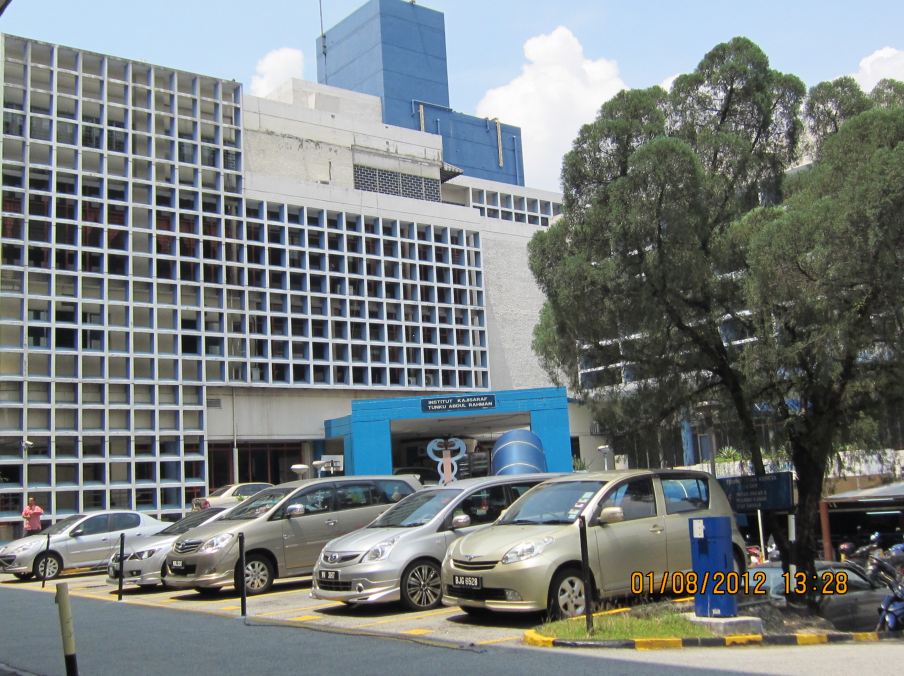 |
| Institute of Neurology, HKL |
Sunday, 5 August 2012
Technical Note - Topics Covered
I will now guide readers wrt the technicalities involved behind the scene for The Early Malay Doctors. It may be useful/useless for some. Some of you maybe able to cope/not be able to cope with the technicalities. Anyone can learn.
Here are some tentative topics which I plan to write about/explain:
Here are some tentative topics which I plan to write about/explain:
- How to send large files (eg digital photos; single file vs archive or zip) - PowerPoint (PPT) 5Aug2012
- How to create compressed files.
- How to enhance photos for printing (eg checking and increasing image resolution).
- How to prepare a composite digital portrait from existing old photos - KIV
- How to touch up old photos (torn or missing bits) - KIV
- What to do with very small images - KIV
- How to capture individual faces from a group photo - KIV
- How to do a line-up of portraits for a person (facial profiling) and determine a person's age by approximation. - KIV
- How to prepare maps - KIV
- How to check what day it was for any given date.
- How to double-check a newspaper publication.
Saturday, 4 August 2012
Malay-Hindustani
I was wondering what Malay-Hindustani was so I clicked on a song in YouTube and got this song by Lata Mangeshkar: Sekuntum Mawar Merah. The lyrics are Malay but the melody is Hindustani.
This is another of her song but with Hindustani lyrics: Dil to pagal hai (The Heart is Crazy). It was sung in Hyderabad in 2002. It is a famous song, and I can sing along but I don't know the meaning at all. I heard the song in a Hindustani movie. Dil to pagal hai in Wikipedia.
From the time I grew up and attended school in Kedah and Kelantan, I listened to such songs. Indian grocery shops also tuned in to Hindustani songs. Even though I am a Sindhi descendant, I don't understand any of the lyrics. My Sindhi relatives all spoke their mother tongue (Urdu?) at a wedding. I could not make out what language my relatives used but they spoke to my mother in English.
Hyderabad is connected to Malaya because a few of the ancestors of the early Malay doctors were from Hyderabad. They include the ancestors of Dr Che Lah bin Md Joonos (Penang), Dr Abdul Karim bin Nawab Din (Taiping). The ancestors made their way from the Deccan plateau to the port of Madras, and then sailed from Madras to Malaya. There are no details of the voyages yet.
These ancestors were Muslims and they were originally from the northern provinces of undivided India. They were from the Sindh, now Pakistan. They were known as Sindhi (now Pakis or Pakistani). I don't have the details of the north-south transmigration from the Sindh down to Darjeeling highlands in the Deccan plateau. It seems that many migrants-to-be followed this route before eventually reaching Madras and finally sailing forth to Malaya. Even people from Surat on the west coast came to the Deccan plateau first and then travelled onward to Madras, before sailing to Malaya.
Madras is Chennai today.
Just recently, Hyderabad was featured in TV AlHijrah / OASIS (can't recall what it was) on ASTRO in August 2012, around Aidilfitri. It showed the important buildings/places in Hyderabad such as the Hyderabad Mosque and the biggest restaurant named Paradise.
Hyderabad Mosque is an intricate old mosque but it is important as over the ages, the Nizam of Hyderabad Mosque was specially picked from among noted and respected clergy or imams. One of the early Nizams of Hyderabad had also contributed a large piece of diamond to the British Queen for her wedding. Paintings of the British Queen featured this diamond piece from the Nizam of Hyderabad. Try look up the Kooh-i-Noor diamond.
Paradise is a special restaurant in that it started as a small eatery, then it expanded and today it is a multi-storey restaurant and caters for all castes of the Indian populace. There are different spaces and settings for the different castes and groups so everyone can eat without feeling awkward. It also has a take-away section. It seems from the documentary that the Indians loved to buy their food from the Paradise take-away section (for breaking the fast in Ramadan). The workers of Paradise are well-looked after in terms of staff welfare, even the families' insurance are paid by Paradise management. Paradise provides very good work opportunities for boys from poor families.
This is another of her song but with Hindustani lyrics: Dil to pagal hai (The Heart is Crazy). It was sung in Hyderabad in 2002. It is a famous song, and I can sing along but I don't know the meaning at all. I heard the song in a Hindustani movie. Dil to pagal hai in Wikipedia.
From the time I grew up and attended school in Kedah and Kelantan, I listened to such songs. Indian grocery shops also tuned in to Hindustani songs. Even though I am a Sindhi descendant, I don't understand any of the lyrics. My Sindhi relatives all spoke their mother tongue (Urdu?) at a wedding. I could not make out what language my relatives used but they spoke to my mother in English.
Hyderabad is connected to Malaya because a few of the ancestors of the early Malay doctors were from Hyderabad. They include the ancestors of Dr Che Lah bin Md Joonos (Penang), Dr Abdul Karim bin Nawab Din (Taiping). The ancestors made their way from the Deccan plateau to the port of Madras, and then sailed from Madras to Malaya. There are no details of the voyages yet.
These ancestors were Muslims and they were originally from the northern provinces of undivided India. They were from the Sindh, now Pakistan. They were known as Sindhi (now Pakis or Pakistani). I don't have the details of the north-south transmigration from the Sindh down to Darjeeling highlands in the Deccan plateau. It seems that many migrants-to-be followed this route before eventually reaching Madras and finally sailing forth to Malaya. Even people from Surat on the west coast came to the Deccan plateau first and then travelled onward to Madras, before sailing to Malaya.
Madras is Chennai today.
Just recently, Hyderabad was featured in TV AlHijrah / OASIS (can't recall what it was) on ASTRO in August 2012, around Aidilfitri. It showed the important buildings/places in Hyderabad such as the Hyderabad Mosque and the biggest restaurant named Paradise.
Hyderabad Mosque is an intricate old mosque but it is important as over the ages, the Nizam of Hyderabad Mosque was specially picked from among noted and respected clergy or imams. One of the early Nizams of Hyderabad had also contributed a large piece of diamond to the British Queen for her wedding. Paintings of the British Queen featured this diamond piece from the Nizam of Hyderabad. Try look up the Kooh-i-Noor diamond.
Paradise is a special restaurant in that it started as a small eatery, then it expanded and today it is a multi-storey restaurant and caters for all castes of the Indian populace. There are different spaces and settings for the different castes and groups so everyone can eat without feeling awkward. It also has a take-away section. It seems from the documentary that the Indians loved to buy their food from the Paradise take-away section (for breaking the fast in Ramadan). The workers of Paradise are well-looked after in terms of staff welfare, even the families' insurance are paid by Paradise management. Paradise provides very good work opportunities for boys from poor families.
Kuala Lumpur
What do we know about Kuala Lumpur (KL)? What does Kuala Lumpur mean? How did KL history begin? Who opened KL? How many people lived in KL in the 1700s? 1800s? 1900s? 20th century? Today? What attracted people to KL?
Why are there few Malays in KL? Why isn't the sultan's palace in KL? How far is KL from Klang?
How was KL connected to the other cities in the past 400 years? What is the significance of KL in Malaysian history? If there was no KL, would there be a Malaysia today?
KL is connected to the Chinese. Why? What attracted the Chinese to KL? When?
Who were the early Chinese of KL? Where are the families today?
What was KL initially? How did KL develop? How were roads paved in KL? Who erected the buildings in KL? What are some of the famous landmark buildings in KL? What are the buildings that have remained till today? What are some of the important structures in KL today?
How many hospitals were built in KL over the past 400 years? Whom did the hospitals serve? How were the hospitals managed in KL? Who were the early doctors who served in the hospitals in KL? What photos of old KL hospitals have survived?
Why are there few Malays in KL? Why isn't the sultan's palace in KL? How far is KL from Klang?
How was KL connected to the other cities in the past 400 years? What is the significance of KL in Malaysian history? If there was no KL, would there be a Malaysia today?
KL is connected to the Chinese. Why? What attracted the Chinese to KL? When?
Who were the early Chinese of KL? Where are the families today?
What was KL initially? How did KL develop? How were roads paved in KL? Who erected the buildings in KL? What are some of the famous landmark buildings in KL? What are the buildings that have remained till today? What are some of the important structures in KL today?
How many hospitals were built in KL over the past 400 years? Whom did the hospitals serve? How were the hospitals managed in KL? Who were the early doctors who served in the hospitals in KL? What photos of old KL hospitals have survived?
Friday, 3 August 2012
British Malacca
British Malacca was quite recent. British Malaya ended with the Malayan independence on 31 August 1957. British Malacca is limited to Malacca while British Malaya affected the entire kingdom of the Malay peoples. British Malacca restored some faith among the people of Malacca but British Malaya practically robbed Malaya so much so that by the time Malaya eventually gained its independence, it was such a poor country! The Malays were so poor that they could not enjoy life at all; many could not go to school or complete tertiary education. The Malay people were so poor at the time of the Malayan independence. Let's not forget that.
Back to British Malacca...
Malacca was a good point of focus for the British. They obtained Malacca from the Dutch. Three things the British did right for Malacca were they blasted the Dutch-protected Portuguese fort to pieces and left just the gate we see today. They painted the red buildings white. They build a fountain after Queen Victoria right in the heart of the red square in Banda Hilir. Many photos taken before the fountain was built point to this era.
There were other buildings made by the British, and a lot have remained to this day. These include all the schools in Banda Hilir and its vicinity, and also the Malacca General Hospital, which was the third hospital in Malacca. Other things they did for Malacca was to run a post office, which operated as a bank. I still have my trust account book from that time. A small airport operated at Batu Berendam. I still have photos of that time at the airport.
Why was Malacca special to Britain?
Malacca was a Straits Settlement, and so were Penang and Singapore. Why was Malacca special? Malacca was obtained by exchange, and not through any war. The last war fought on Malacca soil was between the Dutch and Portuguese in 1641. So Malacca was 'peaceful' since 1641. Malacca was passed on to the hands of yet another European colonial master, a 'better' master that managed Malacca well but still put the Malays at a disadvantage. The British used Malacca for its missionary expansion to spread Christianity while it knew that the Malays were Muslims. Many churches were built in Malacca but hardly any mosque were built by the British for the people of Malacca.
Even today, Malacca still cannot portray its initial Islamic image as it has so many churches and convents, etc. We should remember that the Malacca Sultanate went from Hindu to Islam and remained at that when the Portuguese attacked Malacca. Now that all the 3 colonial masters have returned to their homelands, it is time to manage Malacca properly and give it its long overdue Islamic image that was there before European colonialism.
What we need to do is to critically assess the damages done by the colonials in Malacca's history, clear up all the mess and return the clean image that Malacca once had. Remember, Malacca flourished as the world's trading port at a time when it was under the Malacca Sultanate. The Malacca Sultanate can be restored because there are many who qualify to step up to the throne and be Malacca's new sultan in the post-colonial era. It is just us eggheads who can't think straight who cannot see what is happening to Malacca. The Malay rulers can sit and discuss who should be Malacca's new ruler (Sultan Melaka).
We can forget the colonials altogether because they damaged our reputation. I don't think they even cared about our local customs and tradition. Similarly with Penang - return it to Sultan Kedah. Similarly with Singapore - return it to Sultan Riau-Lingga. That is how I look at the region and its people.
Back to the question of why was Malacca special?
The British acquired Malacca first, then the other states. It was in Malacca that the Malays got together to deal for Malaya's independence. Why didn't they discuss in Kuala Lumpur? Kuala Lumpur may sound Malay but it was a Chinese city opened by the Chinese people when they were forced out of Klang, then a Malay stronghold and where the Malay Sultan of Selangor had his palace. So Malacca bravely dealt for the Malayan independence.
After the Japanese war (1941-45), in the late 1940s, our parents were probably just teenagers. There were already loyal Malays who dealt for our nation's independence. Who were they? Many were people from Malacca or related to Malacca or had connections with Malacca. Tunku himself was married to a Malacca lady - Sharifah Rodziah, a lady born of noble birth and from a good Muslim family. Malacca had high regards for her. I still remember her. When Tunku was successful in dealing for the Malayan independence, of course he returned to Malacca and pronounced the Malayan independence first at Padang Melaka and later at Stadium Merdeka in Kuala Lumpur. I will upload some photos of that historical event from my grandfather's collection later.
When Henry Syers sought assistance from the Malay quarters, he took Malays from Malacca and moved them to Kuala Lumpur. These Malacca people were relocated to a place called Kampong Baru in Kuala Lumpur. Among some of the famous people from Kampong Baru in Kuala Lumpur was Tan Sri Abdul Majid bin Ismail (Coco Majid). His parents were originally from Malacca.
Why was Kampong Baru special?
Kampong Baru was special as it was a trusted Malacca community. It was a community that was relocated into the heart of Kuala Lumpur (then a Chinese community) and became the heart of Kuala Lumpur. Thus, you can see the role that the people of Malacca played in bringing up Kuala Lumpur. Of course as a transplated community, Kampong Baru people were poor (Malays were never rich under the colonials anyway). The best that the Kampong Baru people could do was to excel in their studies when the opportunity arose. They became the community leaders, and almost all of them were Malacca people born and bred in Kuala Lumpur. Of course the language points to their Malacca heritage. There is no language difference between the Malays of Kampong Baru and the people of Malacca.
What can we conclude about Malacca now?
So in conclusion, is British Malacca important? Yes, it was a turning point at least. Is Malacca special? I think so yes, it was a source of hope for a new beginning of a new nation. Will Malacca shine again? If we restore what was there before colonialism, yes, it should rise to fame as before. That's how I look at Malacca, my hometown and birthplace. I will never forget Malacca and its people.
Back to British Malacca...
Malacca was a good point of focus for the British. They obtained Malacca from the Dutch. Three things the British did right for Malacca were they blasted the Dutch-protected Portuguese fort to pieces and left just the gate we see today. They painted the red buildings white. They build a fountain after Queen Victoria right in the heart of the red square in Banda Hilir. Many photos taken before the fountain was built point to this era.
There were other buildings made by the British, and a lot have remained to this day. These include all the schools in Banda Hilir and its vicinity, and also the Malacca General Hospital, which was the third hospital in Malacca. Other things they did for Malacca was to run a post office, which operated as a bank. I still have my trust account book from that time. A small airport operated at Batu Berendam. I still have photos of that time at the airport.
Why was Malacca special to Britain?
Malacca was a Straits Settlement, and so were Penang and Singapore. Why was Malacca special? Malacca was obtained by exchange, and not through any war. The last war fought on Malacca soil was between the Dutch and Portuguese in 1641. So Malacca was 'peaceful' since 1641. Malacca was passed on to the hands of yet another European colonial master, a 'better' master that managed Malacca well but still put the Malays at a disadvantage. The British used Malacca for its missionary expansion to spread Christianity while it knew that the Malays were Muslims. Many churches were built in Malacca but hardly any mosque were built by the British for the people of Malacca.
Even today, Malacca still cannot portray its initial Islamic image as it has so many churches and convents, etc. We should remember that the Malacca Sultanate went from Hindu to Islam and remained at that when the Portuguese attacked Malacca. Now that all the 3 colonial masters have returned to their homelands, it is time to manage Malacca properly and give it its long overdue Islamic image that was there before European colonialism.
What we need to do is to critically assess the damages done by the colonials in Malacca's history, clear up all the mess and return the clean image that Malacca once had. Remember, Malacca flourished as the world's trading port at a time when it was under the Malacca Sultanate. The Malacca Sultanate can be restored because there are many who qualify to step up to the throne and be Malacca's new sultan in the post-colonial era. It is just us eggheads who can't think straight who cannot see what is happening to Malacca. The Malay rulers can sit and discuss who should be Malacca's new ruler (Sultan Melaka).
We can forget the colonials altogether because they damaged our reputation. I don't think they even cared about our local customs and tradition. Similarly with Penang - return it to Sultan Kedah. Similarly with Singapore - return it to Sultan Riau-Lingga. That is how I look at the region and its people.
Back to the question of why was Malacca special?
The British acquired Malacca first, then the other states. It was in Malacca that the Malays got together to deal for Malaya's independence. Why didn't they discuss in Kuala Lumpur? Kuala Lumpur may sound Malay but it was a Chinese city opened by the Chinese people when they were forced out of Klang, then a Malay stronghold and where the Malay Sultan of Selangor had his palace. So Malacca bravely dealt for the Malayan independence.
After the Japanese war (1941-45), in the late 1940s, our parents were probably just teenagers. There were already loyal Malays who dealt for our nation's independence. Who were they? Many were people from Malacca or related to Malacca or had connections with Malacca. Tunku himself was married to a Malacca lady - Sharifah Rodziah, a lady born of noble birth and from a good Muslim family. Malacca had high regards for her. I still remember her. When Tunku was successful in dealing for the Malayan independence, of course he returned to Malacca and pronounced the Malayan independence first at Padang Melaka and later at Stadium Merdeka in Kuala Lumpur. I will upload some photos of that historical event from my grandfather's collection later.
When Henry Syers sought assistance from the Malay quarters, he took Malays from Malacca and moved them to Kuala Lumpur. These Malacca people were relocated to a place called Kampong Baru in Kuala Lumpur. Among some of the famous people from Kampong Baru in Kuala Lumpur was Tan Sri Abdul Majid bin Ismail (Coco Majid). His parents were originally from Malacca.
Why was Kampong Baru special?
Kampong Baru was special as it was a trusted Malacca community. It was a community that was relocated into the heart of Kuala Lumpur (then a Chinese community) and became the heart of Kuala Lumpur. Thus, you can see the role that the people of Malacca played in bringing up Kuala Lumpur. Of course as a transplated community, Kampong Baru people were poor (Malays were never rich under the colonials anyway). The best that the Kampong Baru people could do was to excel in their studies when the opportunity arose. They became the community leaders, and almost all of them were Malacca people born and bred in Kuala Lumpur. Of course the language points to their Malacca heritage. There is no language difference between the Malays of Kampong Baru and the people of Malacca.
What can we conclude about Malacca now?
So in conclusion, is British Malacca important? Yes, it was a turning point at least. Is Malacca special? I think so yes, it was a source of hope for a new beginning of a new nation. Will Malacca shine again? If we restore what was there before colonialism, yes, it should rise to fame as before. That's how I look at Malacca, my hometown and birthplace. I will never forget Malacca and its people.
Thursday, 2 August 2012
Dutch Malacca
Dutch VOC vs Malay Courts of Tanah Melayu - Nazli Aziz
After the Portuguese ruled Malacca, the Dutch came and fought against the Portuguese and won. Malacca became Dutch. Under Dutch rule, the Dutch used the same Portuguese fort for protection and added a few buildings, including a hospital, the governor's office row, a clock tower(?), and a church. The Dutch structures were painted a very striking bright red.
I remember as a pre-school child, being at the 'red square' and I asked my mother, why 'the place was red'. I didn't know the buildings then but I remember all the buildings around me were a glaring red colour. I didn't feel easy - I didn't like being at the 'red square'. I was used to black walls of wooden Malay houses and the red colour of the Dutch buildings in Banda Hilir stood totally out of place!
Now as an adult, and after studying photos of buildings in Banda Hilir taken by the Malay people, I noticed that the Malay people would take photos of the Dutch buildings but they avoided certain features, and especially capturing the cross on the church building. The Stadhuys didn't matter but the church did. A strange thing is there is no mosque in the heart of Banda Hilir, a Malay town and the name says it in Malay. There are many churches but not even a single mosque in Banda Hilir. Why? Have we been blind for hundreds of years, and not noticed that there in no masjid in the centre of Banda Hilir? Where do the Muslims pray if they are shopping in Banda Hilir? Where are the public prayers spaces?
The mosque that my ancestors build in Jalan Parameswara in Banda Hilir (further up towards the Portuguese Settlement and the Gurney School), is the only mosque in this weird place! And a weird thing I find is that Masjid Banda Hilir is never highlighted for its importance at all, never in the history of Malacca. People talk and write about all the other mosques, but they sure fail to even notice the earliest of the mosques at the periphery of Banda Hilir.
When Masjid Banda Hilir was built, it was very near to the sea; I remember walking down from the mosque to the beach in the early 1960s. The beach had soft white sand and the sea was crystal blue. Today, the beach is far away from the mosque, after so much land reclamation.
Were the Dutch better than the Portuguese conquerors? I don't know. My maternal grandmother and her generations were all Dutch-Sinhalese extracts - they were Burghers. Burghers aside, I feel the Dutch left a very lasting impression on the Malacca people, especially in architecture, not so much cuisine or apparels, and maybe a bit of the language and the Christian faith for some. We had Dutch doors and Dutch louvered windows covers for our house in Banda Hilir, which was possibly built during the Dutch era by my great-grandfather, or possibly there was another house on the same site before the one I had lived in, which was approx. 150 years old in the early 1960s. I remember discussing the age and antiquity of our Banda Hilir house with my father in the early 1980s.
So do we still need the red Christ Church, Stadhuys and clock tower in Bandar Hilir today to remind us of our Dutch conquerors? I don't think so. My feeling is we must learn to accept defeat, happily remove the red structures which weren't ours anyway, and build our own lovely Malay structures. I think a mosque, a big public eatery, a multipurpose hall, a garden, and good parking spaces are better - no A&W, no Hungry Jacks, no bowling alley, etc, and don't paint any structure red. The colours of Banda Hilir as I remember were white and green, not white and red. Red is for the Red Warriors - the powerful Kelantan football team! Red means 'ong' (good fortune) for the Chinese.


External links:
http://www.expatgomalaysia.com/article/1773/revenge-conquest-and-a-murder-plot-learn-more-about-melakas-turbulent-history
Muslim marriages during Dutch Malacca
http://www.tanap.net/content/archives/archives.cfm?ArticleID=208#voc
Wednesday, 1 August 2012
Portuguese Malacca
Now I will write a bit about my hometown, Banda Hilir in Malacca. The images are not mine but are from the Internet.
If we have to remove A Famosa, and rebuild a sultan's palace and a sultan's mosque in Banda Hilir, what would the structures look like? It would possibly have a low-lying Minangkabau-styled palace and mosque, with Chinese brickwork. It would use only teak for the beams and no nails.
Do we still need A Famosa? I don't think so. It is a symbol of our failure to defend Banda Hilir and therefore Malacca, against the Portuguese conquerors.
What else needs to go? The big ship - the model of the Portuguese ship, Flor de la Mar. It was Flor de la mar then but not today. The Malays can build better ships and even luxury yatchs - these should be there at Sungai Malacca, and not the Portuguese galleon. I remember visiting Banda Hilir and seeing the replica ship for the first time - my heart sank! How can we even consider re-building a replica ship of our first conqueror! Where is our jati diri? Where is our spirit of Sejati Berdiri? I cried for the shame of seeing this galleon in Banda Hilir. It broke my heart that someone even built it to remind us we were defeated for the first time in our Malay history, and for a long time to come. It is a shame to have that galleon build in Banda Hilir. To me, it is just an empty maritime museum that brings a lot of shame. And worst of it all, my son made a full multimedia of that galleon for his final year project without telling me. But it was a blessing that his multimedia project failed to materialise at the 11th hour. His Flor de la Mar project crashed unexpectedly one strange night and I was sent an SOS to help. That was when I found out he was designing the Flor de la Mar. Of course I refused to help because it was Flor de la Mar! I would help if it was some other battleship.
The Encyclopedia of Malaysia
Muzium Negara
http://www.mbras.org.my/monograph45.html
 | ||
| This is an ancient map of the Portuguese fort in Malacca built in 1511, on a Macau 40 cents stamp. I don't know the currency used in Macau. The characteristic curved bridge is on the left.
Both Macau and Banda Hilir were Portuguese trading ports and ports of call of the Portuguese tradeships. The fort is laid down like a tortoise with the head pointed towards the sea and the 4 legs stretched out. It was a pentagon when it was built. Notice that the sea reached up to the fort's front facade. So the fort was surrounded by land on 3 sides and the Straits of Malacca on two sides (front sides). Malacca hill is where the word 'Malaca' is written on the stamp. Notice that the spelling is with only one c, not two cc's as we spell it now. So the Portuguese name was spelled as Malaca. Today, we use Malacca (which is quite wrong as it is not pronounced as Malak-ka but Me-la-ke, with a very light intonation on the letter k). I still think we need to correct the English spelling and go back and re-use the Portuguese spelling, which translates better to Melaka (pronunciation, Me-la-ke).

Fortaleza de Malaca
The fort walls are clearly outlined, prominent and thick. Notice the curved bridge again. And to the left is written Banda Malaca (Banda Melaka). There is a church icon further up the river bank. There is a lighthouse on the left coast after the curved bridge. There is a big river labelled as Rio de Malaca (Malacca river or Sungai Melaka). To the northeast, there is written Banda Ilher (Banda Ilir) - that was where my ancestors lived for 8 generations. If you head 700m in that direction, you will come to Masjid Banda Hilir, the only surviving mosque in Malacca from our colonial history. The Malacca govt dated Masjid Banda Hilir to 1820, ie during the Dutch era. I would date the mosque to mid-1730s, just like Masjid Batu Uban in Penang. Notice that there are rocks or stones drawn in the southeast aspect - land reclamation? More later.
Macau stamps 1, Macau stamps 2 Map of modern Malacca (from Asia Web Direct)
|

A close look at the brick material used to build the fort brings a rather unexpected find - the red volcanic rocks were actually bricks from the mosques in Banda Hilir which were demolished by the Portuguese conquerors. Why did the Portuguese arrive and destroy the mosque(s). They used the bricks from the mosque(s) to build A Famosa. Was this a good or bad move? Of course it was a bad move and so the Muslim people of Malacca fought back - the wanted their mosque back.
In the meantime, only one mosque survived to this day - Masjid Banda Hilir. Why then do the Malays have this pantun line: Kalau roboh Kota Melaka, papan di Jawa akan ku dirikan...? Why do we still let A Famosa survive till today when it should be a large mosque that was there initially? It could also be the very site of the lost Malacca Sultanate palace that everybody is looking for. Usually, if there is a sultan's palace, then there is an associated mosque for the sultan and his people to pray.
Early Malacca was frequented by Arab and Chinese Muslims. Where is the 'old' mosque in Banda Hilir before the Portuguese arrived? Where is the sultan's palace before the Portuguese arrived? It is a serious offence to demolish a mosque and build something else on its former site. If a mosque must be reconstructed (with the A Famosa demolished), which direction is Qiblat? Qiblat would be facing the curved bridge. Masjid Banda Hilir is about the only mosque that has kept its secrets for a long time, since 1800s. There could possibly be just a small prayer place initially (refer to history of Masjid Sultan in Singapore and Masjid Kapitan Keling in Georgetown, Penang).
Why has attention focused on Masjid Tranquerah, and not Masjid Banda Hilir? Masjid Banda Hilir is an Arab-Minangkabau mosque. Masjid Tranquerah is a Chinese mosque and where Indian Muslims were imams. Masjid Tranquerah is not a Malay mosque - it was built either during Portuguese or Dutch era. The last sultan of Singapore, Sultan Hussein was buried here at Masjid Tranquerah.
If you read about Alfonso de Albuquerque, his suffix Albuquerque comes from the Arabic word Al-buque or Al-baqah, which means 'the terrible' or even 'razed to the ground, and left no trace! Why was Alfonso called the Terrible? Alfonso or Aphonso, must have been so terrible to the Arabs (Muslims) that they labelled him as such and that goes into our history books. We can pen him down as Alfonso The Terrible, just like we did for Ivan the Terrible and also Nero. Albuquerque just sounds nice as it is Arabic but still the meaning is he was terribly terrible. More on Alfonso in Wikipedia.
 |
| Alfonso the Terrible. Image from Wikipedia. |
Do we still need A Famosa? I don't think so. It is a symbol of our failure to defend Banda Hilir and therefore Malacca, against the Portuguese conquerors.
What else needs to go? The big ship - the model of the Portuguese ship, Flor de la Mar. It was Flor de la mar then but not today. The Malays can build better ships and even luxury yatchs - these should be there at Sungai Malacca, and not the Portuguese galleon. I remember visiting Banda Hilir and seeing the replica ship for the first time - my heart sank! How can we even consider re-building a replica ship of our first conqueror! Where is our jati diri? Where is our spirit of Sejati Berdiri? I cried for the shame of seeing this galleon in Banda Hilir. It broke my heart that someone even built it to remind us we were defeated for the first time in our Malay history, and for a long time to come. It is a shame to have that galleon build in Banda Hilir. To me, it is just an empty maritime museum that brings a lot of shame. And worst of it all, my son made a full multimedia of that galleon for his final year project without telling me. But it was a blessing that his multimedia project failed to materialise at the 11th hour. His Flor de la Mar project crashed unexpectedly one strange night and I was sent an SOS to help. That was when I found out he was designing the Flor de la Mar. Of course I refused to help because it was Flor de la Mar! I would help if it was some other battleship.
 |
| A parked Flor de la Mar, a maritime museum in Banda Hilir, Malacca. |
 |
| My son's rendition of the Portuguese galleon, Flor de la Mar in 2012. |
Muzium Negara
http://www.mbras.org.my/monograph45.html
Conference Call
International Conference:
Title: Penang in the Malay World
Date: 19-21 November 2012
Time: 8 am - 5 pm
Venue: Auditorium INFORMM, Universiti Sains Malaysia (USM), Penang
Title: Penang in the Malay World
Date: 19-21 November 2012
Time: 8 am - 5 pm
Venue: Auditorium INFORMM, Universiti Sains Malaysia (USM), Penang
 |
| Download pamphlet |
Tuesday, 31 July 2012
Syed Abdul Malik of Batavia
Who was Syed Abdul Malik of Batavia? Why Batavia? What is Batavia? The old name for Java? What happened in history? Are there Muslim graves in South Africa? What is the oldest Muslim graves in South Africa?
http://www.ajol.info/index.php/jis/article/viewFile/39943/58117
http://www.ajol.info/index.php/jis/article/viewFile/39943/58117
Dutch East India Company (VOC)
INTRODUCTION
I have rewritten this post to include all posts on the Dutch VOC. I am from Malacca. As a descendant of the Dutch Burghers of Ceylon, I collect interesting stories and details about the Dutch VOC.
Students are still doing research on the Dutch VOC even today, 342 years after the capture of Malacca in 1641.
The original Dutch VOC Archives is in Den Haag (The Hague), The Netherlands. This archive is good for everyone who has interest in Malacca's history.
PART 1: Dutch Conquest of Malacca 1641
What do we know about the Dutch conquest of Malacca? What did the Dutch do to the Indonesians? We know from history that there were Malays who opposed the Dutch rule in Indonesia. What happened to those politicians who refused to cooperate with the Dutch authorities in Indonesia? In Malacca? Were there many political refugees? Yes, the Dutch exiled Malay politicians to as far away as South Africa.
http://www.ecu.edu/african/sersas/MasonSERSASF99.htm
PART 2: Dutch VOC Hospitals in Malacca 1641-1796
I am interested in the early hospitals in Malacca 1641-1796. From reading, I know Dutch Malacca had 3 hospitals inside the Portuguese fort - a royal hospital, a civil hospital and one for the poor. There is a map of the grounds of the fort with the 3 hospitals, in Hospital Melaka's history.
PART 3: Dutch VOC Maritime Empire in the East Indies and the Hajj Pilgrimage 1641-1796
How far did the Dutch empire retain its status as a maritime empire in the nineteenth century? How big was Dutch espionage on the Muslim World?
Adventurer's photos capture a bygone Mecca by Barry Neild for CNN, 18 November 2010, updated 1954 GMT (0354 HKT)
http://edition.cnn.com/2010/WORLD/meast/11/11/mecca.hajj.snouck/index.html
Christiaan Snouck Hurgronje - with his rare 1885 photographs and sound recordings of Mecca.
http://edition.cnn.com/2010/WORLD/meast/11/11/mecca.hajj.snouck/index.html
Mecca: A Dangerous Adventure -- Snouck Hurgronje's early photographs 1885 is showing until December 6, 2010 at Dubai's Empty Quarter Gallery.
The earliest Dutch recordings of Makkah was in 1885, by Snouck Hurgronje. He was a pioneer multimedia journalist, and was accused as a Dutch spy. He stayed in Makkah for 5 months and converted to Islam. He fled Makkah when he took something and was accused a thief. he left his camera and recordings to a Syed partner. Syed continued to write to Hurgronje in Netherlands. Hurgronje left his pregnant Ethiopian wife in Makkah but they remarried and lived in Indonesia. He married more wives. What happened to him in the end? Nobody knows.
F. Gaastra, The Dutch East India Company: Expansion and Decline (2003).
J. van Goor, eds. Prelude to colonialism: The Dutch in Asia (2004).
Nigel Worden eds. Contingent Lives: Social Identity and Material Culture in the VOC World (2007).
N. Tarling ed. The Cambridge History of South-East Asia, Vol.2 19th and 20th centuries
K. Ward, Networks of Empire: Forced Migration in the Dutch East India Company (2009).
JH Bentley, R. Bridenthal and K. Wigen eds. Seascapes: Maritime histories, littoral cultures and
trans-oceanic exchanges Chapters by Gaynor and Ward
Eric Tagliocozzo, ‘Hydrography, technology, coercion: Mapping the sea in South-east Asian imperialism, 1850-1900’ in Rigby, Lincoln, Killingray eds. Maritime empires
Eric Tagliocozzo, ‘Kettle on a slow boil: Batavia’s threat perception in the Indies’ Outer islands, 1870-1910’ in Journal of South-east Asian Studies, 2000.
P. Carey, The Power of Prophecy: Prince Dipanagara and the end of an Old order in Java
L. Blusse, Visible Cities: Canton, Nagasaki and Batavia and the Coming of the Americans
R Betts and R. Ross eds. Colonial Cities: Essays on Urbanism in a Colonial Context essay by Blusse
on Batavia and Ross on Cape Town.
N H Schulte, The Spell of Power: A history of Balinese Politics, 1650-1940 (1996)
A. Schrikker, Dutch and British Colonial Intervention in Sri Lanka, 1780-1815
A Singh, Fort Cochin in Kerala, 1750-1830: The Social Conditions of a Dutch Community in an
Indian Mileu (2010).
R Ross, Status and Respectability in the Cape Colony, A Tragedy of Manners (1999)
U Bosma and R. Raben, Being Dutch in the Indies: A history of creolisation and empire (2008).
J G Taylor, The Social World of Batavia
L. Blusse and W. Remmelink, I Smits, eds. Bridging the Divide: 400 years of Netherlands-Japan
(2000).
N Tarling, Anglo-Dutch rivalry in the Malay World 1780-1824 (1962)
J van Lohuizen, The Dutch East India Company and Mysore 1762-1790 (1961)
C. Skott, ‘The VOC and Swedish natural history: The transmission of scientific knowledge in the
eighteenth century’ in The Dutch trading companies as knowledge networks, (2010)
PART 4: Dutch VOC and Slavery in the East Indies 1641-1796
Details of VOC treatment of natives and slaves have not been brought to the fore. The world does not know about slavery as practised by the Dutch VOC. Since slavery has been banned in most civilised and democratic nations, the topic of slavery itself becomes a good historical topic to learn and research. Some of the cases uncovered were frightening and totally unexpected. We have to wait till the VOC researchers today write fully about the Dutch VOC slavery for us to read and see the extent of it.
I have rewritten this post to include all posts on the Dutch VOC. I am from Malacca. As a descendant of the Dutch Burghers of Ceylon, I collect interesting stories and details about the Dutch VOC.
Students are still doing research on the Dutch VOC even today, 342 years after the capture of Malacca in 1641.
The original Dutch VOC Archives is in Den Haag (The Hague), The Netherlands. This archive is good for everyone who has interest in Malacca's history.
PART 1: Dutch Conquest of Malacca 1641
What do we know about the Dutch conquest of Malacca? What did the Dutch do to the Indonesians? We know from history that there were Malays who opposed the Dutch rule in Indonesia. What happened to those politicians who refused to cooperate with the Dutch authorities in Indonesia? In Malacca? Were there many political refugees? Yes, the Dutch exiled Malay politicians to as far away as South Africa.
http://www.ecu.edu/african/sersas/MasonSERSASF99.htm
PART 2: Dutch VOC Hospitals in Malacca 1641-1796
I am interested in the early hospitals in Malacca 1641-1796. From reading, I know Dutch Malacca had 3 hospitals inside the Portuguese fort - a royal hospital, a civil hospital and one for the poor. There is a map of the grounds of the fort with the 3 hospitals, in Hospital Melaka's history.
PART 3: Dutch VOC Maritime Empire in the East Indies and the Hajj Pilgrimage 1641-1796
How far did the Dutch empire retain its status as a maritime empire in the nineteenth century? How big was Dutch espionage on the Muslim World?
Adventurer's photos capture a bygone Mecca by Barry Neild for CNN, 18 November 2010, updated 1954 GMT (0354 HKT)
http://edition.cnn.com/2010/WORLD/meast/11/11/mecca.hajj.snouck/index.html
Christiaan Snouck Hurgronje - with his rare 1885 photographs and sound recordings of Mecca.
http://edition.cnn.com/2010/WORLD/meast/11/11/mecca.hajj.snouck/index.html
Mecca: A Dangerous Adventure -- Snouck Hurgronje's early photographs 1885 is showing until December 6, 2010 at Dubai's Empty Quarter Gallery.
The earliest Dutch recordings of Makkah was in 1885, by Snouck Hurgronje. He was a pioneer multimedia journalist, and was accused as a Dutch spy. He stayed in Makkah for 5 months and converted to Islam. He fled Makkah when he took something and was accused a thief. he left his camera and recordings to a Syed partner. Syed continued to write to Hurgronje in Netherlands. Hurgronje left his pregnant Ethiopian wife in Makkah but they remarried and lived in Indonesia. He married more wives. What happened to him in the end? Nobody knows.
F. Gaastra, The Dutch East India Company: Expansion and Decline (2003).
J. van Goor, eds. Prelude to colonialism: The Dutch in Asia (2004).
Nigel Worden eds. Contingent Lives: Social Identity and Material Culture in the VOC World (2007).
N. Tarling ed. The Cambridge History of South-East Asia, Vol.2 19th and 20th centuries
K. Ward, Networks of Empire: Forced Migration in the Dutch East India Company (2009).
JH Bentley, R. Bridenthal and K. Wigen eds. Seascapes: Maritime histories, littoral cultures and
trans-oceanic exchanges Chapters by Gaynor and Ward
Eric Tagliocozzo, ‘Hydrography, technology, coercion: Mapping the sea in South-east Asian imperialism, 1850-1900’ in Rigby, Lincoln, Killingray eds. Maritime empires
Eric Tagliocozzo, ‘Kettle on a slow boil: Batavia’s threat perception in the Indies’ Outer islands, 1870-1910’ in Journal of South-east Asian Studies, 2000.
P. Carey, The Power of Prophecy: Prince Dipanagara and the end of an Old order in Java
L. Blusse, Visible Cities: Canton, Nagasaki and Batavia and the Coming of the Americans
R Betts and R. Ross eds. Colonial Cities: Essays on Urbanism in a Colonial Context essay by Blusse
on Batavia and Ross on Cape Town.
N H Schulte, The Spell of Power: A history of Balinese Politics, 1650-1940 (1996)
A. Schrikker, Dutch and British Colonial Intervention in Sri Lanka, 1780-1815
A Singh, Fort Cochin in Kerala, 1750-1830: The Social Conditions of a Dutch Community in an
Indian Mileu (2010).
R Ross, Status and Respectability in the Cape Colony, A Tragedy of Manners (1999)
U Bosma and R. Raben, Being Dutch in the Indies: A history of creolisation and empire (2008).
J G Taylor, The Social World of Batavia
L. Blusse and W. Remmelink, I Smits, eds. Bridging the Divide: 400 years of Netherlands-Japan
(2000).
N Tarling, Anglo-Dutch rivalry in the Malay World 1780-1824 (1962)
J van Lohuizen, The Dutch East India Company and Mysore 1762-1790 (1961)
C. Skott, ‘The VOC and Swedish natural history: The transmission of scientific knowledge in the
eighteenth century’ in The Dutch trading companies as knowledge networks, (2010)
PART 4: Dutch VOC and Slavery in the East Indies 1641-1796
Details of VOC treatment of natives and slaves have not been brought to the fore. The world does not know about slavery as practised by the Dutch VOC. Since slavery has been banned in most civilised and democratic nations, the topic of slavery itself becomes a good historical topic to learn and research. Some of the cases uncovered were frightening and totally unexpected. We have to wait till the VOC researchers today write fully about the Dutch VOC slavery for us to read and see the extent of it.
PART 5: Dutch Burghers of Ceylon 1640-2015
The Dutch Burghers of Ceylon 1640-2015 will be hosting the world exhibition "VOC Heritage in Sri Lanka" in Amsterdam in 2015. The same exhibition is due in Kuala Lumpur in 2018. Please get in touch with the Secretariat. You can contact them in Facebook and also write to Nina van Dort.

PART 6: Dutch Submarines in WWII 1941-1945
There are many naval details of WWII which we do not know about. Here are a few links for ships and Dutch submarines which were in Malayan waters. There is mention of Singapore, Borneo, and local cities and towns of Malaya and Siam - Kota Bharu, Patani, etc. There is mention of Pantai Timour in Bali, Indonesia. There is mention of Station Soerabaja (Surabaya). The Dutch submarines blog webmaster also seeks help from readers re people ID, event, location and date.
PART 7: Dutch VOC vs Malay Courts in Tanah Melayu
This is an article written by Nazli Aziz on the diplomatic corpus at the time of Dutch occupation in Tanah Melayu.
http://jati-dseas.um.edu.my/filebank/published_article/448/Nazli%20Aziz-Diplomatic%20Corupus-Between%20the%20Dutch%20in%20Tanah%20Melayu%20and%20the%20Northern%20Malay%20Courts-1641-2699.pdf
External links:
http://www.dutchsubmarines.com/boats/boat_kxii.htm
http://www.dutchsubmarines.com/men/crew/men_g_tigchelaar.htm
http://www.dutchsubmarines.com/pictures/pictures_k_boats_1930s.htm
http://www.dutchsubmarines.com/pictures/pictures.htm
The Dutch Burghers of Ceylon 1640-2015 will be hosting the world exhibition "VOC Heritage in Sri Lanka" in Amsterdam in 2015. The same exhibition is due in Kuala Lumpur in 2018. Please get in touch with the Secretariat. You can contact them in Facebook and also write to Nina van Dort.

PART 6: Dutch Submarines in WWII 1941-1945
There are many naval details of WWII which we do not know about. Here are a few links for ships and Dutch submarines which were in Malayan waters. There is mention of Singapore, Borneo, and local cities and towns of Malaya and Siam - Kota Bharu, Patani, etc. There is mention of Pantai Timour in Bali, Indonesia. There is mention of Station Soerabaja (Surabaya). The Dutch submarines blog webmaster also seeks help from readers re people ID, event, location and date.
Dec 23 1939: Arrived in the Dutch East Indies. Transferred to the K X after a month of exercise patrols on O 20. The O 20 was sunk later in The Gulf of Siam (19 Dec 1941). Exercised on K X, then K XI, K VIII, K XVIII, and K XII in August 1940.Was off West coast of Borneo when war with Japan started (7 Dec 1941). Sailed on board K XII to Singapore, loaded torpedoes from Submarine tender (probably tender Janssens) and went on patrol off the coast of Malaya. http://www.dutchsubmarines.com/men/crew/men_g_tigchelaar.htm
Dec 12 1941: Under the command of Ltz. I H.C.J. Coumou we torpedoed a transport ship of about 8000 tons off Kota Bharu (Battle of Patani). http://www.dutchsubmarines.com/men/crew/men_g_tigchelaar.htm
O 20's deck phone, June 2002 off Kota Bharu (Malaysia). The official name of this phone is electro megaphone and it is manufactured by Brown. (Photo: © Roy Leenderts). http://www.dutchsubmarines.com/pictures/pictures_diving_o20.htm
The dive team at the bow of the Mata Ikan, June 2002 off Kota Bharu. (Photo: © Collection Roy Leenderts). From left to right: Top row: Daniël Zuidema, Klaas Brouwer, Guido Granacher, Dick Cohen and Roy Leenderts. Bottom row: Michael Lim, Simon Bok, the captain (name unknown) and Marcel Conradi. http://www.dutchsubmarines.com/pictures/pictures_diving_o20.htm
K XV arriving in Tandjong Priok (Dutch East Indies), 1945. The submarine on the right is probably the Dutch Tijgerhaai (1). (Photo: © Collection Aart Hopman). http://www.dutchsubmarines.com/pictures/pictures_kxv_wwii.htm
PART 7: Dutch VOC vs Malay Courts in Tanah Melayu
This is an article written by Nazli Aziz on the diplomatic corpus at the time of Dutch occupation in Tanah Melayu.
http://jati-dseas.um.edu.my/filebank/published_article/448/Nazli%20Aziz-Diplomatic%20Corupus-Between%20the%20Dutch%20in%20Tanah%20Melayu%20and%20the%20Northern%20Malay%20Courts-1641-2699.pdf
External links:
http://www.dutchsubmarines.com/boats/boat_kxii.htm
http://www.dutchsubmarines.com/men/crew/men_g_tigchelaar.htm
http://www.dutchsubmarines.com/pictures/pictures_k_boats_1930s.htm
http://www.dutchsubmarines.com/pictures/pictures.htm
Dr Ralph George Hendrickse
http://www.scielo.org.za/scielo.php?pid=S0256-95742010001200017&script=sci_arttext
Dr Ralph George Hendrickse married Begum Abdurahman, whose father Dr Abdullah Abdurahman was a third generation African-Malay. His grandparents were brought to South Africa as slaves from the Dutch East Indies.
Dr Ralph George Hendrickse married Begum Abdurahman, whose father Dr Abdullah Abdurahman was a third generation African-Malay. His grandparents were brought to South Africa as slaves from the Dutch East Indies.
Indian Subcategories
1891 - 3 categories:
- Bengali
- Burmese
- Parsee
1911 - 3 categories in the Straits Settlements (SS):
- India-born
- Straits-born
- Born elsewhere
1911 - 10 categories in the Federated Malay States (FMS):
- Tamil
- Telugu
- Punjabi
- Bengali
- Malayali
- Hindustani
- Afghan
- Gujarati
- Maharatta
- Burmese
1931 - 10 categories
- Tamil
- Telegu
- Malayali
- Punjabi
- Indians from United Provinces
- Burmese
- Bengali
- Indians from Bombay
- Bihari
- Nepali
The Great Amazon Basin
1. Who do you think live in the Great Amazon Basin?
Answer:
Amazing people!
http://rainforests.mongabay.com/amazon/amazon_people.html
2. Why is the Amazon Basin important to Malaysia?
Answer:
We got rubber from the Amazon Basin. Without rubber, we would be poor.
Answer:
Alfred Russel Wallace:
http://www.goodreads.com/author/show/32343.Alfred_Russel_Wallace?auto_login_attempted=true
http://www.fredlangfordedwards.com/previous_works/ar_wallace/ar_wallace_biography.htm
Answer:
Amazing people!
http://rainforests.mongabay.com/amazon/amazon_people.html
2. Why is the Amazon Basin important to Malaysia?
Answer:
We got rubber from the Amazon Basin. Without rubber, we would be poor.
Malaysia is the leading producer of natural rubber in the world. About 46% of the total world's rubber is produced in Malaysia. The rubber plantation was started in Malaysia in 1877. First, the seedlings were brought from the Amazon Basin, and were planted here on a experimental basis. Later, when the rubber seedlings were successfully planted, attempts were made to produce it on a commercial scale. The British people, who colonised the region and introduced rubber tree, provided the capital for clearing the forest and planting rubber trees. They also provided the market for rubber. The skilled labour that was needed was managed from India, particularly from South India. Source: http://wiki.answers.com/Q/Rubber_plantation_in_Malaysia3. Who wrote about the Amazon Basin and linked it to the Malay Archipelago?
Answer:
Alfred Russel Wallace:
http://www.goodreads.com/author/show/32343.Alfred_Russel_Wallace?auto_login_attempted=true
http://www.fredlangfordedwards.com/previous_works/ar_wallace/ar_wallace_biography.htm
Prof Sedick Isaacs 1939-2012
Introduction
He was born in 1939 and grew up in Bo-Kaap, Cape Town in Western Province (now Western Cape) in South Africa.
He was the second of 4 siblings. His father was a businessman in fishing and died when he was 6 years old. His mother worked in embroidery and raised the kids.
Career
He was a schoolteacher and taught Mathematics and Physics.
He was arrested in 1964 and sentenced to 12 years on Robben Island (prisoner #883/64). While in prison, he read and memorized the Quran.
How I met Prof Sedick Isaacs
I met Prof Sedick Isaacs once only when he visited Universiti Sains Malaysia Health Campus in Kubang Kerian, Kelantan. I was placed in charge of his visit and his wife.
Prof Sedick spoke German, so I said Welkomen and Dankeshon to him. We talked about his life when I interviewed him at Perdana Resort in Pantai Cahaya Bulan, Kelantan, long long ago, back in 1997/98. I have not emailed him for a long long time!
He had a very good story about humanity and imprisonment. We talked about life imprisonment, apartheid, sharks at the Cape, Robben Island and great hope for a free life. What hope is there when one is imprisoned for whatever it was?
Prof. Seddick Isaacs was a hafiz, and a good one too. Imagine if you have nothing else to read in your prison cell and all you have is the Quran. What would you do? The best thing is to recite and commit to memory, and come out a hafiz.
That was what he did for 13 years! He memorised the Quran for 13 boring years at Robben island prison.
A free man again
An active young man, 38-year old Sedick Isaacs was released from Robben Island towards the end of September 1977.
Following his release, he was banned for 7 years and could not find employment. In the meantime, he married a nurse Maraldea in 1979 and they had children.
Re-entering academia
The ban was uplifted in 1986 and he re-entered academia, completing his PhD in Germany in 1990.
He was Honorary Fellow, International Medical Informatics Association in 2010.
He was nominated as a Sports Icon in 2010, for bringing sports to Robben Island.
His memoirs of Robben Island were published in 2010.
He was Companion of Demontford University, UK in 2011.
Demise
He passed away on 18 October 2012 in Cape Town (3 months after this post was first written).
Update 16 October 2017
Today, I found out online that Prof Sedick Isaacs had passed away five years ago on 18 October 2012 in Cape Town, South Africa.
He wrote a book entitled Surviving in the Apartheid Prison, which was published by Xlibris in 2010.
External links:
http://www.sahistory.org.za/people/sedick-isaacs
http://www.prisonmovies.net/more-than-just-a-game-2007-south-africa
http://newafricanmagazine.com/sedick-isaacs-the-unsung-anti-apartheid-hero/
This is him on the issue of Islamic banking where charges are high:
http://zulkiflihasan.wordpress.com/2010/07/23/high-islamic-banking-fees-irk-customers-in-south-africa/
He was born in 1939 and grew up in Bo-Kaap, Cape Town in Western Province (now Western Cape) in South Africa.
He was the second of 4 siblings. His father was a businessman in fishing and died when he was 6 years old. His mother worked in embroidery and raised the kids.
Career
He was a schoolteacher and taught Mathematics and Physics.
He was arrested in 1964 and sentenced to 12 years on Robben Island (prisoner #883/64). While in prison, he read and memorized the Quran.
How I met Prof Sedick Isaacs
I met Prof Sedick Isaacs once only when he visited Universiti Sains Malaysia Health Campus in Kubang Kerian, Kelantan. I was placed in charge of his visit and his wife.
Prof Sedick spoke German, so I said Welkomen and Dankeshon to him. We talked about his life when I interviewed him at Perdana Resort in Pantai Cahaya Bulan, Kelantan, long long ago, back in 1997/98. I have not emailed him for a long long time!
He had a very good story about humanity and imprisonment. We talked about life imprisonment, apartheid, sharks at the Cape, Robben Island and great hope for a free life. What hope is there when one is imprisoned for whatever it was?
Prof. Seddick Isaacs was a hafiz, and a good one too. Imagine if you have nothing else to read in your prison cell and all you have is the Quran. What would you do? The best thing is to recite and commit to memory, and come out a hafiz.
That was what he did for 13 years! He memorised the Quran for 13 boring years at Robben island prison.
A free man again
An active young man, 38-year old Sedick Isaacs was released from Robben Island towards the end of September 1977.
Following his release, he was banned for 7 years and could not find employment. In the meantime, he married a nurse Maraldea in 1979 and they had children.
Re-entering academia
The ban was uplifted in 1986 and he re-entered academia, completing his PhD in Germany in 1990.
He was Honorary Fellow, International Medical Informatics Association in 2010.
He was nominated as a Sports Icon in 2010, for bringing sports to Robben Island.
His memoirs of Robben Island were published in 2010.
He was Companion of Demontford University, UK in 2011.
Demise
He passed away on 18 October 2012 in Cape Town (3 months after this post was first written).
Update 16 October 2017
Today, I found out online that Prof Sedick Isaacs had passed away five years ago on 18 October 2012 in Cape Town, South Africa.
He wrote a book entitled Surviving in the Apartheid Prison, which was published by Xlibris in 2010.
External links:
http://www.sahistory.org.za/people/sedick-isaacs
http://www.prisonmovies.net/more-than-just-a-game-2007-south-africa
http://newafricanmagazine.com/sedick-isaacs-the-unsung-anti-apartheid-hero/
This is him on the issue of Islamic banking where charges are high:
http://zulkiflihasan.wordpress.com/2010/07/23/high-islamic-banking-fees-irk-customers-in-south-africa/
Monday, 30 July 2012
Poster 1
This is the poster for the first book. It arrived this morning from the USA, via UPS.
 |
| Poster |
Subscribe to:
Posts (Atom)


