Sunday, 22 July 2012

Tan Sri Che Din Mohamed Hashim

There are many similar names in Malay history and this creates a lot of confusion when trying to make out who's who. Here is one important name which can be easily confused with Captain Noor Mohamed Hashim. Which is the first name? What is the father's name or surname?

Tan Sri Che Din Mohamed Hashim had advised Kamil Mohamed Ariff on taking up medicine. Kamil followed his advice and became Dr Kamil Mohamed Ariff. He was knighted and became known as Sir Kamil Mohamed Ariff or Sir K. M. Ariff for short.

Tan Sri Che Din's daughter, Zubaidah married to Sir K. M. Ariff's son Mushir Ariff. Dato Mushir Ariff had passed away. Dato Zubaidah's son is Nazir Ariff, a Penang property developer.

Hashim CheDin Mohamad, J.M.N., J.P.
Born: 10 June 1896, Penang
Educ: Free Sch
Career: Chairman and Managing Director, A. Dennys & Co Ltd, Penang
Chairman, William Mining Ltd
Director, Sg Tukang Rubber Estate Ltd
Pub act: Pres. Malay Chamber of Commerce, Pg
Member of Light Dues Board, Fed of Malaya and Marine Tender Board
Chair. Muslim Welfare Assn. Trustee, Fed. Sch. for Deaf and Muslim Orphanage, Penang
Chair. Penang UMNO Division
Patron, Penang Malay Assn and Penang Malay Football Assn
Hon. Member, Penang Chinese Swimming Club
Source: Who's Who in Malaysia 1963

Tan Sri Che Din Mohamed Hashim, Chairman and Managing Director, A. Dennys & Co Ltd, Penang.
Allen Dennys & Co Sdn Bhd is in Beach St (Lebuh Pantai), near Bank Negara Malaysia in Padang Kota. Allen Dennys was established in 1908 and taken over by CM Hashim. Photo from Malik Al Habshi in Facebook.

External links:
Malik Al Habshi's Facebook
http://dpmmpp.my/falsafah-dewan/bekas-yang-dipertua/tan-sri-c-m-hashim/
http://www.myheritage.com/site-53195081/myhashim-family-site

Saturday, 21 July 2012

Debate at Sultan Sulaiman Club: Women's Freedom


An interesting article I found.

Majlis, 1 Dec 1932, p.6
General Article.
Majlis Perbahasan di Sultan Sulaiman Club.
Perbahasan (Debate) atas Adakah Perempuan Melayu Patut diBebaskan, telah dilangsungkan di Sultan Sulaiman Club Kampung Baru pada malam semalam, mulai dari pukul 7.20, sampai pukul 9.15, dihadiri oleh kira-kira 50 orang member-membernya termasuk Dr. Che Lah, Dr. Abdul Ghani, Encik Muhammad Amin bin Haji Mahmud, Yusuf, Mahmud Amir, Muhammad Yusuf bin Ahmad, Ahmad bin Muhammad, Fateh Akhir, Tuan Haji Muhammad Sidin, Tuan Zainal Abidin, Encik Amrah Haji Abdul Rashid, dan lain-lain. Engku Raja Uda menjadi Pengerusi. - Taken from MCP, 21 July 2012,
http://mcp.anu.edu.au/N/SK/79.html

It bears the names of 2 early Malay doctors who graduated from the King Edward VII College of Medicine in 1930 - Dr M. J. Che Lah and his colleague, Dr Abdul Ghani bin Mohamad. Both were Penangites but worked in Kuala Lumpur/Klang Valley.

Sultan Sulaiman Club, Kg Baru in Kuala Lumpur.
Courtesy of Jafri Merican Architects and Associates Sdn Bhd

I have a photo of a man named Mohd Amin but none of his descendants know his father's name. Mohd Amin lived in Jalan Stony, Kg Baru, Kuala Lumpur and worked as a market supervisor at Pasar Chow Kit before the war. He was popular by two call names, Mat Amin Pasar and Mat Amin Chow Kit. His house was in front of the Sultan Sulaiman club house. He probably died in 1936. His portrait showed him in baju Melayu with the Johor type of neckline, telok belanga. I suppose he was originally from Johor or belonged to a Johor family? He was a Javanese Malay man. He married 4 wives and had 21 children. Does anybody know more about him?

Another interesting name is Muhammad Amin bin Haji Mahmud. Who was Muhammad Amin bin Haji Mahmud? Does anybody know him?

British historian, J. M. Gullick wrote the name Mohd Amin bin Hassan in one of his books, A History of Kuala Lumpur 1856-1939. Who was Mohd Amin bin Hassan? Does anybody know him?

Search for books by J. M. Gullick:
Google Search results
Sejarah Malaysia topic
MBRAS monographs
Pasar Chow Kit search results

Image taken from Perpustakaan Negara Malaysia (PNM) website 

A History of Kuala Lumpur 1856-1939, J. M. Gullick

Khazanah Fathaniyah


This is an online collection of manuscripts related to Pattani:


KHAZANAH FATHANIYAH
707A, Tingkat Bawah PSN A Sri Terengganu Blok B
Jalan Sentul Selatan
51000 Kuala Lumpur
Malaysia.
Tel: 03-4454745, Fax: 03-6883790

Malay Concordance Project: Malay Publishers

There were 2 Malacca Malay publishers in Penang, Syed Sheikh and Abdul Aziz bin Ibrahim. Both were related by marriage.


SYED SHEIKH, JELUTONG PRESS AND SAUDARA
  1. This is a listing of the contents of the articles which were published in Saudara, an early Malay newspaper which appeared in Penang: http://mcp.anu.edu.au/N/SK/S_index.html 
  2. Saudara was published twice weekly between 1931 and 1950s, by the Jelutong Press which was owned by Syed Sheikh Al-Hadi
  3. Even though Saudara was published in Penang, it included many articles from various contributors from throughout Malaya and Singapore. 
  4. How did Syed Sheikh manage to obtain articles from contributors at a time when the Malays were divided and there were only telephone and telex as means of communication?
  5. If we look further back into Syed Sheikh's background, it will be clear that Syed Sheikh was born into a family whose father was a teacher. His father was a tutor at the Malay palace in Riau, specifically the palace of Raja Haji and his son Raja Ali Haji. He was already exposed to a lot of life-and-strife issues from small when he lived at the palace and later helped looked after the studies of the princes and accompanied them to Egypt and Makkah. 
  6. When Syed Sheikh returned (but) to Singapore and started his religious teaching, Singapore turned him down for his radical teaching approach. Where did Syed Sheikh go to next?
  7. After Singapore, Syed Sheikh returned to his birthplace, Malacca. Syed Sheikh was born in Kampung Hulu, Malacca. He started the same radical teaching approach in Malacca and suffered the same fate. - the Malacca people turned him down. Where did Syed Sheikh go to next?
  8. (If I have this correct) Syed Sheikh is related to the Penang people, especially the ones in Jelutong Timur, surrounding Masjid Jamek Jelutong. When he started out in Penang, new religious classes were started initially at Masjid Melayu Aceh, which later moved a few places before the final 2 locations in Penang today.

SYED SHEIKH AND MADRASAH ALMASHOOR, PENANG
  1. Almashoor was a rich family in early Penang, owning a lot of land, including for setting up a religious school. 
  2. Syed Sheikh married 3 times. Syed Sheikh married to one of the Almashoor daughters as his third wife, Sharifah Zainah al-Mashhur (from the headstones at Kubor Syed of Masjid Jamek Jelutong) and was made the first headmaster of the Madrasah Almashoor, a religious school in Penang which focused on the education of Malay children. 
  3. An early Malay doctor, Dr S. M. Baboo was also involved with the school's activities. 
  4. Both the gentlemen (Syed Sheik and Dr S. M. Baboo) were noted for their 'ilm (knowledge), vision and mission. Both were open-minded and had a wide outlook on life. They were the caring type and especially about education of Malay children.

SYED SHEIKH'S SON AND GRANDSON
  1. Syed Sheikh died on 20 February 1934, within a few years of establishing Jelutong Press, and his son, Syed Alwi Alhady (probably) continued his father's efforts in printing. However, Syed Alwi was also involved with Penang politics.
  2. Syed Sheikh was the grandfather of Dr Syed Mohamed bin Alwi Alhady, an eminent early Malay doctor and a much respected gastrosurgeon in Penang. Dr S. M. A. Alhady was attached to the General Hospital in Penang (GH Penang) when he lived in Penang. I had the opportunity to meet with him in Penang in the early 1960s (c.1965-67). He later moved to KL and was involved with business activities.
  3. http://ms.wikipedia.org/wiki/Syed_Sheikh_Syed_Ahmad_Al-Hadi

ANOTHER PUBLISHER - ABDUL AZIZ BIN IBRAHIM
  1. A short young man and a serious Anglophile, Abdul Aziz bin Ibrahim, or better known as Aziz Al-Yamani or Ami Aziz (Uncle Aziz) to his relatives, left Tranquera in Malacca and arrived in Penang, to be with his Penang relatives in Jelutong. 
  2. Abdul Aziz was a publisher but I do not know much about his publishing activities in Penang. 
  3. I do not have exact dates when Ami Aziz moved to Penang but this could be after 1896, i.e. after his eldest nephew Mohd Yusope bin Haji Mohd Sharif was born in Banda Hilir, Malacca. 
  4. Haji Mohd Sharif married Ami Aziz's sister called Patma (Fatimah bt Mohamad). She was either a natural half-sister or an adopted sister of Ami Aziz.
  5. Haji Mohd Sharif had picked up the gold trade from Makkah and was a goldsmith in Banda Hilir, Malacca. Haji Mohd Sharif (c.1874-c.1912) died early at age 38. He left a Will dated 1906. His friends were Imam Khalil and his younger brother Haji Nordin. The 3 men went to Makkah together and returned and made similar Malay houses in Malacca.
  6. Abdul Aziz bin Ibrahim was a Radical candidate and had contested for Jelutong versus a famous early Malay doctor, Dr S. M. Baboo who was an UMNO candidate and represented Kelawei in the 1951 election. Both lost. Ami Aziz's wife had also contested and lost. 
  7. What became Ami Aziz and his wife is unknown.
  8. What became of Ami Aziz's political views is unknown. 
  9. What became of Ami Aziz's publishing company is unknown.

PUBLICATIONS BY AL-HADY CLAN


External links
Syed Mohamed Alwi al-Hady, 1999a, The life of my father, in G. Alijah (Ed.), The Real Cry of Syed Shaykh al-Hady, Kuala Lumpur: Malaysian Sociological Research Institute, 69–83.

  • Syed Mohamed Alwi al-Hady, 1999b, ''Syed Shaykh: Through the prism of a child’s eyes & the Al-Hady clan'', in G. Alijah (Ed.), The Real Cry of Syed Shaykh al-Hady, Kuala Lumpur: Malaysian Sociological Research Institute, 85–108. 
  • Syed Mohamed Alwi al-Hady, 1999c, Syed Shaykh: A selection of his writings by his son Syed Alwi al-Hady, In G. Alijah (Ed.), The Real Cry of Syed Shaykh al-Hady, Kuala Lumpur: Malaysian Sociological Research Institute, 173–237.


Friday, 20 July 2012

Malayan Independence: Merdeka

Colonial Films 

Slave Trade

The slave trade was described in Hikayat Abdullah (Abdullah's autobiography)
http://courses.nus.edu.sg/course/ellhpj/resources/abdullah15.HTM

Abdullah bin Abdul Kadir @ Munshi Abdullah @ Inchi Abdulla
  • Born 1796 in Malacca; died 1854 in Jeddah
  • An Indian Muslim writer and translator who worked with Colonel William Farquhar in Malacca and later, Stamford Raffles in Singapore
  • Popular with the colonials but unpopular with the Malay and Arab communities
  • Translated the Bible into Malay for the Christian missionaries
  • Many of his life/work stories are studied in Malaysian schools and colleges
  • Wrote Hikayat Abdullah (1843), an autobiography, in Jawi Malay script
http://en.wikipedia.org/wiki/Abdullah_bin_Abdul_Kadir
http://courses.nus.edu.sg/course/ellhpj/resources/abdullah.HTM
http://infopedia.nl.sg/articles/SIP_503_2004-12-27.html

Definition of Munshi
  • a Persian, Urdu or Hindi word that originated from the Arabic word, munshi which refers to a writer or author
  • The word existed or was used circa 1770-80
  • a native interpreter or language instructor
  • a native secretary or assistant
  • a secretary or language teacher in South Asia (eg, Malacca)
  • highly loyal personal attendant
  • usually young Indian men
  • worked for the British colonial masters as interpreters
  • mainly from northern India where the British had ruled till India's independence
  • See Queen Victoria's 'Indian John Brown' in 1800s
  • Munshi is also used as a male name and a surname
  • See usage in the literature
Definition of Hikayat
  • From The Great Soviet Encyclopedia (1979): (also hikâyet), a literary term of the peoples of the Near and Middle East and Southeast Asia. In the broad sense, a hikayat is any long narrative work in prose or sometimes in verse. In the narrow sense, it is an anonymous prose work in book form, such as the 17th-century Malay work The Tale of Hang Tuah. In Arabic, Persian, and Turkish literatures, the term is synonymous with “short story.” In Turkish literature it also refers to an anonymous folk story.
  • literary work, eg Hikayat Hang Tuah
List of Malay stories (hikayat)
http://en.wikipedia.org/wiki/List_of_Hikayat

Wednesday, 18 July 2012

501452 Small book is published

Small book 501452 has been published:

Research on the Early Malay Doctors 1900-1957 Malaya and Singapore
By: Faridah Abdul Rashid

ISBN: 1-4691-7244-5 (Trade Hardback 6x9)
ISBN13: 978-1-4691-7244-6 (Trade Hardback 6x9)
ISBN: 1-4691-7243-7 (Trade Paperback 6x9)
ISBN13: 978-1-4691-7243-9 (Trade Paperback 6x9)

Pages : 416
Book Format : Trade Book 6x9


Also click on the panel at right for more info.

Tuesday, 17 July 2012

Kolej Kejururawatan Kubang Kerian (KKKK)

The construction of the Nursing College in Kubang Kerian was planned in the 1970s. It was ready well before Hospital USM (HUSM) was ready. The man responsible for planning the nursing colleges, hospitals and community clinics in the 1970s was Dr Abdul Majid bin Ismail, now Tan Sri.  When I interviewed him at his office in Kuala Lumpur, he was very happy about the planning and development of the nursing college in Kubang Kerian.

\

Hospital Universiti Sains Malaysia (HUSM)

Web:  http://h.usm.my/

HUSM

Development of Hospital USM (HUSM) 2012

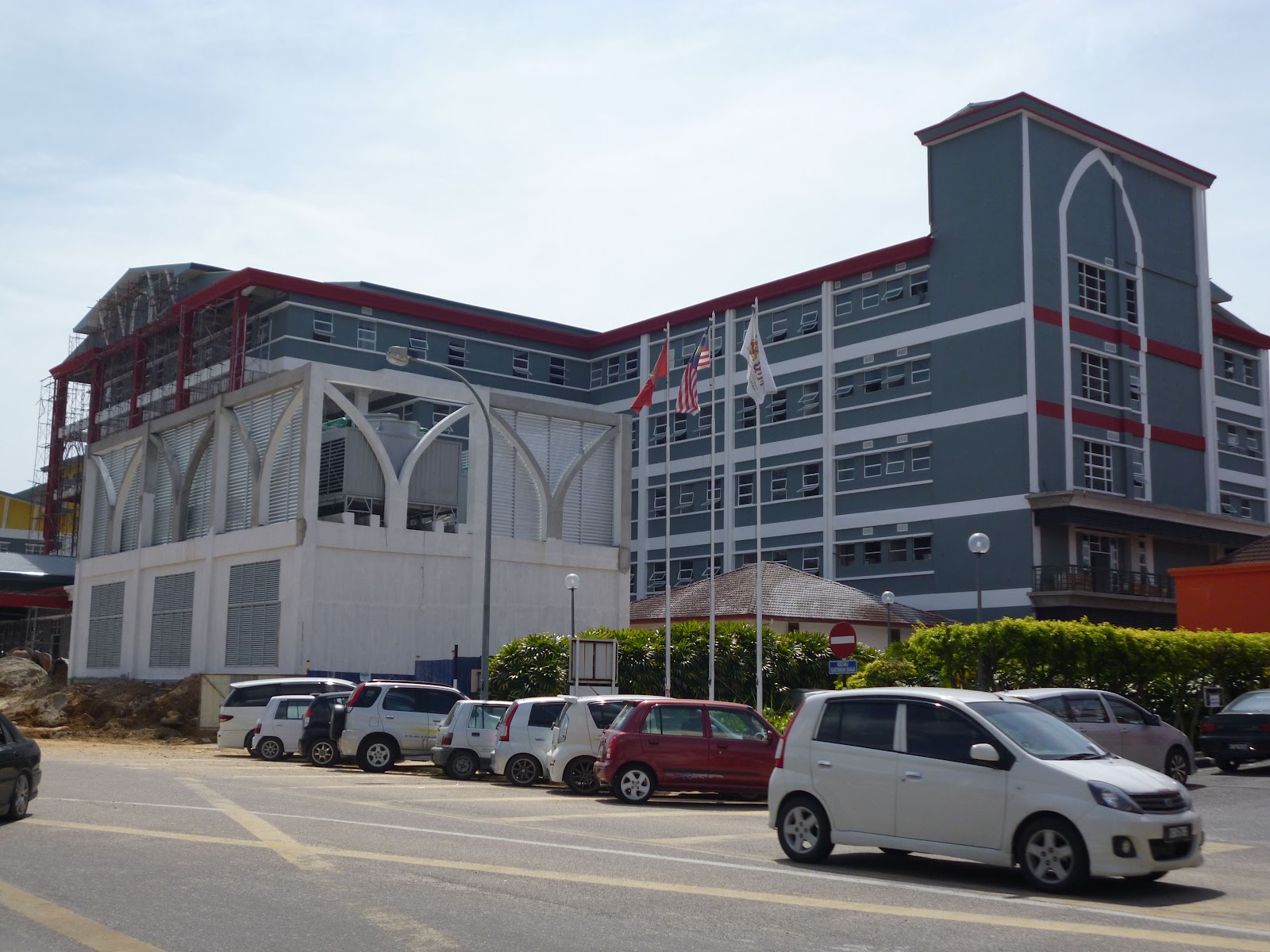
There are 2 new buildings which are almost nearing completion. These are the HUSM administration office and HUSM Accident & Emergency (A&E) Dept. One is the yellow complex, the other is gray & red complex.


HUSM Admin building


HUSM A&E building

Advanced Medical and Dental Institute (AMDI)

There is the Advanced Medical and Dental Institute (AMDI) in Bertam campus in Penang, and a small AMDI office here in Kelantan. When AMDI was opened in Bertam, staff whose families lived in Bertam moved back to Bertam or Penang island. As the lands in Bertam was cheap, people started buying lands and built affordable homes. Now Bertam is becoming expensive. After some time, a small AMDI office was opened in Kelantan campus. So now there in AMDI in Bertam and AMDI in Kelantan. I don't know what the reasons are. But I have heard news of proposed privatisation of AMDI in Bertam. In years to come, AMDI in Bertam may not be ours anymore. I don't know what the problems affecting it are. As far as I know the place, Bertam is too far away from the airport (Penang International Airport). To go to the airport from Bertam, one has to pay toll RM7.00 at Penang Bridge and then drive to Bayan Lepas where the airport is. This is impractical. I have not been to the place because it is far out from my usual travel routes.


School of Pharmacy (Clinical)

There is a small annex for the School of Pharmacy (Clinical) here in Kelantan campus. It is nearest the old playing field. I have only seen it today while strolling. It seems out of place and resembles the old colonial buildings which are joined by covered corridors. The building is actually a container built on a concrete base and fitted with long windows. Since it is a metal container, it needed air-conditioning. A lot of these units can be seen on the outside. I think this is ecologically-unfriendly as it uses a lot of electricity for cooling the 'metal box' whereas it is already situated under the trees and won't need to depend on air-conditioning so much. I think this place should be turned into a Centre for Child Health and Learning. Pharmacy should return to its initial complex at the medical school, not here. 


School of Dentistry, USM

Pusat Pengajian Sains Pergigian (PPSG), Universiti Sains Malaysia (USM), Kubang Kerian, Kelantan, Malaysia.


Dr Zahar Ahmed is in blue shirt. Beside him is Mr Hazrul Reeza. Both are from UNU-IIGH.

The Orphans

Far away in the plains of Gua Musang are several acres of oil palm plantations. The groves are named Chiku 1, Chiku 2, and Chiku 3. Chiku 3 is nearest KL. There was once a Malay man who looked after the oil palm plantations of Chiku 3. I called him Pak De. His real name was Ishak bin Hussin. Pake De married Mak De and they had 5 children, 2 boys and 3 girls. Pak De worked hard and saved as much as he could to have his own home. He managed to secure a terrace house in a row in front of a tadika (kindy) and a mosque. He was happy. He retired and had some money so he bought a piece of swampy land to build his second home, which was by the largest Malay graveyard in Tanah Merah. However, when his second home was ready, and it was his daughter's wedding. Pak De passed away at the hospital where my husband works. My husband received the call that Pak De was at out Hospital USM A&E. We went to see him after work. That time his pulse was about to disappear and the resuscitation team came to his rescue. The light blue curtains were drawn on 3 sides and the lifesavers team set to work. After minutes of the best effort to revive him, Pak De passed away at our hospital. Everyone was very sad. I was sad too and I was standing closest to the blue curtains and once in a while I would peek and see what they were doing to Pak De. I saw the worst. I informed Pak De's sons who were also on site. They cried. I had no tears as I was too sad to even cry. The boys wanted to see their father, so the team allowed them. I then left the room, feeling totally lousy. That was February 2012.

Today, 16 July 2012, I was performing Zohor prayers with my husband (solat jemaah). When we completed, he had a message on his mobile and picked up his phone to check if anyone was looking for him. It was a sad message that Mak De passed away at 1 pm at the General Hospital in Kota Bharu (GHKB). My husband understood the message well - we had to go and help. I said to my husband to go back to his workplace first and finish off his job there, then clock out and we'll go to Tanah Merah to attend to Mak De's funeral. When my husband returned at 5pm, I was just through my solat Asar. My husband had light snack and made my evening cup of milk for me. As I was packing to leave home, I gave instructions to my elder daughter to pick up my youngest daughter who was still at school and would only finished school at 6.15pm. Since it would take 1 hour to drive from Kubang Kerian to Tanah Merah, my husband and I had to leave home before 6pm, and reach Tanah Merah before dark. Then we left. I didn't like the idea of leaving home without seeing my youngest daughter who was still in school. We waited for my husband to finish his call to Bank Islam KL and then we had to leave for Tanah Merah. This time the journey was quiet and I was unhappy. I had also forgotten to bring along my prayer mat and clothes. I was totally upset. We usually played a CD for this 1-hour trip but not today. I was not in a mood to listen to any songs. I was saddened by Mak De's sudden demise. Mak De suffered from diabetes and had her left leg amputated below the knee. She was apparently well after that but went to ICU and passed away there. She had complained of difficulty breathing and was put on a respirator but she passed away in the ICU. 

When we reached Mak De's house at about 7 pm, she was no longer there as her remains were already transferred to 'masjid besar', the main mosque in Tanah Merah. Affandi talked to Mak De's kids and talked to the eldest son, Badrul. We then left so my husband could drop me at my parent's in-law's place.

At the sound of Azan, my husband, his father, his sister's family all left to go to the main mosque to perform solat Maghrib. Then the men sat down to read the Quran for Mak De. They then performed solat jenazah before her remains were brought to the graveyard near her home. My husband, Mak De's eldest son and another son went down in the grave hole (liang lahad) to receive her remains. Her youngest daughter waited above ground to observe the burial process. That done, my husband returned to his parent's home to pick me up to go home. 

I had dinner before my husband returned from the burial ground. When he arrived, there were many people at his parent's house. I was attending to a couple with 5 kids from Padang Tembak. The father of the family, whom I called Li, was telling me stories about his encounter with is classmates, some of whom are doctors where I work. My husband stepped inside the house but he was drenched in his own sweat. He had to take a bath and then we could perform solat Isya' together. My father-in-law joined us and the 3 of us prayed together. He sat on his little portable blue chair while my husband and I stood on our prayer mats. Then my husband had dinner and I accompanied him as I had already eaten. But I had jackfruit (nangka) and durian. Li opened a lot of durians for me to try.

Coming back to Mak De, she was the second woman I met who liked my clothes and asked for them. She was a good seamstress and we bonded like sisters. She would take my clothes and re-modelled them into her clothes. That's like turning a size S to a size L but she turned my clothes into lovely pieces that she could wear. There was one instant she wore a brown two piece re-modelled chiffon garment, and she looked really elegant. Mak De was very tall. I think she was almost 6 feet tall. Mak De was 5 years my senior. She was 59 when she passed away. It made me very sad to lose a 'sister'. Now Mak De's 5 kids are orphans. Three of her daughters are still schooling and they are the same age as my last 2 daughters.