Friday, 8 April 2016

Yusof bin Ishak

He was the first and the first Malay President of Singapore. He was born in Perak, Federated Malay States under British Malaya occupation. His father, grandfather, great-grandfather and great-great-grandfather were Malays of Sumatran Minangkabau heritage. They were descendants of the Minangkabau royalty of the ancient Pagaruyung palace in the central highlands of West Sumatera. Though they were of Minangkabau stock (supposedly a fierce warrior stock), they stuck fast to Islamic values and adhered to living together harmoniously. Many of the Minangkabau men of this heritage married Chinese women, and most of these women, coincidentally, were name Aishah! And almost every Aishah is a Chinese woman married to a Minangkabau man.

I have managed to trace the family tree of Yusof bin Ishak, after our 2013 family reunion in Penang, which was organised by Prof Ahmad Murad Merican. My husband and I then visited Prof Ahmad Murad Merican's parents in Kg Melayu, Air Itam in Penang. His parents were affectionately known as Tok Chu and Nenek. Nenek is related to my late father, and Tok Chu to my late mother - they were of Merican stock. Nenek and my father were Minangkabau descendants.

Nenek related to me her family tree and that of Yusof bin Ishak. Tok Chu showed me the big white rolled sheet that contained my ascendants and familiar names of relatives which I remembered from when I was a a little girl. I never knew their real names. Tok Chu made 7 copies of the family tree, which I distributed to my siblings.

At home in Kelantan, I studied the big sheet that had the family trees of my father's descendants and that of Yusof bin Ishak. I also bought books at the 2013 reunion. I studied them all and then put together the family tree for Yusof bin Ishak, my father and the rest, including Ami Aziz.

When I was putting together my text on Yusof bin Ishak, I had a hard time as I had never heard of him when I was a child, nor did I know what he looked like. I looked through books and the Internet. The only face I knew was that he resembled Walter Disney. I had thought Yusof bin Ishak was Walter Disney!

After watching many YouTube videos and Facebook posts on Yusof bin Ishak, I then could distinguish between Walter Disney and Yusof bin Ishak.

I did not know his wife and family. In 2016, I watched YouTube videos of Lee Hsien Loong on Singapore Rally, and he mentioned Puan Noor Aishah, and there were a few frames of the video clip that showed her. From there I searched her photos and videos online. In Facebook, my third cousin in Singapore, Baharin Thamby, informed me of 3 Bicara interview/YouTube videos of Puan Noor Aishah. The Singapore Malay language used in the video is something I have not heard for a long long time since I was a small girl. It took some time for me to understand, and I played the vidoes several times in order to clearly understand what Puan Noor Aishah said - she spoke real fast! Lee Hsien Loong spoke perfect Bahasa Melayu baku (book style) and that is easy to understand. Most Chinese lecturers in Malaysia today speak this Bahasa Melayu baku. However, the male and female actors spoke Bahasa Melayu Indonesia.

I have not met any of the family members in the flesh. I only know them from YouTube videos and from photos at blogs authored by journalists. There was a lady that sat at my table at the 2013 family reunion. I didn't bother to ask her whom she was as she seemed really sad. I may make her cry. As I look back, I think she could/could not be Puan Noor Aishah. She returned after the function in a big shiny black car. I have the photo somewhere in my many HD.

I have many Singapore relatives. I have only been to Singapore twice - in 1965 and 2011. In 1965, our family visited HABHAL's kicap village in Geylang Serai and we went shopping at Robinson. We also watched Disney on Ice performed in Singapore. In 2011, I visited Singapore to obtain information for my book on The Early Malay Doctors. I had no idea about Yusof bin Ishak in 2011, or I could have asked the people on the street about him and included a text about him in my books.

YouTube videos:
Sejarah Presiden Orang Melayu Pertama Singapura Encik Yusof Ishak


Family, family history and roots:

  1. http://262bandahilir.blogspot.my/Tun Hj Yusof bin Ishak President Singapore
  2. http://theearlymalaydoctors.blogspot.my/Mencari Bako by Aziz Ishak

Saturday, 19 March 2016

Dr A Bearblock and Prof NRE Fendall

Judy is researching on Prof Fendall, whom Dr Bearblock trained. Please read her messages and help her out. Judy is in Facebook.

Judith Cable
Thank you very much for this information. I believe that Dr Bearblock started the Anti TB Association of Malaya back in the 1930s to get rid of the disease from the state. Dr Bearblock trained Professor NRE Fendall (whom I am friends with) I know that Professor Fendall was a boy in Malaya and returned after the war to help train doctors and establish a Health System. If you have any information on Professor Fendall in Malaya it would be helpful.
28 January 2016· Sent from Web

Judith Cable
I have no picture of Dr Bearblock.
Many thanks
28 January 2016· Sent from Web

Judith Cable
Thank you very much for your help. Dr Bearblock and Dr Fendall were very influential in Malaya during the 1920's - 1950's. Dr Fendall helped after the war with Medical care and Dr Bearblock started the Anti TB Association of Malaya which irradicated the disease in the country. I would love for any information on them. Thank you very much. Its so great you have your blog and book. I was very interested in it.
19 March 2016

Monday, 1 February 2016

Red Prawn Durian (Ang Har) from Brown Estate


I wrote a bit about Brown Garden in Penang and described David Brown's estate, on this blog, entitled
David Brown 1778-1825.

These 2 comments came from Lindsay Gasik on 4 March 2015:
https://plus.google.com/101142772099666721363/posts

Thank you for this informative article about the Brown Estate. I am doing research on a durian variety called Red Prawn or Ang Har which is supposed to come from the Brown Estate. Do you know how I can learn more about the Brown Estate and its current status, as well as where exactly the durian may have come from? Thanks!
4 March 2015 at 16:34

Great informative article about the Brown Estate! I am doing research on a durian variety called Red Prawn which supposedly originated there. Do you know how I can find out more on the history of this durian? Thanks!
4 March 2015 at 16:35

---

A. External links on the Brown estate at Glugor in Penang:
Search results at NewspaperSG for Brown Estate Penang

Newspaper articles on the Brown estate:

PENANG NEWS.
The Singapore Free Press and Mercantile Advertiser (1884-1942), 13 December 1923, Page 6
(From Our Correspondent).
Penang, Dec. 12th.
In the Supreme Court, Mr. Justice Sproule is hearing the suit of Helen Margaret Brown against Lawrence Brown, D. A. M. Brown and John Robertson Brown, regarding Glugor Estate.

GLUGOR ESTATE CASE.
The Straits Times, 1 February 1924, Page 9
(From Our Own Correspondent).
Penang, January 31.
In the Supreme Court, Penang, Mr. Justice P. J. Sproule, has given judgment for the plaintiff in the case in which Miss Helen Margaret Brown, only daughter of the late Alexander Murray Brown, sued Lawrence Coombe Brown, David Alexander Murray Brown and John Robertson Brown claiming, (1) a declaration that under the will of the late Forbes Scott Brown and in the events that have happened the plaintiff is entitled in equity to a vested estate tail in the Glugor Estate, Penang, (2) a declaration that the plaintiff is entitled to bar the said entail, (3) conveyance from the defendants of the fee simple in the Glugor Estate upon the plaintiff executing such disentailing declaration as the Court shall seem proper and (4) such further and other relief as the court may think fit.

FUNERAL OF THE LATE MR. J.R. BROWN.
The Singapore Free Press, 12 May 1926, Page 8
(From Our Own Correspondent).
Penang, May 11.
The funeral of the late Mr. J. R. Brown manager of Glugor Estate, whose death occurred with such tragic suddenness on Sunday, took place at Western Road Cemetery. The Rev. Keppel Garnier, Colonial Chaplain, officiated. There were many mourners present.

THE LATE MR. J. R. BROWN.
The Straits Times, 12 May 1926, Page 8
Penang, May 11.
The funeral of the late Mr. J. R. Brown, manager of Glugor Estate, whose death occurred with such tragic suddenness on Sunday, took place at Western Road Cemetery. The Rev. Keppel Garnier, Colonial Chaplain, officiated. There were many mourners present.

Brown Estate
The Straits Times, 28 September 1966, Page 11
PENANG. Tues. - Representatives from 23 Penang Umno youth branches will attend a special delegates' meeting on Oct. 2 at Umno Hall to hear a report from the executive committee on developments relating to Brown Estate.

State 'yes'
The Straits Times, 27 November 1971, Page 17
PENANG. Fri. - The State Government has agreed to the Federal Government's proposal to sell part of the former Brown estate in Glugor for development as an industrial or housing estate.

---

B. External links on durian:
Durian in Facebook
Varieties of popular durian
Durian types
Durian farm
Durian Timeline photos in Facebook

Feedback from Durian in Facebook:

Hi, according to an article in the Strait Time in Singapore dated 22 june 2015, it mentioned the durian 'Ang Har' originated from either Pahang or Johore...
Prof...are you into research on the Durian?

------------------------

C. Update on 10 March 2016:

Location of Glugor House, a plantation house owned by Brown:
https://en.wikipedia.org/wiki/Minden_Barracks

My comment: This house is also featured in a painting at the Penang Museum.

Glugor House was converted into the British Minden Barracks in 1939 (1939-1971), and now houses the Universiti Sains Malaysia (USM) main campus (1971-present).

USM main campus has a durian growing garden in a valley, called Durian Valley. The durian trees here were from the original variety planted at this location. Durian Valley is still extant. Visitors to the USM campus in Penang can ask for directions to the Durian Valley at the main entrance to the campus or check the USM campus website for more details about Durian Valley.

-----------------------

D. Update on 26 April 2016:

I happened to watch TV in the morning and it talked about Red Prawn durians.

My summary:
The durian farm belongs to Mr Sheng, whose father came from China and settled at Balik Pulau, Penang. About 70% of the trees planted by his father are now 50 to 60 years old. They are about 100 feet tall and produce good quality Red Prawn durians. The durian trees that Mr Sheng planted are about 30 years old, and will take well over 30 years to become mature trees and bear quality durians for his children and their generation.

Astro C703 Asian Food Channel (AFC)
Taste with Jason S8 Ep09
26 & 27 April 2016
6.05-6.35; 6.35-7.05 am

This is part of the dialogue (I missed the first part):

Sheng: It has the colour of cooked prawns and it's one of Penang's most famous durians.
Jason: Sheng, let me try the Red Prawn ...
Sheng: It feels like eating ice-cream. This one you are having is delicate and fragrant.
Jason: And it's more refreshing and floral.
Sheng: That's right. So it is younger.
Jason: What are the features of Red Prawn?
Sheng: It has a unique aroma, and its flesh is very delicate and there is no fibre.
          There is fibre in other durians, but when you eat Red Prawn ... or eating ice-cream.
          These two are even more special. They are from old trees - 50 to 60 years old.
Jason: 50 to 60 years old?
Sheng: See if you can taste the wine, and it's especially bitter.
Jason: You're right!
Sheng: Young Red Prawn durians are only sweet and floral. Old ones have an extra layer of
           bitterness and hints of wine
Jason: This is what Sheng does every day (feed durian to customers)
Sheng: The freshness of the durians. So now you know that. Your tongue will turn numb eating it.
          You can only have it here. The numbness lasts only for a few seconds.
          Even durians have a golden half hour, and its interaction with the tongue produce
          unexpected results.
Jason: When you take a bite, your tongue feels a bit different - it's biting into my tongue!
Sheng: That's right!
Jason: It was a quick bite!
Sheng: That's right! When you experience the numbness, the aromas are amplified. The flavours
          explode outwards in that instant, and it has to be within half an hour after it falls.
Jason: How much is one of these? Is it expensive?
Sheng: Yes, it is!
Jason: Sheng gets all excited whenever he talks about durians.
          Over 70% of his trees are more than 30 years old.
          For a durian enthusiast like himself ...
Jason: So all of these are ...
Sheng: ... by my grandfather when he came from China ... apply for a permit from the land office ...
          He started to plant peppers, cloves, cardamoms ... then slowly changed over to planting durians
Jason: Sheng is of Huizhou Hakka descent. His ancestral durian plantation is situated in Penang, at
          Sungai Pinang in Balik Pulau. This area was supposedly the earliest area in Penang where the
          Hakkas settled in. It is believed that they chose to settle in this hilly region because in their  
          homeland ...
          Second generation?
Sheng: That's right!
Jason: It looks like it is almost 100 feet tall!
Sheng: ... are only 30 to 30 years old now, will take another 30 over years ... forefathers leave behind
          for their descendants. It will be sweet, bitter ...
Jason: Every durian tree in the Balik Pulau plantation ... the hard work of the first generation Hakka
          forefathers after they arrived here. Without their enduring spirit, there would not be the
          harvests of today.

Special thanks:
Wilwe Sdn Bhd
Dr Ko Chung Beng
Ko Skin Specialist
Dr Lee Chee Chau

Advisor:
Choo Chi Han
Chiu Keng Guan
Terry Lian
Hor Wai Leng

Videographer: __ (Chinese script)

Editor: Kiang@Octopost
Researcher: __ (Chinese script)
Mixing: Chee Kean @ Infusion

Producer: Pang Khong Peng
Executive Producer: Jason Yeoh

Produced by Insane Kitchen

Download Axian Apps:
www.axian.my
jason@axian.my
www.facebook.com/axian.my

Location:
Boo Seng Durian Farm
150 MK2 Sungai Pinang
11010 Balik Pulau,
Penang

N 5.24.170
E 100.13.167

HP: 012-411-0600

Open: 1100-1900

---------------

Thursday, 28 January 2016

Obituary: Prof Rogayah bt Jaafar (1955-2016)


Prof Rogayah bt Jaafar (1955-2016)
Dept of Medical Education
School of Medical Sciences
Universiti Sains Malaysia

It is with great sadness that I post here on the demise of my colleague, Prof Rogayah Jaafar. I knew her since June 1982 when I joined the USM Medical School. Prof Rogayah was from Johor. She was born on 8 January 1955. She headed the Department of Medical Education. She retired at 58.

She was admitted to Hospital USM on 10 January 2016 and passed away earlier this morning. She passed away on Thursday, 28 January 2016, 30 minutes after midnight. She was 61 when she passed away.

She leaves behind her husband, Prof Zulkifli Ahmad (Community Medicine USM Medical School & USM Dental School Research Deputy Dean), and 5 children - eldest boy and 4 girls.

Her daughters and husband were present at the mortuary where staff could pay their last respect. Her son was on his way to HUSM. I met the family members except her son.

She will be interred at the Muslim burial site at Kg Baung Bayam, near Cherang. I don't know the burial place.

The following pics were obtained from the Internet. They are not mine. They belong to USM.

Prof Rogayah working in her office at Medical Education.
Dept of Medical Education, School of Medical Sciences,
USM in Kubang Kerian, Kelantan
Dept function. Prof Rogayah is seated next to her husband.
Prof Rogayah cutting the cake. Her PA Jamilah is on her right.
Dr Najib Mat Pa and Dr Rose
Prof Rogayah and I et al, last wrote this CDAE module for USM
External links

USM Medical School
http://www.medic.usm.my/ms/

List of departments
http://www.medic.usm.my/ms/kenali-ppsp/senarai-jabatan

Prof Rogayah's CV (online)
http://www.research.usm.my/topwomen/rogayah.pdf

Prof Rogayah - speaker's bio
https://apaphs.wordpress.com/invited-speakers/

Prof Rogayah - speaker's bio
Rogayah Jaafar is a Professor of Medical Education and the founding Head of the Department of Medical Education at the School of Medical Sciences, Universiti Sains Malaysia. She obtained her Bachelor of Medicine and Surgery degree from the University of Cairo, Egypt, her Master of Health Professional Education from the University of New South Wales, Australia and her post graduate fellowship certificate in Health Leadership Development (ICHLD) from the University of Chicago, USA. Dr. Rogayah’s teaching and research interests include curriculum development, partnership and leadership development, interprofessional education and women’s  health issues.
10th Asia Pacific Medical Education Conference (APMEC)
National University of Singapore, Singapore
16-20 January 2013

Adolescent’s Attitudes Towards Health Warning Message on Cigarette Packs
Zulkifli Ahmad, Rogayah Jaafar,* Razlan Musa, and Nyi Nyi Naing
The Malaysian Journal of Medical Sciences (MJMS)
Malays J Med Sci. 2001 Jan; 8(1): 20–24.

PROBLEM-BASED LEARNING AS PERCEIVED BY DENTAL STUDENTS IN UNIVERSITI SAINS MALAYSIA
Arunodaya Barman, Rogayah Jaafar, Noorliza Mastura Ismail*
Malaysian Journal of Medical Sciences, Vol. 13, No. 1, January 2006, pp.63-67

Curricular Trends in Malaysian Medical Schools: Innovations Within
Nor Mohd Adnan Azila,1 BSc, PhD (UK), Jaafar Rogayah,2 MBBCh (Cairo), MHPEd (NSW),
Zabidi Azhar Mohd Hussin Zabidi-Hussin,3 MBBS (N’Cle), MRCP (UK), FRCPCH
Ann Acad Med Singapore 2006;35:647-54
Review Article

Learning style preferences of nursing students at two universities in Iran and Malaysia.
Abdolghani Abdollahimohammad1, *, Rogayah Ja’afar2
Journal of Educational Evaluation for Health Professions (JEEHP)
J Edu Eval Health Prof 24 November 2014


PHT Exhibition & Talk: The Chulia Diaspora, Mosque and Endowments


I have covered a little bit about the founding of Masjid Kapitan Keling in Penang by Cauder Merican. His descendants carry the Merican clan name. Examples of early doctors from this clan are Penang's first doctor, Dr A. O. Merican, and his sons, Dr Carleel Merican and Dr Ezanee Merican. Their biographies are in my book. Cauder Merican's Will is also mentioned in my book.

Khoo Salma Nasution heads the Penang Heritage Trust (PHT). Salma's book is The Chulia in Penang. This book has won her the Australian ICAS book award. I hope you can attend Salma's talk and exhibition in Kuala Lumpur.

Details:

PHT Exhibition and talk: The Chulia Diaspora, Mosque and Endowments
Date: Saturday, 30 January 2016
Speakers: Khoo Salma Nasution (book author) and Jasmin Wahab (film producer)
Time: 10:00 am - Book signing ceremony
           10:30 am - 1:00 pm - Talks
           Tour of exhibition (after talks)
Venue: Islamic Arts Museum, Kuala Lumpur, Malaysia
             (near Masjid Negara in Kuala Lumpur)

---------------------

I'm re-posting an email from Khoo Salma:

from:      Khoo Salma <snkhoo@gmail.com>
to:      Faridah Abdul Rashid <faridahar@gmail.com>
date:      23 January 2016 at 11:44
subject: Fwd: The Chulia Diaspora, exhibition and talk, Islamic Arts Museum KL, Sat 30 Jan 2016

Dear Faridah,

I am pleased to invite you to my talk at the Islamic Arts Museum in Kuala Lumpur at 10am Sat 30 Jan 2016.

It is based on my book The Chulia in Penang: Patronage and Place-Making around the Kapitan Kling Mosque" which explores the history of Penang's links with the Indian Ocean and in particular of the South Indian Muslims who came in large numbers during the East India Company period, contributing to Malaysia's culturally diverse heritage.

I have presented this powerpoint (always a bit differently) at the School of African and Oriental Studies (SOAS) in London, at the ICAS conference in Adelaide, at a talk organised by the Indian Heritage Centre and URA in Singapore, also at a conference in Kanyakumari, India, apart from several talks in Malaysia.

But for my KL friends I will throw in the story of how Sheikh Tahir Jalaluddin resolved the Mihrab / Qibla controversy at the Kapitan Kling Mosque (with comments by S.M. Zainul Abidin).

The film-maker Jasmin Wahab will be my co-speaker. Please arrive at 10am as you will need to look for the auditorium, the event actually starts at 10.30am, ending at 1.00pm with a tour of the exhibition. My books will be available for sale.

Please think of your friends who might be interested to attend and help me forward to them!

Salma

Khoo Salma's The Chulia in Penang wins ICAS Book Award

Pamphlet
-------------------------

This is IAMM's circular which I received with Salma's email.

IAMM circular:

The Islamic Arts Museum Malaysia (IAMM) invites you to "The Chulia Diaspora, Mosque and Endowments", a lecture by Khoo Salma Nasution and Jasmin Wahab. The lecture is organised in conjunction with IAMM's latest exhibition entitled "The Chulia in Penang".

“During the era of the British East India Company, the South Indians appeared in British records as “Chulia”. The Chulias who came to the Straits of Malacca consisted mainly, but not exclusively, of Muslims. The Chulias lived and worked in the port area, and around the Kapitan Kling Mosque in George Town, Penang. This community played a key entrepreneurial role in the development of the Penang port and its region. The local born Indian Muslims, known as “Jawi Pekan” or “Jawi Peranakan”, gradually assimilated with the Malay community.”

The lecture will be held on 30th January 2016 (Saturday) at 10 am at IAMM, followed by a book-signing session and lecturing tour of the exhibition at the Open Space Gallery. For further enquiries or to reserve your seats, kindly contact the Education Department at:

Email: education@iamm.org.my
Tel : 03-2270 5136 / 5111 / 5101 / 5103

Poster
Book
Speakers & Film Producer


Thursday, 21 January 2016

Dr A Bearblock

From Judith Cable, also in Facebook:
https://www.facebook.com/judy.cable

Posted by Judy C to The Early Malay Doctors at 21 January 2016 at 05:19

Judy C has left a new comment on your post "Yahya Ibrahim":

Hi - I was wondering if you had any information on a Dr Bearblock. Dr Bearblock was a British doctor who trained other in Malaya. I am trying to track down those who may have known him.

Many thanks

------------------------------------

Google search for 'Dr Bearblock' on 21 January 2015, 7:22am:

Obituary
http://www.family-announcements.co.uk/wmn/view/1227905/charles-henry-bearblock

BEARBLOCK Dr Charles Henry of Saltash MB BS DRCOG ...

His full name is Dr Charles Henry Bearblock (MBBS, DRCOG) of Saltash.

He was a medical practitioner and an O&G doctor. He was a postgraduate holder of the Diploma from the Royal College of Obstetricians and Gynaecologists (DRCOG).

The Royal College of Obstetricians and Gynaecologists is based at:

27 Sussex Place
Regent's Park
London NW1 4RG
UK

The Facebook page for RCOG is at https://www.facebook.com/RCObsGyn

------------------------------------

Google search for 'Saltash in UK' on 21 January 2016, 7:43am:

https://en.wikipedia.org/wiki/Saltash

Cornwall Record Office (CRO), Cornwall, England:
The historical records are from the mid-12th century to the 21st century.
https://en.wikipedia.org/wiki/Cornwall_Record_Office

------------------------------------

When was Dr Bearblock born?

When did he obtain his MBBS?

When did he obtain his DRCOG?

When did Dr Bearblock serve in Malaya?

As the British doctors were distributed throughout Malaya, a time frame and a name of a place or a State in Malaya would help to search for people who had worked with Dr Bearblock in Malaya.

-----------------------------------

Cornwall Record Office Online Catalogue:
http://crocat.cornwall.gov.uk/dserve/DServe.exe?dsqApp=Archive&dsqCmd=Index.tcl

Search catalogue for 'Charles Henry Bearblock':
0x0003 NO RECORDS FOUND:

-----------------------------------

Newspaper search for 'Dr C H Bearblock' at the NewspaperSG archives in Singapore.

There are 22 results on him:
http://eresources.nlb.gov.sg/newspapers/Digitised/Searchresults.aspx?q=Dr+C+H+Bearblock&lang=

'Dr A. Bearblock' had worked in Malaya from April 1933 till the breakout of WW2 in Malaya, 1941.

PASSENGERS OUTWARD
The Singapore Free Press and Mercantile Advertiser (1884-1942), 10 April 1933, Page 13
Family members who embarked on the Patroclus at Birkenhead on 25 March 1933 for the Straits Settlements were:
Dr. A. Bearblock
Mrs. Bearblock
Master D. Bearblock
- the voyage took 11 days

PASSENGERS OUTWARD
The Singapore Free Press and Mercantile Advertiser (1884-1942), 21 April 1933, Page 12
The following passengers by T.S.S. Patroclus are expected to arrive in Singapore today:
Dr. and Mrs. A. Bearblock and child
Dr F. D. Zau

SOCIAL & PERSONAL.
The Straits Times, 28 November 1934, Page 13
- Dr. McNab, of the Taiping Hospital, has succeeded Dr. A. Bearblock as Medical Officer, General Hospital, Teluk Anson.
- Dr. A. Bearblock has gone to Kuala Kangsar on transfer.

KING'S PAVILION
The Singapore Free Press and Mercantile Advertiser (1884-1942), 30 December 1936, Page 8
Saturday, 26 December 1936
- Dr. A. Bearblock

SULTAN OF PERAK ILL.
The Straits Times, 12 June 1937, Page 13
- H.H. the Sultan of Perak suffered from influenza.
- Dr. G. A. Graham who succeeded Dr. E. Bearblock, Medical Officer, Kuala Kangsar, attended to His Highness.
:: The 30th Sultan of Perak at Kuala Kangsar at the time was Sultan Iskandar Shah Ibni Almarhum Sultan Idris Murshidul Adzam Shah I (1918–1938). He passed away a year after Dr. G. A. Graham had seen to him for his influenza. This was before the Second World War (WW2).

In Last Night's Government Gazette
The Singapore Free Press and Mercantile Advertiser (1884-1942), 1 July 1939, Page 3
- Dr. E. D. Lindow to officiate as Chief Medical Officer, Penang.
- Dr. A. Bearblock to act as Chief Medical Officer, Malacca.
- Dr. C. Samugam, House Physician, Grade III, S.S. Medical Service, seconded for service
  under the Government of Sarawak.

EXEMPTION CLAIMED FROM TRAINING
The Straits Times, 15 August 1941, Page 10
From the NST's Malacca correspondent, 14 August 1941
- 21 applications for exemption from all training
- Local Forces (Training) Ordinance, 1940
- Tribunal members: Mr. J. C. Cobbett (chairman),
   Mr. H. J. Ridgewell, and Mr. G. W. Bryant (Resident Councillor).
- 14 applicants in the Medical Department will be represented by Dr. A. Bearblock,
  Chief Medical Officer.

---------------------------------
Which Sultan of Perak reigned when Dr Bearblock worked in Malaya?
28. Sultan Idris Murshidul Adzam Shah I (1887–1916)
29. Sultan Abdul Jalil Karamatullah Nasiruddin Mukhataram Shah (1916–1918)
30. Sultan Iskandar Shah (1918–1938)

Sultan of Perak
https://en.wikipedia.org/wiki/Sultan_of_Perak
Siak Sultanate
27. Sultan Yusuf Sharifuddin Mudzaffar Shah Ibni Almarhum Sultan Abdullah Muhammad Shah I (1877–1887)
28. Sultan Idris Murshidul Adzam Shah I Ibni Almarhum Raja Bendahara Alang Iskandar (1887–1916)
29. Sultan Abdul Jalil Karamatullah Nasiruddin Mukhataram Shah Ibni Almarhum Sultan Idris Murshidul Adzam Shah I (1916–1918)
30. Sultan Iskandar Shah Ibni Almarhum Sultan Idris Murshidul Adzam Shah I (1918–1938)
31. Sultan Abdul Aziz Al-Mutasim Billah Shah Ibni Almarhum Raja Muda Musa I (1938–1948)
32. Sultan Yussuf Izzuddin Shah Ibni Almarhum Sultan Abdul Jalil Karamatullah Nasiruddin Mukhataram Shah (1948–1963)
33. Sultan Idris Iskandar Al-Mutawakkil Alallahi Shah II Ibni Almarhum Sultan Iskandar Shah (1963–1984)
34. Sultan Azlan Muhibbuddin Shah Ibni Almarhum Sultan Yussuf Izzuddin Shah (1984–2014)
35. Sultan Nazrin Muizzuddin Shah Ibni Almarhum Sultan Azlan Muhibbuddin Shah (2014–present)

Sultan Iskandar of Perak
https://en.wikipedia.org/wiki/Iskandar_of_Perak

Perak Palaces
https://en.wikipedia.org/wiki/Istana_Iskandariah

---------------------------------
Archive: Malaysian National Archives/Arkib Negara Malaysia (ANM)

Ref. No.: ANM 1957/0461300

Title: Requests that the Medical & Health Department should have prior notice of ships calling at Port Dickson.

Source: Office of the Government Secretary of Negeri Sembilan

Dr A. Bearblock had worked as Assistant/Acting Medical Officer in Negeri Sembilan. The Health and Medical Department had requested that foreign ships which called at Port Dickson to inform the department prior to arrival. Foreign ships should only be allowed in the port after the Medical Officer had performed a health inspection of the ship.

-------------------------------------

The Straits Times, 17 November 1928, p.10. Untitled.

Dr Bearblock, of the Ipoh District Hospital, has been transferred to Kuala Kangsar in place of Dr E. C. Chitty, Medical Officcer, who goes to Ipoh with Dr (Mrs) Chitty, the Lady Medical Officer, Kuala Kangsar. Mrs (Dr) Chitty takes the place of Miss (Dr) Robertson, Lady Medical Officer, Ipoh, who left for Kuala Kangsar on transfer on Wednesday in a similar capacity.

My comments: 
This article does not mention he is Dr A. Bearblock, but it is assumed this was Dr A. Bearblock. He was at the Ipoh District Hospital till November 1928. He was transferred to the Kuala Kangsar Hospital in mid-November 1928.

---------------------------------------

Wednesday, 6 January 2016

Malayan Girl Guides

Pemandu Wanita di-negeri ini lahir pada tahun 1917
Berita Harian, 22 October 1966, Page 9


-- Before WW1 --

The Girl Guides was born in Berkshire, England on 6 February 1909.

The World Scouts Movement was formed by Lord Baden Powell.

He was the Chief Scout and his wife, Chief of the Girl Guides.


** History of the Girl Guides

The girls at Pinkneys Green wanted their own society for women.
They included schoolgirls, shop workers, and domestic maids.

Lord Baden Powell registered the women's society under the Girl Guides (Pemandu Perempuan).

Lord Baden Powell was a fine soldier. However, the societies he helped formed did not involve military activities. Instead, they were formed to train boys and girls, men and women, to help one another, to be brave, to be law-abiding, and to believe in oneself.

The motto for the Scouts and Girl Guides is "Be Ready."
Their rules are one and the same.

The Scouts and Girl Guides movements expanded and reached other countries - British Colonies, Europe and America. They are everywhere today.

-- During WW1 --

By the time of the first World War, there were thousands of Scouts and Girl Guides.

The Girl Guides wore the original blue pinafore.

The Girl Guides worked alongside volunteers and the Red Cross.

They attended to the wounded. They did charity work to raise money for their coffers.


** Malayan Girl Guides

The Malayan Girl Guides was established in Kuala Lumpur in 1917.
The girls were not that social and were still shy at the time.
The first batch of schoolgirls were from the Methodist Girls' School in Kuala Lumpur.
The school's American headmistress encouraged the girls to establish the Girl Guides.
This Girl Guides was registered in India.

-- After WW1 --

The Malayan Girl Guides activities expanded between 1919 and 1921.
It expanded from Kuala Lumpur to other districts in Selangor, Penang, and Butterworth.

In 1921, a HQ Council was formed for all Malayan Girl Guides.
Its President was Lady Guillemard.
Its Chief Commissioner was Mrs Cavendish.

The Girl Guides was introduced to the other states.
Girl Guides training classes were held in Penang and Perak.

Seremban and Malacca established their Girl Guides after 1925.

In Perak, the Girl Guides opened sub-branches in small towns such as Batu Gajah and Tapah.

Even though the Girl Guides expanded rapidly, the members were girls and ladies
who could speak English; there were no Malay ladies.

The first Malay ladies who joined the Girl Guides were from Sekolah Kampong Baharu, Kuala Lumpur.
There were 50 people; they comprised Brownies and Girl Guides.
The beginners were Brownies, who then advance to Girl Guides when they gained experience.
They joined the Brownies on 13 May 1923.
They were known as Malay Brownies (Brownie2 Melayu).

The Malay Brownies then expanded to Negeri Sembilan and Johor.

The first all-Malayan Girl Guides camping or gathering was held in Malacca in 1932.
Following the first successful gathering, the second one was held in 1932.

In the meantime, many British women arrived from England to assist the Girl Guides in Malaya to train new members. Some of the women who had long served the Girl Guides left to return to their home countries. The ladies were bestowed medals for their great contributions to charities.

The Girl Guides published their monthly bulletin in 1935.
Lady Shenton Thomas became the President.
Sir Shenton Thomas was the British High Commissioner to Malaya.

The third gathering was held in 1933, one in Malacca and another in Kuala Lumpur.

The problem faced was training new members about Girl Guides activities.
An experienced British lady, Mrs Croft Watts, was sent from India to assist.

In 1936, a magazine about the Girl Guides was published in Penang, where its HQ was opened.

In the meantime, a group of Indian Brownies was formed in Kuala Lumpur.

-- Before WW2 --

As WW2 approached, another gathering was held in Malacca, and courses were held in many states.

-- During WW2 --

The Girl Guides activities halted abruptly during the Japanese occupation in Malaya.

-- After WW2 --

The Girl Guides was revived after the war, in 1946.

The HQ resumed its activities in 1947.

There were many historical records created by the Malayan Girl Guides.

In 1948, two members of the Malayan Girl Guides went to England to attend courses on Girl Guides activities. They were Che Lili Majid and Nona Ng Ooi Chan.

 ** Is this the late Dr Lily Majid, elder sister of Dr Ruby Majid - an early Malay doctor?

In 1950, the Malayan Girl Guides attended an international gathering and camp in Australia.

In 1951, five members of the Malayan Girl Guides won the Queens Guide prize.

In 1952, a group of Malayan Girl Guides attended a gathering in England.

In 1953, the Malayan Girl Guides which had served both Malaya and Singapore, separated to form two bodies.

In 1953, a Malayan Girl Guide, Che Hasnah binti Mohd Ali, was sent to attend a Juliette Low Guide course in Switzerland.

  ** Is this Tun Dr Siti Hasmah bt Mohd Ali, an early Malay doctor?

The Malayan Girl Guides was a busy body. It sent a delegation to attend many international conferences, new offices and many tents were opened, etc.

In 1957, when Malaya gained its independence, the Federated Malay States Guides Society combined with the World Guides Society.

In 1958, the Chief Commissioner post was held by a Malayan, Mrs Navaratnam.

Malaysia can boast of her Girl Guides activities as they are on par with those of developed countries.


** World Girl Guides

74 countries became members of the Girl Guides world body.
Malaysia is a member.
Lady Baden Powell remained as its Chief.
The body held its 19th international conference in Tokyo.

Pic caption: Lady Baden-Powell gave her speech at the Camp Windsor Great Park, Berkshire, England during the 100th birthday anniversary of Lord Baden-Powell.


Source:
Pemandu Wanita di-negeri ini lahir pada tahun 1917
Berita Harian, 22 October 1966, Page 9

Thursday, 31 December 2015

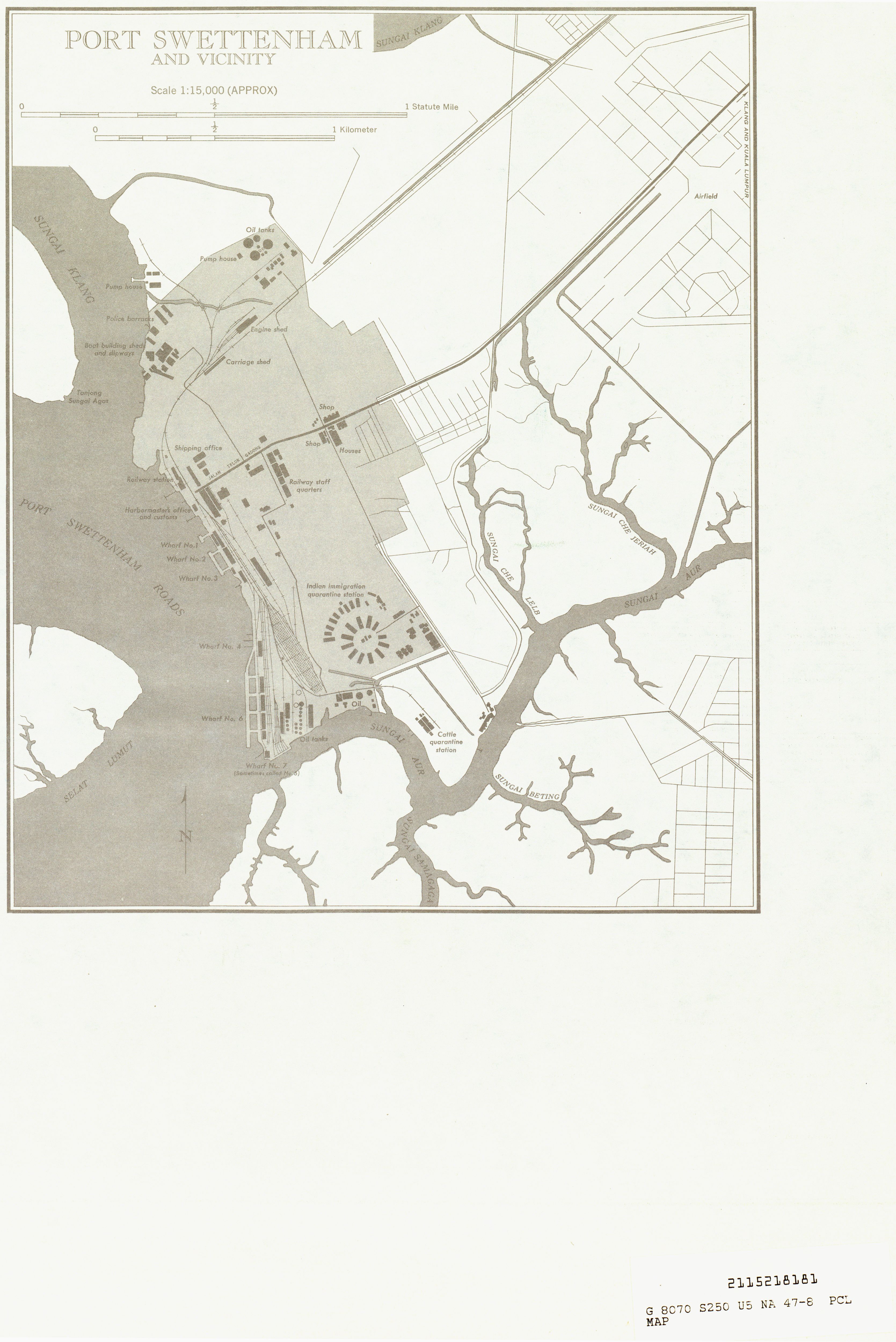
Port Swettenham

Port Swettenham ... named after Frank Swettenham on 15 September 1901
Port Klang ............. renamed since July 1972
Pelabuhan Klang ... Malay name


Before Port Swettenham existed, there were Swettenham Pier in Penang - a deep sea harbour, and another at Keppel Harbour in Singapore.

Port Swettenham was inspired by Frank Swettenham. This port was for exporting rubber to the USA, and tin to England. It was also used for picking up and sending home Hajj pilgrims, before Tabung Haji was formed and commercial flights were made available.

Port Swettenham is located about 6 kilometres (3.7 miles) southwest of the town of Klang, and 38 kilometres (24 miles) southwest of Kuala Lumpur, the country's capital.

Port Swettenham was built on a mangrove swamp and mosquitoes were a menace then. Malaria was rampant in the coastal areas and Port Swettenham, The early Malay doctors were posted to manage health at Klang, Port Swettenham, and the coastal areas. Among doctors posted to Klang, Port Swettenham, and the coastal areas included Dr Che Lah bin Md Joonos and his colleagues.

Land fill helped and malaria ceased to exist. No malaria is reported anymore. There is no malaria in Malaysia today.

The same mosquito menace is being experienced by areas with many lakes and swamps today - for example Mandurah and Serpentine Hill in Western Australia.

Port Swettenham is presently divided into 3 parts, with 3 different agencies managing each part or port - Southport (oldest), Northport and Westport. Southport is still under the Govt. Northport and Westport have been privatized.

---------------
Map of Port Swettenham 1954. Wikipedia
Port Swettenham And Vicinity by U.S. Army Map Service 
https://commons.wikimedia.org/wiki/File:Port_Swettenham_And_Vicinity.jpg#/media/File:Port_Swettenham_And_Vicinity.jpg
 http://www.lib.utexas.edu/maps/ams/indonesia/txu-oclc-21752461-na47-8-back-b.jpg

---------------
There are road and railway links to Port Swettenham.

Port Klang Komuter station offices" by Rifleman_82 
- Own work. Licensed under Public Domain via Commons 

----------------------------------------------------
Klang
- terminus of Govt railway
- port town of Selangor state
- capital of Selangor state before 1880
- royal town of the Bugis rulers of the Selangor Sultanate
- Indian labourers were shipped here to work on rubber estates
- largely Indian populace

----------------------------------------------------
Milestones

1880
- KL replaced Klang as the capital of Selangor
- transport between KL-Klang was by horse or buffalo wagons, or boat
- William Bloomfield Douglas was the British Resident
- Sir Frank Athelstane Swettenham described the journey as long and boring
  Suggested to add a railway line to link KL to Klang

1882
- Sir Frank Swettenham became Selangor Resident in Sept 1882
- He initiated a railway link between KL-Klang
- alleviated problems with transporting tin ore to Port Swettenham (Pelabuhan Batu)

1886
- Railway track measuring 19.5 miles between KL-Bukit Kudu was opened in Sept 1886

1890
- KL-Bukit Kudu railway track was extended by 3 miles to join to Klang

1897
- Sir Ronald Ross discovered the malarial parasite, an anophelene mosquito
Britain's Sir Ronald Ross proved in 1897 that malaria is transmitted by mosquitoes. Port Swettenham was the first colonial area to benefit from the discovery. Swamps were filled in, jungle cleared, and surface water diverted to destroy mosquito breeding grounds and combat further disruption to port operations. The threat of malaria was removed completely by the end of the exercise. Source: Wikipedia

1901
- Port Swettenham was opened on 15 Sept 1901 by Sir Frank Swettenham

1902
- the Selangor Polo Club was founded in Port Swettenham

1911
- the Selangor Polo Club moved to KL

1914
- 2 new births and other port facilities were added

1930
- Port Swettenham deep seaport was developed by the Malayan Railway
- Hajj pilgrims could leave Port Swettenahm for Penang and onward to Jeddah. East coast
  pilgrims preferred Port Swettenham rather than go down to Keppel Harbour in Singapore.

1995
- Port Klang Cruise Centre opened in December 1995 at Pulau Indah,
  next to the cargo terminals of Westport

----------------------------------------------------
Scheme to Develop Port Swettenham
- full report by the Imperial Shipping Committee
- Chairman: Sir Halford Mackinder
  Secretary: R. M. Nowell
  Signatures:
  1. Sir Halford Mackinder
  2. S. J. Chapman (UK)
  3. G. H. Ferguson (Canada)
  4. Granville Ryrie (Australia)
  5. T. M. Wilford (New Zealand)
  6. H. T. Andrews (South Africa)
  7. Atul C. Chatterjee (India)
  8. G. Grindle (Colonies and Protectorates)
  9. Stanley H. Dodwell (merchant)
 10. T. Harrison Hughes (shipowner)
 11. W. L. Hichens (shipbuilder)
 12. Kenneth Lee (manufacturer)
 13. A. Shaw (shipowner)
 14. F. C. Shelmerdine (civil aviation)
- Terms of Reference: 10
- to provide additional deep water berths at Port Swettenham
- estimated cost £1,300,000
- wharfage will be 1,100 to 1,200 feet
- to provide 2 adequate berths for ocean-going vessels
- maximum capacity of the quay approximately 350,000 tons a year
- Port Swettenham harbour is completely landlocked
- minimum depth 22 feet over the bar at the southern entrance
  (the average rise of tide is 15 feet at springs
   and 9 feet at neaps)
   and 32 feet in the anchorage
TST 20Oct1931 p14

--------------------------------------------
Gene technology
- use gene editing to cure genetic defects
- use gene editing to make genetic changes spread rapidly through an entire population (gene drive)
- use gene drive to prevent mosquitoes from spreading a disease

Malaria
- malaria is a fatal disease
- it killed more than 0.5 million people in 2014

Malaria-free mosquitoes
- Nov 2015: UC San Diego (UCSD) used CRISPR to create a population of mosquitoes
  resistant to spreading malaria
- 2 weeks later: scientists in London had modified another species of mosquito
  (that caused 90% of death due to malaria) to stop it from spreading malaria

--------------------------------------------
External links
Port Swettenham http://www.rsmurthi.com/PortSwettenhamPhotos.html
Majlis Perbandaran Klang stesen keretapi port swettenham
Port Klang Railway http://www.great-railway-journeys-malaysia.com/klang.html
YouTube of Port Klang in 1960 https://www.youtube.com/watch?v=Hu2bKFk4nIs
Port Klang in Wikipedia https://en.wikipedia.org/wiki/Port_Klang
7 major advancements in gene editing in 2015 by Tanya Lewis, Dec 30 2015
7 Major Gene Advancements in Gene Editing in 2015 

Wednesday, 16 December 2015

Haji Zainul Abidin bin Sultan Mydin (1898-1969)


Haji Zainul Abidin bin Sultan Mydin, BA, JMN, JP (1898-1969)

He was also known as:
SM Zainal Abidin
SM Zainal Abidin, BA
Zainal Abidin b. Sutan Maidin
Haji S.M. Zainul Abidin
Tuan SM Zainal Abidin
Sutan Maidin is sometimes written as Sultan Mydin in different accounts
SM Zainul Abidin is sometimes written as SM Zainal Abidin in different accounts

Born: 3 October 1898, 167 Cakela Lane (renamed Argyll Road)
Deceased: 8 December 1969
Where died? Penang
Place of burial? Penang

Family
- father: A.P. Sultan Mydin
- mother: Meeracha Ammal bt Kadir Sultan
- # of children (sibs): 7
  1. Haniff bin Sultan Mydin (SM Haniff) - elder brother of SM Zainal Abidin
  2. Yusof bin Sultan Mydin (SM Yusof) - office assistant, Education Office, Penang
  3. Hussein bin Sultan Mydin (SM Hussein)
  4. Zainul Abidin bin Sultan Mydin (SM Zainul Abidin) - he was #4 son
  5. Isahak bin Sultan Mydin (SM Isahak)
  6. Hajah Fatimah Bee bt Sultan Myin
  7. Shaharom Bee bt Sultan Mydin (youngest sister)
Zainul Abidin’s youngest sister, Shaharom Bee married to S. Mohamed Ismail who set up Ismalia Bakery (now renamed Maliia Bakery) on Transfer Road, Penang. It is famous for roti Benggali (a misnomer for the actual roti penggalis or sharecropper's bread).

Residence
He lived 2 doors down from the Jewish Cemetery at No. 35, Jalan Zainal Abidin (formerly Jalan Yahudi).
Zainul Abidin’s home was situated just behind the present UMNO building, at the junction of Macalister Road and Jalan Zainal Abidin.
He was 31 years old when he came to live here.
He lived here from 1929 till his demise in 1969 (40 years).

Demise
Zainul Abidin passed away peacefully on 8 December 1969.
He was 71 years old.

Union
SM Zainul Abidin married Hajjah Che Wan Rashidah Merican bt Hamid Sultan Merican
(her parents are Hamid Sultan Merican and Wan Teh)


Children: 11
  1. Zainal Ariffin (eldest son)
  2. Zainal Amil
  3. Datuk Haji Zainal Alam (5 March 1926-12 December 1991) - senior RTM broadcaster. He was better known as an entertainer, singer and stand-up comedian.
  4. Wan Chik married Aziz Ibrahim
  5. Datu' Haji Zainal Aziz (15 December 1928)
  6. Zainal Aminuddin
  7. Zainal Akbar
  8. Zainal Alauddin (9 June 1932-9 May 1990) married Fatimah Sham (31 Aug 1940-14 June 2007)
  9. _______ ?
  10. Wan Majmin
  11. Zainal Arshad (youngest son)

Zainul Abidin’s fifth son put together a book to record the family history and contributions of his late father. — ‘Pengkisahan Riwayat Hidup Haji S.M. Zainul Abidin’

Education
  1. 1903 Chowrasta School, Penang
  2. 1914 Penang Free School (PFS); passed Senior Cambridge in 1914 (aged 16)
  3. 1915-1918 Trainee teacher at PFS
  4. Zainul Abidin was head prefect for 2 years and was awarded the Medal of Merit by his principal Ralph Henry Pinhorn. 
  5. In 1918, the then school head Harold Robinson Cheeseman offered him a job as a school teacher at PFS.
  6. He taught geography (Ilmu Alam) and Literature (Sastera) and languages (Latin and French)
  7. 1933 University of London (off campus course); obtained B.A. (Hon) London 1933
  8. Zainul Abidin was the first Malay to obtain a B.A. degree (externally) from London University in 1933.

He survived 2 World Wars
WWI 1913-1918  -- he was 15-20 years old
WWII 1941-1945 -- he was 43-47 years old

Government Civil Service

During WWI:
  • 1915 trainee teacher at Penang Free School
  • 1917-1918 School Captain of Penang Free School
  • 1918-1938 (20 years) teacher at Penang Free School; strict disciplinarian
  • S.M. Zainul Abidin was one of Penang’s pioneer educationists
  • Among his colleagues were Tunku Abdul Rahman, Tuanku Syed Putra Jamalullail (Raja of Perlis), Tun Dr Lim Chong Eu and Tuan Yusoff Rawa.
  • He taught at the Penang Free School for 20 years before becoming headmaster of the Francis Light School in 1938.

Post-WWI:
  • 1938 Headmaster of Francis Light School in Penang

During WWII:
During the Japanese occupation he was appointed as the radio station supervisor for Radio Penang.

Post-WWII:
  • 1945 School Inspectorate in Prai
  • Inspector of Malay Schools, Penang
  • He retired as Inspector of Schools in Penang.

Retirement
He retired from the Government Civil Service as Inspector of Schools in Penang in 1953.

Political Involvement
  • Penang politician 1946; 1953-1964 (11 years)
  • Founder Member of UMNO Penang
  • Set up UMNO Penang with a few friends
  • 1946 fought against Malayan Union, but civil servants could not be involved in politics; 7 years in limbo?
  • he retired in 1953 and re-joined politics
  • he was active in politics and headed UMNO Penang
  • he was UMNO Penang Chairman
  • He won the parliamentary seat in Balik Pulau in the 1955 election (he was 57 years old). This was the first Malayan Parliamentary election.
  • He was offered the post of Education Minister but he declined as he did not want to leave Penang.
  • He was responsible for getting a piece of land from his good friend, the late Hamid Khan, to build the UMNO building in Penang. He managed to build the UMNO building in Macalister Road. The UMNO building is near the Jewish cemetery

Contributions to Society

1. Scout
  • Scout Master
  • Assistant Commissioner of Scout

2. Persaudaraan Sahabat Pena Malaya (PASPAM)
  • a pen-pal club
  • involved literary figures and Kaum Muda Islamic reformist leaders
  • The first national conference was held at Sunlight Muslim Association, 212 Kota Road, Taiping, on 11 November 1934.
  • Setiausaha Agong (General Secretary): Syed Alwi bin Syed Sheikh al-Hadi (father of Dr Syed Mohamed bin Alwi al-Hadi)
  • Yang Dipertua (President): S.M. Zainul Abidin (he wrote many books, and was a close friend of Dr Che Lah bin Md Joonos, an early Malay doctor)
  • Penasihat Umum (General Advisor): Sheikh Abdullah al-Maghribi al-Ghadamshi (publisher, printer, writer, educationist; born 1892, Ghadamis, Libya-died 1974, Libya; taught Arabic, Arabic literature, Fekah and Balaghah at Madrasah al-Mashoor; Headmaster of al-Mashoor (1919); taught at Madrasah Idrisiah, Perak; opened his own Madrasah al-Huda al-Diniyyah; owned a printing company, Al-Huda Press; published his writings Kitab Munir al-Ifham and Kitab Ilmu Balaghah; printed religious reading materials and newspaper, Sahabat)

3. UMNO
  • member of Alliance Council
  • member of the 1955 Federation Legislative Assembly
  • Chairman of UMNO Penang
  • MP Balik Pulau 1955
  • built UMNO building in MacAlister Road, Penang

4. University of Malaya (UM)
  • member of University Court for several years

5.  Department of Education, Federation of Malaya
  • committee member of Razak Report and Rahman Talib Report
  • He was also involved in the setting of Bahasa Baku Melayu/ Indonesia (also read about Dato' Lokman Musa in 1967-69)
  • Published his book: Kitab Ilmu Bumi dikarang dan diatur oleh S.M. ZAINUL-‘ABIDIN, B.A. (LONDON),
  • Ketua Guru Ilmu Bumi dan Ilmu Alam di Penang Free School (1920-1938).
  • Diterbitkan dalam siri The Malay School Series, No.24,
  • Publishing for The Department of Education Federation of Malaya. Dikeluarkan oleh Jabatan Pelajaran dan dicetak di Singapore oleh Malayan Publishing House, Limited, 1948.

6. Penang Malays' Co-operative Society (PMCS)
  • President of the Penang Malays' Co-operative Society
  • This co-operative built the first flat in Taman Abidin, Perak Road, Penang in 1973,
  • 4 years after his demise.

7. Dar-Es-Salam Harmonian Party
  • a musical band which he set up with his children
  • headed by him

8. Penang Wireless Party
  • HQ at Penang Radio Station
  • He was a member and the radio announcer for the Malay section, managing the news and songs requests.

9. Penang Malay Association (PMA) or Persatuan Melayu Pulau Pinang (PEMENANG)
  • History 1927:
  • PMA began as an afternoon gathering at the home of a local Malay millionaire, Mohamad Ariff Tajuddin (popularly known as Mohamad Ariff) at Hutton Lane on Sunday, 27 March 1927.
  • Mohamad Ariff's house was across the road from Masjid Jamek Jalan Hutton (Hutton Lane).
  • The gathering was attended by Malay intellectuals and property owners.
  • The members discussed the setting up of an organisation to look after the interest of the Malays in Penang, and to protect their religion under British administration.
  • HQ at 60, Jalan Pemenang (formerly part of Cantonment Road)
  • Tuan SM Zainul Abidin was Pengerusi Tetap Persidangan Agung UMNO Malaya when UMNO held its annual conferences at Francis Light School, Penang in 1946 and 1948.
  • Tuan SM Zainal Abidin was the President of PMA between 1948 - 1951.
  • Tuan SM Aidid was Economic & Treasury Officer (Pegawai Ekonomi dan Kewangan), and eventually became Treasurer (Bendahari) UMNO Malaya in 1948.
  • Master Mohamed Noor Bin Mohamed was appointed as Treasurer (Bendahari) UMNO Malaya and succeeded Tuan SM Aidid in 1950.
  • Master Mohamed Noor was a teacher at Penang Free School (PFS) and the elder brother of Dr Abdul Ghani bin Muhammad, an early Malay doctor.
  • In the 1970's, the State Government under Dr Lim Chong Eu granted PMA a plot of land at the junction of Anson Road and Macalister Road, where Bangunan Persatuan Melayu Pulau Pinang was built. The four-storey shop lot building at 117 Jalan Macalister today houses a car showroom on the ground floor.

Merits and Awards
  • He was the first Malay student with a B.A (Hon) London in 1933.
  • Johan Mangku Negara (JMN)
  • Justice of the Peace (JP) or Jaksa Pendamai

Interests
  • Languages - he mastered and taught 7 languages: Tamil, Arabic, Malay, English, Latin, French, and Japanese. He was a multi-lingual legend.
  • Recreation: tennis, billiard, chess, draught, judo, cooking, reading and traditional medicine, music.
  • He was a judo instructor.
  • He wrote the country’s first election song, Undilah, to encourage the people to vote in the 1955 election campaign.

Legacy
  • Yahudi Road near the Jewish Cemetery was renamed Jalan Zainal Abidin (misspelling: it should be Jalan Zainul Abidin)
  • SMK Haji Zainul Abidin, Scotland Road, Penang 1965 became Haji Zainul Abidin School in 1972
  • Sekolah Haji Zainul Abidin, Jalan Scotland officially transferred to Sekolah Menengah Agama Lelaki Al-Mashoor in 2009
  • SHZA then relocated to Jalan Hamilton, Jelutong and is known as SMKHZA (SMK Haji Zainul Abidin).

=======

External links:

http://www.thestar.com.my/news/community/2013/07/13/jalan-yahudi-to-jalan-zainal-abidin-the-real-zainal/

http://penangmalays.com/2015/02/18/zainul-abidin-sultan-mydin/
by Ahmad Muaz
Source: Victor J. Morais (Ed.) (1959). The Leaders of Malaya and Who’s Who 1959-1960. Singapore: Fisher

http://penangmalays.com/2015/02/18/zainul-alam-zainul-abidin/

http://penangmalays.com/2014/03/28/syeikh-abdullah-al-maghribi-al-ghadamshi/

https://faqirullah1958.wordpress.com/tag/sm-zainul-abidin/ (pic of book front cover)
by Faqirullah
Kitab Ilmu Bumi dikarang dan diatur oleh S.M. ZAINUL-‘ABIDIN, B.A. (LONDON),
Ketua Guru Ilmu Bumi dan Ilmu Alam di Penang Free School (1920-1938).
Diterbitkan dalam siri The Malay School Series, No.24,
Publishing for The Department of Education Federation of Malaya.
Dikeluarkan oleh Jabatan Pelajaran dan dicetak di Singapore oleh Malayan Publishing House Limited, 1948.

http://smkhzapenang.blogspot.com/2009/08/background-of-haji-sm-zainul-abidin.html

http://www.thestar.com.my/news/community/2013/08/24/respected-teacher-politician-and-writer-zainul-abidin-and-his-family-are-illustrious-names-in-islan/
The Star Online
Community
Saturday, 24 August 2013

http://www.geni.com/people/Datuk-Hj-Zainal-Alam-bin-S-M-Zainul-Abidin/6000000004844445413

Thursday, 22 October 2015

Fates of the Japanese Soldiers in Malaya after WW2


War has both its good and bad effects. Children who survived WW2 are mostly dead today. Some still survive to tell stories of the war.

There was a TV documentary of WW2 in Malaya and what happened to some of the Japanese soldiers who were in Malaya while waiting to go home to Japan. They grew and ate the humble sweet potato (ubi keledek). They had to plant ubi keledek as there was no food rationed for the Japanese soldiers following the war. Ubi keledek is different from ubi kayu (tapioca).

Ubi keledek (sweet potato)
Ubi kayu rebus (boiled tapioca/manioc/casava)

Merdeka was long awaited after other neighbouring nations celebrated their independence. Malaysia celebrated Merdeka on 31 August 1957, after much negotiation with the British.

A film of Malaya's struggle during the British re-occupation following the war, entitled Seruan Merdeka (Call of Freedom), was filmed on site in Kg Glam, Singapore. The film was directed and produced by Mr SMAH Chishty, a relative of an early Malay doctor in Singapore - Dr HS Moonshi.

http://eresources.nlb.gov.sg/history/events/
Malay Film of the Occupation - The Straits Times, 10 March 1947, Page 3
The film Seruan Merdeka was advertised and shown at the Queens Theatre.
Page 3 Advertisements Column 3 - The Straits Times, 18 August 1947, Page 3

Not all Japanese soldiers wanted to return to Japan. Some chose to remain in Malaya.

In Search of the Unreturned Soldiers in Malaysia (1970)
https://www.youtube.com/watch?v=JIq1skQbsMQ&feature=youtu.be

Why do you think some of the Japanese soldiers did not want to return to Japan after the war?

One Japanese soldier who chose to remain in Malaya was Yano Shigeru @ Mohd Ali, or better known as Pak Ali. He was a soldier before WW2 and was a soldier for 8 years. He was once a farmer in Malacca - the actual site was not mentioned. He was also a fisherman for 5 years. He followed the advice of a Malay fisherman and became a Muslim. He had worked at Malayawata Steel for 6 years. He married a woman from Malacca and had 10 children. They lived in Tanah Liat, Bukit Mertajam, on the mainland near Penang. He operated a bicycle shop. A handful of helpful Muslims assisted him.

Mohd Ali @ Yano Shigeru, a revert Japanese soldier in Malaysia
https://www.youtube.com/watch?v=re43bpk924Q
From Facebook: Shaharudin Abu Hassan Affirmative. This is Pak Ali my neighbour in Tanah Liat, Bukit Mertajam back in the 60s. In the scene where the family is having their meal I could recognise one of his sons who we refer to as Md Dani. The eldest son is Daud and the eldest daughter is Maimunah. His wife is Mak Jarah (Zaharah?) from Melaka.
Malaya's struggle for freedom was recently presented in a film produced by Greenlight Pictures Sdn Bhd at the 20th Busan International Film Festival 2015 (BIFF 2015).
https://www.youtube.com/user/greenlightpic
https://www.facebook.com/greenlight.pictures
http://english.busan.go.kr/SubPage.do?pageid=sub050403

Malayawata Steel Mill was established in Malaya in 1961 as a Malayan-Japanese joint venture. It was built by the Japanese company Nippon Steel Corporation. Malayawata was renamed Ann Joo Steel Berhad on 8 December 2006. It now operates at two sites, one in Prai, Penang, and another in Shah Alam, Selangor.
http://www.steelorbis.com/steel-news/latest-news/malayawata_steel
http://www.annjoo.com.my/business-activities/manufacturing/ann-joo-steel-berhad/
http://www.chunyuconstruction.com/project8.htm
New Scientist - 16 Oct 1980 - Page 144 - Google Books Result

Wednesday, 13 May 2015

13 May 1969

Synonyms
13 May incidence
13 May incidences
Tiga-belas Mei
Racial riot

13 May 1969 marked a sad incidence in Malaysia's history. I was 10 years old and living with my parents and siblings at Gaya College near Jesselton, Sabah in Borneo. Jesselton is Kota Kinabalu today. Sabah is a part of Malaysia since 16 September 1963.

At the capital city, Kuala Lumpur, racial tension had begun to build up and eventually sparked on 13 May 1969. Watch the video link to understand how, why and what happened.

Racial tensions sparked in Kampung Baru. I referred to the 13th May incidence in my book, Biography of the Early Malay Doctors 1900-1957 Malaya and Singapore.

Today, 13 May 2015, is the 46th anniversary of the 13 May incidence. We learn from past incidences so that we can be more tolerant and thoughtful of all races in Malaysia.

In my family and big family of relatives, we are multiracial .... there were then (and there are still,) Malays (Bugis-Minang, Jawa), Arabs (Hadrami, Makawi), Chinese (Hokkien), Indians (descended from Hyderabad Indian Muslims), Pakistani, Siamese, Dutch Burghers, etc. As such we cannot be involved with racial tensions or the entire clan will break up. It is more beneficial for us to learn about other races and live harmoniously - like we do on Facebook. - Faridah Abdul Rashid, 13 May 2015

External links
YouTube video https://www.youtube.com/watch?v=kNdtlxWPfH4 (many sections have been cut)

Friday, 24 April 2015

ASAS '50 and Jawi Text

ASAS '50 stems from Angkatan Sastrawan '50.

ASAS '50 was a literary and cultural organisation that looked after the Malay community-based literary works and culture, including Malay movies. It was started in 1950 by a group of writers, journalists, and students. One of the writers was Muhammad Ariff Ahmad. A few of the early students of ASAS '50 were medical students at the King Edward VII College of Medicine in Singapore. They included (Dr) Ungku Omar bin Ungku Ahmad, and (Dr) Abbas bin Haji Alias. Malay movies made in Singapore and directed by a Malay Rawa Penangite, P Ramlee, also abide by ASAS '50 guidelines. 

It was during ASAS '50 that Malay Jawi writing (tulisan Jawi) adopted the Romanised form (tulisan Rumi). In 1972-73 while living at one of the government quarters of Maktab Perguruan Perempuan Melayu (MPPM) in Durian Daun in Malacca, I remember trying to read a Jawi version of Utusan Malaysia to my paternal grandmother. She only attended Standard One and could not read and write the Romanised Malay form. I had never seen her held a pen or pencil. She could read Malay Jawi text by herself in the adjoining back house which was the servant's quarters. I read the Jawi newspaper aloud and she asked questions and pointed to me where to read. I can't recall what I read.

When my father died in early March 2009, he left behind plenty of little pieces of paper in the drawers of his desk at home in Minden Heights, Penang. They were actually not scrap paper for discarding. They were actually his daily jottings in Malay Jawi, as if they were pages torn out of his imaginary diary, It feels strange to find that a Malay man educated in England would keep records of his activities on scrap paper - but that was my father. Unlike Romanised Malay, Malay Jawi writing can be compressed and needs very little space for writing something. There are no vowels available for use in Malay Jawi writing. An experienced reader of Malay Jawi text can read well without vowels and diacritical marks. It is a wonder to be able to read and write Malay Jawi text.

Today, the Malay Jawi writing form is unpopular among the Malay community, but Malay newspapers are trying to make a comeback. Whether the Malay Jawi form will prevail and remain for long is a wonder. 

Children who study at the Malay religious schools can read the Malay Jawi text. Those who attend national schools mat have some difficulty trying to read the Malay Jawi text. Malay clergy and those who work at the Islamic institutions can read Malay Jawi text.

Malay movies made in Malaysia today go through FINAS for approval. FINAS is a national body and stems from Filem Nasional. It vets the appropriateness of Malay movies for broadcast on TV and in cinemas.

Apart from FINAS, there is another body for censorship purpose altogether that vets Malay movies for compliance according to Islamic standards or rulings. Such things are new. Script writers attend sessions to learn how to write syariah compliant scripts for TV and movie productions.

Cartoons are also subject to such rigorous screening and censorship. So far, TV AlHijrah has aired some of these programmes, such as Zone Aulad and a cartoon series featuring a little nurse. In the little nurse story, the nurse wears a headscarf just as any Muslimah (Muslim girl) wears hers.

External links:

More details of ASAS '50 can be found at Wikipedia:
http://en.wikipedia.org/wiki/Asas_%2750

A brief biography of Singaporean Muhammad Ariff Ahmad can be found at the Singapore Literary Pioneers web page:
http://www.nlb.gov.sg/exhibitions/literarypioneers/writers/malay/muhammadariffahmad/index.php

Thursday, 26 March 2015

Football Association of Malaya (FAM)

There are a few mentions of football in connection with the early Malay doctors - Dr Abbas, Dr SH Aljunied, and a few others.

In Malaya, Dr Abbas was the first doctor to be connected with football. In Singapore it was Dr SH Junied.

Football Association of Malaya (FAM) at Birch Road (now Jalan Maharajalela) in KL, December 1961. Photo from Kuala Lumpur Old Pictorial Thread at www.skyscrapercity.com.

Among Malaysia's top footballers are Mokhtar Dahari, Soh Chin Aun, R. Arumugam, Santokh Singh, James Wong, Hassan Sani, Isa Bakar, M. Chandran, Abdul Ghani Minhat, Syed Ahmad, Shaharudin Abdullah, Namat Abdullah, Zainal Abidin Hassan, Wong Choon Wah, Shukor Salleh, Ali Bakar, Edwin Dutton, Arthur Koh, Chow Chee Keong, Abdullah Yeop Nordin, N. Thanabalan, and others.

---
Brief biography of Mokhtar Dahari

Full name: Dato' Mohamad Mokhtar bin Dahari
Call names: Mokhtar Dahari, SuperMokh
Born: 13 November 1953, Kg Pandan, Kuala Lumpur
Deceased: 11 July 1991 (37 years)
Occupation: He worked as a clerk and played football.
  Football: Selangor team
  Jersey number: 10
  Position played: striker (penyerang)
  Retired in November 1978 and in October 1982
Wife: Datin Tengku Zarinah (Kelantan)
Children: 3

Mohd Mokhtar bin Dahari was popularly known Mokhtar Dahari, and is still remembered as SuperMokh. He was a Malay boy from Kg Pandan in Kuala Lumpur. His father was a lorry driver and his mother a housewife. He has a brother. As a little boy, Mokhtar enjoyed playing football after school. He was good at football. The boys played football at the field (padang) in their village (kampung).

Mokhtar played for Selangor. He never played for other states. He was a loyal Selangor footballer. His jersey was number 10. He was a fit footballer and his body was all muscles. He was highly muscular. He scored many goals for his home team and Malaysia.

Mokhtar married and had 3 children. His continued to work and play football. He suffered menisci problems in both knees and they were removed. He continued to play well. However, his football career came to an abrupt end. Mokhtar suffered from a degenerative disease. He suffered from motor neuron disease (MND), something unknown to the Malaysian football scene at the time. Mokhtar was confined to bed and got around in a wheelchair. He continued to coach while still in wheelchair. The family sought a second opinion in London. He performed the Hajj, then passed away. The nation lost its one and only greatest footballer of all times. There is no other striker like SuperMokh.

External links:
Football Association of Malaya

MALAYA FOOTBALL ASSOCIATION.
The Singapore Free Press and Mercantile Advertiser (1884-1942), 1 February 1917, Page 10

Malaya Football Association
The Singapore Free Press and Mercantile Advertiser, 11 February 1936, Page 16

Malaysia Football Association > Malaysia Football News
http://malaysiafootball2u.blogspot.my/p/great-players.html

FAM accept invitation to Vietnam
The Straits Times, 1 October 1962, Page 18

YouTube video on Mokhtar Dahari
https://youtu.be/-hlwTIiL_N4