Projek Sekolah Dalam Hospital (SDH) was recently officially opened at Hospital Universiti Sains Malaysia (HUSM) in Kubang Kerian, Kelantan. I went to have to look at the place when I passed by it on my way to Anjung Cafe. There was a Datin in-charge of the place. USM ENT specialist Prof Dinsuhaimi Sidek is the person in-charge at HUSM. He is with the School of Health Sciences.
The project looks exclusive to me. I don't agree with the idea of a school within the hospital and hinging on just one medical doctor. Children who are hospitalised long enough have a severe enough disease, problem or condition that I feel, rest and some light walkaround and reading are all that they need. There are many electronic gadgets today that children admitted to hospitals don't need a school while they are hospitalised. Give them the gadgets and that should make them study. Have e-learning for all school levels. That should take care of their study needs. Give them chat function or activate their handphones to enable them to call or speak to their teachers right from their hospital beds.
Personal tution for hospitalised children has pros and cons. It is expensive and deployment needs staff who are bound to that work and they do nothing else. They only teach at the SDH class. So that alone is a waste of educational resources. With kampung schools or rural schools having so many problems, especially lack of space and classroom, yet the proposition of SDH was rolled out this year (close to PRU-13), complete with desktop computers (which is a setback now that we are in this digital age and children prefer fancier gadgets - laptops and tablets).
It does not mean that one great idea top-down is a great idea for all that saves the hospitalised children. I would rather have that money go to the rural schools which don't have proper classrooms or classes (insufficient classes). Misappropriation of money is what I see and I don't think such a project will work in the long run; it will work in the short term. How much money are we wasting for the SDH? For how long are we having the SDH? When is the first review of the SDH? Will the review be made public? What are the expected benefits of the SDH? Will the hospitalised children see other specialists at the hospitals who may have a positive effect on their learning? Aren't psychologists and paediatricians better for these children?
What are the priorities set for such children? Universities are tertiary education centres. They teach and educate, students, postgraduates and patients. Why did the SDH not contact the lecturers who are already in such field? Why didn't the SDH go through the same gruelsome rigorous research process as we all lecturers have to, like it or not? It seems strange and looks like a cut-and-paste job order. That is what it looks like to me. It kills the peace when something like this comes and by-passes the usual strict ethical research protocol which we already have in place. What's the point of having so many research platforms (we have 4 at USM) when top-down projects can just by-pass all barriers?
The SDH now occupies the previous nursing hall, Dewan Rufaidah.
What would happen if a poor kampung kid was hospitalised and has never used or owned a computer or handphone? When he is discharged from the hospital, he will miss the SDH. So it is better to create the SDH facilities at all local schools, especially rural schools. Kids pay for the computers at school but they don't get to use the computers. Isn't this true?
http://www.bharian.com.my/bharian/articles/Projeksekolahdalamhospitalditerus/Article/index_html
--
Email from the unit re the program called PRINCE:
[staf] Penawaran Jawatan Guru di PRINCE
Mon Dec 03 2012 17:00:55 GMT+0800 (Malay Peninsula Standard Time)
From: adilah@kk.usm.my
To: staf@groups.wargakk.usm.my; akadppsk@groups.wargakk.usm.my
Cc: suhaimi@kb.usm.my; adilah@kk.usm.my
Saya mewakili pihak PEMANCAR (di bawah Prof Dinsuhaimi) ingin membuka tawaran jawatan guru kepada lepasan Diploma atau Degree in Child Early Education untuk berkhidmat di PRINCE (Program for Inclusive Children's Excellence).
Jika ada sesiapa yang berminat, sila hubungi saya atau Prof Dinsuhaimi untuk maklumat lanjut.
Terima kasih
Dr. Nik Adilah Binti Nik Othman
Lecturer & Otorhinolaryngologist- Head&Neck Surgeon
School of Health Sciences, Health Campus
Universiti Sains Malaysia
16150 Kubang Kerian , Kelantan
Malaysia
Office no: +609-767 7571
Handphone no: +6019-9377080
Email: adilah@kk.usm.my
------------
Email
Subject: [staf] RUJUKAN PELAJAR KE KELAS SDH
Sent By: "Sekolah Dalam Hospital, HUSM" <sdh_husm@kk.usm.my>
On: January 7, 2013 3:14 PM
To: staf
Cc: "zaidun" <zaidun@kb.usm.my>; "drmas" <drmas@kb.usm.my>; "rusnah" <rusnah@kck.usm.my>
Salam tahun baru. Sekolah Dalam Hospital(SDH) HUSM telah bermula pada 01/01/13. Terima kasih atas kerjasama semua wad yang terlibat dalam menjayakan program SDH. Kebelakangan ini kehadiran murid ke kelas SDH kurang memuaskan. Mohon jasa baik semua wad yang terlibat agar dapat menasihati semua pelajar yang layak mengikuti sesi pembelajaran di kelas supaya turun ke kelas semasa sesi pembelajaran. Bermula tahun 2013, Pembantu Pengurusan Murid akan menjemput dan menghantar pelajar ke wad bagi tujuan pembelajaran di kelas. Mohon kerjasama dan tindakan dari pihak tuan. Harap maklum. Terima Kasih. Penyelia SDH HUSM, Muhizulahfaz bin Ariffin
------------
Email
Subject: Re: [akadppsp] Now PRINCE is expanding! Pendidikan anak at the USM doorsteps,
Sent By: Nor Hayati Othman
On: December 21, 2012 3:07 PM
To: Akademik
Cc: "adilah" <adilah@kk.usm.my>; "Zuraida Zainun" <zuraida@kb.usm.my>; "Mohd Fadzil Nor bin . Rashid" <fadzil@kk.usm.my>; "ppsk" <akadppsk@groups.wargakk.usm.my>; "ppsk" <ppsk@warga.kck.usmnet>
Reply To: Akademik
Din, Congratulations for good work!
Professor Dr Nor Hayati Othman
Dean, Clinical Science Research & Chairman, Pathology Postgraduate Education,
Universiti Sains Malaysia , 16150, Kubang Kerian , Kelantan , MALAYSIA
Tel : 609 7663117 (office), 609 7663417, 609 765 8371 fax: 609 7656291
http://www.crp.kk.usm.my
----- Original Message -----
From: "Prof. Dr. Dinsuhaimi Sidek" <suhaimi@kb.usm.my>
To: "ppsk" <akadppsk@groups.wargakk.usm.my>, "ppsk" <ppsk@warga.kck.usmnet>, "akadppsp" <akadppsp@groups.wargakk.usm.my>
Cc: "adilah" <adilah@kk.usm.my>, "Zuraida Zainun" <zuraida@kb.usm.my>, "Mohd Fadzil Nor bin . Rashid" <fadzil@kk.usm.my>
Sent: Thursday, December 20, 2012 4:16:28 PM GMT +08:00 Beijing / Chongqing / Hong Kong / Urumqi
Subject: [akadppsp] Now PRINCE is expanding! Pendidikan anak at the USM doorsteps,
Salaam to all
Looking towards a new year and a better future for our children...
As all friends and colleague can remember, it was just a year and the half ago that we started PRINCE (PRoram Inklusif aNak CEmerlang), whereby our staff kids are taken cared, educated holistically and at the same time they help to educate and support the OKU's (deaf children and children with autism)...i.e our child growup in a very OKU friendly environment and at the same time get a maximum enhancement from the experts.
Fantastic improvement results achieved for our OKU colleagues....very loving children of our staffs supporting them...
Our Dato' VC visited our place and gave a lot of encouragement and support, hoping that it will be an outreach national project (the only inclusive school for deaf and autism starting at 2 yrs old.) Next year we hope to expand to other hospitals and states.
For PRINCE USM now we will expand further... to a bigger place in USM .
We are opening to the 4 to 6 year olds as well...but only for limited places.
For registration (normal children open to anak staff USM KK only):
1. Pls reply to my email & all the cc: stating a) Child's name & b)DOB.
c)Parents name, d) dept & contact no.
2. All parents must agree to be interviewed (educating is a shared responsibility)
3.All parents must know that their children will have OKU friends and they should be proud of that.
Fees is still the old fees i.e RM 200/- for half day and RM 300 till 5pm.(to be reviewed in June 2013)
OUR TEACHERS ARE VERY LOVING AND MOSTLY GRADUATES.
/info: pls contact:
En Fadzil Nor (Audiologist PPSK) 0123094142, Dr. Nik Adila (audio PPSK) 0199377080, Dr. Zuraida (0179427395)
Chairman, Audiology Program
School of Health Sciences, Universiti Sains Malaysia
16150 Kubang Kerian , Kelantan
Professor,
Otorhinolaryngology-Head and Neck Surgery (ORL-HNS),
School of Medical Sciences, USM
Senior Consultant ORL-HNS,
Hospital USM
----- Forwarded Message -----
From: "Dinsuhaimi Sidek" <suhaimi@kb.usm.my>
To: "Hasmah Abdullah" <hasmah@kck.usm.my>
Sent: Monday, July 4, 2011 7:08:55 AM GMT +08:00 Beijing / Chongqing / Hong Kong / Urumqi
Subject: Re: [ppsk] Cepat, Hanya untuk yang berminat! l: QUality Early Education Centre (TASKA) at USM doorsteps for 2-4 yr olds
Salaam,
Pls confirm about your child's place in PRINCE,
kami mula pagi ini Isnin4hb., because of your enquiry we have put your name in.Jika tidak berminat harap maklum sbb we are oversubscribed.
Dr Dinsuhaimi
----- Original Message -----
From: "Hasmah Abdullah" <hasmah@kck.usm.my>
To: "Dr Dinsuhaimi" <suhaimi@kb.usm.my>
Sent: Thursday, June 30, 2011 11:28:08 AM GMT +10:00 Canberra / Melbourne / Sydney
Subject: Re: [ppsk] Cepat, Hanya untuk yang berminat! l: QUality Early Education Centre (TASKA) at USM doorsteps for 2-4 yr olds
Ok. terima kasih.
----- Original Message -----
From: "Dr Dinsuhaimi" <suhaimi@kb.usm.my>
To: "Hasmah Abdullah" <hasmah@kck.usm.my>
Sent: Wednesday, June 29, 2011 11:26 PM
Subject: Re: [ppsk] Cepat, Hanya untuk yang berminat! l: QUality Early
Education Centre (TASKA) at USM doorsteps for 2-4 yr olds
> Salam.
> Program akan mula pada Isnin 4 hb July ini di bangunan baru PPSK.
> Sila confirm kalau betul perlu tempat sbb limited space.
> Dr Din
>
> Sent from my iPhone
>
> On Jun 29, 2011, at 9:21 AM, "Hasmah Abdullah" <hasmah@kck.usm.my> wrote:
>
>> Salam Prof Din,
>>
>> Prog ni nak start bila?
>>
>> Hasmah
>> PPSK
>> ----- Original Message ----- From: "Dinsuhaimi Sidek" <suhaimi@kb.usm.my
>> >
>> To: "ppsk" <ppsk@groups.wargakk.usm.my>; "ppsk" <ppsk@warga.kck.usmnet>;
>> "ppsk" <ppsk@warga.kck.usmnet>; "akademik" akad"
>> <akademik@warga.kck.usmnet>; "akadppsp" <akadppsp@groups.wargakk.usm.my
>> >
>> Sent: Tuesday, June 28, 2011 6:13 PM
>> Subject: [ppsk] Cepat, Hanya untuk yang berminat! l: QUality Early
>> Education Centre (TASKA) at USM doorsteps for 2-4 yr olds
>>
>>> As-Salam,
>>>
>>> Dengan kejayaan program " D' Kecek" (Deaf Kids Excellence Centre,
>>> Kelantan) dimana budak-budak yang pekak teruk dengan bantuan alat
>>> pendengaran dan sistem pembelajaran yang excellent, pada umur seawal 2
>>> tahun mereka sudah boleh bercakap dan membaca, bersosial dll.
>>>
>>> Sekarang dengan pendekatan inklusif dan holistik, kita akan membuka
>>> satu lagi program iaitu "PRINCE" - "PRogram for INclusive Children's
>>> Excellence" atau Program INklusif aNak Cemerlang
>>> berteraskan kepada early education yang holistik termasuk kognitif,
>>> fizikal, sosial, spiritual dan leadership. Anak di beri kebebasan
>>> memilih untuk belajar mengikut keinginan sendiri secara exploratory,
>>> dibimbing oleh para profesional mengguna segala potensi.
>>>
>>> Beberapa anak istimewa juga akan di-inklusifkan dalam program ini, bagi
>>> membiasakan anak-anak kita mempunyai keprihatinan yang tinggi dan kerja
>>> kumpulan serta kasih-sayang.
>>>
>>> Anak-anak ini akan mempunyai bimbingan oleh profesional yang terlibat
>>> seperti occupational therapist, speech pathologist, early educationist,
>>> audiologist dll memakai kaedah yang terkini dan canggih. Mereka juga
>>> berpeluang untuk mengikuti kajian-kajian terkini dan tercanggih dan
>>> bergaul dengan pelajar-pelajar Universiti.
>>>
>>> Hanya 20 tempat disediakan, sekarang tinggal 13 lagi....siapa cepat dia
>>> dapat tetapi ibu-bapa akan melalui interviu ringkas terutama tentang
>>> komitmen ibu-bapa utk meneruskan strategi-strategi pembelajaran di
>>> rumah. Penglibatan ibu-bapa merupakan keperluan untuk kejayaan anak
>>> cemerlang.
>>>
>>> Bahasa utama 1. Bahasa Inggeris, 2. Bahasa Malaysia dan 3. Bahasa Arab.
>>> Beberapa anak postgrad international sudah mendaftar.
>>>
>>> Beberapa Detail seperti di bawah ini:
>>>
>>> Tempat Sementara: Blok Bangunan Baru PPSK (Bersebelahan rumah Haiwan
>>> dan Makmal Penyelidikan Haiwan) (tempat kekal "ISTANA atau InStitut
>>> ANAk) dijangka mula dibina tahun ini di USM dgn bantuan NGO)
>>>
>>> Umur 2-4 tahun
>>> Yuran Bulanan : RM 200/- 8.00am -12.30am (tea break disediakan)
>>> RM 260/- ( jika disambung dengan daycare/mengaji hingga
>>> 5.00pm (extra hours RM5 per hr.) (tambahan RM 40/- untuk makan
>>> tengahari dan petang jika tidak disediakan oleh ibu-bapa).
>>>
>>> Yuran tahunan dan pendaftaran: semasa pendaftaran (tahunan RM200 DAN
>>> PENDAFTARAN RM !00)
>>>
>>> Anjuran Utama: Persatuan Membantu Orang Cacat Pendengaran Kelantan
>>> (PEMANCAR)
>>>
>>> Penasihat: 1. Prof Dr. Dinsuhaimi Sidek
>>> 2, Puan Azlinda Abd Ghani
>>> 3. Dr. Ramiza Ramzan Ramli
>>> 4. Prof Madya Siti Hawa Ali
>>>
>>> Yang berminat sila sms kpd Prof Dr. Dinsuhaimi 0139208980 sila catat
>>> Nama anak, umur dan HP: ibu-bapa + tempat bekerja (USM). Atau email:
>>> suhaimi@kb.usm.my
>>>
>>> Drp Dr. Dinsuhaimi...
--
Sunday, 28 October 2012

Saturday, 27 October 2012
Mubin Sheppard (1905-1994)
Dato Jasa Purba Di-Raja, Haji A. Mubin Sheppard
Born: 21 June 1905, Kent, England
Mubin Sheppard was instrumental in guiding 2 early Malay doctors to become doctors. They were Dato'Dr Abbas bin Haji Alias and Tan Sri Dr Mohamed Said bin Mohamed.
http://www.mbras.org.my/monograph42.html

Born: 21 June 1905, Kent, England
Mubin Sheppard was instrumental in guiding 2 early Malay doctors to become doctors. They were Dato'Dr Abbas bin Haji Alias and Tan Sri Dr Mohamed Said bin Mohamed.
http://www.mbras.org.my/monograph42.html

 |
| From Who's Who in Malaysia 1971-1972 |
British Officers
There were many British officers in British Malaya and in the Federation of Malaya and later Malaysia till the early 1970s. When I lived Sabah, I saw many British families residing in Sabah. They were in Tanjong Aru, near the coast. They were near the airport. They were at the hospital (Queen Elizabeth II Hospital). At the airport, I saw quite a number of white kids who wore leg braces - they had polio. At that time I did not know polio and I had thought the metal braces were a higher societal standard! On the airport flashback, I think polio was a big problem in Sabah then. I had suffered from elephantiasis while living in Sabah; maybe because I was out hiking a lot in the jungle nearby where we lived.
There was one white man who worked with my father at Gaya College. Maybe he was the principal? He was Mr Todd. I don't know his full name but he was already very old when I met him. I didn't see any British officers at the school I attended (Tanjong Aru Primary School). There were many missionary schools in Sabah. The priests also came to our school to preach. They were in big white robes with a red band at the waist. They looked Indian to me. The Muslim students had a choice of either following the missionary classes or leave class. As for me, my father came to see the principal, Mr Regis, and informed him that we are a family of Muslims and that he didn't want my sibs and me to follow the missionary classes. So while the other students followed the missionary classes, Mr Regis and my eldest brother would come and call me out from my class. Mr Regis was a kind Indian man - he spoke very softly to students, and always smiled. I went out to play in the sunshine and enjoyed every minute of it while the other students followed the missionary classes.
My late father mentioned a lot of British names which have stuck in my mind since my childhood despite my intolerance of history as a subject per se (I didn't hate history but I didn't know what it was about). Some of the names were Lord Mountbatten, Mubin Shepard, Henry Gurney, etc. He mentioned their importance in our history but I have forgotten a lot of what I heard from him. He would put up slide shows at home and as kids, my sibs and I had to sit still and watch the slides quietly while he narrated (sometimes very boring). But we were obedient kids and did not object to watching slide show after slide show. That is what I call brain-washing or propaganda. But I was a little girl then and "No" was a forbidden answer. What remains in my mind are his words, "They were great men." Sometimes I ask myself, "How great were these men? What great deeds did they do for us? Who were they?"
Today, I have pictures of people in our history and have to write the stories without my father by my side. My stories about the British officers are from my childhood and from reading up about them. I have still not sorted the photos my father left me; where do I begin?
I am still looking for a British doctor named Mr Gideon, who served as a gastrosurgeon at GH Kota Bharu in 1969/70. I don't know his full name. He was my doctor when I was 12. Where is he today?
British officers were allowed to go on overseas leave for 3 months every 3 years.
External links
The Straits Times Singapore, Fri, Aug. 12, 1949. Malayan Tory
The Straits Times, 12 August 1949, Page 4
There was one white man who worked with my father at Gaya College. Maybe he was the principal? He was Mr Todd. I don't know his full name but he was already very old when I met him. I didn't see any British officers at the school I attended (Tanjong Aru Primary School). There were many missionary schools in Sabah. The priests also came to our school to preach. They were in big white robes with a red band at the waist. They looked Indian to me. The Muslim students had a choice of either following the missionary classes or leave class. As for me, my father came to see the principal, Mr Regis, and informed him that we are a family of Muslims and that he didn't want my sibs and me to follow the missionary classes. So while the other students followed the missionary classes, Mr Regis and my eldest brother would come and call me out from my class. Mr Regis was a kind Indian man - he spoke very softly to students, and always smiled. I went out to play in the sunshine and enjoyed every minute of it while the other students followed the missionary classes.
My late father mentioned a lot of British names which have stuck in my mind since my childhood despite my intolerance of history as a subject per se (I didn't hate history but I didn't know what it was about). Some of the names were Lord Mountbatten, Mubin Shepard, Henry Gurney, etc. He mentioned their importance in our history but I have forgotten a lot of what I heard from him. He would put up slide shows at home and as kids, my sibs and I had to sit still and watch the slides quietly while he narrated (sometimes very boring). But we were obedient kids and did not object to watching slide show after slide show. That is what I call brain-washing or propaganda. But I was a little girl then and "No" was a forbidden answer. What remains in my mind are his words, "They were great men." Sometimes I ask myself, "How great were these men? What great deeds did they do for us? Who were they?"
Today, I have pictures of people in our history and have to write the stories without my father by my side. My stories about the British officers are from my childhood and from reading up about them. I have still not sorted the photos my father left me; where do I begin?
I am still looking for a British doctor named Mr Gideon, who served as a gastrosurgeon at GH Kota Bharu in 1969/70. I don't know his full name. He was my doctor when I was 12. Where is he today?
British officers were allowed to go on overseas leave for 3 months every 3 years.
External links
The Straits Times Singapore, Fri, Aug. 12, 1949. Malayan Tory
The Straits Times, 12 August 1949, Page 4
Batu Road School, Kuala Lumpur
I don't know the history of the school. I have only heard of the school from 2 people - Tan Sri Dr Abdul Majid and my late mother.
So far, I have Tan Sri Dr Abdul Majid who stated in The Who's Who in Malaysia 1965 that he attended Batu Road School (refer to my previous post on him).
I went to Kuala Lumpur many times to search for the school between 2007 and 2009. However, when I passed in front of the school, I was confused because the plaque read as shown below. It seems the school is now 3-in-1. It is a special school for the blind, an integration program and a boys' school. Just across the road is the Batu Road Girls' School.
Pendidikan Khas (Cacat Penglihatan) Jalan Batu
Jalan Raja Laut, 50350 Kuala Lumpur
(Special School for the Blind)
Program Pendidikan Khas Integrasi
Sekolah Kebangsaan Lelaki Jalan Batu
Jalan Raja Laut
50350 Kuala Lumpur
Tel/Fax: 03-2692 7297
Recently, my eldest daughter also took pictures of the same old school. She emailed me the photos without any text or caption but I noticed the bright yellow and brown colours, and instantly knew it was the same school I had photographed before.
These photographs were taken from my moving car (so some photos are blur) (7 June 2009):


So far, I have Tan Sri Dr Abdul Majid who stated in The Who's Who in Malaysia 1965 that he attended Batu Road School (refer to my previous post on him).
I went to Kuala Lumpur many times to search for the school between 2007 and 2009. However, when I passed in front of the school, I was confused because the plaque read as shown below. It seems the school is now 3-in-1. It is a special school for the blind, an integration program and a boys' school. Just across the road is the Batu Road Girls' School.
Pendidikan Khas (Cacat Penglihatan) Jalan Batu
Jalan Raja Laut, 50350 Kuala Lumpur
(Special School for the Blind)
Program Pendidikan Khas Integrasi
Sekolah Kebangsaan Lelaki Jalan Batu
Jalan Raja Laut
50350 Kuala Lumpur
Tel/Fax: 03-2692 7297
Recently, my eldest daughter also took pictures of the same old school. She emailed me the photos without any text or caption but I noticed the bright yellow and brown colours, and instantly knew it was the same school I had photographed before.
These photographs were taken from my moving car (so some photos are blur) (7 June 2009):


GH Kota Bharu 2012 (2)
The government hospital in Kota Bharu has undergone much renovation since I wrote in my last post about the hospital. This hospital is important in our medical history because initially Kuala Krai was the seat of the British officers and doctors in Kelantan, before that adminstration was shifted to Kota Bharu. The hospital in Kota Bharu was at a different site in Kota Bharu before it was shifted to its present site.
Many of our early Malay doctors served at GH Kota Bharu and the various clinics in Kota Bharu. I came to live in Kelantan in early 1969 (after the May 13 incidences) and left Kelantan on 1 January 1971 (before first day of class). So I can remember a bit of GH Kota Bharu at that time. I remember the walk from the road to the X-ray unit and some of the services then.
Photos of GH Kota Bharu on 26 October 2012 (Aidiladha 1433 Hijrah):
Ambulatory Care & Haemodialysis Centre
(site of previous TB ward and parking lot nearest Stadium Sultan Muhammad IV)

The new buildings which replaced the TB ward and surrounding areas were ready in 2013. It is a multistorey day ward.
Many of our early Malay doctors served at GH Kota Bharu and the various clinics in Kota Bharu. I came to live in Kelantan in early 1969 (after the May 13 incidences) and left Kelantan on 1 January 1971 (before first day of class). So I can remember a bit of GH Kota Bharu at that time. I remember the walk from the road to the X-ray unit and some of the services then.
Photos of GH Kota Bharu on 26 October 2012 (Aidiladha 1433 Hijrah):
Ambulatory Care & Haemodialysis Centre
(site of previous TB ward and parking lot nearest Stadium Sultan Muhammad IV)

Friday, 26 October 2012
En Abdul Rahman bin Haji Talib (1916-1968) [4], Biodata and Family
 |
| Abdul Rahman bin Talib |
Born: 1916, Temerloh, Pahang
Early education: Temerloh, Pahang
Higher education: Sultan Idris Training College (SITC), Tanjung Malim, Perak
Career Path
Career sectors served: Politics, education, health
1940-45: Teacher, Sekolah Abdullah, Kuantan
1945: Penolong Nazir Sekolah-sekolah Melayu Pahang
1952: Pioneer for the establishment of Jabatan Hal Ehwal Agama, within the Education Dept, Pahang
Political involvement: Active in Pertubuhan Kebangsaan Melayu Bersatu (PKMB/UMNO)
Member, National Council
1956: Deputy Minister, Natural Resources and Local Govt
1957: Transport Minister
1959: Trade and Industry Minister
1960-62; 1964: Education Minister
Honours and Awards
- 1962: Awarded Ijazah Kehormat Doktor Undang-undang, UM
- Eminent MBSKL Alumni
Contributions to Society
- National language. Proposed Bahasa Melayu as the national language (bahasa kebangsaan)
- Rahman Report 1960. Proposed improvement of the educational system of the Federated Malay States (FMS). Greater emphasis for use of the Malay language in schools. To make Malay language compulsory. Teachers were rewarded. Also known as Laporan Rahman 1960.
1965: resigned
Death
Deceased: 18 October 1968, Cairo, Egypt
Name when deceased: Allahyarham Abdul Rahman Talib
Family
Wife: Rahmah bte Musa
Children: 10 (6 boys and 4 girls)
- -
- Ahmad Fauzi
- -
- -
- Ahmad Fadzil
- Dato Ahmad Fuad
- -
- -
- -
- -
- Malaysia Merdeka http://www.malaysiamerdeka.gov.my/v2/en/my-malaysia/heroes-and-leaders/national-hero/77-abdul-rahman-talib Accessed on 26 October 2012 (Aidiladha 1433 Hijrah)
- Abdul Rahman Talib family. Contacted 25 October 2012
- Sejarah Malaysia http://sejarahmalaysia.pnm.my/portalBM/sm10_all.htm Accessed on 30 November 2012
- http://ms.wikipedia.org/wiki/Abdul_Rahman_Talib. Accessed 8 February 2013.
Tuesday, 23 October 2012
Malacca History (5)
I'm thankful to readers who dropped by to read some of the pages in this blog. I'm most grateful to those of you who cared to pen a line or two in the comments. The comments are useful as any small piece of information creates another big area of search and further research in a more defined direction. Nothing goes to waste. The comments are precious especially to this type of research that digs far back into our history.
For now, I have managed to go back into our history. The ancient Malay graves are in Semabok, in an enclosed low perimeter thick brick wall. I haven't been back to see the ancient graves in Semabok since university teaching has just begun for the new academic session 2012/2013. I have vivid memories of the graves there - the gravestones resembled the large Minangkabau ones. Whether the people buried there were from Pagarruyung or descended from their Pagarruyung ascendants is not known. But evidence from a Penang clan may shed some light that these graves could be Minangkabau; they could also be mixed Arab. Could also be Chinese Muslims.
Other questions arise; if there was a marriage of the Chinese Muslim princess to the Sultan of Malacca, where would she be buried? Where would he be buried? So, the graves at Semabok are important to Malacca history. Maybe the anthropologists and archaeologists missed that place as they don't have connection.
But as far as I know from my late father, Datuk Prof Dr Zuraina Abdul Majid is related to my father; therefore she should know. I only met her twice but can only recall the second time I met her. According to my father, she attended my wedding in Penang. But because I didn't know her at the time, I didn't talk to her and took no notice of her. The second time I met her, she was in the panel that interviewed me for my Associate Professor post at USM in Kelantan; I didn't know she was in the panel, so it was a surprise for me and probably for her too. I have not met her after that interview but I met her husband a few times.
A visit to the graves at Semabok should be worth a visit. I don't know the grave digger or graveyard caretaker at all as usually my late father and Imam Haji Yusof went there; they knew who were buried there. I only visited the graves once with my father and he pointed to our family plot (so very ancient).
Another small ancient Muslim burial plot actually lies beneath Masjid Banda Hilir, now renamed to Masjid an-Nur. As far as I know, only babies were buried there and the adults were buried in Semabok.
There are other ancient graves in Malacca, at Kampung Hulu and somewhere near the Malacca High School (if I'm not mistaken).
The last Sultan of Singapore is buried behind Masjid Tengkera? He went to live in Banda Hilir, Malacca first. Did he live in my grandfather's house? Whose house did he live in at Banda Hilir?
There were no other Malay houses in Banda Hilir at the time except my grandfather's (and his ascendants); the Malays lived farther down the road in Ujong Pasir and Umbai (according to my father and his uncle Coco). Banda Hilir or Banda Ilir is also in Dutch maps. Who was the last Sultan of Singapore? Was he related to the Malacca Sultanate?
Why did Coco and my paternal grandmother tell me that we are related to the Chinese princess? Did she really exist? Did the Malacca sultan marry her? Did they have issue? Nobody has tried to explain how our family is related to the Chinese Ming princess.
My mother said most of the Chinese wooden furniture (black) were used as firewood during the Japanese war, and she had bought modern furniture for our house in Malacca when she married to my father in 1955.
So there are none of the ancient Chinese furniture left today. I had seen some of the Chinese furniture when I was growing up in Malacca; most resembled the dressing tables and cabinets at Penang Museum. The European cupboards are also familiar to me. I haven't searched the thousands of photos my grandfather and my father left behind. A lot of photos are still missing. Both my grandfather and my father were avid photographers. They documented a lot of our history in B/W photos.
External links:
http://khleo.tripod.com/tour.htm#tor2
http://www.expatgomalaysia.com/article/1773/revenge-conquest-and-a-murder-plot-learn-more-about-melakas-turbulent-history
For now, I have managed to go back into our history. The ancient Malay graves are in Semabok, in an enclosed low perimeter thick brick wall. I haven't been back to see the ancient graves in Semabok since university teaching has just begun for the new academic session 2012/2013. I have vivid memories of the graves there - the gravestones resembled the large Minangkabau ones. Whether the people buried there were from Pagarruyung or descended from their Pagarruyung ascendants is not known. But evidence from a Penang clan may shed some light that these graves could be Minangkabau; they could also be mixed Arab. Could also be Chinese Muslims.
Other questions arise; if there was a marriage of the Chinese Muslim princess to the Sultan of Malacca, where would she be buried? Where would he be buried? So, the graves at Semabok are important to Malacca history. Maybe the anthropologists and archaeologists missed that place as they don't have connection.
But as far as I know from my late father, Datuk Prof Dr Zuraina Abdul Majid is related to my father; therefore she should know. I only met her twice but can only recall the second time I met her. According to my father, she attended my wedding in Penang. But because I didn't know her at the time, I didn't talk to her and took no notice of her. The second time I met her, she was in the panel that interviewed me for my Associate Professor post at USM in Kelantan; I didn't know she was in the panel, so it was a surprise for me and probably for her too. I have not met her after that interview but I met her husband a few times.
A visit to the graves at Semabok should be worth a visit. I don't know the grave digger or graveyard caretaker at all as usually my late father and Imam Haji Yusof went there; they knew who were buried there. I only visited the graves once with my father and he pointed to our family plot (so very ancient).
Another small ancient Muslim burial plot actually lies beneath Masjid Banda Hilir, now renamed to Masjid an-Nur. As far as I know, only babies were buried there and the adults were buried in Semabok.
There are other ancient graves in Malacca, at Kampung Hulu and somewhere near the Malacca High School (if I'm not mistaken).
The last Sultan of Singapore is buried behind Masjid Tengkera? He went to live in Banda Hilir, Malacca first. Did he live in my grandfather's house? Whose house did he live in at Banda Hilir?
There were no other Malay houses in Banda Hilir at the time except my grandfather's (and his ascendants); the Malays lived farther down the road in Ujong Pasir and Umbai (according to my father and his uncle Coco). Banda Hilir or Banda Ilir is also in Dutch maps. Who was the last Sultan of Singapore? Was he related to the Malacca Sultanate?
Why did Coco and my paternal grandmother tell me that we are related to the Chinese princess? Did she really exist? Did the Malacca sultan marry her? Did they have issue? Nobody has tried to explain how our family is related to the Chinese Ming princess.
My mother said most of the Chinese wooden furniture (black) were used as firewood during the Japanese war, and she had bought modern furniture for our house in Malacca when she married to my father in 1955.
So there are none of the ancient Chinese furniture left today. I had seen some of the Chinese furniture when I was growing up in Malacca; most resembled the dressing tables and cabinets at Penang Museum. The European cupboards are also familiar to me. I haven't searched the thousands of photos my grandfather and my father left behind. A lot of photos are still missing. Both my grandfather and my father were avid photographers. They documented a lot of our history in B/W photos.
External links:
http://khleo.tripod.com/tour.htm#tor2
http://www.expatgomalaysia.com/article/1773/revenge-conquest-and-a-murder-plot-learn-more-about-melakas-turbulent-history
Monday, 22 October 2012
Conference Call
On behalf of the ISHIMR 2013 Committee, we invite you to participate in the 16th
International Symposium for Health Information Management Research (ISHIMR), which will take place on 26-28 June 2013, in Halifax, Nova Scotia, Canada.
International Symposium for Health Information Management Research (ISHIMR), which will take place on 26-28 June 2013, in Halifax, Nova Scotia, Canada.
Further information about ISHIMR 2013 is available at https://www.ishimr2013.com/
Thursday, 18 October 2012
Louis Mountbatten
Q1. Who was Lord Louis Mountbatten?
http://en.wikipedia.org/wiki/Louis_Mountbatten
He served in the British navy in the Mediterranean, Burma, and India. Along with his father, they were the only father and son to hold the highest post in the British admiralty. Sir Winston Churchill liked him but Mountbatten made one remark against Churchill and that severed their ties.
Q2. What role did he play in this region?
He was the last British Viceroy in India before India's independence. He helped India to unite while setting Pakistan free. He worked with Indian leaders including Mahatma Gandhi, Pandit Jawaharlal Nehru and also Muhammad Ali Jinnah.
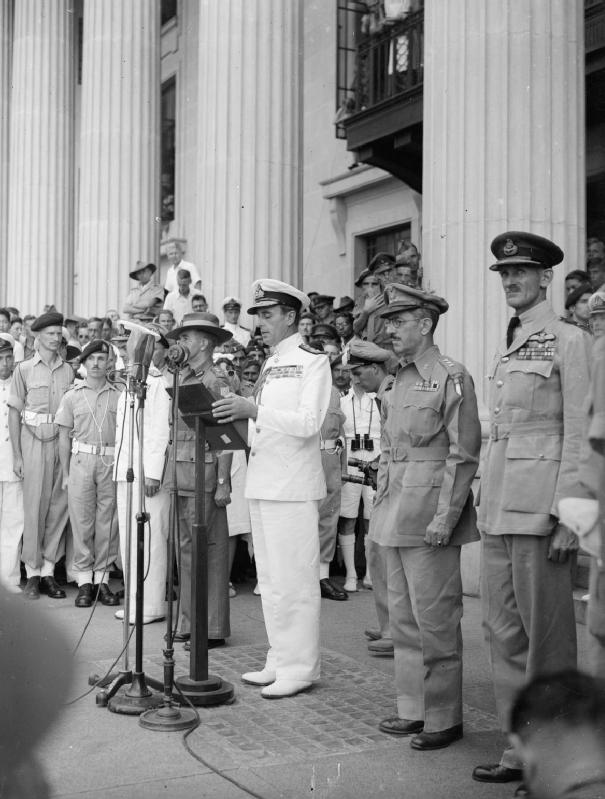
At the end of World War II, Mountbatten returned to Singapore as the Supreme Commander of the South East Asia Command to receive the surrender of the Japanese at City Hall on 12 September 1945. Even though he attended to Singapore's freedom, he was serving the interest of Britain. The British returned to reoccupy Singapore after the war - for another 18 years!
Prince Edward had visited Singapore before he ascended to the British throne. In Prince Edward's entourage was Louis Mountbatten. [What year?]
Q3. What happened to him?
He survived a bomb blast (while on his boat with his family) but he died before reaching shore.
Q4. Who planned his murder?
The IRA.
Q5. Did he have a family?
Yes, he had a wife, Edwina (Lady Mountbatten), and 2 daughters, Patricia and Pamela.
Q6. Where was he from?
Battenberg, Hesse in Germany. He was related to the British monarchs.
http://en.wikipedia.org/wiki/Louis_Mountbatten
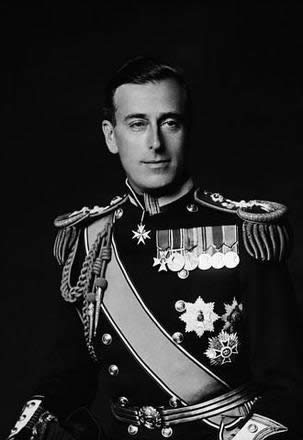 |
| Admiral Louis Mountbatten (1900-1979) (From Wikipedia: Admiral of the Fleet Louis Francis Albert Victor Nicholas Mountbatten, 1st Earl Mountbatten of Burma, KG, GCB, OM, GCSI, GCIE, GCVO, DSO, PC (1900–1979) was a British admiral, Viceroy of India and statesman.) Photo originally from the UK Government. |
He served in the British navy in the Mediterranean, Burma, and India. Along with his father, they were the only father and son to hold the highest post in the British admiralty. Sir Winston Churchill liked him but Mountbatten made one remark against Churchill and that severed their ties.
Q2. What role did he play in this region?
He was the last British Viceroy in India before India's independence. He helped India to unite while setting Pakistan free. He worked with Indian leaders including Mahatma Gandhi, Pandit Jawaharlal Nehru and also Muhammad Ali Jinnah.
At the end of World War II, Mountbatten returned to Singapore as the Supreme Commander of the South East Asia Command to receive the surrender of the Japanese at City Hall on 12 September 1945. Even though he attended to Singapore's freedom, he was serving the interest of Britain. The British returned to reoccupy Singapore after the war - for another 18 years!
Prince Edward had visited Singapore before he ascended to the British throne. In Prince Edward's entourage was Louis Mountbatten. [What year?]
 |
| Admiral Louis Mountbatten addressing the Japanese surrender in Singapore in 1945. He is at the mike and in white. Photo from Wikipedia Mountbatten_address%2C_Singapore_1945.jpg Photo was originally from the Imperial War Museum, Britain. |
Q3. What happened to him?
He survived a bomb blast (while on his boat with his family) but he died before reaching shore.
Q4. Who planned his murder?
The IRA.
Q5. Did he have a family?
Yes, he had a wife, Edwina (Lady Mountbatten), and 2 daughters, Patricia and Pamela.
Q6. Where was he from?
Battenberg, Hesse in Germany. He was related to the British monarchs.
Wednesday, 17 October 2012
Independence of British, Spanish & Japanese Colonies in SEA
QUESTION 1
It is interesting to reflect on why Malaya achieved its independence 9 years later than nations which achieved their independence in the late 1940s. Have you ever wondered why? Why? Why was Malaya slow in achieving its independence? What actually went on or went wrong?
Philippines' independence: 12 June 1898 (from Spain)
Indonesian independence: 17 August 1945 (from Japan)
India's independence: 15 August 1947 (from Britain)
Malayan independence: 31 August 1957 (from Britain)
Singapore's independence: 31 August 1963 (from Britain); 9 August 1965 (from Malaysia)
QUESTION 2
Who were the people behind Malaya's independence?
1) Mustapha Hussain (second person in KMM; his youngest daughter is Insun Sony Mustapha Fenner. Insun Sony is in Facebook. Insun Sony wrote 5 books about her father.)
2) Yusof bin Ishak (he was the first President of Singapore; a relative of Mustapha Hussain; both were descendants of Datuk Jenaton)
3) Burhanudin Helmy (he was KMM leader; he was an early Malay doctor)
4) Other??
QUESTION 3
What was the origin of the Malay reformers for the Malayan independence?
1) Datuk Jenaton (Datuk Jenaton group is in Facebook. The history of Datuk Jenaton is at a different website given in Insun Sony's Facebook.)
2) Pagarruyung (the Pagarruyung palace was razed to the ground in the battle called Perang Paderi. Many Malay princes escaped to Malaya at that time.)
3) West Sumatra (the Arab descendants of the Minangkabau princes could have come from Aceh. The Arabs of Aceh had significant control over the region before the arrival of the Dutch East India Company.)
4) Other??
Saturday, 13 October 2012
The Nizam of Hyderabad
I first came to know of the Nizam of Hyderabad when I wrote the biography of Dr Ismail Mohamed Ghows, an early Malay doctor from Taiping, Perak. Dr Ghows was descended from the Khatibs of the mosque of the Nizam of Hyderabad.
Who was the Nizam of Hyderabad? He was the ruler of Hyderabad. He was once the richest man in Hyderabad. He had a huge palace called the Taj Falaknuma Palace, which means 'Mirror of the Sky' or Heaven on Earth, where he entertained his guests including durbar. The palace is sited 2000 feet above, fronting the sprawling city of Hyderabad below. However, the Nizam did not live here but somewhere else. Hyderabad joined India in September 1948, and the Nizamhood ceased to exist. The last Nizam was the 8th. It was the 6th Nizam who came to stay in this place one afternoon and liked it and bought it for himself. Today, the grandson of the 8th Nizam is there to show the diamonds and emeralds to visitors.
There are more than 60 suites in the Taj Falaknuma Palace Hotel, Hyderabad. The most expensive is the Nizam Suite. There is a library upstairs which has the Guest Book of visitors to the Taj Falaknuma Palace from 1901 to 1951. This is a treasure chest of who's who in the 50 years of the Taj's existence then. The interior is Italian and is filled with Italian furniture, curtains, decor. The lamps and chandeliers are beautiful fittings. The dining room fits 100 guests and the Nizam himself, making it 101 people at a sitting. The dining table is beautifully laid out with lovely fresh bouquets of white and pink flowers and leaves.The metal drinking vessels and cutlery are Indian, with intricate carving. The Taj logo resembles that of the British East India Company, with 2 tigers holding the crest. The metal plates also bear the Taj logo.
The azan (call to prayer) can be heard in the background when dining at dusk on the deck at Taj Falakhuma Palace Hotel. That is probably from the mosque of the Nizam. I'm not sure whether it is the Mecca Mosque in Hyderabad or some other mosque where Dr Ghows ancestors had served. How many mosques belonged to the Muslim Nizam of Hyderabad?
When Hyderabad joined India, there were 22 districts - 12 went to the new state, 10 belonged to Nizam and one was French. Hyderabad was a strong and well-structured state and with a good economy. It had a market, a huge entrance gate to the city, a train station, and mosque(s). There were parades, etc. Hyderabad was a bustling and peaceful place. Its wealth was Hyderabad had the world's largest deposits of diamonds. So that was how rich Hyderabad was and how wealthy the Nizams who had control of the diamonds.
The 8th Nizam of Hyderabad's coronation was in 1967 but the Nizamhood fell apart. The Nizam escaped to Western Australia and lived on a vast piece of land that he bought. It gave him peace and reminded him of life in the Deccan. He lived in the outback, to escape everything that went on in Hyderabad. The Taj collectibles were auctioned off. Relatives had their share of the takings. But the Nizam didn't care about it - he wanted some peace in his life. One day, he told his secretary in his Perth office that he was going to the mosque. He went to the mosque and then went missing. Nobody ever found him.
It should be remembered that for many of the early Malay doctors, their ancestors came from Hyderabad. As far as I have researched, none belonged to any of the Nizam's family or relatives. It would be good news to hear if they are related. Then we can go to Hyderabad and explore the possibilities of a genealogical link.
Please take a look at this huge palace of the Nizam of Hyderabad in the video links below. It is now a hotel and is open to the public after 10 years of renovation. It is now restored to its original grandeur.
Who was the Nizam of Hyderabad? He was the ruler of Hyderabad. He was once the richest man in Hyderabad. He had a huge palace called the Taj Falaknuma Palace, which means 'Mirror of the Sky' or Heaven on Earth, where he entertained his guests including durbar. The palace is sited 2000 feet above, fronting the sprawling city of Hyderabad below. However, the Nizam did not live here but somewhere else. Hyderabad joined India in September 1948, and the Nizamhood ceased to exist. The last Nizam was the 8th. It was the 6th Nizam who came to stay in this place one afternoon and liked it and bought it for himself. Today, the grandson of the 8th Nizam is there to show the diamonds and emeralds to visitors.
There are more than 60 suites in the Taj Falaknuma Palace Hotel, Hyderabad. The most expensive is the Nizam Suite. There is a library upstairs which has the Guest Book of visitors to the Taj Falaknuma Palace from 1901 to 1951. This is a treasure chest of who's who in the 50 years of the Taj's existence then. The interior is Italian and is filled with Italian furniture, curtains, decor. The lamps and chandeliers are beautiful fittings. The dining room fits 100 guests and the Nizam himself, making it 101 people at a sitting. The dining table is beautifully laid out with lovely fresh bouquets of white and pink flowers and leaves.The metal drinking vessels and cutlery are Indian, with intricate carving. The Taj logo resembles that of the British East India Company, with 2 tigers holding the crest. The metal plates also bear the Taj logo.
The azan (call to prayer) can be heard in the background when dining at dusk on the deck at Taj Falakhuma Palace Hotel. That is probably from the mosque of the Nizam. I'm not sure whether it is the Mecca Mosque in Hyderabad or some other mosque where Dr Ghows ancestors had served. How many mosques belonged to the Muslim Nizam of Hyderabad?
When Hyderabad joined India, there were 22 districts - 12 went to the new state, 10 belonged to Nizam and one was French. Hyderabad was a strong and well-structured state and with a good economy. It had a market, a huge entrance gate to the city, a train station, and mosque(s). There were parades, etc. Hyderabad was a bustling and peaceful place. Its wealth was Hyderabad had the world's largest deposits of diamonds. So that was how rich Hyderabad was and how wealthy the Nizams who had control of the diamonds.
The 8th Nizam of Hyderabad's coronation was in 1967 but the Nizamhood fell apart. The Nizam escaped to Western Australia and lived on a vast piece of land that he bought. It gave him peace and reminded him of life in the Deccan. He lived in the outback, to escape everything that went on in Hyderabad. The Taj collectibles were auctioned off. Relatives had their share of the takings. But the Nizam didn't care about it - he wanted some peace in his life. One day, he told his secretary in his Perth office that he was going to the mosque. He went to the mosque and then went missing. Nobody ever found him.
It should be remembered that for many of the early Malay doctors, their ancestors came from Hyderabad. As far as I have researched, none belonged to any of the Nizam's family or relatives. It would be good news to hear if they are related. Then we can go to Hyderabad and explore the possibilities of a genealogical link.
Please take a look at this huge palace of the Nizam of Hyderabad in the video links below. It is now a hotel and is open to the public after 10 years of renovation. It is now restored to its original grandeur.
Friday, 12 October 2012
Dr Mustapha bin Osman
I received a message in Geni.com dated 13 August 2012 but I only read it tonight. The message was from Iszham Idris, whose granduncles were brothers Mohd Arshad bin Osman and Dr Mustapha bin Osman.
Iszham Idris also provided a family photo of Dr Mustapha bin Osman, which he obtained from his aunt, Aishah bt Mohd Arshad. I downloaded the photo from BOX tonight. It had Dr Mustapha bin Osman, his wife and daughter, posing outside a brick building, in the sunshine. The photo was taken in London. No other information was provided; the photo was undated and the occasion unknown.
Dr Mustapha bin Osman graduated from Hong Kong University in 1924. Dr Mustapha returned to Malaya in 1931. I would guess the photo was taken after 1924 and circa 1931, before WWII (1941). He served in the Japanese administration during the Japanese occupation in Malaya. Nothing is mentioned about his family (wife and children) during the war. Only his siblings were mentioned - they held posts in the Japanese administration during the war. He was in charge of the Lady Templer Hospital in Kuala Lumpur in 1952. It is not known how many times he returned to London.
His date of marriage is unknown but I had guessed a date from other sources. If he got married circa 1924, then the daughter would be at least 6 years old in the photo, but she looked older than age 6. If he got married circa 1931, then the daughter would be approx. 10 years old at the break of WWII (1941).
His daughter was already a big girl in the photo, probably around 10-12 years old. It is not known where and when his daughter was born, so it is difficult to date the photo. The photo was probably between 1935 and WWII (1941). That's my best guess.
Iszham Idris also provided a family photo of Dr Mustapha bin Osman, which he obtained from his aunt, Aishah bt Mohd Arshad. I downloaded the photo from BOX tonight. It had Dr Mustapha bin Osman, his wife and daughter, posing outside a brick building, in the sunshine. The photo was taken in London. No other information was provided; the photo was undated and the occasion unknown.
Dr Mustapha bin Osman graduated from Hong Kong University in 1924. Dr Mustapha returned to Malaya in 1931. I would guess the photo was taken after 1924 and circa 1931, before WWII (1941). He served in the Japanese administration during the Japanese occupation in Malaya. Nothing is mentioned about his family (wife and children) during the war. Only his siblings were mentioned - they held posts in the Japanese administration during the war. He was in charge of the Lady Templer Hospital in Kuala Lumpur in 1952. It is not known how many times he returned to London.
His date of marriage is unknown but I had guessed a date from other sources. If he got married circa 1924, then the daughter would be at least 6 years old in the photo, but she looked older than age 6. If he got married circa 1931, then the daughter would be approx. 10 years old at the break of WWII (1941).
His daughter was already a big girl in the photo, probably around 10-12 years old. It is not known where and when his daughter was born, so it is difficult to date the photo. The photo was probably between 1935 and WWII (1941). That's my best guess.
Tuesday, 9 October 2012
Research on the Early Malay Doctors
 |
| Xlibris Book ID: 501452 |
Book Title:
RESEARCH ON THE EARLY MALAY DOCTORS 1900-1957 MALAYA AND SINGAPORE
Author: Faridah Abdul Rashid
Published date: 18 July 2012
Total no. of pages: 392
Wt of paperback = 0.71 kg
 |
| Cover (17 May 2012) |
Copyright (C) 2012 Faridah Abdul Rashid
Library of Congress Control Number: 2012903532
ISBN 13: Softcover: 978-1-4691-7243-9
ISBN 13: Hardcover: 978-1-4691-7244-6
ISBN 13: eBook: 978-1-4691-7245-3
Website:
http://www2.xlibris.com/books/webimages/wd/anz/501452/index.html
(temporary link)
http://www.earlymalaydoctors.com/
(official website, valid for 6 Sept 2012-23 Sept 2013; will cease by 23 Sept 2013)
Facebook:
http://www.facebook.com/pages/Research-on-the-Early-Malay-Doctors-1900-1957-Malaya-and-Singapore
Complimentary copy:
To request a complimentary paperback review copy, contact the publisher at 1-800-618-969.
Booksellers (for resale)/Penjual buku:
To purchase copies of the book for resale, please fax Xlibris at (02) 8282-5055 or call 1-800-618-969.
Online purchase:
Xlibris books can be purchased at Xlibris bookstore, Amazon and Barnes & Noble:
How to order from Xlibris
How to order from Amazon.com
How to order from BN.com
Xlibris books can be purchased at Xlibris bookstore, Amazon and Barnes & Noble:
How to order from Xlibris
How to order from Amazon.com
How to order from BN.com
For more information, contact Xlibris at 1-800-618-969 or on the web at www.Xlibris.com.au.
Xlibris Corporation
1-800-618-969
www.Xlibris.com.au
Orders@Xlibris.com.au
1-800-618-969
www.Xlibris.com.au
Orders@Xlibris.com.au

 |
| Business card |
Note to all readers:
This book is available for sale to anyone. There is no restriction for its sale. Anyone can buy this book anywhere, in Malaysia and outside Malaysia. This book can be purchased online wherever you are where you have Internet access. If you wish to sell this book in your bookshop, book fairs, or buy in bulk (beli banyak untuk penjualan semula), please email directly to Xlibris and request for discounted price. There is no fixed price for this book. The prices vary on the Internet because the currencies vary for different countries. Please check whether the book price is quoted in AUD$, USD$, Canadian$, Euro or UK pounds. You can sell this book at whatever price you wish. For Muslim resellers, you cannot sell above the 30% profit that Islam defines under sale of goods. Please do not exceed the 30% profit margin. All the books are mailed by air freight by the printer assigned by Xlibris. For 100 copies, the air charges are approximately AUD$345. All orders are paid by credit card. The books are only printed after you pay (Xlibris will call you, so have your credit card ready). Please check your orders when you receive the books, especially for any damages to the books - torn spine, torn cover, missing pages, etc and immediately inform Xlibris. The name of the printer varies (depending on your location) and is printed in the back pages of the book in fine print. When informing Xlibris of damages, please also mention the name of the printer, so you can rapidly get replacement for damaged goods. Also, please take pictures of the damaged goods that you receive, and email them to Xlibris for action. Do not keep quiet if you are unhappy.
Xlibris is now under Penguin Books, the largest book producer.
Tuesday, 2 October 2012
Maximum Reality

This blog has reached its maximum capacity - maximum # of pages, maximum # of photo uploads, etc. I cannot do much more beyond this free capacity that comes with Blogger. If I want to continue to upload photos, I will need to pay for server space, etc. What I can do now is remove some of the photos and also remove some of the posts.
Please download whatever info you need before I click DELETE, and check back here when you have time. I can create another blog like this but it will be too much work to maintain and update. I have altogether 37 blogs on Blogger.
This blog is more than 3 years old and now I can't grow it anymore. I will just maintain this blog for as long as it is useful and till I can get hold of the remaining early Malay doctors, wherever they are and wherever their families are today. I am still looking for 12 more early Malay doctors. I was able to contact one family 2 days back and am continuing to correspond - the family member contacted me through Facebook.
Since a major part of searching has been completed and I have published 2 books about the early Malay doctors, it is time for me to move on to do other things and help out with other research projects.
TQ all for your shared interest on the topic of THE EARLY MALAY DOCTORS.
Prof Faridah
Monday, 1 October 2012
Leprosy
I have written a post before about leprosy but I didn't have much resources then. This is an update on the resources. The link on Sg Buloh has the names of the British doctors who served at Sg Buloh from 1928 onward. A few of the early Malay doctors also served at Sg Buloh.
Resources on leprosy
CDC
http://www.cdc.gov/nczved/divisions/dfbmd/diseases/hansens_disease/technical.html#clinical
Stanford
http://www.stanford.edu/class/humbio103/ParaSites2005/Leprosy/index.htm
International Leprosy Association - Global Project on the History of Leprosy
http://www.leprosyhistory.org/english/gallery/gallerylepmuseum.htm
Culion Sanatarium, Culion Palawan 5315, Philippines
Resources on leprosy
CDC
http://www.cdc.gov/nczved/divisions/dfbmd/diseases/hansens_disease/technical.html#clinical
Stanford
http://www.stanford.edu/class/humbio103/ParaSites2005/Leprosy/index.htm
International Leprosy Association - Global Project on the History of Leprosy
http://www.leprosyhistory.org/english/gallery/gallerylepmuseum.htm
Culion Sanatarium, Culion Palawan 5315, Philippines
Dr Windsor Wade's collection of old books - Wade's Library
India map - Route of Commission
Indian leprosy gallery
Leprosy Settlement, Sg Buloh, Selangor, Malaysia (1930-present)
History of leprosy and research at Sg Buloh
Leprosy Sanatarium, Pulau Jerejak (1828-1969)
Leprosy Academic Network
Friday, 28 September 2012
The haunts of an old British barrack in Pengkalan Chepa
I lived at one of the lecturers' quarters at Maktab Perguruan Perempaun Melayu (MPPM) at Pengkalan Chepa in Kelantan, from May 1969 to December 1971. The college was a previous British army barrack which was first built and used by the British till the war broke out. It was then used by the Japanese army from 1941 till it surrendered in 1945.
My father was a lecturer at MPPM in the post-war, from May 1969 to January 1972. There were very few teachers then as I remember - (Tan Sri Dr) Yahya Ibrahim, Mr Ibrahim (deceased), Dr Sharifah, Mr ____ (Taufik's father), Mr ____ (Mimi's father), Mr Khalid (quiet family), Mr Jamaludin (deceased, Dr Faezah's father and my neighbour), Madam ___, etc. I didn't know what my father taught but probably Maths and/ Malay.
Anyway, when it was my turn to teach here on weekends for the Open University Malaysia (OUM) chemistry course, I thought to walk around and see the place for myself, and feel for myself how my father had worked here. I was slotted for the Sept/Dec classes, which were scheduled during the heavy monsoon period. Despite the rain and the perilous road conditions, I had to brave myself and drive through torrential rain and also zero visibility, to arrive for my classes on time. I could have died on the road, speeding at 90 km/h or more, in heavy rain. For such a high risk and weekend work, I was paid RM700-RM1,200/mo.
OUM now has a recently renovated blue-silver building in Lundang, in front of Balai Islam. Here are some old photos of the British barrack where I taught chemistry on weekends from 2005/6 to 2007/8. These are pre-war buildings, some are more recent though.
 |
| old big hall |
 |
| new modern buildings and corridors |
 |
| modern corrugated stunted Doric columns |
 |
| old corridor with round metal poles, post-war, 1960s |
 |
| ancient corridor with square wooden poles on base, old roof, pre-war |
 |
| classrooms |
 |
| a typical home of a British/Japanese army officer/college lecturer |
 |
| modern surau and free parking |
Thursday, 27 September 2012
What's up?
I am waiting for my 2 books to be printed. The delay is because the previous book representative at Xlibris left without my knowing and a new person took over as of yesterday. The books didn't get printed on time (intended for Aidilfitri 2012). I hope they will be printed in time for Aidiladha 2012. To those of you whom I have promised to send you the books (gratis), I will do that once I get them. I would prefer you to come to my house and pick up the books because then you get to select what you want (hardcover or softcover) and I can sign the book(s) for you. If you can't come, then I will mail them out to your work or home address, whichever is convenient. Once you get the book(s), please read it/them and provide me some feedback, especially errors/typos/etc so that when I do the next printing (insyaaAllah), I would have done the corrections (insyaAllah). I want to take this opportunity to thank everyone for their help and support of the research on the early Malay doctors and the 2 books. I have made many lifetime friends and I will keep fond memories of everyone I met and corresponded with. You can write to me and keep in touch in Facebook or other. If I forget you in future, it only means I'm getting old, so forgive me.
Those of you who are in medicine and allied health, you can send your biodata/CV and photos to me so I can upload a story about you here in this blog. The more students read about others, the better they can decide on what they want to be and make changes in life towards their goal. Otherwise, it is quite difficult to change our society without solid evidence of successes from predecessors. Transformation is a big word but means nothing if the means are not there. So I'm using this blog to move our society one step ahead, and by-passing politics, etc. I hope this blog is useful for many students who are grappling and groping, and parents who want the best for their children. I am a mother of 6 kids and bringing them up without good examples for them to follow was difficult but I had used Sherlock Holmes stories and had some success somewhat. Please come forward and let's help the children of today by giving them true information of our successes so they can see for themselves and follow suit. The young follow their parents. Parents can learn from other parents. A good society is one where everyone is learning from everyone else. Fighting about our differences gets us nowhere but builds more anger (sakit hati) and that can crumble any society. We are fortunate to live in Malaysia (or Singapore) as this is a peaceful country. But let us not forget that we must educate ourselves, our young and our society if we want to maintain this peace and harmony and live as loving human beings.
Those of you who are in medicine and allied health, you can send your biodata/CV and photos to me so I can upload a story about you here in this blog. The more students read about others, the better they can decide on what they want to be and make changes in life towards their goal. Otherwise, it is quite difficult to change our society without solid evidence of successes from predecessors. Transformation is a big word but means nothing if the means are not there. So I'm using this blog to move our society one step ahead, and by-passing politics, etc. I hope this blog is useful for many students who are grappling and groping, and parents who want the best for their children. I am a mother of 6 kids and bringing them up without good examples for them to follow was difficult but I had used Sherlock Holmes stories and had some success somewhat. Please come forward and let's help the children of today by giving them true information of our successes so they can see for themselves and follow suit. The young follow their parents. Parents can learn from other parents. A good society is one where everyone is learning from everyone else. Fighting about our differences gets us nowhere but builds more anger (sakit hati) and that can crumble any society. We are fortunate to live in Malaysia (or Singapore) as this is a peaceful country. But let us not forget that we must educate ourselves, our young and our society if we want to maintain this peace and harmony and live as loving human beings.
Monday, 24 September 2012
Views of USM Health Campus
These are views of the USM Health Campus from the 8th floor (top floor) of the USM hospital building, Hospital USM (HUSM). The land surrounding the campus is flat. It is flat for miles, right up to the South China Sea. Because it is this flat, it floods easily everywhere except for built-up areas, hillocks, hills, foothills, and the central mountain range in Jeli (~2 hours from Kota Bharu).
These views were taken while my daughter was admitted for tympanoplasty, to patch her eardrum, after she cleaned her left ear so hard and it bled from the burst eardrum. She had gone swimming at a ladies swimming pool in Bangalore, India. The surgery and recovery took 4 hours. So I took photos instead to kill time. I am no heroine when it comes to heights, so my husband had to hold me and direct me where to point the camera. I am scared of heights! My office was on this floor too back in 1983/84, in the left wing or Wad 8 Selatan. I was 3rd in rank for looking after the administration for this hospital then. Then I left for Australia to do my PhD in Feb 1985.
It was also on this top floor, in east wing (Wad 8 Timur), that Prof Salem and I taught programming to HUSM staff. That was the beginning of laboratory computerisation and hospital information system (HIS) for us. Today, we have our own in-house LifeLine for HIS and also for electronic medical records (EMR). We are presently on to the Case-Mix System from UNU-IIGH, despite the cons of the Case-Mix System. We think we can design a better Case-Mix System later but that needs a lot of discussion, and that is another story. I will be fully retired.
Other photos of USM Health Campus
Courses offered at USM Health Campus:
http://www.usm.my/images/stories/pdf/Health_Campus.pdf
These views were taken while my daughter was admitted for tympanoplasty, to patch her eardrum, after she cleaned her left ear so hard and it bled from the burst eardrum. She had gone swimming at a ladies swimming pool in Bangalore, India. The surgery and recovery took 4 hours. So I took photos instead to kill time. I am no heroine when it comes to heights, so my husband had to hold me and direct me where to point the camera. I am scared of heights! My office was on this floor too back in 1983/84, in the left wing or Wad 8 Selatan. I was 3rd in rank for looking after the administration for this hospital then. Then I left for Australia to do my PhD in Feb 1985.
It was also on this top floor, in east wing (Wad 8 Timur), that Prof Salem and I taught programming to HUSM staff. That was the beginning of laboratory computerisation and hospital information system (HIS) for us. Today, we have our own in-house LifeLine for HIS and also for electronic medical records (EMR). We are presently on to the Case-Mix System from UNU-IIGH, despite the cons of the Case-Mix System. We think we can design a better Case-Mix System later but that needs a lot of discussion, and that is another story. I will be fully retired.
 |
| Big roofs in the foreground are those of the present (old) A&E Dept (a new one will open soon). The USM Dental School is the white-orange building with a blue dome. A covered bridge (at left) links the Dental School to the Medical School complex. The water tower is next to the surau (can see its minaret, top left corner). The pink roof (top left corner) is the old Sports Complex. |
 |
| USM Medical School complex, Phase II, built in mid-1990s. The end of the campus is Sg Datu (near the skyline). The hexagon roofs are the lecture theatres. There are 3 such roofs and 5 lectures theatres. The 2 parallel roofs in the foreground are lecturers rooms. The long blue plastic strip joins the roofs. On the right are the rooms above the old Oren Mall. The previous shops of Oren Mall have now been renovated and converted to USAINS spaces for private ventures. |
 |
| HUSM Students' Exam Block (big roofs), kitchen (lower roof with air vents), dhobi and incinerator (with long chimney). The north wing (Wad Utara) of HUSM can be seen at left edge of the photo. The airport in Pengkalan Chepa is towards the skyline and to the right. |
 |
| A new shopping place called the Kubang Kerian Square is in front of USM Health Campus. There is Mydin and everything else. You can get everything here. All food is halal in Kubang Kerian except at a few ethnic eateries. This new shopping place is convenient for both USM staff and the patients' families. There is no need to stay in Kota Bharu. Kubang Kerian and Kubang Kerian Square have many places to stay. The roofs in the foreground are the Students' Exam Block. The lower roof beyond that (with exhaust fans and vents) is the recently renovated hospital kitchen. |
Other photos of USM Health Campus
 |
| Close-up of the students' hostels viewed from the Medical School bridge to the library. The water tower is behind the students' hostel. |
 |
| Distant view of the students' hostel from Medical School at the bridge to the library |
 |
| Dewan Utama, the main hall for most public lectures on campus |
 |
| School of Medical Sciences, USM Health Campus in Kubang Kerian, Kelantan since 1990 |
 |
| The Director of Campus office has moved to a new complex near the new playing field in early 2012 |
 |
| Old photo of the water tower in 2010. The students' old hostel block is behind the water tower. The campus surau is to the left of the water tower (not in pic). A new block of students' hostel was later built adjacent to the water tower and was commissioned in September 2012. |
Courses offered at USM Health Campus:
http://www.usm.my/images/stories/pdf/Health_Campus.pdf
Sungai Datu
This river is behind USM Health Campus. The river swells during the monsoon season and appears as in the photos below during off monsoon season. Many have used photos of the river for book covers, etc. There was talk of building a bridge from USM to the other side of the river but that has not materialised. The concrete slabs you see are for the intended bridge. Since it was known that the bridge was going to be build, many people bought land on the other side of the river, for setting up homes. However, since the bridge has been built, the landowners are frustrated. Land across this river is no longer cheap. The other side of the river is low lying and floods easily, and not many people know, so they buy up. When it floods, the water reaches waist deep. I don't see any point in purchasing land on the other side of the river and prospective buyers should know. To buy land in Kelantan, it is worth coming here during the monsoon months and then decide. There is no point crying after buying. A rule of thumb when buying land here is to look for the nipah palms. These palms thrive in marshland and signifies a waterlogged land. So don't buy land where you can clearly see the nipah palms unless you don't understand what they signify.
The present USM Campus is sited on very high grounds. If I recall correctly, they had to top up the land to about 50 feet high and then build the hospital buildings, the teaching complexes, etc. It does not flood on campus but the river water overflows and floods its river banks. My brother-in-law's family lives on the other side of the river. They were cheated into buying land there under the poor families scheme (PPRT). He has 10 kids, and during the flood, they all have to wade in waist deep water to go elsewhere. It is terrible to have to cope that way.
The present USM Campus is sited on very high grounds. If I recall correctly, they had to top up the land to about 50 feet high and then build the hospital buildings, the teaching complexes, etc. It does not flood on campus but the river water overflows and floods its river banks. My brother-in-law's family lives on the other side of the river. They were cheated into buying land there under the poor families scheme (PPRT). He has 10 kids, and during the flood, they all have to wade in waist deep water to go elsewhere. It is terrible to have to cope that way.
 |
| View of Sg Datu from USM Health Campus. There are nipah palms lining the river banks. The concrete slabs are meant for the proposed bridge. |
 |
| Clear blue waters of Sg Datu. I have heard of crocodiles thriving in this river. |
 |
| Another view of the Sg Datu river from USM Health Campus |
Working definition of Malay
I'm copying this here from my old Zimbra Inbox before I lose it.
----- Forwarded Message -----
From: "Prof Faridah Abdul Rashid" <faridah@kb.usm.my>
To: "Akademik" <akademik@warga.kck.usmnet>
Sent: Wednesday, November 10, 2010 10:38:28 AM GMT +08:00
Subject: [akademik] Working definition of 'Malay'
Salam
Back to the definition of Malay.
This is my working definition of the term 'Malay':
1) Has a Malay or Muslim name
2) Speaks Malay most of the time
3) Eats Malay food most of the time
4) Dresses to cover most part of the body
5) Professes Islam as a religion and way of life; the male goes for Friday prayers
6) Has Malay/Indian/Chinese parents born within the Malay World who are also Muslims
7) Has pan-Asian facial features with flat/high nose bridge
8) Has fair to dark complexion determined by his/her genes
9) Has black/brown/hazel-coloured iris depending on genes inherited
10) Has short stature, about 5 feet but not higher than 6 feet
11) Has black/brunette/pale orange (warna sireh) straight/wavy/frizzy hair depending on genes inherited
12) Greets by salam gesture (holds the palms of the friend in his/her palms for a few seconds) or similar
13) Has a headgear most of the time - the ladies wear a scarf, serban or tudung and the males wear a black songkok, white kopiah or serban
14) Observes Ramadan fasting most of the time
15) Goes for hajj pilgrimage at least once in a lifetime
16) Eats halal foods and avoids non-halal foods (pig products and alcoholic beverages)
17) Does not advocate gambling, prostitution and free sex
18) Marries a wife and can possibly have up to 4 wives at a time but does not have mistresses or call girls and the like
19) Has a halal source of income
20) Pays zakat of mainly 2 kinds - zakat fitrah and zakat harta\
----- Forwarded Message -----
From: "Prof Faridah Abdul Rashid" <faridah@kb.usm.my>
To: "Akademik" <akademik@warga.kck.usmnet>
Sent: Wednesday, November 10, 2010 10:38:28 AM GMT +08:00
Subject: [akademik] Working definition of 'Malay'
Salam
Back to the definition of Malay.
This is my working definition of the term 'Malay':
1) Has a Malay or Muslim name
2) Speaks Malay most of the time
3) Eats Malay food most of the time
4) Dresses to cover most part of the body
5) Professes Islam as a religion and way of life; the male goes for Friday prayers
6) Has Malay/Indian/Chinese parents born within the Malay World who are also Muslims
7) Has pan-Asian facial features with flat/high nose bridge
8) Has fair to dark complexion determined by his/her genes
9) Has black/brown/hazel-coloured iris depending on genes inherited
10) Has short stature, about 5 feet but not higher than 6 feet
11) Has black/brunette/pale orange (warna sireh) straight/wavy/frizzy hair depending on genes inherited
12) Greets by salam gesture (holds the palms of the friend in his/her palms for a few seconds) or similar
13) Has a headgear most of the time - the ladies wear a scarf, serban or tudung and the males wear a black songkok, white kopiah or serban
14) Observes Ramadan fasting most of the time
15) Goes for hajj pilgrimage at least once in a lifetime
16) Eats halal foods and avoids non-halal foods (pig products and alcoholic beverages)
17) Does not advocate gambling, prostitution and free sex
18) Marries a wife and can possibly have up to 4 wives at a time but does not have mistresses or call girls and the like
19) Has a halal source of income
20) Pays zakat of mainly 2 kinds - zakat fitrah and zakat harta\
Kota Jembal, Kelantan
If you reach the Kubang Kerian traffic lights, and proceed towards Bachok (beach), you will pass by a place named Kota Jembal. As you approach the traffic lights at the Kota Jembal junction, the marketplace will be on your left. Why is Kota Jembal important in Kelantan Malay history?
Kota Jembal was one of the many 'kingdoms' or 'rajadom' in the early vast Malay kingdom in Kelantan. Kota Jembal is a region on the eastern bank of Sungai Pengkalan Datu. As a landing place or pengkalan, it was (may still be) a place of trade. Pasar Kota Jembal is the present marketplace in Kota Jembal, an ancient Malay city. Its architecture is a mark of the ancient Malay architecture, very unique to the Kelantan Malay craftmanship of this region, and I don't think it is found outside Kelantan - I have not seen it outside Kelantan.
Next time you come and visit Kelantan, come and visit this ancient princely city of Kota Jembal and see its marketplace, Pasar Kota Jembal (they didn't have malls in ancient cities). I have not been around on foot in this city, but my vibes tell me, this place is 'very ancient'. Looks spooky too but I didn't see any big blood-shot eyes. That's ancient legend.
The people of Kota Jembal were religious people (Hindu in ancient times but now Muslims) and some of the descendants of that early kingdom are still around and rule this state. They are related to the other Malay royalties of a large Malay kingdom in this region. The ancient Malay kingdom spreads from southern Siam (now Thailand) to Kota Jembal and beyond. Sungai Pengkalan Datu opens into the South China Sea. There is an artificial sandbar built by the villagers to dampen the waves, to avoid erosion of the beach front. Many Malays settle at this rivermouth (muara). The homes are wooden and built high on stilts as this rivermouth is flooded during the monsoon season. Malay people from Cambodia and also from Malacca probably came to Kota Jembal via this rivermouth. The Malacca migrants settled at Pulau Melaka (a large sandy island in Sungai Pengkalan Datu) and others settled on the river bank at Kota Jembal. Both cities are princely cities. I would say that this part of the Malay region probably contains inhabitants who are descended from ancient Malay royalties, and thus we see the prefix 'Raja' and 'Puteri/Putri' in their names. Most have dark skin as they are descended from ancient Indian forebearers. However, the ones descended from the Cambodian Malays have fair skin - they carry the prefix 'Wan' in their names.
There is a meeting of the royals of Kota Jembal on 6 November 2012(?).
Kota Jembal was one of the many 'kingdoms' or 'rajadom' in the early vast Malay kingdom in Kelantan. Kota Jembal is a region on the eastern bank of Sungai Pengkalan Datu. As a landing place or pengkalan, it was (may still be) a place of trade. Pasar Kota Jembal is the present marketplace in Kota Jembal, an ancient Malay city. Its architecture is a mark of the ancient Malay architecture, very unique to the Kelantan Malay craftmanship of this region, and I don't think it is found outside Kelantan - I have not seen it outside Kelantan.
Next time you come and visit Kelantan, come and visit this ancient princely city of Kota Jembal and see its marketplace, Pasar Kota Jembal (they didn't have malls in ancient cities). I have not been around on foot in this city, but my vibes tell me, this place is 'very ancient'. Looks spooky too but I didn't see any big blood-shot eyes. That's ancient legend.
The people of Kota Jembal were religious people (Hindu in ancient times but now Muslims) and some of the descendants of that early kingdom are still around and rule this state. They are related to the other Malay royalties of a large Malay kingdom in this region. The ancient Malay kingdom spreads from southern Siam (now Thailand) to Kota Jembal and beyond. Sungai Pengkalan Datu opens into the South China Sea. There is an artificial sandbar built by the villagers to dampen the waves, to avoid erosion of the beach front. Many Malays settle at this rivermouth (muara). The homes are wooden and built high on stilts as this rivermouth is flooded during the monsoon season. Malay people from Cambodia and also from Malacca probably came to Kota Jembal via this rivermouth. The Malacca migrants settled at Pulau Melaka (a large sandy island in Sungai Pengkalan Datu) and others settled on the river bank at Kota Jembal. Both cities are princely cities. I would say that this part of the Malay region probably contains inhabitants who are descended from ancient Malay royalties, and thus we see the prefix 'Raja' and 'Puteri/Putri' in their names. Most have dark skin as they are descended from ancient Indian forebearers. However, the ones descended from the Cambodian Malays have fair skin - they carry the prefix 'Wan' in their names.
 |
| Prayer place at the entrance to the Ramadan bazaar adjacent to Pasar Kota Jembal. |
 |
| I can't make out what the buildings are. The Ramadan bazaar is in the centre. |
 |
| Ramadan bazaar in full swing in 2012 |
 |
| After the Ramadan bazaar, after the fasting month was over, back to normal. |
 |
| Fenced marketplace, this is Pasar Kota Jembal. Note the unique architecture. Looks like a lodge or a princely residence. This is an example of fine Malay architecture. I like it very much. |
There is a meeting of the royals of Kota Jembal on 6 November 2012(?).
Subscribe to:
Posts (Atom)