Sunday, 8 July 2012

A Mother's Loss

I thought to write about how mothers feel when they lose their son(s).

Case 1
I was solo at first, then married, then a mother of 1, 2, 3, 4, 5, and 6. Something happened to #2 and #3; I almost lost my 2 sons. Why? Must be the Grand Plan roll-out. #2 survived his second month and first six months of life under the threat of an almost fatal bout of chickenpox which was contracted one month into maternal confinement. I also contracted chickenpox at the time, and so did #1. We all survived, Alhamdulillah. You wouldn't believe it if I told you that we were living in Perth at the time when we contracted chickenpox. I had never contracted nor seen chickenpox before. This was the first and last and very painful case of chickenpox. I almost went crazy the whole month fighting back to get my little baby boy to live and not die. I would be very devastated today if he had died. I would blame myself endlessly for his 'death'. But he survived. How #2 miraculously survived is a wonder. He still retains the scars of that almost fatal chickenpox (he will be 27 on 13 July 2012). It breaks my heart when he takes protraits and the poxes show up. It is unsightly but what can I do? His mere survival is my joy but the unsightly poxes gives him unhappiness. What can I do about the scars? They must be very deep scars. I have seen worst scars on other bodies.

Case 2
#3 above was born at the Subiaco Women's Hospital after a difficult bout of shoulder dystocia. When he was out he was breathing. Seconds after that, he wasn't, he was dying. Before I passed out, I cried out to the last person out the door to take a look at him cos he was dying. I passed out. The next thing I knew I was in the postnatal ward. My baby son was nowhere to be seen. I cried for I knew my baby son 'had died'. It was a bitter cry for this was the second time I 'had lost a baby son'. I couldn't and I didn't ask and I didn't wash myself. I laid in bed, unmoved by the world around me. 'I had lost my baby son'. I lived like a log for about 3 days, with no sight of my baby son. I didn't know where it was, where he was buried. On the thrird day, they brought a lovely baby to give to 'as a replacement'. I asked the nurse whose baby were they giving me. I asked them who were the baby's parents. I asked them when was the baby born. It took me awhile to accept their answers that that baby they had brought to me is my own baby son. He looks like a Mat Salleh son, so I wasn't too happy and I still thought my own baby son died and they replace that dead baby with this Mat Salleh baby which is not mine. I refused to accept this Mat Salleh baby son. I took a look at its baby hand-band and it had my name but I remember I didn't give birth to a Mat Salleh-looking baby. So I did my Sherlock-Holmes assignment - to find out the identity of the 'new' baby son that the nurses gave me. I asked my husband to follow the baby back to ICU and find out if there were other babies in the ICU, and if there was an Asian-looking baby that is mine. I wanted an Asian-looking baby, not a Mat Salleh-looking baby. I was angry that I was not allowed to wander down to the ICU to check out things for myself. My husband wasn't sure too whether the baby they gave us is truly our or not. We both didn't know what to do. Anyway, my husband still went on to do the Aqiqah for the 'unknown' baby and we took it home and looked after it. We both still have doubts that this may still not be our child. Where is my real son? Where is the real #3? I don't know.

Case 3
Removed.

Case 4
I can't remember the story fully but I will write what I remember. In the days on Islam's rise to become an empire, many young adult males went to war. Some never came back. I can't remember their names off hand. But imagine, how the mothers must have felt when they received news of their deceased sons.

Case 5
Death of sons through air crash. This happened to a good friend of mine. When she wrote about her son's death, I felt like a hard marble stuck in my throat and that marble didn't budge. I could not breathe. She's Penang Chinese, I'm Malacca Peranakan. We both feel the loss, even today. I feel the loss of other mothers' sons, as I had felt such loss while struggling to bring back my 2 sons to life. Even though my 2 sons survived their ordeals, I still feel the loss of sons of other mothers. It must be very painful to lose a son. Now with stop at 5, 3, 2 and 1, I think the loss felt is greater as mothers today have less number of children, and they run a higher risk of losing their son(s). Losing a daughter is different from losing a son.

Case 6
I was reading the pages about the world wars. There was this man who went to war and was in charge of his platoon. When someone in his platoon died, he had to make a note and write home to inform the respective families. Writing down the notes were painful for the officer in-charge but imagine the mothers at home. How did they feel upon receipt of the death news of their young sons? They went away healthy and happy, they sent home a sad news without remains. All news returned as Loss in Action, no private grave, but a mass grave and an expansive graveyard, like at Flanders Field. That's the price we pay for war.

Case 7
Slavery. What is slavery? That is treating humans as animals and lower than animals. Slavery and extreme slavery are evil tools that we have chosen to let the super powers use to treat what we consider as lesser humans. Who is superior who is lesser human? You be the judge and explain yourself. When I watched Roots the movie, I felt disgusted. I stopped watching after the first few episodes. My late father enjoyed the movie and watched all episodes. Bless him. He only liked the main character, not the ill treatment of the slaves. The most notable of the slavery track record was the African slaves mass exodus to North America. When I took US history at California State University in my sophomore years, I got very annoyed about the fates of the African slaves. I hated the conditions mentioned in mu history book. I just hated the entire subject of slavery (all kinds). If you think prostitution is better than slavery, I tell you both are evil means of exploitation. Never give in to prostitution and slavery. Free people from all forms of slavery. When a Black mother loses a son through slavery, she never gets to see her son for good. Is that good or bad? You can ask Mr Obama.

Case 8
Convicts. There are many examples of how super powers traded the convicts as free foreign labour. Imagine you have a beautiful young healthy son, and while your son is happily at work, comes a super power officer and drags him to jail for a crime he did not commit. But super power people are like that. They lack a good mentality of being humane and caring. They use brute force. Then the super power people decide to use the young lad for their own gains. The super power people gathered and shipped the 'convicts' far out to far away lands, so foreign to the 'convicts'. What happens next and at home? Of course the mothers of these falsely wronged lads would be crying their hearts out for want of their only sons, their pride and joy. But do the super power bodies care? No, they are mindless and heartless, worse than a bull. Even a bul opens its 2 eyes to see where it will charge. So the 'convicts' are shipped out for months at sea, only arriving at a foreign port. Worst if they were chained. They were. I looked through some hardcover Orang Putih books, the 'convicts' were in chains. Why? Who's doing wrong actually? The Indian man in loins or the white man in his white uniform and pit hat? Dunia dah nak kiamat?! I think we all need to sit and re-think, about the values in life and how we treat others, those who differ from us, especially in skin colour. If we all had no skin, wouldn't we all have the same coloured flesh? Let's try that. Peel off our skins and dissolve all our body hairs and see if we are any different. Yes, one more thing, pull out our voice-boxes too as that would give away our ethnic type. So now, just bare flesh, no hair, no voice-box, aren't we the same? Yes, we are just the same underneath our skin. And that is what will happen in Akhirat during the Day of Judgement - Allah SWT will leave our body parts to speak for us, not our mouth. We humans are actually no different but yet we treat others like dogs, cats and frogs. So, don't mistreat another person or steal a son from a mother. A mother cries her heart out when she loses herself - she falls down and cries to Allah SWT to have her son back. Don't take anybody's son. Never take a son.

Case 9
The wars today. There are so many wars and battles today. Boys, young men and old men are taken away and made to fight or they are captured, imprisoned, interrogated and in the end terminated by the gunshot to the head or heart. They die a life that is innocent. If they die as innocent beings, who's the culprit? We have read about and heard about all the dirty treatment handed to POWs. Some of the cruels things unimaginable happen to them. Poor souls. Imagine the mothers at home - they cry day and night, wanting their sons back for other useful purposes - till the land, grow food for the family, carry water from the well, harvest the fruits, etc. Give them back their sons. Don't kill the sons for nothing. Their mothers gave birth to them for a reason. Stop killing sons (men for that matter). The best thing we all need to do and have to do is to stop the bulldogs and rotweilers from going to war. They create wars and take the sons while the mothers need the sons. It is wrong to create war today for any reason. Why aren't we stopping the dogs? You know the dogs and you respect the dogs? Dogs need masters, and the masters must be those with sound minds. So now you can decide whether you are a dog or a master. It is better to be a dog master and not a master dog.

Case 10
Drugs, prisons and death row. I often thought about men sent to death row and the final hanging. I lived close to the Henry Gurney School in Banda Hilir when I was a little girl. I was reading about Pudu Jail and some the other jails and when they do hanging - usually after Subuh prayer. It made me sad thinking that after every Subuh prayer, someone was going to be hanged. It is painful to come to terms and know someone was going to be hanged that morning. When I was enjoying my life in San Francisco, I could see Alcatrez prison island from the tram that rolled down at Hyde Park. It felt uneasy thinking of prisoners there but it was defunct at the time, just a tourist stop, but the ugly stories linger. I visited the Tower of London and some other unplaesant prison places during the holidays while waiting to enter graduate school in southern California. I visited some of the prison cells and tried to imagine myself being locked away as the prisoners were in human history. It was nauseating. I went down from the castle to the courtyard where they beheaded prisoners. I had no second thoughts. I told my dad I wanted to return to California. I was out of Britain and flying home to California within days, never wanting to return to Britain. I hate the thought of prisoners being imprisoned in the tower and the final head-chopping thing. Now when they Britons watch Hudud at its best in YouTube, they snarl. Why don't they do the same to British history? Chopping heads is barbaric, isn't it? Hudud is Hukum Allah SWT, so we have to uphold that. I also watched on TV, the beheading of a queen (can't remember which one). It was sad watching a queen being beheaded (reenactment only). When I was doing my PhD in UWA, Perth, I often went to Fremantle for weekend shopping, just to bring the family out and keep boredom under control. We passed by Fremantle prison. The ugly thick mossy walls were enough to turn me off from going nearer to have a close look at what was going on inside. People may be proud of being descendants of prisoners pr POWs but I am sad about prisoners being imprisoned. Nobody should ever be imprisoned. Life and living should always be free, untied and not involving any form of imprisonment.


FREE THE SONS

RETURN THE SONS TO THEIR MOTHERS

DON'T TAKE AWAY SONS

SONS BELONG TO THEIR MOMMIES

I DON'T WANT MY SONS TO GO TO WAR, NEVER EVER!
Watch this video

Maxwell Manuscript 24

It is always a 'Jones' or a 'Doctor Jones' when it comes to historical digs and fact-finding. Why does it always have to be a 'Jones'? Why can't it ever be a 'Mat' or even an 'Awe'? Let's see, someone brought up something interesting from a dull place. Someone went to a place up latitude north and unearthed some unexpected treasures near the GMT line. Guess where that place is?

Back in the last century, there were hardly universities in the British Isles. So where did the British get all the information that they amass today? You guess it right. They went out to find information - they wandered south into Asia and South Asia, and Southeast Asia. We Asians always want to go north!

What did our whiteman brothers discover and keep? They obtained useful information which even our own grannies and grandpas never knew. The British 'knowledge explorers' got a lot information about us that we never knew. But we are lucky that someone went north to find our history. So we have almost solved the origins of one doctor's family - that of Tan Sri Dr Raja Ahmad Noordin bin Raja Shahbuddin bin Raja Dagang bin ??? ..... (this bit is still a mystery). 

The place that stores his families' information is up north but was started in the south. The Royal Asiatic Society was founded by Sir William Jones (I told you it is always a Jones in history) in Calcutta, India on 15 January 1784. Here's the link: 

Royal Asiatic Society
60 Queens Gardens, Bayswater, London
Go to Malaysian Branch of the Royal Asiatic Society

Maxwell Manuscript 24

The family information is contained in Maxwell Manuscript 24. Who was Maxwell? He was Sir George E. Maxwell. How many manuscripts did he write in a lifetime? And why Manuscript 24? Does that mean there are manuscripts 1-23 that contain the stories before #24? Does that mean there are more manuscripts after #24? When will we have time to complete searching for information? It seems endless, endless, endless,....

Maxwell Manuscript 24 at the Royal Asiatic Society


Facebook:
http://www.facebook.com/faridah.abdulrashid

A nephew of the late Tan Sri Dr Raja Ahmad Noordin, Raja Adley Paris Ishkandar Shah wrote in Facebook to inform that the number for the Maxwell Manuscript should be 24 and not 25 as printed in the book Biography of TEMD. Please make the necessary correction in the book. TQ - 15 January 2013, FAR


Erratum
Maxwell Manuscript 25 should be corrected to Maxwell Manuscript 24.

Saturday, 7 July 2012

Penang Islamic Museum (Syed Al-Attas Mansion)


Link 1: Conservation
Link 2: Brochure
Link 3: Details
--

Masjid Jamek Gelugor

Map of Penang - Locality: Masjid Jamek Gelugor
Powered by Streetdirectory http://www.streetdirectory.com/

Malay Governors of Penang

Penang had British leaders for a long time. Francis Light was the first Superintendent in 1786. After Merdeka, the governors/Yang DiPertua Negeri were Malay men.

PENANG GOVERNORS
  1. Raja Tun Uda Al Haj bin Raja Muhammad, Gabenor, 1957
  2. Tun Syed Sheh Shahabuddin, Gabenor, 1967
  3. Tun Syed Sheh Barakbah, Gabenor, 1969
  4. Tun Haji Sardon bin Haji Jubir, Yang DiPertua Negeri, 1975
  5. Tun Datuk Dr Haji Awang bin Hassan, Yang DiPertua Negeri, 1981
  6. Tun Tan Sri Datuk (Dr) Haji Hamdan  bin Sheikh Tahir, Yang DiPertua Negeri, 1989
  7. Tun Dato' Seri Utama (Dr) Haji Abdul Rahman bin Haji Abbas, Yang DiPertua Negeri, 2001
List taken from: HT Ong. To Heal The Sick, page 188.


Friday, 6 July 2012

Orthopaedic Pioneers

This website contains names of pioneers in orthopaedics:

Other websites:

Orthopaedic pioneers:
  1. Tan Sri Dr Abdul Majid bin Ismail (Coco)
  2. Prof. Dr Masbah Omar
  3. Dr Shamsuddin Osman Cassim / Dr. Samsudin Osman Cassim, B.Sc.Med, M.D, M.S.Orth (UKMalaysia), / Dr Samsudin Osman Cassim (Gleneagles Hospital KL), grandson of Dr Samsudin bin Kassim / Cassim
  4. Prof Dr Saw Aik


Thursday, 5 July 2012

KB Today

Today is Nisfu Sya'ban, which means we start fasting in 2 weeks time. I visited Kota Bahru (KB) after lunch, to see KB for the 3rd time this year. I also visited my father's uncle's shop in KB - Jaffar Rawas, as I usually do, days before Ramadan. It is like an unwritten ritual. Jaffar Rawas store sells Quran, dates, air zamzam, etc. Laila Rawas store sells textiles. Let's see, the development in KB this far, on Nisfu Sya'ban 1433 H, 2 weeks before Ramadan.

Bridge from Pasir Hor side (left) to USM side (right).
KB  is straight ahead. Kubang  Kerian is behind the camera side.
KB taxi stand near Tabung Haji (TH). The small shop at the left of the tall TH building is a mobile phone outlet. It sells mobile phone batteries for RM20 each. I bought 4 pieces.
KB taxi stand
An old street with a herbal dealer.
Old street scene.
Roti?
At the end of the old street is the KB Scouts corner
Studio apartments under construction in KB, the former site of Pasar Kain MPKB.
Ansar Garden Hotel and Wan Ali Tailor in KB.
I just noticed that Jaffar Rawas store is beneath PAS HQ. This particular Jaffar Rawas store sells the most number of Quran in Kelantan. I remember buying 30 Quran from this store when I first came to live in Kelantan in September 1983. I still buy a lot of Quran from this store, mostly to give away as wedding gifts. There are some beautiful Quran here. This is a blessed store. There is a fridge in front that has fruit juices - apple juice, pomegranate juice, mango juice, etc. Today I saw 4 types of dates at Jaffar Rawas but I didn't see a particular type that I like - one that is heart-shaped, appears pale yellow and tastes sweeter than sugar. I have to come again.
Jaffar Rawas and Laila Rawas stores in KB.
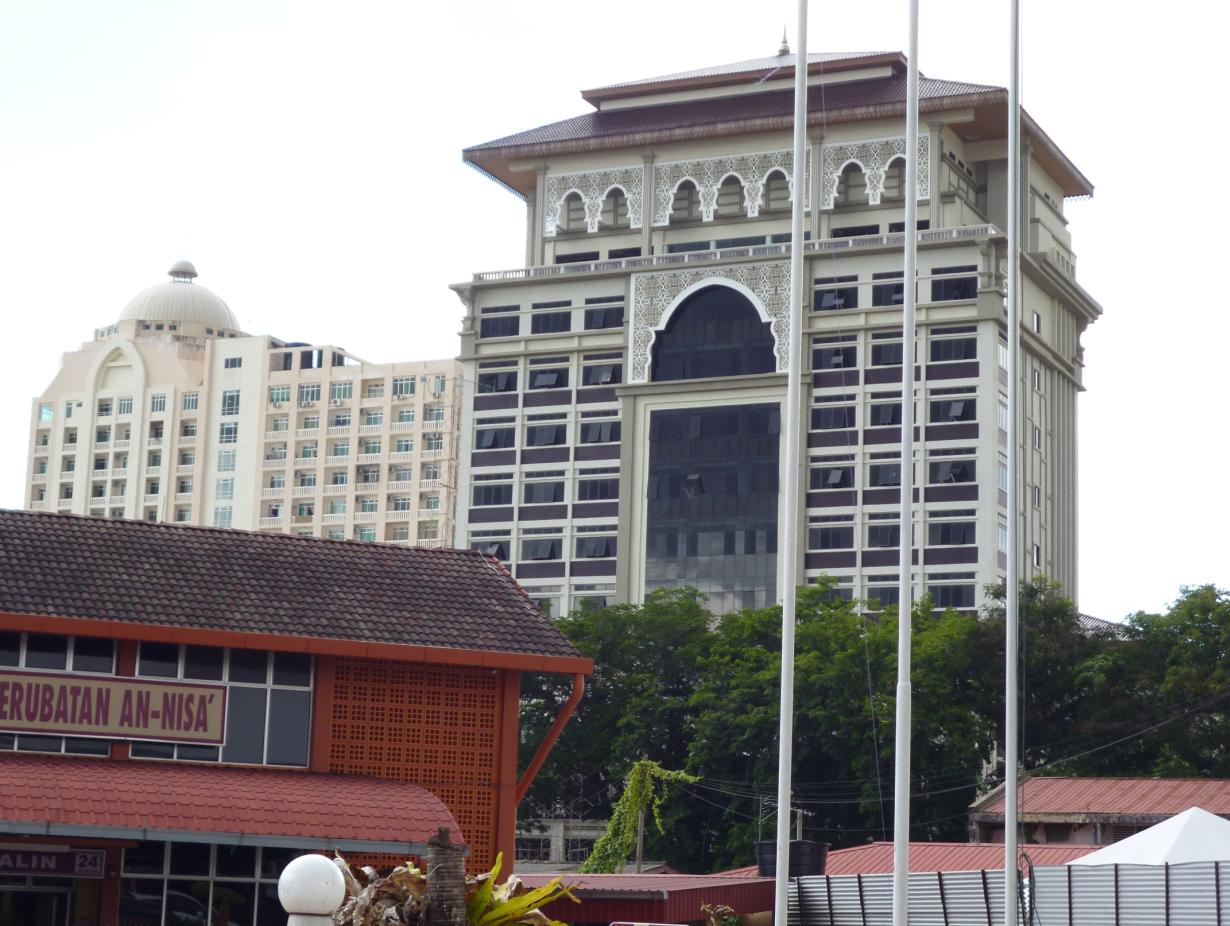
Pusat Perubatan An-Nisa' (women's hospital). Most Muslim women prefer to come here to give birth as they prefer female doctors to handle them during delivery. I don't know what the cost is.
High rise in KB: on the left is Kota Bharu Trade Centre (KTC), on the right is the new Perdana Hotel (the old buiding that was built in the early 1970s was demolished to build this new one). KTC also houses the Red Warriors bistro.

Another place I visited was Azam Money Changer in KB. I didn't take any photo there as he deals with cash. Today Affandi exchanged RM2,625 and got AUD$800. He and Ibrahim will be leaving for Perth after Aidilfitri. They will be in Perth for 2 weeks, mostly for some transaction. Ibrahim is both Australian as well as Malaysian. (Azam later closed down.)

External links
http://www.mpkb.gov.my/

Tuesday, 3 July 2012

Diagnosa & MJMS


A long time ago, the USM medical school published a bulletin entitled Diagnosa. At the time I didn't have any idea what the word meant. I knew the word 'diagnosis' but this was 'diagnosa'. I had thought it was a strange disease. For a long time I thought about that strange word - Diagnosa.

I never published in Diagnosa simply because I didn't like the name Diagnosa. After some time Diagnosa was changed to The Malaysian Journal of Medical Sciences (MJMS). This new name is much better than Diagnosa.

But MJMS is based in our medical school which is far away from all the medical excitement and progress in Klang Valley and all the big cities. I was studying how small publications could ever make it to the global arena. I studied mainly PubMed and some of the other elite universities' databases, mostly in the US as I didn't know most of the universities outside the USA. 

Once I found that online listing and presence was possible for a small journal like the MJMS, I wrote to the Dean; at the time the Dean was Prof. Dr Mafauzy Mohamed. He was my mother's former high school student. Prof. Mafauzy was 50-50 about the idea. So I wrote again and begged him to consider online listing of the TOC in MJMS. We got Bioline International to host our MJMS FOC. It was a slow beginning as many researchers did not know about MJMS, and that it was already online. Access to MJMS was reported back to the medical school by Bioline International.

We also included all our conference abstracts from the annual National Conference on Medical Sciences (NCMS) - usually held every May/June. When I was in charge of the NCMS as its webmaster, I hosted lovely pictures of Kota Bharu too. That became an eye opener and we all got excited. One thing led to another.

Now we have MJMS online at NCBI and the NCMS has its own website somewhere. So, over a period of approximately 15 years from the birth of Diagnosa, we made it to the Internet, of course with the cooperation of many bodies. Bioline International is really great.

This is my PhD student's article published in MJMS and accessible at NCBI: 

He is in Facebook. He published 8 articles for his PhD. He also published a book which is available at Amazon.com. He is now an editor of his own university's journal (Medical Journal of Bangladesh), and the best thing is, his journal is also online somewhere; he learned how we did it and he did it for his university. It makes me really happy that even remote places like our medical school in Kelantan has made its presence in the greater global sphere of knowledge.

I have not looked at ISI, SCOPUS, etc. 

We also have a research bulletin which I think should go online. I am an author there but I haven't written anything so far. 

I'm also looking at whether Patient Education materials can be made available online and to a wider audience.

Glossary

IJAMPU = [I = Indonesian; J = Javanese; A = Arabic; M = Malay; P = Persian; U = Urdu]


MADRASAH, MADRASSA, MADRASA

The Madrasa in Asia is a good reference that contains a glossary of IJAMPU words. 


Islah means reform

Jamiyah means association

Kyai is a religious teacher

Ma'had is an institute

Maulvi is cleric or divine

Mubaligh is a preacher

Qasida is a poem

Tabligh refers to propagation

Tarbiya is education or training

Tibb is medicine or healing


MAHARAJA/MAHARAJAH, MAHARANI/MAHARANEE - from Wikipedia:
http://en.wikipedia.org/wiki/Maharaja

In peninsular Malaysia:
Maharaja was the title of the monarch of the peninsular Malay state of Johor(e) from 1873 to 1885. The Arabic, Muslim title sultan, often considered of higher rank, was re-adopted later and remains in current usage.
The title Bendahara Seri Maharaja was used by the ruler of Pahang (1623– 1853 in personal union with Johor, eventually becoming a fief of the Bendahara family), till on 6 August 1882 Tuanku Ahmad al-Muadzam Shah ibni al-Marhum Tun Ali adopted the title sultan.

In northern Borneo, the title Maharajah of Sabah and Rajah of Gaya and Sandakan was used from 29 December 1877 to 26 August 1881 by Alfred Dent (compare White Rajah).


NAKHODA vs. NAHKHODA vs. NAHKODA
- from Kamus Dewan, Edisi Ketiga, 1998, ms 919; 
- published by Dewan Bahasa dan Pustaka, Kuala Lumpur
http://en.wikipedia.org/wiki/Kamus_Dewan

Nakhoda: 1. pemimpin atau ketua perahu (kapal), juragan; 2. kapten kapal.

Menakhodai: menjadikan nakhoda kpd, mengetuai: kapal yg dinakhodai oleh orang Arab.

Translation:

Nakhoda (synonym juragan) is the leader or head of a perahu (small boat) or a ship's captain.

Menakhodai is to become a leader of a boat or ship's captain.

Primary Care Research

This is the Bibliography database for Primary Care Research in Malaysia. It belongs to the Malaysian Primary Care Research Group.

http://www.mpcrg.org/book/chapter2.html#F


I'm not sure whether this is the same Universiti Malaya group which I wrote to the PI in-charge of the research & database. I wondered what happened to the research project.

Malaiziia

This article contains a Russian article on Malaysia, including its health system in the 1970s.
http://encyclopedia2.thefreedictionary.com/M'sia

Another article was on Malajsie

Friday, 29 June 2012

Some feedback from Xlibris

Rey Barnes called at lunch time today to explain the nature of the books and purchases. I will just summarize what I heard from her and what I can make out of the phone call ( there were a lot of echoes so I couldn't hear her properly), and what I have understood so far.

  1. She will request Xlibris to expedite publication of one book (the small book) as I have requested the books to be published before or by October 2012; since Malaysian govt institutions (university libraries, etc) cannot make purchase orders after October as the accounts will be closed (October 2012-March 2013). The other book (big book) may need a little bit more time before it can be published, and Xlibris will try to get the second book out too by October 2012. I informed Rey Barnes about Ramadan and also the Hajj season and re our upcoming 13GE.... hectic time.
  2. The print copies can be purchased at Xlibris and Amazon.com; anyone can purchase any version. Business as usual.
  3. The ebook version is as explained by Rey Barnes in a preceding post. Nobody can download a second time after the initial download (must be prepaid and must download at certain times). The download link is immediately deactivated after one download. The ebook is not searchable before download as the book is not visible to search engines. I have only requested 4 pages of the ebook to be displayed online - cover and TOC. That's all the search engines can see. The search engines cannot search contents of the ebook as the contents won't be uploaded along with the displayed pages.
  4. Institutions can request free complimentary copies of the print copies, but not the ebook. The ebook is only for purchasing, not complimentary copy or FOC.
  5. Persons can request print copies but Xlibris will decide whether to give complimentary copies or not. If in doubt, Xlibris will contact me and I can decide.
  6. All other matters re purchase will be referred to me and I can release or refuse any sale to any person. Of course I don't like to be doing this job.
  7. Anyone can write to Xlibris and ask Rey Barnes re my books or if they have further queries.
  8. My 2 books (each book has 3 versions) will be available for as long as I live and for 50 years after my death. After that the books will be free for circulation (they will enter into public domain). If I still want the books to be copyrighted for another 50 years, then my children will need to file for copyright once more. If I  live another 50 years, I will be 104!!!! 
  9. The books will be printed on demand; Xlibris does not store printed books. When you order a print book, it will print one book just for you. That way, you always get a fresh book, not an old book. Xlibris is a green company which means it tries to cut down on paper and save the trees, keep the ozone layer intact and we get a cooler Earth. Xlibris encourages the ebook. In future, almost all books will be published as ebooks, no print books anymore.
  10. Book dealers, book resellers, orang jual buku, etc - can write to Xlibris for discounted price and then resell at whatever price they wish, and make a profit. This is ok with me.
  11. Xlibris is also looking at the Malaysian and Singapore buyers: doctors' associations, medical groups, dental groups, organisations, companies, ministries/kementerian, etc who will be interested in the books. Please write to Xlibris and for bulk orders, etc. I will make the ISBN #s for the second book handy when I have them.
  12. I will not be selling my own books, so everyone has to buy them online at Xlibris or Amazon.com. 
  13. The people at Xlibris said the books are very good. One lady phoned to inform she liked the Preface so much that she couldn't resist to copy a para of it for her Facebook. Of course I allowed it cos I wanted her to be happy. The para was about children's literacy.
  14. Rey Barnes also told me to check my email (often)....sebab lambat jawab emel. Of course I cannot check my email when I'm out among the rubber trees!
I hope this post is helpful for everyone. Take care.

Prof Faridah


Ebook

This is the answer from Xlibris to my queries re ebook.

from: Rey Barnes Rey.Barnes [a] xlibris.com
to: faridahar [a] gmail.com
date: Fri, Jun 29, 2012 at 1:43 PM
subject: Book ID 501452

Hello Faridah,

e-Book is the electronic copy of your book. The version that we will provide the buyers will depend on the type of e-book reader they are using. However, there is now a new innovation that one e-book version is already compatible to all readers (Macintosh, Nook, iPad, Adobe Digital, Kindle, etc). We will send them a download link that offers one-time download to make sure that only the person who bought a copy will get the product. After the download process, the link deactivates and they can no longer use it for downloading another copy. They also need to download the material within 5 business days or the link will also deactivate and become useless.

I have posted some links earlier re the present ebook version that operates on all mobile devices.

According to Rey Barnes, libraries today lack space and they would prefer to have the ebook version.

Here are examples of ebooks.
Other examples of ebooks
About ebooks from the Advanced Learning Centre

Puteri Wanang Seri

Who was Wanang Seri? She is sung by Roslan Madun in his song by the same name. Who was she? Who were her parents? Was she the legendary Hang Li Poh who married Sultan Melaka?

Roslan Madun: Puteri Wanang Seri

Roslan Madun: Tebang Tebu


Thursday, 28 June 2012

Water, Oil and Gas (WOG)

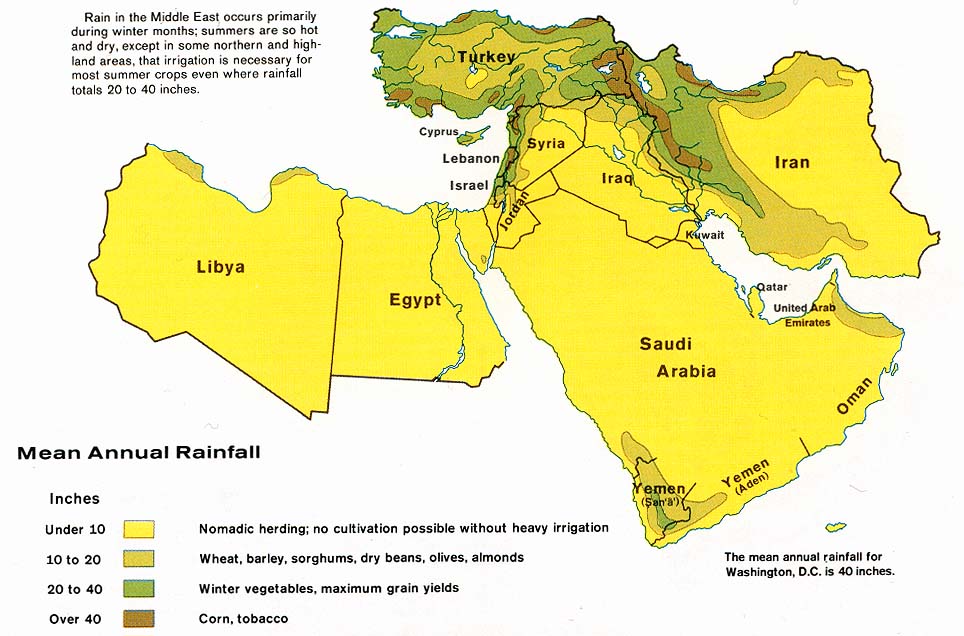
What is water? Where does water come from? Why do we need water? Can we live without water? We know from the Asian Tsunami 2004 that man can survive for 14 days without water. Is water essential? Where can we find water? Is there no water somewhere? Where? Where are our water resources? Who owns water? Who makes water? Who sells water? Who has no water? Why has water become a commodity? Why is water expensive? Why is water the #3 cause of war, after oil and gold? Why are we rushing for water ownership? Why are we fighting because of water? Why are we killing because of water? Why has water become a source of conflict in almost every nation that exists on Earth? Why? Why? Why? Remember, water, oil and gas all exist as a package in nature - conquering water resources means you automatically get the other 2, oil and gas. Let's look at the triad - water, oil and gas.


Here are some good reads and maps about water, oil and gas:

Thomas Malthus Theory:

Middle East Rainfall 1973:
http://www.lib.utexas.edu/maps/middle_east_and_asia/middle_east_rainfall_1973.jpg

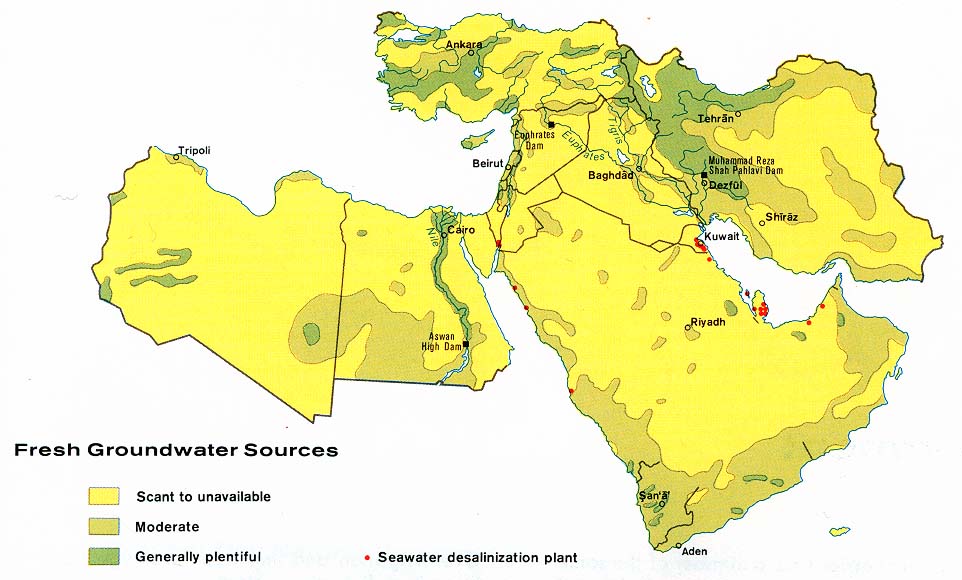
Middle East Groundwater 1973:
http://www.lib.utexas.edu/maps/middle_east_and_asia/middle_east_grndwater_1973.jpg

Caspian Sea oil and gas 2001:
http://www.lib.utexas.edu/maps/middle_east_and_asia/caspian_sea_oil_gas-2001.jpg

Maps of Israel:
http://www.lib.utexas.edu/maps/israel.html

Maps of Asia:
http://www.lib.utexas.edu/maps/asia.html

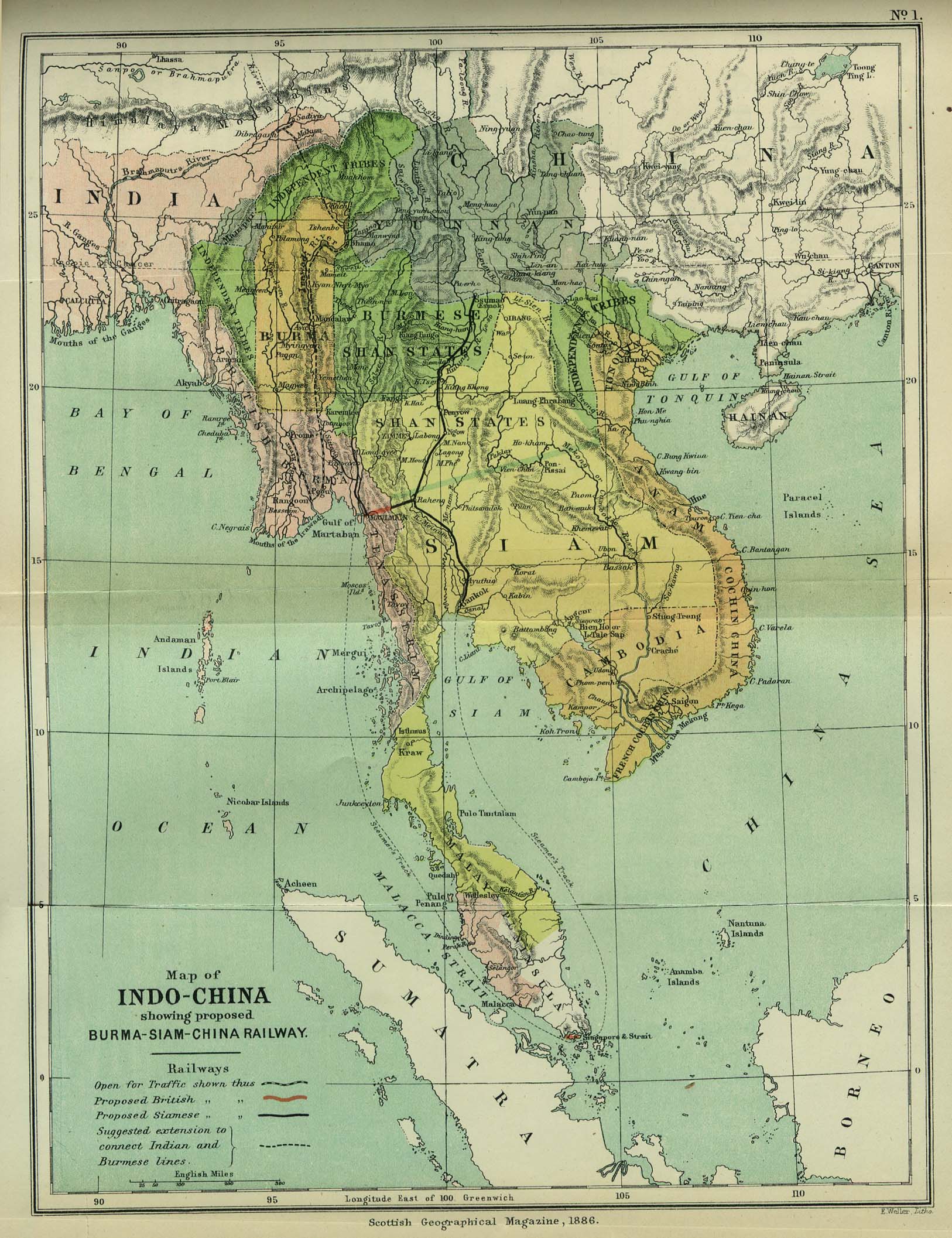
Map of Indo-China 1886:
http://www.lib.utexas.edu/maps/historical/indo_china_1886.jpg (shows proposed Burma-Siam-China railway)

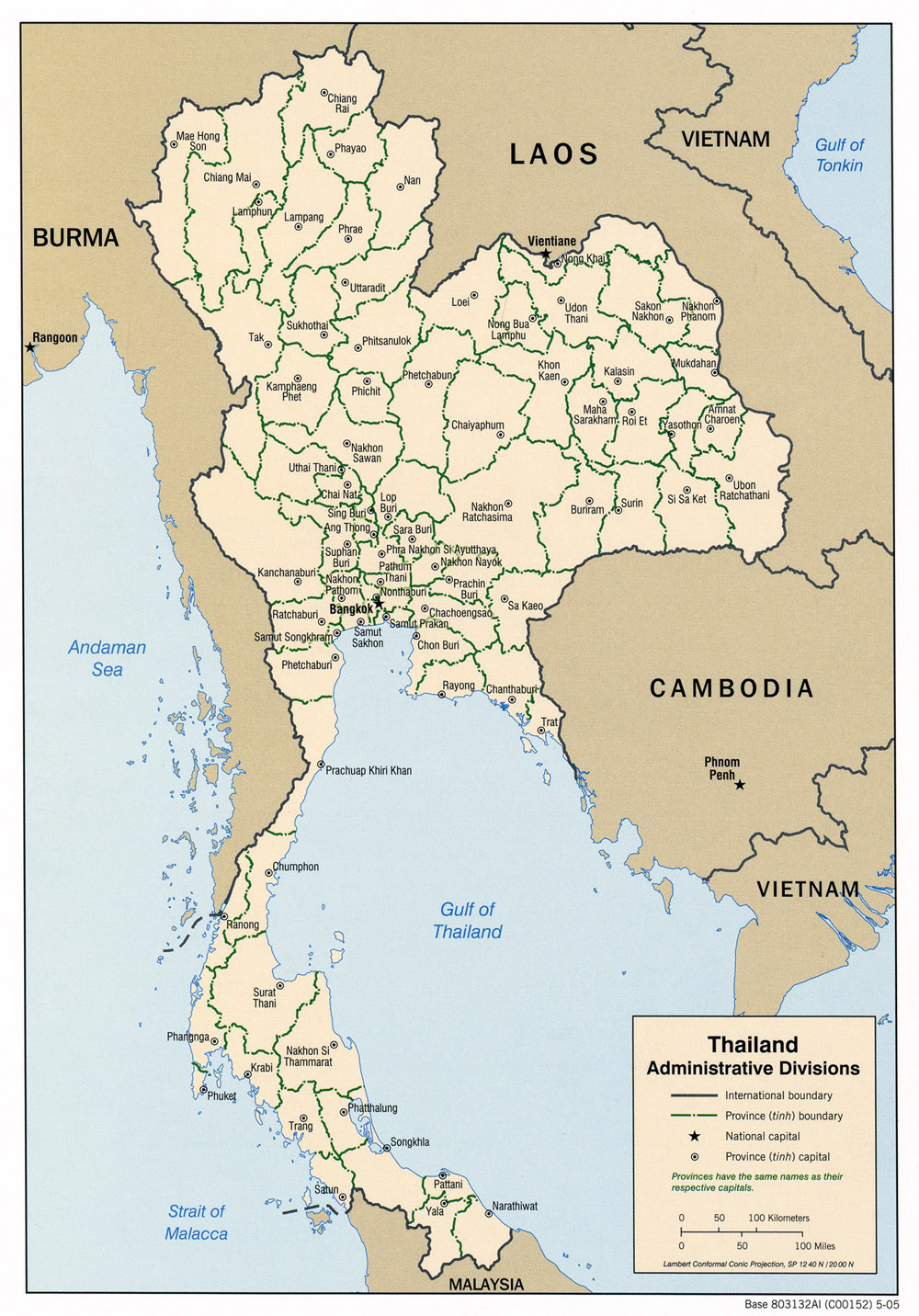
Maps of Thailand:
- administrative map 2005:
http://www.lib.utexas.edu/maps/middle_east_and_asia/thailand_admin_2005.jpg (also shows Satun, Pattani, Yala and Narathiwat)
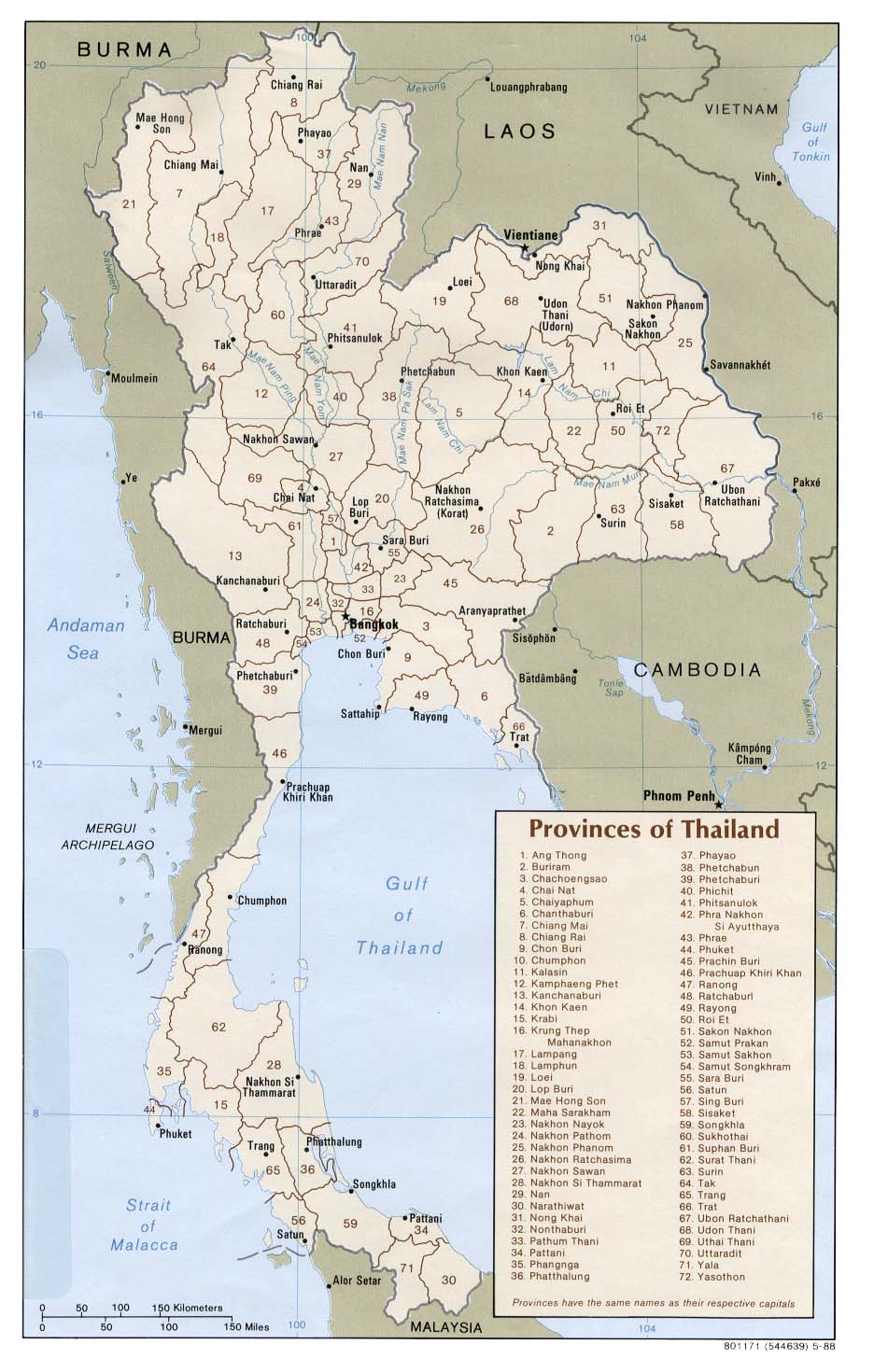
- 72 provinces in Thailand 1988:
http://www.lib.utexas.edu/maps/middle_east_and_asia/thailand_provinces_88.jpg (Pattani is #34)
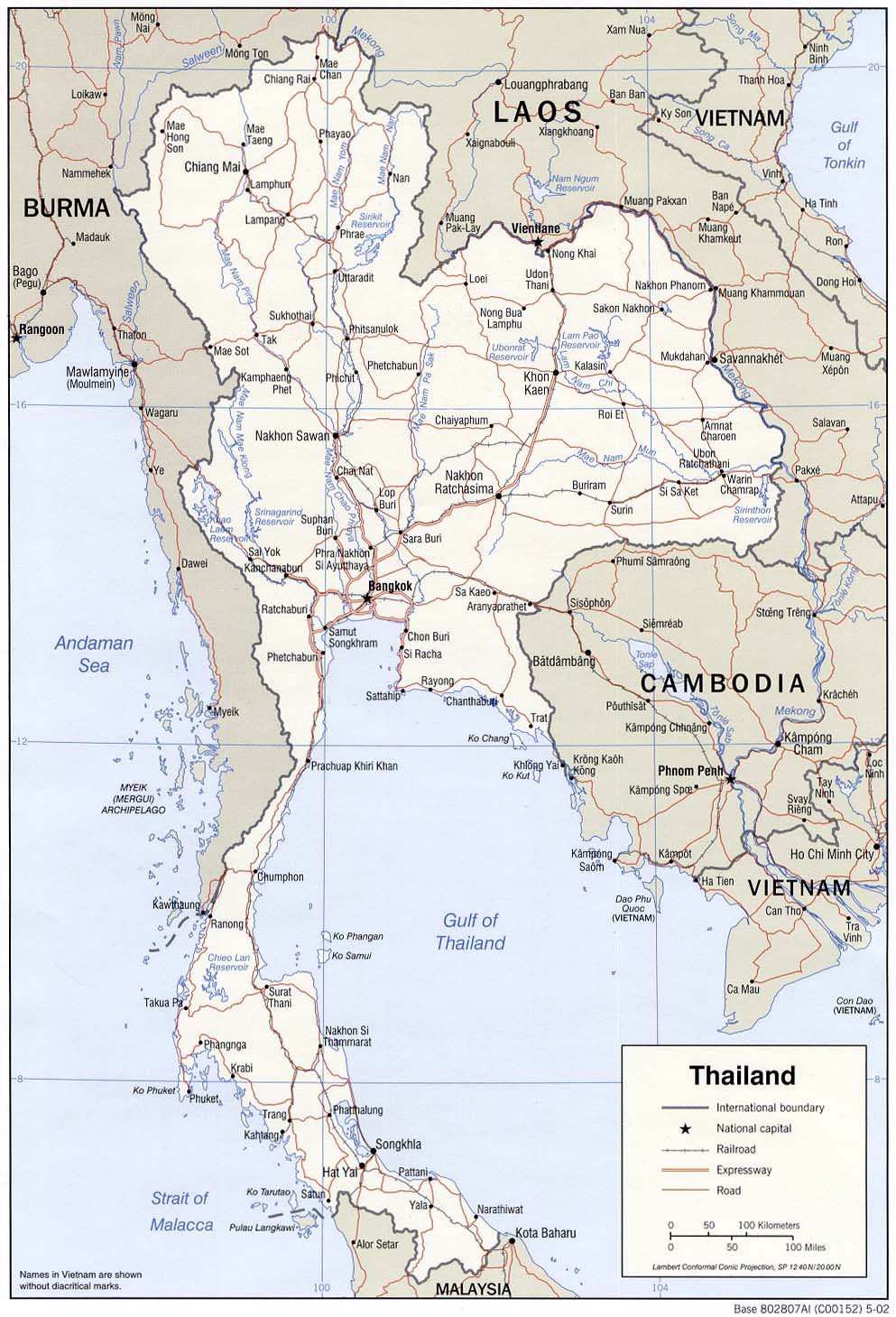
- shows names of towns:
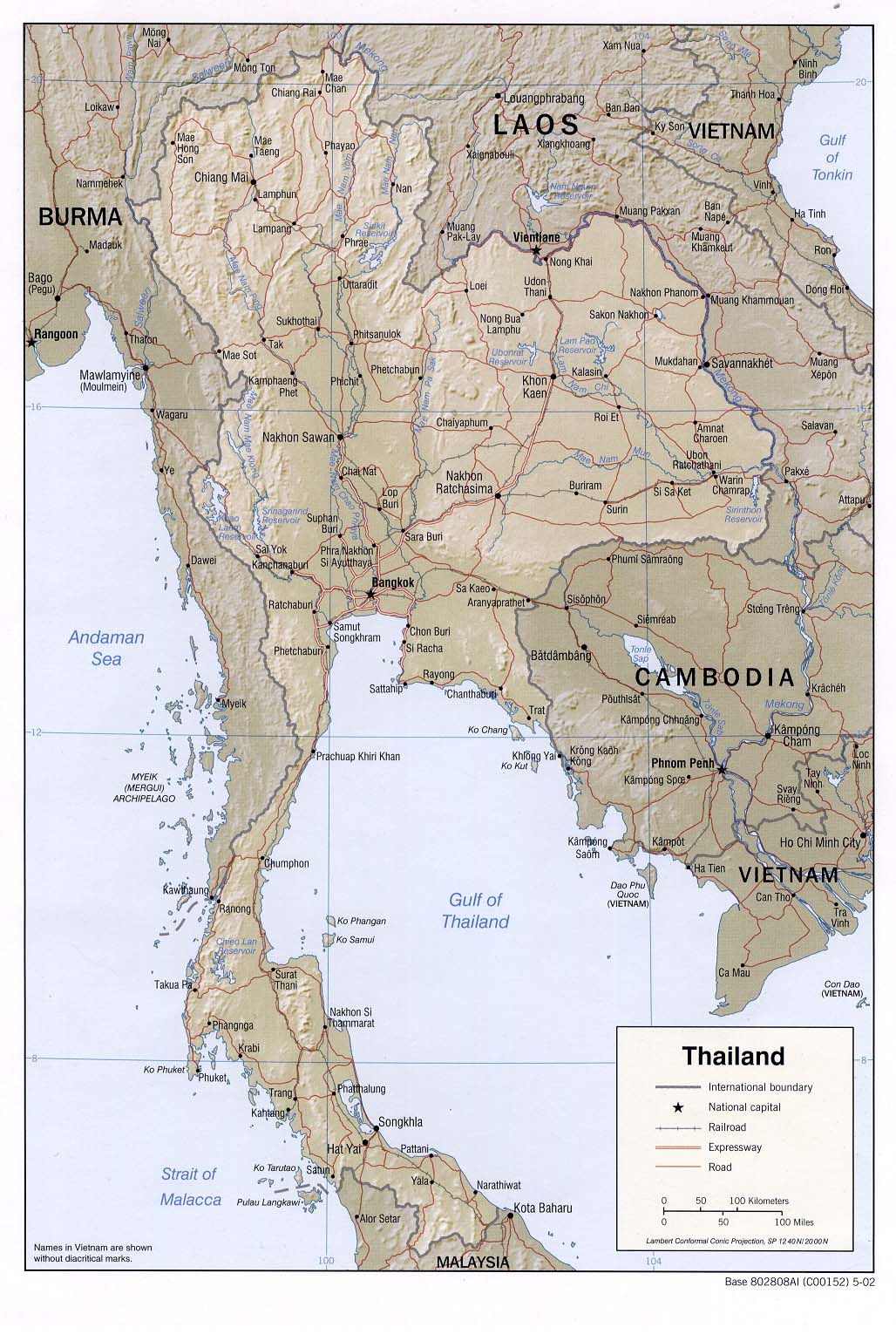
http://www.lib.utexas.edu/maps/middle_east_and_asia/thailand_pol_2002.jpg (also part of Burma, including a town called Pegu (Bago) which is much cited in Malay History. There is also the town of Moulmein).
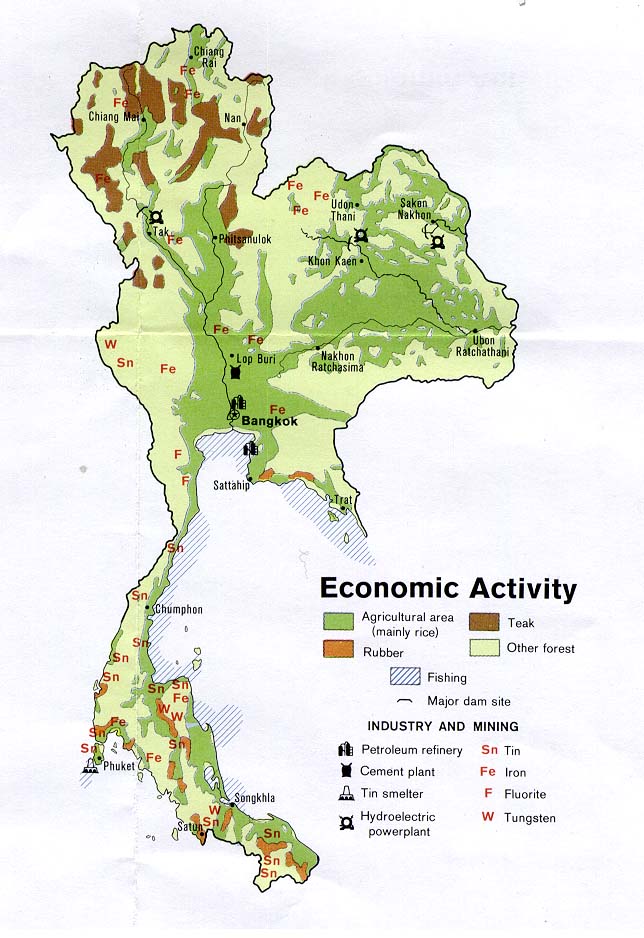
- economy map 1974:
http://www.lib.utexas.edu/maps/middle_east_and_asia/thailand_1974_econ_activity.jpg (shows mining but there is no gold marked on the map. Where did Thailand obtain all her gold for her palaces and temples?)
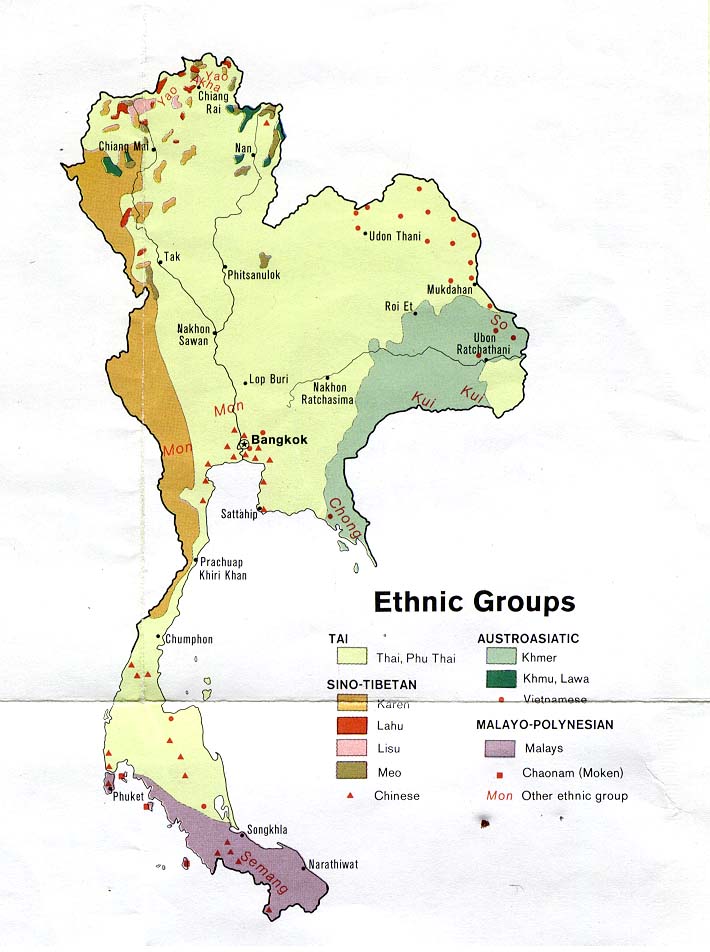
- ethnic Thai groups 1974:
http://www.lib.utexas.edu/maps/middle_east_and_asia/thailand_1974_ethnic_groups.jpg (shows the Malays lives in Pattani, Yala, Narathiwat and Satun)
- relief map:
http://www.lib.utexas.edu/maps/middle_east_and_asia/thailand_rel_2002.jpg (also shows railway)

In the old days, if  a doctor needed to travel from Penang to Kota Bharu, Kelantan, he would have to take the train that went up to Thailand, then take another train that came back down to Kelantan. In Kelantan, the train previously stopped at Penambang, then the doctor had to take a ship across Sungai Kelantan, and make it to Kota Bharu. The journey from Penang to Kota Bharu, Kelantan may take many days. This journey appears in the biography of Dr Ali Othman Merican, and his sons, Dr Carleel Merican and Dr Ezanee Merican.


There was no bridge across Sg Kelantan till one was built by the British in 1939 - it was a bridge that collected toll. In 1967, the toll was $2 (RM2) per vehicle; motorcycles, bicycles and pedestrians did not have to pay. Buses had to pay. 

Maps of Malaysia:
http://www.lib.utexas.edu/maps/malaysia.html
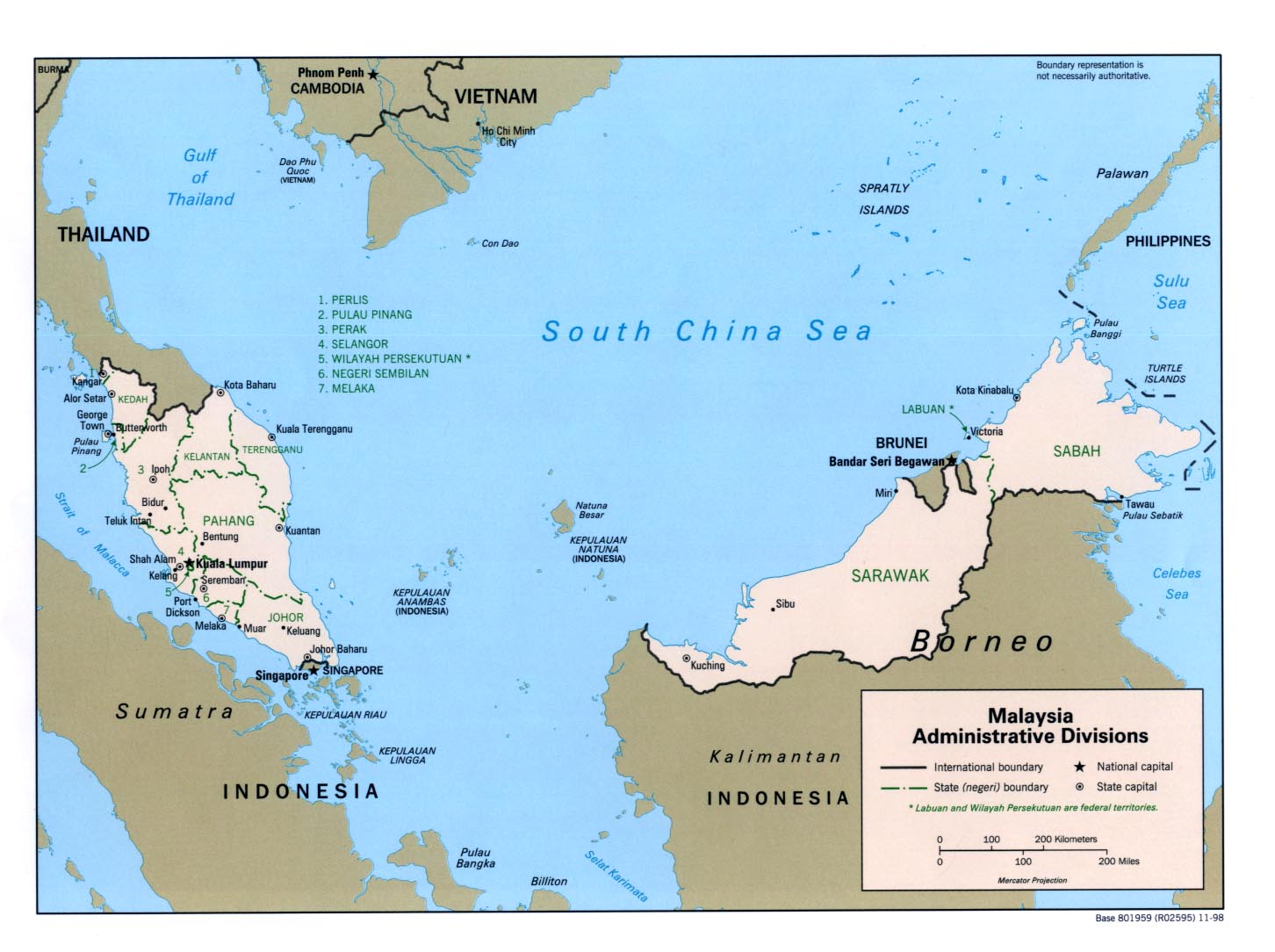
http://www.lib.utexas.edu/maps/middle_east_and_asia/malaysia_adm98.jpg
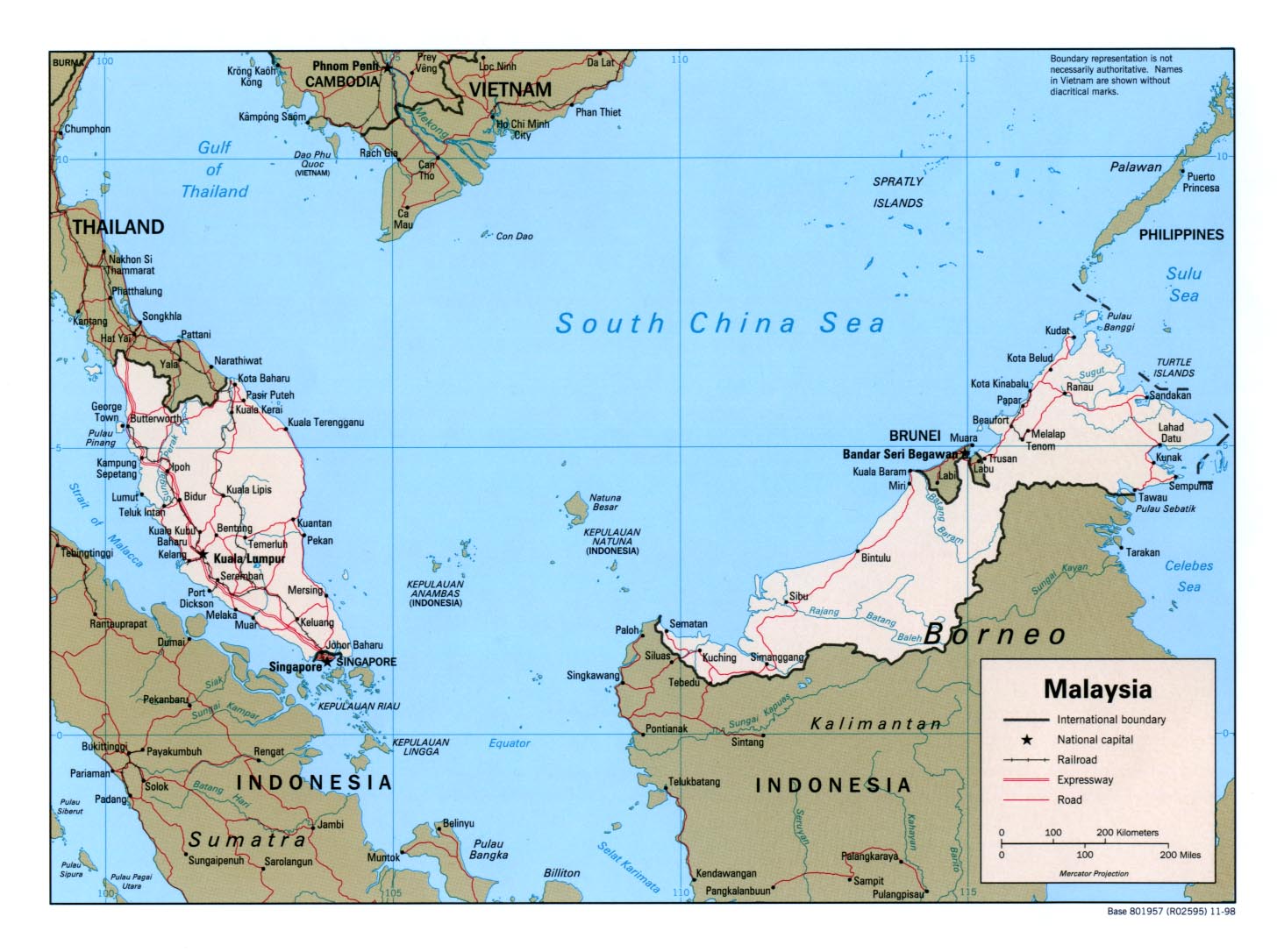
http://www.lib.utexas.edu/maps/middle_east_and_asia/malaysia_pol98.jpg (1998)

Map of Malacca 1854:
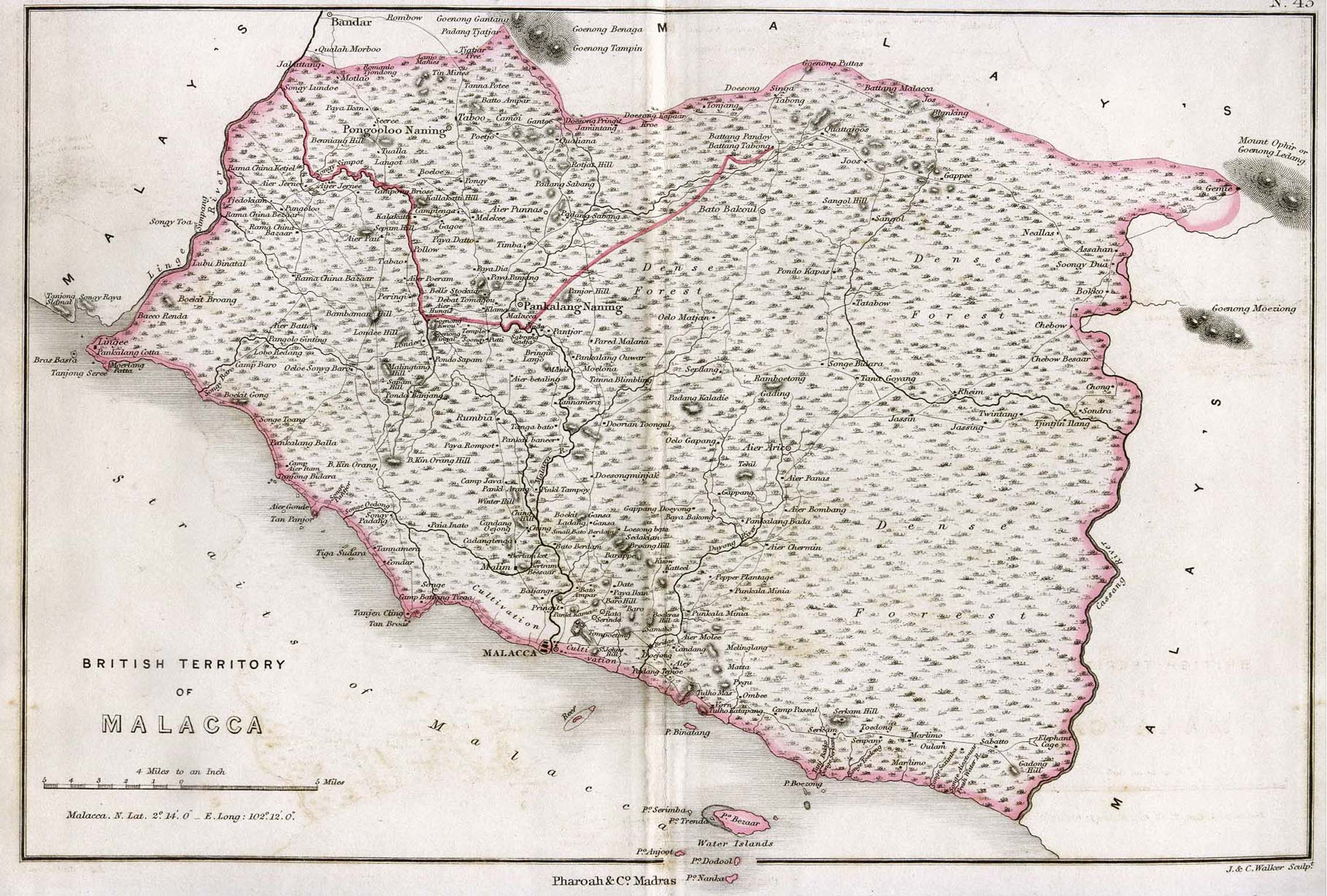
http://www.lib.utexas.edu/maps/historical/malacca_1854.jpg

Malacca has a lot of water problems because geographically, it has a low water-table. This means, you need to dig a well deep enough to get to the water-table. However, it is rather weird that Malacca also suffers from floods! I don't understand the water and irrigation system in Malacca.

In the many reports of typhoid and cholera in the old newspapers, Malacca and Terengganu had major outbreaks in 1964 and 1967 (have to re-check the dates). Terengganu has many rivers.

In a book by Yeoh, she explained that when Singapore (and all of Malaya) used the bucket system, there were some problems with the collection of the buckets (tong tahi). The buckets had to be carried from the latrines, through the living-room to the front, so the Chinese man can collect the nightsoil. That cause diseases somehow (I have no idea how this can happen).

When I lived in Banda Hilir, Malacca, my family had a latrine far away from the house. It used the bucket system and a Chinese man would come and collect the nightsoil. The buckets were stinking and looked really ugly.

Malaysia was really lucky when Dr Raja Ahmad Noordin invented the Jitra Bowl in 1963, a cousin of the Siamese Bowl. In early 1970, my father installed the Jitra Bowl with a flush system for our Banda Hilir house. It was the first time someone did that for a kampung house. As kids, we didn't have to go to the dark latrine outside anymore. It was a great change in hygiene.

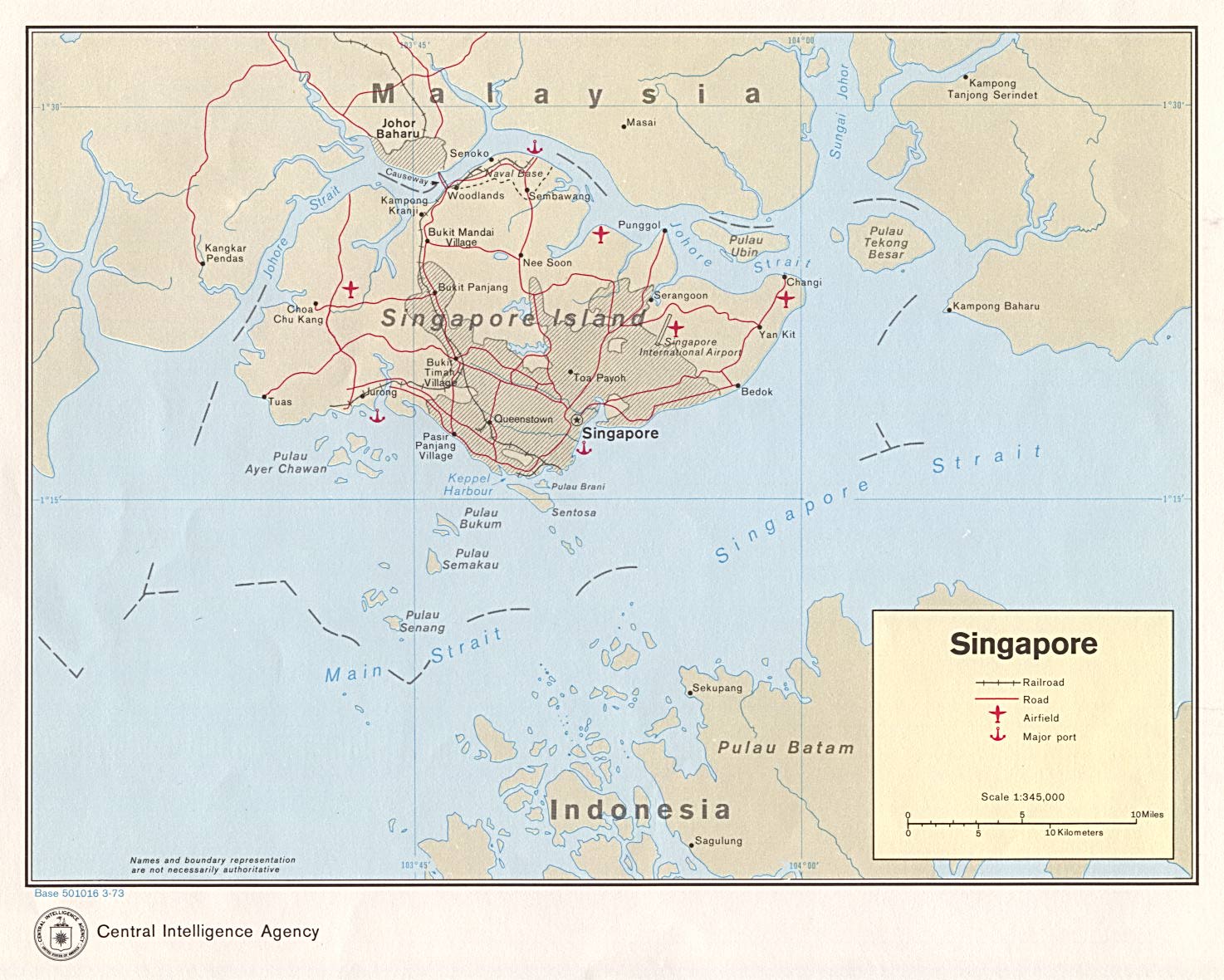
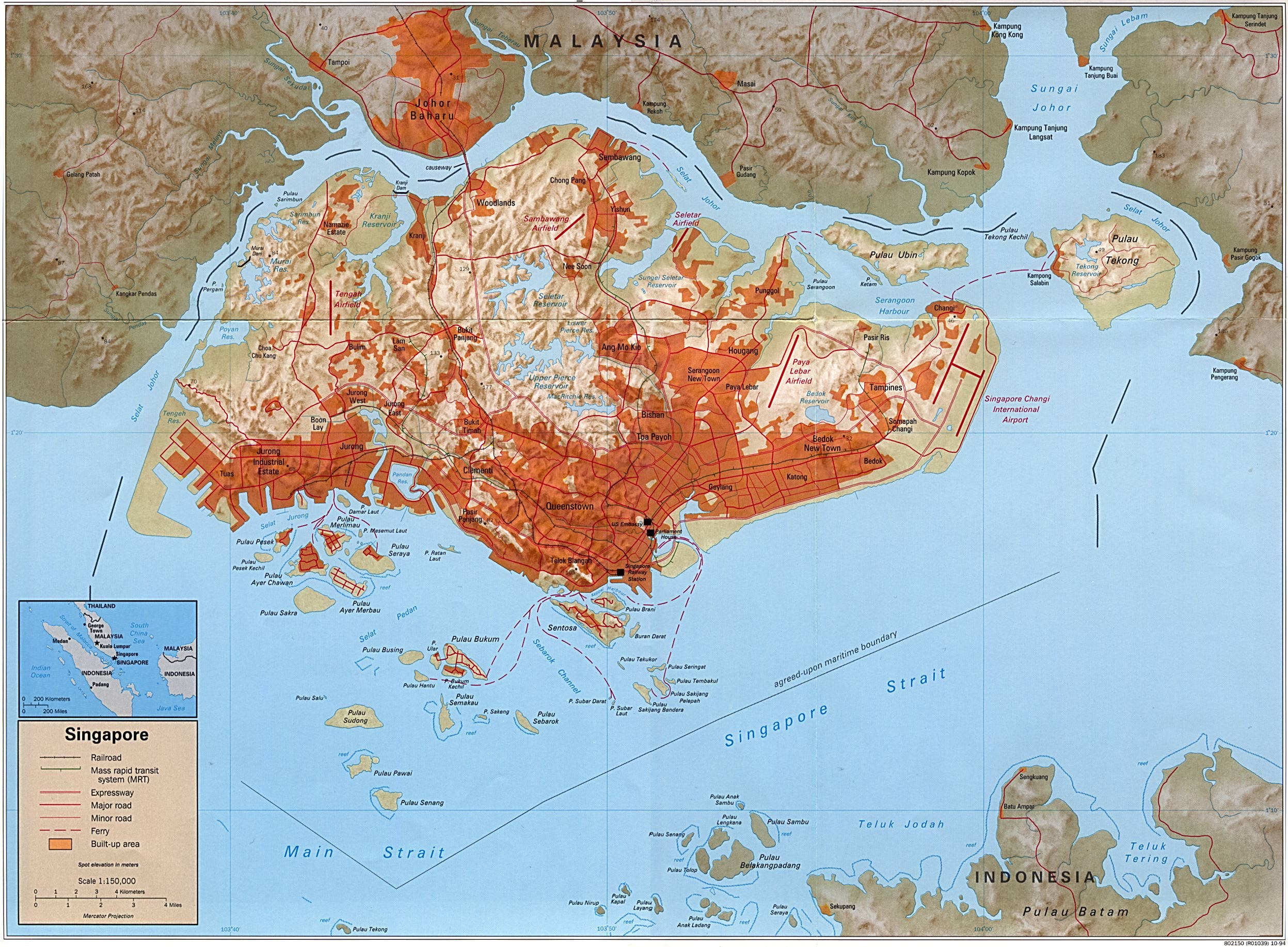
Maps of Singapore:
http://www.lib.utexas.edu/maps/singapore.html (shows 3 airports 2005)
http://www.lib.utexas.edu/maps/middle_east_and_asia/singapore.jpg (shows Keppel Harbour 1973)
http://www.lib.utexas.edu/maps/world_cities/singaporeb.jpg (built-up areas)

When the Japanese war reached Singapore (Battle of Singapore 8-14 February 1942), the first thing that Abdul Majid bin Ismail was assigned to do was to check the water resources in Singapore, for the Japanese army. He had to take water samples at about 8 places, some at the lowlands and others at the highlands. According to Tan Sri Dr Abdul Majid (Coco Majid), the water samples at the lowlands were all salty and the ones at the highlands were freshwater. The names of the places are mentioned in his biography. There was a Japanese chemist whom Coco was working for.

There was some water problems experienced by the Japanese army. I don't know the exact nature of that water problem. I don't know if that same water problem is the same water problem that Singapore faces today (67 years post-war). What is the water level in the lowlands of Singapore? Aren't the reservoirs providing sufficient water? Singapore also buys and processes water for Malaysia and then sells it back at a higher price - why? When I went to see Singapore and crossed the Johor Causeway, I saw huge silver water pipes on my side of the train window. It was drizzling so my photos didn't come out good. Anyway. I didn't know it was the Causeway! I had thought it was a big river! I don't remember the Causeway from childhood.

Looking at the map of Singapore, I can see a lot of water bodies formed by lakes and rivers.  I'm just wondering what is the actual water problem - is it lack of freshwater or is it lack of water altogether? Penang is an island and it has no water problems. As I faintly recall, there is Guillemard Dam, one at Bukit Dumbar and another near where we lived in Penang, somewhere near Brown Garden side, facing Bukit Pemancar. Penang also has the best drinkable filtered tap water (no need to boil).

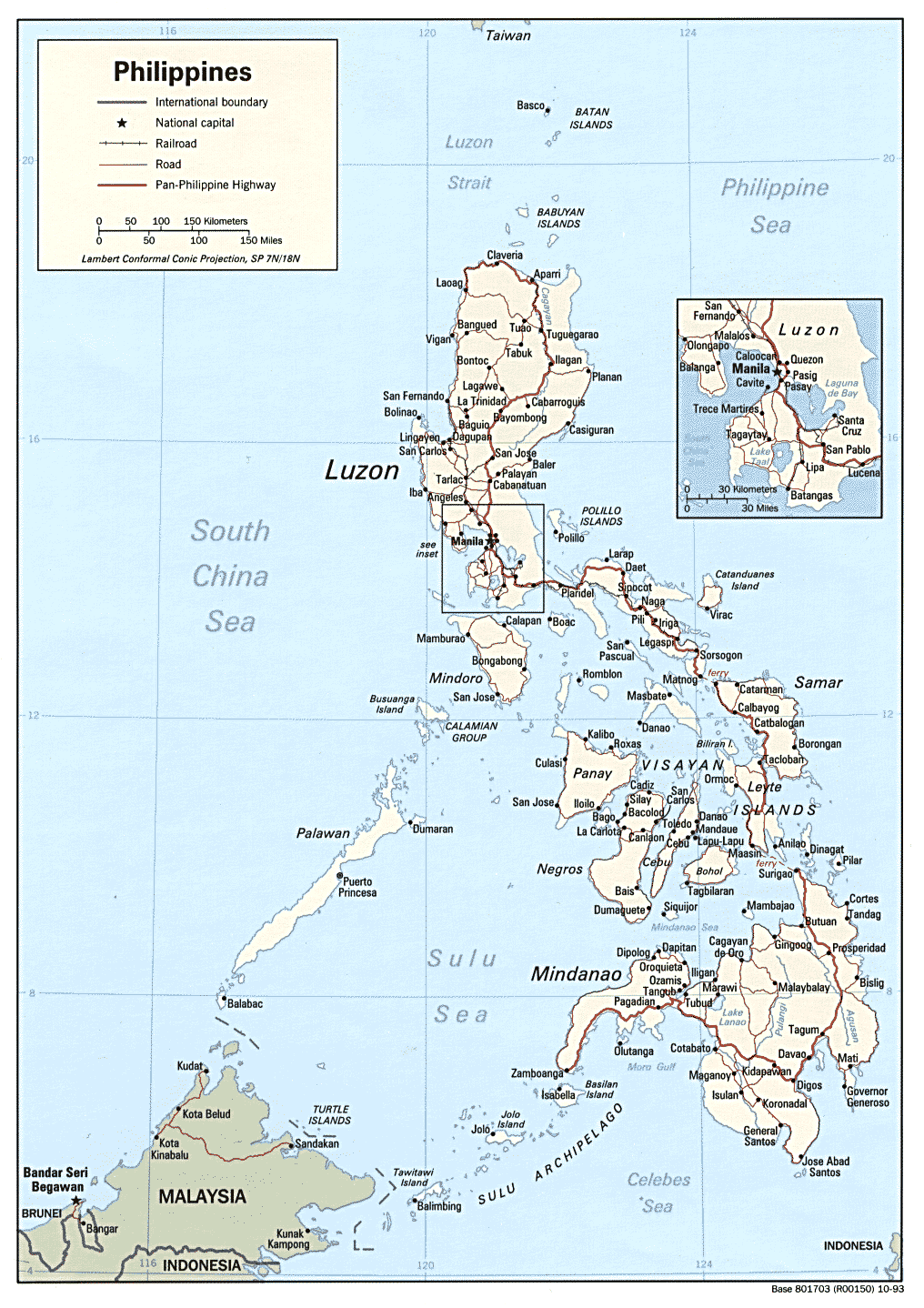
Maps of the Philippines:
http://www.lib.utexas.edu/maps/philippines.html
http://www.lib.utexas.edu/maps/islands_oceans_poles/philippines.gif (shows Palawan, presumably home of the Sea Gypsies)


Internet Publishing

We now have a problem because everyone is split over the meaning of Internet privacy. I will select and list here the ones that have the correct interpretation. There are many interpretations. I have written to 5 people, including the publisher for the two books on The Early Malay Doctors. It will certainly delay publishing. I will write the full terms later, as I have a class session now.

Straits Settlements (SS)

The Straits Settlements (SS) refer to the 3 states which do not have Malay sultans - Penang, Malacca and Singapore. Actually the SS is a misnomer; the 3 states had Malay sultans. Penang was a part of Kedah (old spelling Quedah) and was thus under the Kedah Sultanate. Malacca was under the Malacca Sultanate which was over thrown by the Portuguese. Singapore had Sultan Hussain Muazzam Shah. What happened to them and the 3 sultanates? We have continued with the British system and legacy and even after Merdeka, we have not restored the 3 sultans for the 3 Malay states. I think we should since the lands are still Malay lands, and Malay lands have sultans. India had Indians sultans but lost them. Britain still maintains its white kings and queens. China had Chinese emperors and empresses but lost them. So, we too need to maintain our Malay sultans and sultanahs. 

Back to the SS, what did we have? I went to Penang Museum to see what they had under SS. This is what they have - pinggan-mangkuk kaca warna putih. Fine bone China with SS marked on the back. Have you seen them? What are they for?  They are very pretty.

The British had a lovely time here in Malaya. They dined and lived as if it was paradise, like in the movie Bali High. That is the picture I get when I read about the British people in Malaya. Even the hotels at the time were merely for them, including the swimming pools. Our lives and theirs were totally different and nothing we see today comes close to how the white masters lived here at that time. Our forefathers must have felt so bad.

SS dinnerware, Penang Museum

History of the Camera and Life

I want to bring up the camera as I think this is about the most important invention that records history in pictures.

If you go to museum, etc, you will see old models of cameras. Here are some old camera models: 

We can safely say the camera was invented by the Chinese, picked up by the Europeans, adapted and modified to whatever was usable though impractical. 

If we check old photographs of the 1830s, these were likely photos from the early camera models that worked, and the cameras were big and on a tripod-like structure. The flash used was blinding.

When I had my pictures taken in the early 1960s, the big bulky accordian-like box cameras were still in use by photo studios. I still remember in some cases they used a flash that was like a fan-flower piece and the flash itself was so strong that it could send a child rolling backwards. Many people did not like being photographed because of the blinding flash that was used for indoor photography. But the photographs from these early cameras are sharp and good, they last till today.

Some of the doctors had some of the early cameras. Later on there the SLRs, then the automatic disposable, followed by autofocus, then finally the digital still and now zoom and video cam. Soem doctors preferred to develop their own photographs.  

Most of the early B/W photos are very good are lasting. Nowadays we prefer coloured photos and I am worried they will not last. I looked through my photo collection and the coloured ones and slides may have to go soon. The B/W ones are still clear as if they were taken yesterday (they were taken when I completed my first degrees in 1976).

I have submitted 421 unique photos for the big book. The portraits are the usual ones but there is one portrait that stands out, and that is of Dr Megat Khas when he played the role of Bottom the Weaver in Shakespeare's Midsummer Night's Dream for a school play. He wore a dunce cap and looked really sad. The other stunning photos are of the Malay families and Malay ladies. I have never seen a Malay family gathered nicely for a photo and there is a nice one posed by Dr Megat Khas' family in a wooden home. There is one photo where 4 Megat brothers posed  for a photo, dressed in 3-piece and with pointed shoes. You may think such photos exist in European films but this is one with 4 Malay men. You cannot tell that they are Malay men. I particularly like the tea parties that the doctors attended. It seems that life was quite relaxed then and doctors had time to attend tea parties and enjoy the evening. In one photo, the men were dressed in baju Melayu and they looked really handsome. In another photo, the doctors & dentists gathered for dinner and they looked really happy. There is one photo with Dr Latifah Ghows seated very near to the camera and that is about the best photo of her so far. Next to her was a boy/man dressed in baju Melayu and songkok but I have no idea who it was. He looked Malay to me but I cannot make out who it is - could be any of the 12 doctors who are still not written about. There are quite a number of photos where most of the individual are still unidentified since the ones who knew them have all passed away. The faces are in full view but there is no clue to tell who they are. Most of the photos where the people are unidentified are from the 1960s. I don't know them too as I was 7 years old in 1965. I have passed on some of the photos to VI webmaster and to the Nursing Association in KL for assistance with identification. It is very sad that I don't know who are in the photos.

In the 1960s, there was the first Cabinet. That ministers whom I recall are Temenggung Jugah, Tan Sri Sardon Jubir, Aishah Ghani, Ghazali Jawi, Tun Abdul Razak, Tun Hussien Onn, Ghafar Baba, etc. I remember Tun Dr Mahathir from 1974 when he was education minister. I remember most of the Agongs, mostly from the stamps I collected (still at it). I remember Sultanah Bahiyah because she was the prettiest queen on TV. 

I think we were more patriotic as kids in the early 1960s. We celebrated everything that the school taught us, even Poppy Day was a big thing at school and at home. The school uniforms made us feel like responsible kids. Parents also had a different attitude then. It was a different life altogether.

We had P Ramlee movies, B/W only, for a long time but that didn't bother us as nobody had coloured TV then. There was only one channel - RTM. Much later, we had a second channel, RTM2. Then in 1982, after I returned from California, we had TV3, which was in English. Because I had returned from California after being overseas for 6 years, I could not understand the English that TV3 had used at that time. I had a lot of trouble getting used to Malaysian English; when I left Malaysia at 17, I could't even say a sentence of conversational English. It took me many years to become Malaysian again, but now I have become Kelantanese. If I venture outside Kelantan, eg go to KL for Aidilfitri, then it is hard for me to speak standard Bahasa Melayu as I have lost that skill after living in Kelantan since 1983. I can still speak some English but not as much as when I first returned in 1982. I am now learning some basic Arabic. Soon I will lose another language and pick up a new language. I'm also picking up Tagalog, hoping to travel and see Philippines for the first time. I hope to learn Indonesian so I can visit Indonesia for the first time. I have been to Thailand but the life there is very different that I got very scared of the rural life. I particularly like the shops that were selling fabric in Hadyai (if I remember the place). They sell a lot of fried chicken on the way and our bus stopped so we could by some fried chicken. I still don't know the Thai language even though I live about an hour from the Thai border. I have not captured a lot of rural life and clinics as I only had the new digital cameras this year. I was using an entry model digital still camera but I got angry with my CPU one day as a lot of viruses attacked it that I just reformatted and lost all my photos.

For the digital still, I only need a minimum 300dpi for book reproduction but dsc nowadays come at 14 Mpixels and each photo is approx. 5MB, when they were just 100Kb before. So when more photos mean more storage space, I am lost because I have a lot of photos but I cannot keep accumulating photos. At some point, some photos need to go so I have some space. For books on The Early Malay Doctors alone, I use a 13GB external HD plus  lots of cute little pendrives when I work on different computers. I buy a lot of pendrives when I go shopping, some for my kids and the rest for my work. I don't keep any empty pendrive; when I need space, I just delete an entire photo album. Then when I need the photos again, I go out to photoshoot a whole new set of photos. I still believe, the best way to work today is to have a very good camera and a very fast laptop with as much RAM as possible, and the fastest Internet. I don't scan but refer the job to my daughter - she does all the necessary scanning for me. My other daughter takes care of all my phone calls except the ones where the caller speaks English and she doesn't understand a word. She speaks American English but fails to understand the normal English on the phone. My husband takes care of all the calls which I don't hear, fail to answer, fail to understand or when I'm asleep. I don't like handphones at all. I still prefer the old dial-a-number phone. I miss the old days when things were a lot easier to manage. Technological advances are good but I still think we must keep the old things too. The new inventions today break down so often that sometimes I think it is not worth buying a new thing. I still prefer news coming from a person rather than watch TV. I still prefer story-telling rather than watch TV. A lot of things in the old days have personal touch and were so meaningful to life itself. Nowadays, there is lack of soul in life; people don't stop to ponder at all.

Batu Ferringhi beach (beach of Portuguese stones), Penang


Sunday, 24 June 2012

Radiology FAQ and the bear story

This is an interesting website that educates patients. If you have queries about x-ray and things related to radiology, you can ask at the website. The answers are real good for educational purposes. 

Radiology FAQ at Radiology Malaysia website:

I covered some medical developments as part of my professorial talk, and the camera pill was one which I talked about. I was really excited about the camera pill. The thought of swallowing a camera pill gives a wormy feeling. I also talked about the camera pill in class and the students were amazed that such a device exists, but not in Malaysia.

If you are the type that stands or lay down frequently for radiodiagnostic imaging and the whole stuff that they have and do in radiology today, I think the camera pill will be a hit and patients may even want to pay for it rather than have to strip into the open-back gowns for all the radiology procedures. 

I have been to radiology dept as early as age 11-12 years, in and out, in and out, in and out, ... countless times. I didn't mind the discomfort but I particularly enjoyed the old Indian radiographer who interpreted all my x-ray films. Mind you I was just a child, and he took a lot of pain and courage to tell me what I had. I still remember him back in 1969, except that I don't have his name. He was old when I met him in the x-ray dept - they were all men there, no women. He was a kind man, and I can still remember him holding up the x-ray film for me and pointing to the structures, and telling what was what and what was wrong. He said it was wrong (against the rule) if he told me what I had but I insisted that he tell me and so he did. He was very patient and answered everything despite my not knowing which was bone or what was on the x-ray films. Then he broke down and cried. I asked him why. Imagine as child begging a sad old man not to cry. He said: awak tak tau awak apa sakit, kalau saya sakit macam awak, lama saya sudah minta mati!' I was taken aback. Why did this old man feel so bad when it was me whose x-ray films he was looking at. He really cried and had to leave the room. He left. I then turned to ask the other younger 'cheeky' Malay men. I think the old Indian man must have understood the extent of what I had and its impact on my life and future. But I was just a child and I could never understand his concerns and worries for me. I never saw him after that. Maybe he refused to see me anymore because I asked him too many questions. I never saw him again but I certainly miss his kindness in explaining things to me.

I remember being at GH Penang in 1976 for my ME for a scholarship I was applying for to go overseas. That time if I am correct, there wasn't an x-ray facility at GH Penang. I had to go to a private x-ray facility somewhere quite far. I can't recall where but the Indian boy performing the x-ray was very good. He didn't say much and did a good job. I didn't have to do any repeat x-ray. I then took my x-ray film to GH Penang. I remember the waiting area at GH Penang was filled with patients - many Indian ladies in sari, one in particular was moaning in great pain. it was very heart-breaking watching her moaning or was it crying in pain? I can't tell which is which but she was definitely in great pain. I was with my mother - I would never go to any hospital without her. It was like she was my shield and go-between me and the doctor. She spoke and answered doctors' questions on my behalf. I had a mouth that would not open when a doctor asked me anything. I usually appeared mute to doctors. Back to the Indian lady, I asked my mother why she was moaning so badly with her mouth agape and saliva drooling. My mother said the Indian lady probably had oral cancer - she had lots of white blisters even on her lips. I asked her oral cancer from what? She said makan sireh. I rebut and said nenek lain pun makan.... and they don't get to this very advanced condition and excruciating pain. I couldn't ask anymore nor finish my question .... I could see a tiny drop of tear at the edge of my mother's eye nearest to me. I stopped asking. Enough was enough. But the part that I didn't get to ask and get a complete explanation, became a research question for almost my entire adult life. Why did the poor lady kunyah sireh? Didn't she know it will give her oral cancer? Why didn't anyone tell the poor lady... I had so many questions in my head ... a good thing I never became a doctor and have to treat a poor lady like that - I would end up crying like her! She must have passed on, if she had survived she probably would be 120 I guess. She certainly died. Poor thing!

I grow sireh emas in my backyard, on a tree trunk that is a leftover of my pokok belimbing besi - it wouldn't grow on any other batang pokok except this particular one. It's grown wildly that I can't even walk past it to get to the wall that separates my compound from my neighbour's. I can't even see my neighbour when she washes clothes outside her house - the sireh emas vine blocks my view. Usually I can just stand at my kitchen door and talk (loudly) to my neighbour and we can talk for 1 hour! And we stop when it is masak nasi time before the hungry Y-species come home for lunch.

When I started teaching at USM in Penang in June 1982, some places were recycling their x-ray films for smthg I don't remember. In the 1980s, a lot of things were recycled. Nowadays we are very unmotivated to recycle. I am refraining from using the dirty word 'lazy'. We are not lazy but just not motivated enough to do any amount of recycling. What happened to boleh spirit in all of us? Did laziness come to replace or displace boleh buat one? We musn't be l**y.

In 2009, I underwent a lot of radiology procedures, and also the following year. You might be wondering why. Didn't I tell you that my brother's brown teddy bear lost both its black button-eyes? Where do you think the eyes went? We were just kids - I was probably 3/4/5 and my brother +2 years older than me. One day he received a big brown teddy bear for being a good boy. He showed his teddy bear but I had none. I was intrigued that this teddy bear had eyes .... so .... (you can guess what happened). One day after the 'eyes meal' my brother discovered that his teddy was missing eyes!!! LOL. Who could be having 2 extra little black eyes? Me! Hahaha.... telan everything! That's the funny part. The serious part is I still buy teddy bears, big and small and in-between. I must be the oldest lady with the largest collection of teddy bears to date, but they all still have eyes! LOL. Next time you do window shopping and see teddy bears, remember this story - it will make you smile.

Please visit the Radiology website and read the FAQs.

This is about the loveliest of my many teddy bears and one of my favourites. This one sits in my office and I sit on it. I put it away when students come to see me in my office. I bought 3 of these, one for my husband who wanted it for his clinic where he sees pediatric patients. Each teddy bear costs RM39 at KLIA (18 Oct 2010). This photo was taken 3 days after my birthday, after I got back to office. That is how far I travel to get this beautiful bear. I think for people who are lifelong patients, a bear is all that they must have. With each passing year, the number of bears increase but life draws to almost an end. I used to collect donkeys but I switched to bears because people were teasing me. Never mind.

DON'T CRY FOR ME BUT CRY FOR MY BEAR

LA TAHZAN


Saturday, 23 June 2012

A Lesson on the Plague


I was looking for the meaning of 'Messrs' and I landed at a website for Online Readers under Project Gutenberg. There are so many old online books for reading (for English classes), for school holidays and stage plays. I like this particular critic on Robinson Crusoe of 1719, and the biography of the secret life of its author, Defoe. I have included the critic on The History of the Plague in London which should be a useful read.


ROBINSON CRUSOE BY DEFOE

Of the two hundred and fifty odd books and pamphlets written by Defoe, it may fairly be said that only two--"Robinson Crusoe" and the "History of the Plague in London"--are read by any but the special students of eighteenth-century literature. The latter will be discussed in another part of this Introduction. Of the former it may be asserted, that it arose naturally out of the circumstances of Defoe's trade as a journalist. So long as the papers would take his articles, nobody of distinction could die without Defoe's rushing out with a biography of him. 
In these biographies, when facts were scanty, Defoe supplied them from his imagination, attributing to his hero such sentiments as he thought the average Londoner could understand, and describing his appearance with that minute fidelity of which only an eyewitness is supposed to be capable. Long practice in this kind of composition made Defoe an adept in the art of "lying like truth." When, therefore, the actual and extraordinary adventures of Alexander Selkirk came under his notice, nothing was more natural and more profitable for Defoe than to seize upon this material, and work it up, just as he worked up the lives of Jack Sheppard the highwayman, and of Avery the king of the pirates. 
It is interesting to notice also that the date of publication of "Robinson Crusoe" (1719) corresponds with a time at which Defoe was playing the desperate and dangerous game of a political spy. A single false move might bring him a stab in the dark, or might land him in the hulks for transportation to some tropical island, where he might have abundant need for the exercise of those mental resources that interest us so much in Crusoe. The secret of Defoe's life at this time was known only to himself and to the minister that paid him. He was almost as much alone in London as was Crusoe on his desert island. 
The success which Defoe scored in "Robinson Crusoe" he never repeated. His entire lack of artistic conscience is shown by his adding a dull second part to "Robinson Crusoe," and a duller series of serious reflections such as might have passed through Crusoe's mind during his island captivity. Of even the best of Defoe's other novels,--"Moll Flanders," "Roxana," "Captain Singleton,"--the writer must confess that his judgment coincides with that of Mr. Leslie Stephen, who finds two thirds of them "deadly dull," and the treatment such as "cannot raise [the story] above a very moderate level."
The closing scenes of Defoe's life were not cheerful. He appears to have lost most of the fortune he acquired from his numerous writings and scarcely less numerous speculations. For the two years immediately preceding his death, he lived in concealment away from his home, though why he fled, and from what danger, is not definitely known. He died in a lodging in Ropemaker's Alley, Moorfields, on April 26, 1731. The only description we have of Defoe's personal appearance is an advertisement published in 1703, when he was in hiding to avoid arrest for his "Shortest Way with the Dissenters:"
--
"He is a middle-aged, spare man, about forty years old, of a brown complexion, and dark-brown colored hair, but wears a wig; a hooked nose, a sharp chin, gray eyes, and a large mole near his mouth."

Source: http://www.gutenberg.org/catalog/world/readfile?fk_files=1507330&pageno=5
--

HISTORY OF THE PLAGUE BY DEFOE
In the years 1720-21 the plague, which had not visited Western Europe for fifty-five years, broke out with great violence in Marseilles. About fifty thousand people died of the disease in that city, and great alarm was felt in London lest the infection should reach England. Here was a journalistic chance that so experienced a newspaper man as Defoe could not let slip. Accordingly, on the 17th of March, 1722, appeared his "Journal of the Plague Year: Being Observations or Memorials of the most Remarkable Occurrences, as well Publick as Private, which happened in London during the Last Great Visitation in 1665.
Written by a Citizen who continued all the while in London. Never made public before." The story is told with such an air of veracity, the little circumstantial details are introduced with such apparent artlessness, the grotesque incidents are described with such animation, (and relish!) the horror borne in upon the mind of the narrator is so apparently genuine, that we can easily understand how almost everybody not in the secret of the authorship believed he had here an authentic "Journal," written by one who had actually beheld the scenes he describes. 
Indeed, we know that twenty-three years after the "Journal" was published, this impression still prevailed; for Defoe is gravely quoted as an authority in "A Discourse on the Plague; by Richard Mead, Fellow of the College of Physicians and of the Royal Society, and Physician to his Majesty. 9th Edition. London, 1744." 
Though Defoe, like his admiring critic Mr. Saintsbury, had but small sense of humor, even he must have felt tickled in his grave at this ponderous scientific tribute to his skill in the art of realistic description. If we inquire further into the secret of Defoe's success in the "History of the Plague," we shall find that it consists largely in his vision, or power of seeing clearly and accurately what he describes, before he attempts to put this description on paper. As Defoe was but four years old at the time of the Great Plague, his personal recollection of its effects must have been of the dimmest; but during the years of childhood (the most imaginative of life) he must often have conversed with persons who had been through the plague, possibly with those who had recovered from it themselves. He must often have visited localities ravaged by the plague, and spared by the Great Fire of 1666; he must often have gazed in childish horror at those awful mounds beneath which hundreds of human bodies lay huddled together,--rich and poor, high and low, scoundrel and saint,--sharing one common bed at last. His retentive memory must have stored away at least the outline of those hideous images, so effectively recombined many years later by means of his powerful though limited imagination. 
 * * * * * 
Defoe had the ability to become a good scholar, and to acquire the elements of a good English style; but it is certain he never did. He never had time, or rather he never took time, preferring invariably quantity to quality. What work of his has survived till to-day is read, not for its style, but in spite of its style. His syntax is loose and unscholarly; his vocabulary is copious, but often inaccurate; many of his sentences ramble on interminably, lacking unity, precision, and balance. Figures of speech he seldom abuses because he seldom uses; his imagination, as noticed before, being extremely limited in range. That Defoe, in spite of these defects, should succeed in interesting us in his "Plague," is a remarkable tribute to his peculiar ability as described in the preceding paragraph.

Source: http://www.gutenberg.org/catalog/world/readfile?fk_files=1507330&pageno=6

Other ebooks: http://www.gutenberg.org/wiki/Historical_Fiction_(Bookshelf)