Thursday, 31 December 2015

Port Swettenham

Port Swettenham ... named after Frank Swettenham on 15 September 1901
Port Klang ............. renamed since July 1972
Pelabuhan Klang ... Malay name


Before Port Swettenham existed, there were Swettenham Pier in Penang - a deep sea harbour, and another at Keppel Harbour in Singapore.

Port Swettenham was inspired by Frank Swettenham. This port was for exporting rubber to the USA, and tin to England. It was also used for picking up and sending home Hajj pilgrims, before Tabung Haji was formed and commercial flights were made available.

Port Swettenham is located about 6 kilometres (3.7 miles) southwest of the town of Klang, and 38 kilometres (24 miles) southwest of Kuala Lumpur, the country's capital.

Port Swettenham was built on a mangrove swamp and mosquitoes were a menace then. Malaria was rampant in the coastal areas and Port Swettenham, The early Malay doctors were posted to manage health at Klang, Port Swettenham, and the coastal areas. Among doctors posted to Klang, Port Swettenham, and the coastal areas included Dr Che Lah bin Md Joonos and his colleagues.

Land fill helped and malaria ceased to exist. No malaria is reported anymore. There is no malaria in Malaysia today.

The same mosquito menace is being experienced by areas with many lakes and swamps today - for example Mandurah and Serpentine Hill in Western Australia.

Port Swettenham is presently divided into 3 parts, with 3 different agencies managing each part or port - Southport (oldest), Northport and Westport. Southport is still under the Govt. Northport and Westport have been privatized.

---------------
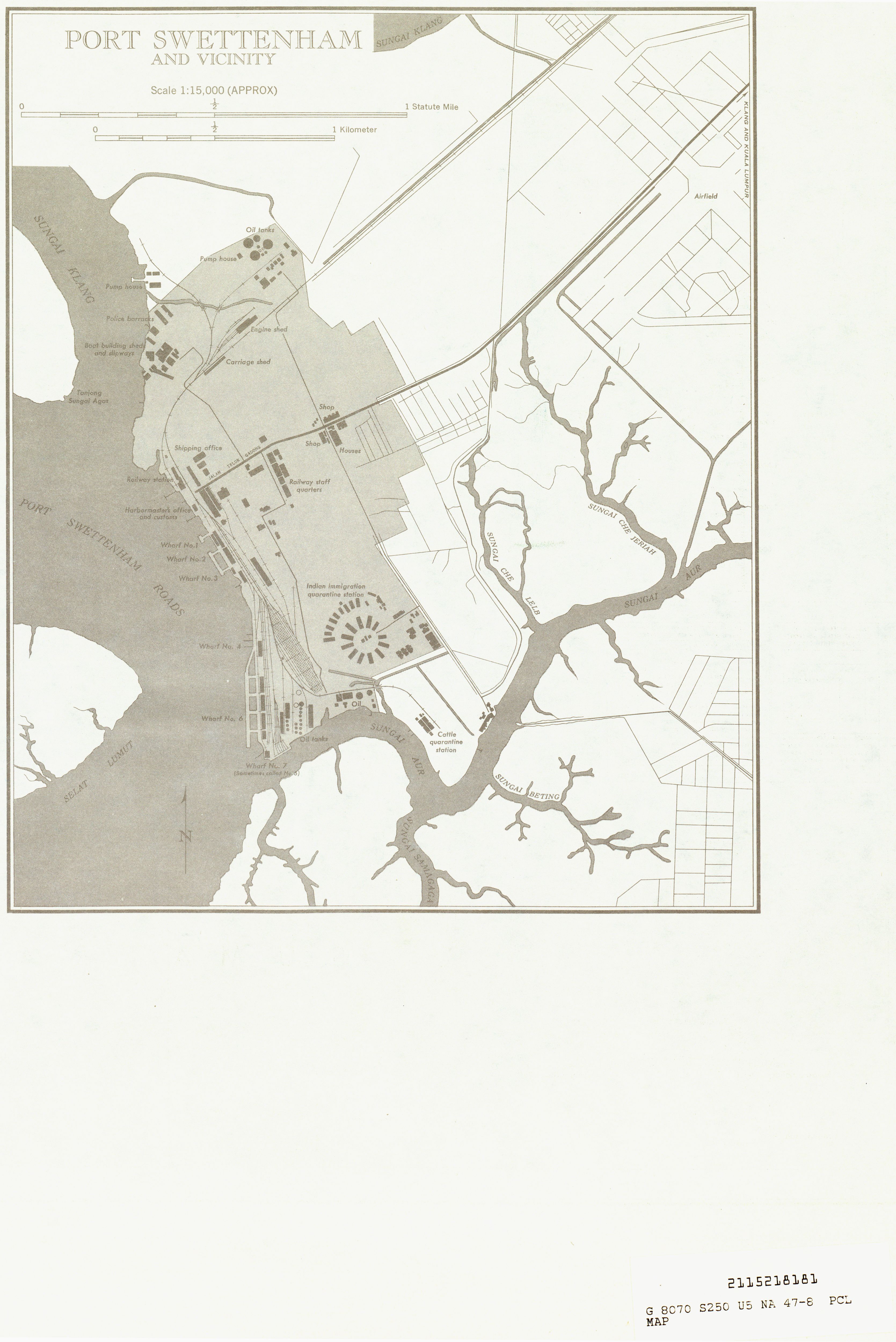
Map of Port Swettenham 1954. Wikipedia
Port Swettenham And Vicinity by U.S. Army Map Service 
https://commons.wikimedia.org/wiki/File:Port_Swettenham_And_Vicinity.jpg#/media/File:Port_Swettenham_And_Vicinity.jpg
 http://www.lib.utexas.edu/maps/ams/indonesia/txu-oclc-21752461-na47-8-back-b.jpg

---------------
There are road and railway links to Port Swettenham.

Port Klang Komuter station offices" by Rifleman_82 
- Own work. Licensed under Public Domain via Commons 

----------------------------------------------------
Klang
- terminus of Govt railway
- port town of Selangor state
- capital of Selangor state before 1880
- royal town of the Bugis rulers of the Selangor Sultanate
- Indian labourers were shipped here to work on rubber estates
- largely Indian populace

----------------------------------------------------
Milestones

1880
- KL replaced Klang as the capital of Selangor
- transport between KL-Klang was by horse or buffalo wagons, or boat
- William Bloomfield Douglas was the British Resident
- Sir Frank Athelstane Swettenham described the journey as long and boring
  Suggested to add a railway line to link KL to Klang

1882
- Sir Frank Swettenham became Selangor Resident in Sept 1882
- He initiated a railway link between KL-Klang
- alleviated problems with transporting tin ore to Port Swettenham (Pelabuhan Batu)

1886
- Railway track measuring 19.5 miles between KL-Bukit Kudu was opened in Sept 1886

1890
- KL-Bukit Kudu railway track was extended by 3 miles to join to Klang

1897
- Sir Ronald Ross discovered the malarial parasite, an anophelene mosquito
Britain's Sir Ronald Ross proved in 1897 that malaria is transmitted by mosquitoes. Port Swettenham was the first colonial area to benefit from the discovery. Swamps were filled in, jungle cleared, and surface water diverted to destroy mosquito breeding grounds and combat further disruption to port operations. The threat of malaria was removed completely by the end of the exercise. Source: Wikipedia

1901
- Port Swettenham was opened on 15 Sept 1901 by Sir Frank Swettenham

1902
- the Selangor Polo Club was founded in Port Swettenham

1911
- the Selangor Polo Club moved to KL

1914
- 2 new births and other port facilities were added

1930
- Port Swettenham deep seaport was developed by the Malayan Railway
- Hajj pilgrims could leave Port Swettenahm for Penang and onward to Jeddah. East coast
  pilgrims preferred Port Swettenham rather than go down to Keppel Harbour in Singapore.

1995
- Port Klang Cruise Centre opened in December 1995 at Pulau Indah,
  next to the cargo terminals of Westport

----------------------------------------------------
Scheme to Develop Port Swettenham
- full report by the Imperial Shipping Committee
- Chairman: Sir Halford Mackinder
  Secretary: R. M. Nowell
  Signatures:
  1. Sir Halford Mackinder
  2. S. J. Chapman (UK)
  3. G. H. Ferguson (Canada)
  4. Granville Ryrie (Australia)
  5. T. M. Wilford (New Zealand)
  6. H. T. Andrews (South Africa)
  7. Atul C. Chatterjee (India)
  8. G. Grindle (Colonies and Protectorates)
  9. Stanley H. Dodwell (merchant)
 10. T. Harrison Hughes (shipowner)
 11. W. L. Hichens (shipbuilder)
 12. Kenneth Lee (manufacturer)
 13. A. Shaw (shipowner)
 14. F. C. Shelmerdine (civil aviation)
- Terms of Reference: 10
- to provide additional deep water berths at Port Swettenham
- estimated cost £1,300,000
- wharfage will be 1,100 to 1,200 feet
- to provide 2 adequate berths for ocean-going vessels
- maximum capacity of the quay approximately 350,000 tons a year
- Port Swettenham harbour is completely landlocked
- minimum depth 22 feet over the bar at the southern entrance
  (the average rise of tide is 15 feet at springs
   and 9 feet at neaps)
   and 32 feet in the anchorage
TST 20Oct1931 p14

--------------------------------------------
Gene technology
- use gene editing to cure genetic defects
- use gene editing to make genetic changes spread rapidly through an entire population (gene drive)
- use gene drive to prevent mosquitoes from spreading a disease

Malaria
- malaria is a fatal disease
- it killed more than 0.5 million people in 2014

Malaria-free mosquitoes
- Nov 2015: UC San Diego (UCSD) used CRISPR to create a population of mosquitoes
  resistant to spreading malaria
- 2 weeks later: scientists in London had modified another species of mosquito
  (that caused 90% of death due to malaria) to stop it from spreading malaria

--------------------------------------------
External links
Port Swettenham http://www.rsmurthi.com/PortSwettenhamPhotos.html
Majlis Perbandaran Klang stesen keretapi port swettenham
Port Klang Railway http://www.great-railway-journeys-malaysia.com/klang.html
YouTube of Port Klang in 1960 https://www.youtube.com/watch?v=Hu2bKFk4nIs
Port Klang in Wikipedia https://en.wikipedia.org/wiki/Port_Klang
7 major advancements in gene editing in 2015 by Tanya Lewis, Dec 30 2015
7 Major Gene Advancements in Gene Editing in 2015 

Wednesday, 16 December 2015

Haji Zainul Abidin bin Sultan Mydin (1898-1969)


Haji Zainul Abidin bin Sultan Mydin, BA, JMN, JP (1898-1969)

He was also known as:
SM Zainal Abidin
SM Zainal Abidin, BA
Zainal Abidin b. Sutan Maidin
Haji S.M. Zainul Abidin
Tuan SM Zainal Abidin
Sutan Maidin is sometimes written as Sultan Mydin in different accounts
SM Zainul Abidin is sometimes written as SM Zainal Abidin in different accounts

Born: 3 October 1898, 167 Cakela Lane (renamed Argyll Road)
Deceased: 8 December 1969
Where died? Penang
Place of burial? Penang

Family
- father: A.P. Sultan Mydin
- mother: Meeracha Ammal bt Kadir Sultan
- # of children (sibs): 7
  1. Haniff bin Sultan Mydin (SM Haniff) - elder brother of SM Zainal Abidin
  2. Yusof bin Sultan Mydin (SM Yusof) - office assistant, Education Office, Penang
  3. Hussein bin Sultan Mydin (SM Hussein)
  4. Zainul Abidin bin Sultan Mydin (SM Zainul Abidin) - he was #4 son
  5. Isahak bin Sultan Mydin (SM Isahak)
  6. Hajah Fatimah Bee bt Sultan Myin
  7. Shaharom Bee bt Sultan Mydin (youngest sister)
Zainul Abidin’s youngest sister, Shaharom Bee married to S. Mohamed Ismail who set up Ismalia Bakery (now renamed Maliia Bakery) on Transfer Road, Penang. It is famous for roti Benggali (a misnomer for the actual roti penggalis or sharecropper's bread).

Residence
He lived 2 doors down from the Jewish Cemetery at No. 35, Jalan Zainal Abidin (formerly Jalan Yahudi).
Zainul Abidin’s home was situated just behind the present UMNO building, at the junction of Macalister Road and Jalan Zainal Abidin.
He was 31 years old when he came to live here.
He lived here from 1929 till his demise in 1969 (40 years).

Demise
Zainul Abidin passed away peacefully on 8 December 1969.
He was 71 years old.

Union
SM Zainul Abidin married Hajjah Che Wan Rashidah Merican bt Hamid Sultan Merican
(her parents are Hamid Sultan Merican and Wan Teh)


Children: 11
  1. Zainal Ariffin (eldest son)
  2. Zainal Amil
  3. Datuk Haji Zainal Alam (5 March 1926-12 December 1991) - senior RTM broadcaster. He was better known as an entertainer, singer and stand-up comedian.
  4. Wan Chik married Aziz Ibrahim
  5. Datu' Haji Zainal Aziz (15 December 1928)
  6. Zainal Aminuddin
  7. Zainal Akbar
  8. Zainal Alauddin (9 June 1932-9 May 1990) married Fatimah Sham (31 Aug 1940-14 June 2007)
  9. _______ ?
  10. Wan Majmin
  11. Zainal Arshad (youngest son)

Zainul Abidin’s fifth son put together a book to record the family history and contributions of his late father. — ‘Pengkisahan Riwayat Hidup Haji S.M. Zainul Abidin’

Education
  1. 1903 Chowrasta School, Penang
  2. 1914 Penang Free School (PFS); passed Senior Cambridge in 1914 (aged 16)
  3. 1915-1918 Trainee teacher at PFS
  4. Zainul Abidin was head prefect for 2 years and was awarded the Medal of Merit by his principal Ralph Henry Pinhorn. 
  5. In 1918, the then school head Harold Robinson Cheeseman offered him a job as a school teacher at PFS.
  6. He taught geography (Ilmu Alam) and Literature (Sastera) and languages (Latin and French)
  7. 1933 University of London (off campus course); obtained B.A. (Hon) London 1933
  8. Zainul Abidin was the first Malay to obtain a B.A. degree (externally) from London University in 1933.

He survived 2 World Wars
WWI 1913-1918  -- he was 15-20 years old
WWII 1941-1945 -- he was 43-47 years old

Government Civil Service

During WWI:
  • 1915 trainee teacher at Penang Free School
  • 1917-1918 School Captain of Penang Free School
  • 1918-1938 (20 years) teacher at Penang Free School; strict disciplinarian
  • S.M. Zainul Abidin was one of Penang’s pioneer educationists
  • Among his colleagues were Tunku Abdul Rahman, Tuanku Syed Putra Jamalullail (Raja of Perlis), Tun Dr Lim Chong Eu and Tuan Yusoff Rawa.
  • He taught at the Penang Free School for 20 years before becoming headmaster of the Francis Light School in 1938.

Post-WWI:
  • 1938 Headmaster of Francis Light School in Penang

During WWII:
During the Japanese occupation he was appointed as the radio station supervisor for Radio Penang.

Post-WWII:
  • 1945 School Inspectorate in Prai
  • Inspector of Malay Schools, Penang
  • He retired as Inspector of Schools in Penang.

Retirement
He retired from the Government Civil Service as Inspector of Schools in Penang in 1953.

Political Involvement
  • Penang politician 1946; 1953-1964 (11 years)
  • Founder Member of UMNO Penang
  • Set up UMNO Penang with a few friends
  • 1946 fought against Malayan Union, but civil servants could not be involved in politics; 7 years in limbo?
  • he retired in 1953 and re-joined politics
  • he was active in politics and headed UMNO Penang
  • he was UMNO Penang Chairman
  • He won the parliamentary seat in Balik Pulau in the 1955 election (he was 57 years old). This was the first Malayan Parliamentary election.
  • He was offered the post of Education Minister but he declined as he did not want to leave Penang.
  • He was responsible for getting a piece of land from his good friend, the late Hamid Khan, to build the UMNO building in Penang. He managed to build the UMNO building in Macalister Road. The UMNO building is near the Jewish cemetery

Contributions to Society

1. Scout
  • Scout Master
  • Assistant Commissioner of Scout

2. Persaudaraan Sahabat Pena Malaya (PASPAM)
  • a pen-pal club
  • involved literary figures and Kaum Muda Islamic reformist leaders
  • The first national conference was held at Sunlight Muslim Association, 212 Kota Road, Taiping, on 11 November 1934.
  • Setiausaha Agong (General Secretary): Syed Alwi bin Syed Sheikh al-Hadi (father of Dr Syed Mohamed bin Alwi al-Hadi)
  • Yang Dipertua (President): S.M. Zainul Abidin (he wrote many books, and was a close friend of Dr Che Lah bin Md Joonos, an early Malay doctor)
  • Penasihat Umum (General Advisor): Sheikh Abdullah al-Maghribi al-Ghadamshi (publisher, printer, writer, educationist; born 1892, Ghadamis, Libya-died 1974, Libya; taught Arabic, Arabic literature, Fekah and Balaghah at Madrasah al-Mashoor; Headmaster of al-Mashoor (1919); taught at Madrasah Idrisiah, Perak; opened his own Madrasah al-Huda al-Diniyyah; owned a printing company, Al-Huda Press; published his writings Kitab Munir al-Ifham and Kitab Ilmu Balaghah; printed religious reading materials and newspaper, Sahabat)

3. UMNO
  • member of Alliance Council
  • member of the 1955 Federation Legislative Assembly
  • Chairman of UMNO Penang
  • MP Balik Pulau 1955
  • built UMNO building in MacAlister Road, Penang

4. University of Malaya (UM)
  • member of University Court for several years

5.  Department of Education, Federation of Malaya
  • committee member of Razak Report and Rahman Talib Report
  • He was also involved in the setting of Bahasa Baku Melayu/ Indonesia (also read about Dato' Lokman Musa in 1967-69)
  • Published his book: Kitab Ilmu Bumi dikarang dan diatur oleh S.M. ZAINUL-‘ABIDIN, B.A. (LONDON),
  • Ketua Guru Ilmu Bumi dan Ilmu Alam di Penang Free School (1920-1938).
  • Diterbitkan dalam siri The Malay School Series, No.24,
  • Publishing for The Department of Education Federation of Malaya. Dikeluarkan oleh Jabatan Pelajaran dan dicetak di Singapore oleh Malayan Publishing House, Limited, 1948.


6. Penang Malays' Co-operative Society (PMCS)
  • President of the Penang Malays' Co-operative Society
  • This co-operative built the first flat in Taman Abidin, Perak Road, Penang in 1973,
  • 4 years after his demise.

7. Dar-Es-Salam Harmonian Party
  • a musical band which he set up with his children
  • headed by him

8. Penang Wireless Party
  • HQ at Penang Radio Station
  • He was a member and the radio announcer for the Malay section, managing the news and songs requests.

9. Penang Malay Association (PMA) or Persatuan Melayu Pulau Pinang (PEMENANG)
  • History 1927:
  • PMA began as an afternoon gathering at the home of a local Malay millionaire, Mohamad Ariff Tajuddin (popularly known as Mohamad Ariff) at Hutton Lane on Sunday, 27 March 1927.
  • Mohamad Ariff's house was across the road from Masjid Jamek Jalan Hutton (Hutton Lane).
  • The gathering was attended by Malay intellectuals and property owners.
  • The members discussed the setting up of an organisation to look after the interest of the Malays in Penang, and to protect their religion under British administration.
  • HQ at 60, Jalan Pemenang (formerly part of Cantonment Road)
  • Tuan SM Zainul Abidin was Pengerusi Tetap Persidangan Agung UMNO Malaya when UMNO held its annual conferences at Francis Light School, Penang in 1946 and 1948.
  • Tuan SM Zainal Abidin was the President of PMA between 1948 - 1951.
  • Tuan SM Aidid was Economic & Treasury Officer (Pegawai Ekonomi dan Kewangan), and eventually became Treasurer (Bendahari) UMNO Malaya in 1948.
  • Master Mohamed Noor Bin Mohamed was appointed as Treasurer (Bendahari) UMNO Malaya and succeeded Tuan SM Aidid in 1950.
  • Master Mohamed Noor was a teacher at Penang Free School (PFS) and the elder brother of Dr Abdul Ghani bin Muhammad, an early Malay doctor.
  • In the 1970's, the State Government under Dr Lim Chong Eu granted PMA a plot of land at the junction of Anson Road and Macalister Road, where Bangunan Persatuan Melayu Pulau Pinang was built. The four-storey shop lot building at 117 Jalan Macalister today houses a car showroom on the ground floor.

Merits and Awards
  • He was the first Malay student with a B.A (Hon) London in 1933.
  • Johan Mangku Negara (JMN)
  • Justice of the Peace (JP) or Jaksa Pendamai

Interests
  • Languages - he mastered and taught 7 languages: Tamil, Arabic, Malay, English, Latin, French, and Japanese. He was a multi-lingual legend.
  • Recreation: tennis, billiard, chess, draught, judo, cooking, reading and traditional medicine, music.
  • He was a judo instructor.
  • He wrote the country’s first election song, Undilah, to encourage the people to vote in the 1955 election campaign.

Legacy
  • Yahudi Road near the Jewish Cemetery was renamed Jalan Zainal Abidin (misspelling: it should be Jalan Zainul Abidin)
  • SMK Haji Zainul Abidin, Scotland Road, Penang 1965 became Haji Zainul Abidin School in 1972
  • Sekolah Haji Zainul Abidin, Jalan Scotland officially transferred to Sekolah Menengah Agama Lelaki Al-Mashoor in 2009
  • SHZA then relocated to Jalan Hamilton, Jelutong and is known as SMKHZA (SMK Haji Zainul Abidin).

=======

External links:

http://www.thestar.com.my/news/community/2013/07/13/jalan-yahudi-to-jalan-zainal-abidin-the-real-zainal/

http://penangmalays.com/2015/02/18/zainul-abidin-sultan-mydin/
by Ahmad Muaz
Source: Victor J. Morais (Ed.) (1959). The Leaders of Malaya and Who’s Who 1959-1960. Singapore: Fisher

http://penangmalays.com/2015/02/18/zainul-alam-zainul-abidin/

http://penangmalays.com/2014/03/28/syeikh-abdullah-al-maghribi-al-ghadamshi/

https://faqirullah1958.wordpress.com/tag/sm-zainul-abidin/ (pic of book front cover)
by Faqirullah
Kitab Ilmu Bumi dikarang dan diatur oleh S.M. ZAINUL-‘ABIDIN, B.A. (LONDON),
Ketua Guru Ilmu Bumi dan Ilmu Alam di Penang Free School (1920-1938).
Diterbitkan dalam siri The Malay School Series, No.24,
Publishing for The Department of Education Federation of Malaya.
Dikeluarkan oleh Jabatan Pelajaran dan dicetak di Singapore oleh Malayan Publishing House Limited, 1948.

http://smkhzapenang.blogspot.com/2009/08/background-of-haji-sm-zainul-abidin.html

http://www.thestar.com.my/news/community/2013/08/24/respected-teacher-politician-and-writer-zainul-abidin-and-his-family-are-illustrious-names-in-islan/
The Star Online
Community
Saturday, 24 August 2013

http://www.geni.com/people/Datuk-Hj-Zainal-Alam-bin-S-M-Zainul-Abidin/6000000004844445413

Thursday, 22 October 2015

Fates of the Japanese Soldiers in Malaya after WW2


War has both its good and bad effects. Children who survived WW2 are mostly dead today. Some still survive to tell stories of the war.

There was a TV documentary of WW2 in Malaya and what happened to some of the Japanese soldiers who were in Malaya while waiting to go home to Japan. They grew and ate the humble sweet potato (ubi keledek). They had to plant ubi keledek as there was no food rationed for the Japanese soldiers following the war. Ubi keledek is different from ubi kayu (tapioca).

Ubi keledek (sweet potato)
Ubi kayu rebus (boiled tapioca/manioc/casava)

Merdeka was long awaited after other neighbouring nations celebrated their independence. Malaysia celebrated Merdeka on 31 August 1957, after much negotiation with the British.

A film of Malaya's struggle during the British re-occupation following the war, entitled Seruan Merdeka (Call of Freedom), was filmed on site in Kg Glam, Singapore. The film was directed and produced by Mr SMAH Chishty, a relative of an early Malay doctor in Singapore - Dr HS Moonshi.

http://eresources.nlb.gov.sg/history/events/
Malay Film of the Occupation - The Straits Times, 10 March 1947, Page 3
The film Seruan Merdeka was advertised and shown at the Queens Theatre.
Page 3 Advertisements Column 3 - The Straits Times, 18 August 1947, Page 3

Not all Japanese soldiers wanted to return to Japan. Some chose to remain in Malaya.

In Search of the Unreturned Soldiers in Malaysia (1970)
https://www.youtube.com/watch?v=JIq1skQbsMQ&feature=youtu.be

Why do you think some of the Japanese soldiers did not want to return to Japan after the war?

One Japanese soldier who chose to remain in Malaya was Yano Shigeru @ Mohd Ali, or better known as Pak Ali. He was a soldier before WW2 and was a soldier for 8 years. He was once a farmer in Malacca - the actual site was not mentioned. He was also a fisherman for 5 years. He followed the advice of a Malay fisherman and became a Muslim. He had worked at Malayawata Steel for 6 years. He married a woman from Malacca and had 10 children. They lived in Tanah Liat, Bukit Mertajam, on the mainland near Penang. He operated a bicycle shop. A handful of helpful Muslims assisted him.

Mohd Ali @ Yano Shigeru, a revert Japanese soldier in Malaysia
https://www.youtube.com/watch?v=re43bpk924Q
From Facebook: Shaharudin Abu Hassan Affirmative. This is Pak Ali my neighbour in Tanah Liat, Bukit Mertajam back in the 60s. In the scene where the family is having their meal I could recognise one of his sons who we refer to as Md Dani. The eldest son is Daud and the eldest daughter is Maimunah. His wife is Mak Jarah (Zaharah?) from Melaka.
Malaya's struggle for freedom was recently presented in a film produced by Greenlight Pictures Sdn Bhd at the 20th Busan International Film Festival 2015 (BIFF 2015).
https://www.youtube.com/user/greenlightpic
https://www.facebook.com/greenlight.pictures
http://english.busan.go.kr/SubPage.do?pageid=sub050403

Malayawata Steel Mill was established in Malaya in 1961 as a Malayan-Japanese joint venture. It was built by the Japanese company Nippon Steel Corporation. Malayawata was renamed Ann Joo Steel Berhad on 8 December 2006. It now operates at two sites, one in Prai, Penang, and another in Shah Alam, Selangor.
http://www.steelorbis.com/steel-news/latest-news/malayawata_steel
http://www.annjoo.com.my/business-activities/manufacturing/ann-joo-steel-berhad/
http://www.chunyuconstruction.com/project8.htm
New Scientist - 16 Oct 1980 - Page 144 - Google Books Result

Wednesday, 13 May 2015

13 May 1969

Synonyms
13 May incidence
13 May incidences
Tiga-belas Mei
Racial riot

13 May 1969 marked a sad incidence in Malaysia's history. I was 10 years old and living with my parents and siblings at Gaya College near Jesselton, Sabah in Borneo. Jesselton is Kota Kinabalu today. Sabah is a part of Malaysia since 16 September 1963.

At the capital city, Kuala Lumpur, racial tension had begun to build up and eventually sparked on 13 May 1969. Watch the video link to understand how, why and what happened.

Racial tensions sparked in Kampung Baru. I referred to the 13th May incidence in my book, Biography of the Early Malay Doctors 1900-1957 Malaya and Singapore.

Today, 13 May 2015, is the 46th anniversary of the 13 May incidence. We learn from past incidences so that we can be more tolerant and thoughtful of all races in Malaysia.

In my family and big family of relatives, we are multiracial .... there were then (and there are still,) Malays (Bugis-Minang, Jawa), Arabs (Hadrami, Makawi), Chinese (Hokkien), Indians (descended from Hyderabad Indian Muslims), Pakistani, Siamese, Dutch Burghers, etc. As such we cannot be involved with racial tensions or the entire clan will break up. It is more beneficial for us to learn about other races and live harmoniously - like we do on Facebook. - Faridah Abdul Rashid, 13 May 2015

External links
YouTube video https://www.youtube.com/watch?v=kNdtlxWPfH4 (many sections have been cut)

Friday, 24 April 2015

ASAS '50 and Jawi Text

ASAS '50 stems from Angkatan Sastrawan '50.

ASAS '50 was a literary and cultural organisation that looked after the Malay community-based literary works and culture, including Malay movies. It was started in 1950 by a group of writers, journalists, and students. One of the writers was Muhammad Ariff Ahmad. A few of the early students of ASAS '50 were medical students at the King Edward VII College of Medicine in Singapore. They included (Dr) Ungku Omar bin Ungku Ahmad, and (Dr) Abbas bin Haji Alias. Malay movies made in Singapore and directed by a Malay Rawa Penangite, P Ramlee, also abide by ASAS '50 guidelines. 

It was during ASAS '50 that Malay Jawi writing (tulisan Jawi) adopted the Romanised form (tulisan Rumi). In 1972-73 while living at one of the government quarters of Maktab Perguruan Perempuan Melayu (MPPM) in Durian Daun in Malacca, I remember trying to read a Jawi version of Utusan Malaysia to my paternal grandmother. She only attended Standard One and could not read and write the Romanised Malay form. I had never seen her held a pen or pencil. She could read Malay Jawi text by herself in the adjoining back house which was the servant's quarters. I read the Jawi newspaper aloud and she asked questions and pointed to me where to read. I can't recall what I read.

When my father died in early March 2009, he left behind plenty of little pieces of paper in the drawers of his desk at home in Minden Heights, Penang. They were actually not scrap paper for discarding. They were actually his daily jottings in Malay Jawi, as if they were pages torn out of his imaginary diary, It feels strange to find that a Malay man educated in England would keep records of his activities on scrap paper - but that was my father. Unlike Romanised Malay, Malay Jawi writing can be compressed and needs very little space for writing something. There are no vowels available for use in Malay Jawi writing. An experienced reader of Malay Jawi text can read well without vowels and diacritical marks. It is a wonder to be able to read and write Malay Jawi text.

Today, the Malay Jawi writing form is unpopular among the Malay community, but Malay newspapers are trying to make a comeback. Whether the Malay Jawi form will prevail and remain for long is a wonder. 

Children who study at the Malay religious schools can read the Malay Jawi text. Those who attend national schools mat have some difficulty trying to read the Malay Jawi text. Malay clergy and those who work at the Islamic institutions can read Malay Jawi text.

Malay movies made in Malaysia today go through FINAS for approval. FINAS is a national body and stems from Filem Nasional. It vets the appropriateness of Malay movies for broadcast on TV and in cinemas.

Apart from FINAS, there is another body for censorship purpose altogether that vets Malay movies for compliance according to Islamic standards or rulings. Such things are new. Script writers attend sessions to learn how to write syariah compliant scripts for TV and movie productions.

Cartoons are also subject to such rigorous screening and censorship. So far, TV AlHijrah has aired some of these programmes, such as Zone Aulad and a cartoon series featuring a little nurse. In the little nurse story, the nurse wears a headscarf just as any Muslimah (Muslim girl) wears hers.

External links:

More details of ASAS '50 can be found at Wikipedia:
http://en.wikipedia.org/wiki/Asas_%2750

A brief biography of Singaporean Muhammad Ariff Ahmad can be found at the Singapore Literary Pioneers web page:
http://www.nlb.gov.sg/exhibitions/literarypioneers/writers/malay/muhammadariffahmad/index.php

Thursday, 26 March 2015

Football Association of Malaya (FAM)

There are a few mentions of football in connection with the early Malay doctors - Dr Abbas, Dr SH Aljunied, and a few others.

In Malaya, Dr Abbas was the first doctor to be connected with football. In Singapore it was Dr SH Junied.

Football Association of Malaya (FAM) at Birch Road (now Jalan Maharajalela) in KL, December 1961. Photo from Kuala Lumpur Old Pictorial Thread at www.skyscrapercity.com.

Among Malaysia's top footballers are Mokhtar Dahari, Soh Chin Aun, R. Arumugam, Santokh Singh, James Wong, Hassan Sani, Isa Bakar, M. Chandran, Abdul Ghani Minhat, Syed Ahmad, Shaharudin Abdullah, Namat Abdullah, Zainal Abidin Hassan, Wong Choon Wah, Shukor Salleh, Ali Bakar, Edwin Dutton, Arthur Koh, Chow Chee Keong, Abdullah Yeop Nordin, N. Thanabalan, and others.

---
Brief biography of Mokhtar Dahari

Full name: Dato' Mohamad Mokhtar bin Dahari
Call names: Mokhtar Dahari, SuperMokh
Born: 13 November 1953, Kg Pandan, Kuala Lumpur
Deceased: 11 July 1991 (37 years)
Occupation: He worked as a clerk and played football.
  Football: Selangor team
  Jersey number: 10
  Position played: striker (penyerang)
  Retired in November 1978 and in October 1982
Wife: Datin Tengku Zarinah (Kelantan)
Children: 3

Mohd Mokhtar bin Dahari was popularly known Mokhtar Dahari, and is still remembered as SuperMokh. He was a Malay boy from Kg Pandan in Kuala Lumpur. His father was a lorry driver and his mother a housewife. He has a brother. As a little boy, Mokhtar enjoyed playing football after school. He was good at football. The boys played football at the field (padang) in their village (kampung).

Mokhtar played for Selangor. He never played for other states. He was a loyal Selangor footballer. His jersey was number 10. He was a fit footballer and his body was all muscles. He was highly muscular. He scored many goals for his home team and Malaysia.

Mokhtar married and had 3 children. His continued to work and play football. He suffered menisci problems in both knees and they were removed. He continued to play well. However, his football career came to an abrupt end. Mokhtar suffered from a degenerative disease. He suffered from motor neuron disease (MND), something unknown to the Malaysian football scene at the time. Mokhtar was confined to bed and got around in a wheelchair. He continued to coach while still in wheelchair. The family sought a second opinion in London. He performed the Hajj, then passed away. The nation lost its one and only greatest footballer of all times. There is no other striker like SuperMokh.

External links:
Football Association of Malaya

MALAYA FOOTBALL ASSOCIATION.
The Singapore Free Press and Mercantile Advertiser (1884-1942), 1 February 1917, Page 10

Malaya Football Association
The Singapore Free Press and Mercantile Advertiser, 11 February 1936, Page 16

Malaysia Football Association > Malaysia Football News
http://malaysiafootball2u.blogspot.my/p/great-players.html

FAM accept invitation to Vietnam
The Straits Times, 1 October 1962, Page 18

YouTube video on Mokhtar Dahari
https://youtu.be/-hlwTIiL_N4

Planned Book Revision

My book: Biography of the Early Malay Doctors 1900-1957 Malaya and Singapore.


I plan to write and publish a revised edition, with a few more addition of biographies not included before.

I will need to obtain correct facts and stories from the doctors' families and from anyone who is willing to help me.

I will also need updates, better photos, anything new, corrections etc from all the families concerned.

You can send me your reviews and I will try to accommodate them in my book.

You can send me quotations (famous sayings, proverbs, etc) and I will try and include them too.

I have contacted my publisher (Xlibris) today for a revised quote for re-publishing. It is costlier to revise than to print a new book.

I will also need help with promoting my books.

Those of you who got free copies can also help me by telling your friends about my books.

If you helped me with any of my books, but did not receive a copy, please remind me or let me know.

If you are related to any of The Early Malay Doctors, please let me know.

Anyone who wants to help me can email, pm me in Facebook, or WhatsApp me.

I need people to help me sell all my books which I still have in stock (about 140 copies left). You can sell them from car boot sale, at book fairs, KONVO, bookshops, etc.

I will need people to help me print banners, buntings, posters and flyers, once I get images from my publisher.

I want to thank everyone who has helped me this far. TQVM. Really appreciate it.

Faridah
012 963 2218
faridahar@gmail.com

Saturday, 21 February 2015

Obituary: YB Tuan Guru Dato' Bentara Setia Haji Nik Abdul Aziz bin Nik Mat (1931-2015)


Introduction

Nik Abdul Aziz was born at home in a Malay village at Kampung Pulau Melaka on 10 January 1931. His village lies on the outskirt of Kota Bharu in Kelantan, on a big sandbar in Sungai Pengkalan Datu. At the time of his birth, Kelantan was a Malay state free of Siamese control, but was an Unfederated Malay State under British Malaya. Kelantan is now a part of Malaysia.

From historical Malay accounts written about his family origin, his ancestors were of royal Malay heritage from southern Siam, now Thailand. The royal family relocated to Kampung Pulau Melaka.

His parents were Raja Mohammad bin Raja Banjar and Aminah bt Abdul Majid. His father was also known as Nik Mat Alim and Nik Mat Raja Banjar.

His family tree was released by Brunei in September 1997 (scroll to the bottom of this post).

Early Education

Nik Abdul Aziz studied at 3 local Malay religious schools in Kelantan and Terengganu before pursuing his studies overseas. Firstly, he studied at Sekolah Kebangsaan Kedai Lalat, Kelantan for 3 months in 1936. Secondly, he studied at Sekolah Pondok Tok Kenali in Kubang Kerian, Kelantan. Thirdly, he studied at Sekolah Pondok Tok Guru Haji Abbas in Besut, Terengganu (undated). He completed his studies in Malaya in 1956, before the Malayan independence.

Tertiary Education

He went overseas in 1952 at age 21, and studied at 3 Islamic tertiary institutions. Firstly, in 1952 he studied at Deoband University (Darul Uloom Deoband) in the city of Deoband Saharanpur, in the state of Uttar Pradesh in India. Secondly, he studied the Translation of the Quran (Ilmu Tafsir Quran) at Lahore, Pakistan in 1957. Thirdly, he studied Arabic Language for his Bachelor's Degree ( Ijazah Sarjana Muda Pengajian Bahasa Arab) at Al-Azhar University, Egypt. Fourthly, he studied Islamic Law for his Master's Degree (Sarjana Perundangan Islam) at Al-Azhar University.

He was a native Malay speaker and with Kelantan accent. During colonial British Malaya, many Malay men were also able to acquire and speak good British English. India also uses British English as a unifying language. From his studying overseas, he was able to speak 3 additional languages - Tamil (India), Urdu (Pakistan) and Arabic (Egypt).

Occupation

Early on in his career, he taught at 3 religious schools in Kelantan. He was a schoolteacher at Sekolah Menengah Agama Tarbiyyah Mardiah in Panchor. He was then a schoolteacher at Sekolah Menengah Agama Darul Anwar at Pulau Melaka in his village, a school that was established by his father. He was then a coordinator for an adult class under KEMAS. He was a schoolteacher at the all boys' school, Sekolah Menengah Maahad Muhammadi in Kota Bharu.

Political Involvement

He was involved with Malay politics in Kelantan. He registered as a member of PAS in 1967, aged 36. He became a Member of Parliament (MP) for Kelantan Hilir for 2 terms in the late 1960s to before mid-1970s (1967-1969; 1969-1974). The constituency of Kelantan Hilir was then abolished.

He was Head of the Ulama' Wing of PMIP (1971-1995). PMIP is Pan-Malaysian Islamic Party. He attended a Persekutuan Islam SeMalaysia...PAS at Dewan Bahasa dan Pustaka in Kuala Lumpur on 28-29 July 1971, aged 41.

He was photographed at the Jawatankuasa Kerja Agung PAS 1977 (aged 46), along with Haji Hassan Shukri, En Mustapha Ali, Dr Sanusi and Datuk Asri.

He became an MP for Pengkalan Chepa for 3 terms from 1974 to 1986 (1974-1978; 1978-1982; 1982-1986).

He was Kelantan PMIP Commissioner (1978-2013).

He was a Member of the Kelantan State Assembly (ADUN) for Semut Api (1986-1990/1995). This constituency was then abolished.

He was a Member of the Kelantan State Assembly (ADUN) for Chempaka till his demise (1995-12 Feb 2015).

He succeeded YB Tuan Haji Yusof Rawa (Penang) as Mursyidul Am PAS (spiritual leader of PAS) till his demise (1991-12 Feb 2015).

He succeeded YB Dato' Mohamed bin Yaacob as Menteri Besar (MB) Kelantan (22 October 1990-6 May 2013), and stepped down after PRU13.

Altogether, he had served Kelantan for a total of 39 years: as MP for 19 years, as ADUN for 4 years, and as MB Kelantan for 24 years.

He served as MB Kelantan for 2 sultans - Sultan Ismail Petra and his eldest prince, Sultan Muhammad V. 

His deputy MB was YB Ahmad bin Yaakob.

A Thinker and Imam

In his post retirement months, he continued to serve Kelantan. His office at the State Secretariat is the Institut Pemikiran Tok Guru Dato' Bentara Setia. He served as an advisor while his successor, the MB of Kelantan, YB Ahmad bin Yaakob, chaired the institute.

He led prayers as Imam at Stadium Sultan Muhamad IV on many occasions - before the general elections (PRUs), after a long draught, before each football match held in Kelantan when the Red Warriors team were to play. 'This is Kota Bharu' became an icon of the state of Kelantan at the stadium during his tenure as MB Kelantan.

He led prayers seeking peace for Egypt and Syria (Solat Hajat & Munajat Keamanan, Mesir & Syria) at Pusat Tarbiyah Islamiyah Kelantan (PUTIK), organised by Dewan Ulama' PAS Negeri Kelantan on Saturday, 6 July 2013.

Orator and Writer

He gave public talks every Friday morning at Medan Ilmu in Kota Bharu (Kuliah Pagi Jumaat). These talks were well attended by the public and were often overcrowded by those who came from far and near. The tents for the talks were set up by Majlis Perbandaran Kota Bharu Bandaraya Islam (MPKB-BRI). These talks are now handled by his sons Nik Abduh and Nik Umar. Nik Abduh is the MP for Pasir Mas, while Nik Umar is the head of Darul Anwar school at Pulau Melaka.

He gave the Keynote Address at the Kolokium Agenda Kesejahteraan Rakyat on 28 January 2014 at Dewan Bunga Teratai, SUK.

He launched his book, Khalifah; Kita Pilihan Allah on Friday, 17 October 2014 at Medan Ilmu in Kota Bharu.

Titles, Salutations and A World Figure

He was Mursyidul Am PAS. He was regarded as Murabbi Ummah. He was addressed as YB Tuan Guru Dato' Bentara Setia, a post which he held till his demise.

He was listed as the 55th most influential man in the world.

Posters

His colourful and educational posters were prepared by Unit Komunikasi Menteri Besar (UKMB) Kelantan. 

Personal Grooming

He always wore either a black or white serban (turban), like the Prophet Muhammad S.A.W. wore his. He never wore a songkok.

He appeared neat in very clean clothes, either white, black, or pastel colours.

His barber used a robe for him which was kept separately from the other robes for other customers. He adorned a crewcut.

Family Life

In 1963, he was 32 when he married his teenage wife who was 14. His wife is Tuan Sabariah bt Tuan Ishak (66; born 1949) and they have 10 children - 5 boys and 5 girls.

His eldest child is 50 years old (in 2013) and was born when his wife was 15.

His children are: Nik Aini, Nik Umar, Nik Adli, Nik Abdul Rahim, Nik Mohamad Abduh, Nik Adilah, Nik Mohamad Asri, Nik Amani, Nik Amalina, and Nik Asma' Salsabila.

His children were brought up based on Islamic teaching and discipline.

All his children pursued studies on Islam.

His children live in the same village except 2 of his children's families live far way - one in Malacca and another in Dungun.

He had 60 grandchildren and 3 great-grandchildren when he passed away.

Health

He was a healthy man except towards old age. He had suffered from prostate cancer and was warded at Hospital Universiti Sains Malaysia (HUSM) for treatment. His son Nik Abduh was often seen by his side at HUSM. Even though he was hospitalised, he continued to perform his night prayers (Qiamullail).

On his request to die at home, he was discharged home alive on 12 February night at 8.40pm. Many people had gathered in his compound to receive him when the HUSM van arrived at his village. On hearing news that he had reached home, many came to his village, including those from outside Kelantan.

Demise

He passed away at home on Thursday night on 12 February 2015 at 9.40pm (malam Jumaat), aged 84, an hour after he was discharged from HUSM.

The entire nation was shocked and grieved. Many cried.

News of his demise was aired on all Malaysian TV stations and on Astro Awani.

Messages and condolences filled all social media platforms, including Facebook.

A football match (Kelantan vs PDRM) was postponed to honour his passing.

The by-election for DUN Chempaka is also postponed (to 10 March 2015) to respect him.

Burial Rites

Solat Jenazah was performed at his masjid on Friday at 10 am, before Friday prayer (Solat Jumaat). Thousands of his fans and followers prayed. The crowd that had turned up was so huge that police had to man his village, all roads leading to his village and and burial ground. Pall bearers carried him to the burial ground near the former ikan linang industry in Pulau Melaka. It took them an hour to reach the burial ground because they had to snake through the dense crowd.

He was laid to rest next to his father, in a simple grave.

For a week following his demise, there was non-stop flow of visitors to his grave at Tanah Perkuburan Islam Pulau Melaka, near Sungai Pengkalan Datu that flows out to the South China Sea. 

Inna lillahi wa inna ilaihi raji'un. 
From Allah do we come and to Him is our return.


Sources, external links and acknowledgement

Blog Tok Guru - Biodata
http://www.blogtokguru.com/biodata/
Accessed 15 Feb 2015

Wikipedia
Accessed 15 Feb 2015

Photos are from Unit Komunikasi Menteri Besar (UKMB) Kelantan.
Facebook: https://www.facebookcom/Zam.UKMB.13

Some photos from Facebook are by Rizal Tahir.

Other photos are from the Internet and Kelab Pencinta Sejarah Kelate.

YouTube videos:
https://www.youtube.com/watch?v=n4uZJv0hjJA
https://www.youtube.com/watch?v=VcvJhXRWAHg
https://www.youtube.com/watch?v=txnjvqB57JE

---

Family Tree
obtained from Kelab Pencinta Sejarah Kelate in Facebook

Ihsan drp:

Yang dimuliakan Pehin Jawatan Dalam Seri Maharaja
Dato' Seri Utama Dr Haji Awang Mohd Jamil Al-Sufri
Pengetua Pusat Sejarah

Disusun oleh

Unit Salasilah, Bahagian Penyelidikan dan Dokumentasi, Jabatan Pusat
Sejarah, Negara Brunei Darussalam.

September 1997

---

Maharaja Srimat Trailokyaraja Maulibhushana Warna Dewa (Brahma)

Raja Surendra (Maharaja Suran)

Raja Sakranta (Maharaja Jawaka)

Raja Tilam (Raja Sang Tawal)

Raja Bahrubhasa (Sultan Mahmud; Raja Lankasuka)

Radin Mas Aria DiGunung (Sultan Baki Shah)

Sultan Iskandar Shah (Sultan Kelantan I)

Sultan Mansur Shah (Sultan Kelantan II)

Raja Gombak (Sultan Kelantan III)

Puteri Mani Kemenyan

Raja Sungai

Raja Dewi

Raja Abdul Rahman (Raja Mir)

Raja Abdullah

Raja Mohammad

Raja Kechik

Raja Majam

Raja Banjar

Raja Mohammad (Nik Mat Alim)

Tuan Guru Dato' Haji Nik Abdul Aziz

---

Raja Bahrubhasa (Sultan Mahmud; Raja Lankasuka)
2 children
- Radin Mas Aria DiGunung (Sultan Baki Shah)
- Puteri Zubaidah

---

Puteri Zubaidah
m. Sultan Zainal Abidin (Che' Bong Pa)
Their daughter
- Puteri Ramawati

---

Raja Sakti (Raja Jembal; Sultan Kelantan IV; 1638-1949)
m. Puteri Mani Kemenyan
Children:
- Raja Sungai
- Raja Omar
- Puteri Sayu Bari
- Puteri Cempaka Bongsu
- Puteri Unang Melor
- Raja Bahar
- Raja Loyor

---

Raja Sungai
His daughter
- Raja Dewi

---

Raja Omar (Sultan Omar; Raja Jembal V; 1675-1721)
His son
- Raja Kecil Sulong

---

Raja Dewi
m. Raja Kecil Sulong (Raja Jembal VI; 1721-1725)
Children
- Raja Sakti III
- Raja Ngah
- Raja Pah
- Raja Ami___ (Raja Na___) ... unclear

---

Raja Bahar (Bendahara)
His 2 sons
- Raja Abdul Rahim (Sultan Abdul Rahim; Raja Jembal IV; 1671-1675)
- Raja Abdullah (Sultan Abdullah; Raja Jembal III; 1663-1671)

---

Raja Abdullah
m. Puteri Saadong (Putri Maryam)
Their son
- Datu Pengkalan Tua (Petani)

---

Datu Pengkalan Tua (Petani)
His son
- Long Bahar

---

Long Bahar
m. Raja Pah (Tuan Besar; Raja Jembal VIII; 1725-1733)

---

Raja Loyor (Sultan Adiluddin; Raja Jembal II; 1649-1663)
m. Raja Kuning (Putri Nang Chayam)
Their children
- Raja Sakti II
- Puteri Saadong (Putri Maryam)

---

Raja Mohammad
His sons
- Raja Kechik
- Raja Hitam (Kangkong)

---

Raja Hitam (Kangkong)
His son
- Raja Abdullah

---

Raja Kechik
His daughter
- Raja Majam

---

Raja Majam
m. Raja Abdullah
Their 2 children
- Raja Banjar
- Raja Sharifah

---

Raja Banjar
His son
- Raja Mohammad (Nik Mat Alim)

---

Raja Mohammad (Nik Mat Alim)
m. Aminah bt Abdul Majid
Their 9 children
- Nik Hussin
- Nik Din
- Nik Radhi
- Nik Daud
- Tuan Guru Dato' Haji Nik Abdul Aziz
- Nik Wajih
- Nik Md Ajun
- Nik Md Yassin
- Nik Abdullah

---

Raja Sharifah
m. Raja Tengah
Their 3 sons
- Raja Sulaiman
- Raja Setapa
- Raja Mat

---

Tuan Guru Dato' Haji Nik Abdul Aziz (MB Kelantan)
m. Tuan Sabariah bt Tuan Ishak
Their 10 children
- Nik Aini
- Nik Umar
- Nik Adli
- Nik Abdul Rahim
- Nik Mohamad Abduh
- Nik Adilah
- Nik Mohamad Asri
- Nik Amani
- Nik Amalina
- Nik Asma' Salsabila.

Sunday, 15 February 2015

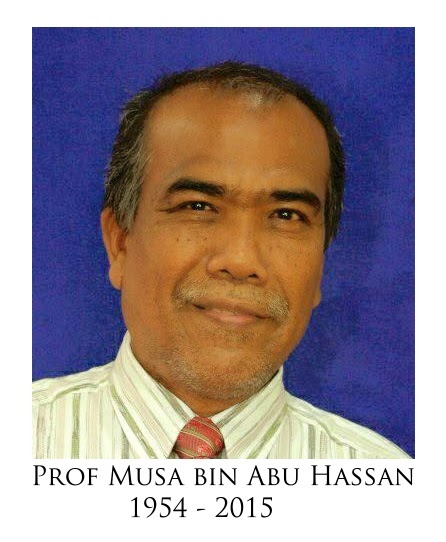
Obituary: Prof Musa bin Abu Hassan


My condolences to his family, Maznah Pendek and the kids, and the people of Masjid Tanah, Melaka.

I have known Musa since I was in third year university in California.


Full name: Musa bin Abu Hassan
Call names: Musa, Pak Itam, Orang Kampung
DOB: 20 December 1954
Date of demise: Thursday night, 12 February 2015, 9.30pm (malam Jumaat)
Solat jenazah: 13 February 2015, 10 am, Masjid UPM, Serdang
Burial: Tanah Perkuburan Islam UPM, Serdang
Date of marriage: 8 August 1982
Wife: Maznah Pendek
Children: 4

BIOGRAPHY

Musa was born in Masjid Tanah, Melaka. His mother passed away soon after he was born (ibunya mati syahid). His father re-married and he lived with them. He had many brothers and sisters, but he was the youngest from the same parents. He was of Malay Bugis heritage.

He was a Bachelor's degree candidate from UPM and studied at the University of California, Davis campus (UC Davis). He had many skills and 4 of his outstanding skills were Malay short-story writing (fiction), close-up photography, mass communication, and cooking rendang ayam. After UC Davis, he went to Stanford University, Palo Alto to do a Masters degree in Mass Communication under Prof Everette Rogers, another luminary in Mass Communication. His co-supervisor was Ms Mody, an Indian lady. His best friend at Stanford was a Japanese man, Toshio, who married at the cathedral at Stanford University - the wedding cuisine arrived by a Japan Airlines chartered flight, all the way direct from Tokyo. Another friend was Amira, a tall skinny Japanese American.

After completing his Masters at Stanford University in 1981, Musa returned and worked as a lecturer at UPM in Serdang. Musa married in 1982 to Maznah Pendek, a former MGHS student who was in my younger sister's batch. They have 4 kids.

Musa then pursued his studies and completed his PhD at the University of Florida.

Upon completion of his studies, he performed the obligatory Hajj, and later went to perform the Umrah.

In his academic work, Musa covered many areas and new fields, including IT for rural areas and development. Today, many rural areas have Internet access. He co-authored many papers on IT development in Malaysia. His papers can be found in Digital Reviews online.

He obtained full professorship from UPM by 2008. He became a member of Majlis Profesor Negara (MPN) along with 3000 Malaysian professors on 1 April 2010.


Musa was also a speaker on radio, and he had talked about a congress at UPM.

Musa worked all his life with UPM and then joined USIM after he retired, till he passed away.

May Allah accord him with the best of His blessings.

External links:
https://www.youtube.com/embed/3NVFLYHJ7eM?feature=player_embedded
https://www.youtube.com/watch?v=DLruFLm18vs
https://www.facebook.com/UCDavis/timeline

References:
http://www.digital-review.org/

Musa Abu Hassan and Mohd Safar, UPM. In Digital Review of Asia Pacific 2007-2008 ‘.my’ Malaysia. pp196-203

Musa Abu Hassan and Siti Zobidah Omar, UPM. In Digital Review of Asia Pacific 2009-2010 ‘.my’ Malaysia. pp255-261

Sunday, 14 December 2014

Book: Pages From My Past

"Pages From My Past" by Kamaruddin Abdullah (2013; second printing 2014)
Published by Kalsom Taib Publishing, Kuala Lumpur (kalsomt@gmail.com)
304 pages
Coloured covers and spine
Paperback
ISBN-13: 978-967-585-901-4
ISBN-10:        967-585-901-6

Book launch: 24 November 2013
Price: RM50 per copy
Available from major bookstores

I received a copy of this book from the author. It arrived at my office in December 2014. He also runs a blog at Kamaruddinabdullah.wordpress.com, from where a selection of the stories for the book was taken. Additionally, there are B/W photos and his own B/W and coloured sketches in the book.

The language is simple and the equivalent words in Muar's dialect are clearly explained.

The glossary helps to understand Muar's dialect - for example, pawancak (new Malay spelling) or pawanchak (old Malay spelling) for private taxi. Another one is kacra (flirt).

I like the layout very much. No where have I seen a book like this - nicely made for the curious reader. The book has a good smooth feel when held in the hands.


Wednesday, 29 October 2014

Seminar Pemerkasaan Warisan Melayu Pulau Pinang


Subjek: Jemputan ke Seminar Pemerkasaan Warisan Melayu Pulau Pinang: Cabaran dan Harapan

Pusat Penyelidikan Dasar dan Kajian Antarabangsa (CenPRIS), Universiti Sains Malaysia dengan kerjasama Persatuan Warisan Melayu Pulau Pinang (PEWARIS) dan Think City akan menganjurkan Seminar Pemerkasaan Warisan Melayu Pulau Pinang: Cabaran dan Harapan pada 1 November 2014 (Sabtu), jam 8.30 pagi hingga 5.30 petang bertempat di Dewan Persidangan Universiti (DPU), USM. Antara objektif utama adalah untuk:

  1. Membicarakan cabaran dan harapan warisan Melayu Pulau Pinang dalam arus perbandaran dan permodenan.
  2. Menjejak dan meneroka khazanah warisan Melayu Pulau Pinang dan kesinambungan tinggalannya.
  3. Mempertingkatkan pengetahuan dan memberi pendedahan kepada generasi muda tentang warisan Melayu Pulau Pinang.
  4. Memperkasa dan merakyatkan warisan Melayu Pulau Pinang ke akar umbi.
  5. Mengekal dan memulihara warisan Melayu Pulau Pinang.

Majlis akan dirasmikan oleh Y. Bhg. Tan Sri Nor Mohamed Yakcop, Timbalan Pengerusi, Khazanah Nasional Berhad. Untuk keterangan lanjut, sila hubungi:

Puan Aniza Daud                          :    04-6533389/aniza_daud@usm.my
Puan Samsuriati Syamsuddin     :    04-6533385/samsuriati@usm.my

Sekian.

Dr. Azeem Fazwan Ahmad Farouk
Timbalan Pengarah
Pusat Penyelidikan Dasar dan Kajian Antarabangsa (CenPRIS)
Universiti Sains Malaysia

Thursday, 23 October 2014

Pudu Prison

Synonyms:
  • Pudu Prison
  • Pudu Jail


Photos from Kuala Lumpur Old Pictorial Threads at www.skyscrapercity.com


Developmental Milestones of Pudu Prison (Pudu Jail)
  • site was dense jungle with tigers roaming
  • former site of Chinese burial ground
  • construction used convict labour
  • 1891-1895 construction of Pudu Jail on Shaw Road (now Jalan Hang Tuah)
  • cost $16000 Straits dollars
  • medium security
  • 394-metre prison wall
  • small dark cells with a shoebox-sized window per cell
  • opened 1895-1996 & 2003-2008 (operated for total 106 years)
  • the first governor of Pudu Prison was Lt. Col. JAB Ellen
  • Aug 1895 cholera struck prison via an infected old well from the former burial ground
  • the well problem was fixed in 1898 (after 3 years)
  • In 1911, Richard Alfred Ernest Clark was one of the European warders of Pudu Prison
  • the only prison in Selangor
  • initially imprisoned men and women with short sentences
  • later imprisoned criminals and drug offenders
  • administered rotan caning
  • had its own vegetable garden and was self sufficient
  • During World War II (1941-1945), the Japanese occupation forces incarcerated many Allied POWs at Pudu Prison
  • 11 June 1981 execution of Botak Chin
  • In 1984, an inmate named Khong Yen Chong used approx. 2,000 litres of paint to create a mural of tropical scenes. It measured approx. 860 feet by 14 feet and was mentioned in the Guinness Book of Records as the longest mural in the world. Khong was unable to complete the mural as an inmate. He returned later as a free man and volunteered his time to complete his masterpiece.
  • 1986 execution of 2 young Australians - Kevin Barlow and Brian Geoffrey Chambers
  • 1986 Pudu Prison seige
  • closed 1996 (Malaysian Prison Dept 1895-1996; 101 years) 
  • Inmates relocated to Sg Buloh and Kajang prisons
  • 1997 used as a museum
  • 1998 Pudu Prison exhibition
  • closed 2008 (Royal Malaysian Police 2003-2008; 5 years)
  • 2009 used as a day holding facility for prisoners attending court hearings
  • June 2009 government decided to demolish Pudu Prison
  • June 2010 east wall demolished
  • Dec 2012 the entire prison was demolished, leaving the main gate and a portion of the exterior wall
  • former prison site can be viewed from the monorail between Imbi and Hang Tuan stations
  • 2014 redevelopment by UDA Malaysia at US$1billion, for an integrated commercial and transportation hub


External links:
Pudu Jail
http://en.wikipedia.org/wiki/Pudu_Prison
http://www.corpun.com/myjur4.htm
http://www.corpun.com/singfeat.htm

Sunday, 10 August 2014

Hospital Raja Perempuan Zainab II (HRPZ2)

Synonyms
General Hospital Kota Bharu (GHKB)
Hospital Besar Kota Bharu (HBKB)
Hospital Kota Bharu (HKB)
Hospital Raja Perempuan Zainab II (HRPZ2) - 5 Sept 2005 till present

Hospital Director: Dr Ghazali Hasni bin Md Hassan
Hospital Raja Perempuan Zainab II
Jalan Hospital
15000 Kota Bharu
Kelantan Darul Naim, Malaysia
Phone: 09-745 2000
Email: hrpz2@klt.moh.gov.my
Website: http://hrpz2.moh.gov.my
Facebook: HRPZ2
History of HRPZ2
Founded: 1 January 1920

Introduction

British Doctors in Kelantan

Kota Bharu had British medical doctors at the turn of the century. Their names have been published in a local newspaper and a book written by Dr JD Gimlette, Malay Poisons and Charms. One of the early British officers in Kelantan left behind 2 photo albums in the hands of the late then Sultan, which are now kept by Muzium Kelantan. I have reproduced some of the photos of the British doctors from Muzium Kelantan as shown below. These photos are cropped and edited by me in Zoner Photo Studio 15.


Refer page 328 in Biography of the Early Malay Doctors 1900-1957 Malaya and Singapore.


History of GHKB / HRPZ2
(Taken and edited from its Facebook, 10 August 2014)

Kota Bharu General Hospital began its operations in the 1920s. The building was situated just off the town of Kota Bharu which is now the Kota Bharu Municipal Council building (bangunan MPKB). The early hospital building consists of two buildings, a building known as the "European Ward" and another building was allocated for the people of Kelantan.

From me: Dr Ali Othman Merican @ Mohomed Ally Merican (Dr AO Merican, b.1890-d.1945) was the first Penang Malay doctor. He moved to Kelantan in 1927 and set up private practice called the Dispensary, at Jalan Hulu Pasar, close to the then Pasar Besar Kota Bharu. The clinic was within walking distance from the then hospital (on MPKB ground). There was no piped water in Kota Bharu in 1927, water had to be carried from a well behind the clinic for use in the market. Little boys were hired to carry buckets of water from the well to the fresh market. Piped water was only available in Kota Bharu from 1939 onwards.

Services provided at that time was of Medicine and Surgery and cases are placed in a ward, and this included maternity cases. At the same time the new hospital building began and was completed in 1938.

Total members who served at that time consisted of two doctors, Dr Gimlet Dr JD Gimlette as Chief Medical Officer (CMO) and assisted by Dr Mark Loi. Support members consisted of a Hospital Supervisor, 5 Dressers (Administrative Assistants), a Matron and four nurses.

From me: One of the Dressers was Mr Timothy Wong, a millionaire, whose family resided at Jalan Hamzah in Kota Bharu. His grave is at the Christian cemetery in front of KB Mall.

In 1938 the transfer from the thatched-roof hospital (hospital atap) to a new brick hospital starts in stages, except for the maternity ward (now Mother And Child Health Clinic at Kota Bharu). The transfer was completed in 1950.

The new Kota Bharu General Hospital building was fully operational in 1938, with eight wards and services offered that have been improved. These services are Medical / Surgical / Veneral Diseases Ward (VD) / Leprosy Ward (LW), and the last ward that moved in here was the Maternity Ward.

In the same year (1938), the Kota Bharu General Hospital had a surgeon, Dr KD Fraser - he was the first surgeon working for the Kelantan State.

In December 1938, the war broke out when the Japanese forces entered Kota Bharu. They used the hospital as a base for a week and they recognized Kota Bharu General Hospital workers. At that time Dr Evan (CMO) and Dr Fraser (Surgeon) had left Kota Bharu and were heading to Singapore. Indirectly, In the interim, Dr RS Arurampalam served as CMO.

From me: Dr AO Merican had passed away in Kota Bharu on 17 June 1945, before the end of the Second World War (WWII). He is laid to rest at the Kelantan royal cemetery in Langgar, Kota Bharu.

Post-war

After losing the First Second World War (WWII) in 1943 1945, Japan left Kota Bharu. In early 1944 1945 the administration of Kota Bharu General Hospital was taken over by the British Medical Army (BMA) under the administration of Dr Major Flowski. He administered the hospital for one year and handed over to Dr Evan in 1946 followed by Dr Gibson in 1948, and Dr Issac until the year 1950.

From me: Dr MJ Che Lah was an early Malay doctor who served in Kota Bharu after the war. He was the Medical Officer, MO (LA) Grade I, at the Civil General Hospital Kuala Lumpur on 21 September 1945. He was transferred to Kota Bharu where he served as Health Officer (HO) Grade I on 11 December 1945. He was earning $5,640 per annum ($470 per month). Four months later, Dr Che Lah worked at the State Hospital in Kota Bharu, Kelantan. He served as Medical Director (MD) Grade I on 30 April 1946 and his salary was raised to $5,820 per annum ($485 per month). Dr Che Lah was then transferred and worked in the Health Department, Malayan Railway Administration, in Kuala Lumpur as the Acting Health Officer on 21 June 1946.

In 1950 Dr RE Anderson took over position from Dr Issac as CMO. He began planning the new hospital development. A nurses hostel building was erected where Obstetrics and Gynaecology (O&G) clinic is located now. He also eliminated the "European Ward". In the 1950s, services were enhanced.

Post-Merdeka

Meanwhile, dental care services were organized and launched by Al-Sultan Yahya Petra, the son of the late Al-Sultan Ibrahim.

As a result of rise in tuberculosis (TB), in 1958, the TB ward construction started and was inaugurated on 5 June 1961 (21 Muharram 1380) by His Majesty Yahya Petra, son of the late Sultan Al-Ibrahim.

Malaysian Hospital Directors

Kota Bharu Hospital in this millennium, continues to forge ahead towards excellence under the leadership of a competent director, starting with Dato' Dr Haji Abdul Razak bin Haji Kechik, followed by Dr Husayn bin Othman, Dr Mary Abraham, and then Y Bhg Datin Dr Hajah Aesah @ Zaharah bt Haji Awang, Dr Mohamad bin Ismail, and now Dr Ghazali Hasni bin Md Hassan.

Progress of Hospital

Under their leadership, Kota Bharu Hospital continues to move scaling up success after success in 2002, Kota Bharu Hospital received the Prime Minister Quality Award (Public Sector) and the Ministry of Health in conjunction with the Special Award for quality day. Kota Bharu Hospital success etched, not only at the national level but also made a name at the International level, where in 2004, Kota Bharu got CONFRAC certified by the National French and Certification BS EN ISO 9001: 2000 (UKAS) by the United Kingdom.

Indeed, the excellent history of the Kota Bharu Hospital established itself as a reputable and distinguished institution to date. Therefore it is very appropriate if the hospital is recognized by its new name that is Hospital Raja Perempuan Zainab II on 5th September 2005.

Hospital Renaming (5 September 2005)

Kota Bharu Hospital Renaming Opening Ceremony to Hospital Raja Perempuan Zainab II, Kota Bharu was executed by His Majesty the Sultan of Kelantan, Tuanku Ismail Petra, son of the late Sultan Yahya Petra, on Monday, 5 September 2005 (1 Sha'ban 1426 Hijrah), located in the forecourt of Hospital Raja Perempuan Zainab II, Kota Bharu, Kelantan.

From me: The old MPKB market building was demolished in October 2011 and a modern condominium now stands in its place in 2014. The condominium is within walking distance of the HRPZ2.

External links
http://ms.wikipedia.org/wiki/Hospital_Raja_Perempuan_Zainab_II

Dato' Dr Haji Abdul Razak bin Haji Kechik
http://ahmadrais.blogspot.com/2012/04/semalaman-bersama-dato-dr-abdul-razak.html
http://wanazmisik.blogspot.com/2009/04/anak-kelahiran-sik-yang-pertama.html
http://www.jkm.gov.my/images/stories/pdf/psk2012/ngo2012-kelantan.pdf
http://imamsympo2012.blogspot.com/2012_03_01_archive.html

Dr Adlin Zafrulan Zakaria

One of our USM Master of Medicine (MMed) graduates is Dr Adlin. He came to the Welcoming Session of the new MMed students (17 women) this morning, Sunday, 10 August 2014. I'm glad he came. I gave him a set of my books for HRPZ2 library. The present Hospital Director is Dr Ghazali Hasni bin Md Hassan.

Dr Adlin Zafrulan Zakaria
Chemical Pathology, Dept of Pathology
Hospital Raja Perempuan Zainab II (HRPZ2)
15586 Kota Bharu, Kelantan
Office tel: +6-09-745 2408


Wednesday, 30 July 2014

The Train Stations at Palekbang and Pasir Mas


It was Raya morning and I was talking to my mother-in-law. I call her Chek Daddy. She is called Yah in her village. Her name is Mariah @ Shamsiah bt Ahmad, a local from Kampung Gajah Mati village in Kota Bharu.

Chek was born in 1937. I asked Chek about train travels before the Sultan Ismail bridge was built. This is her story. According to Chek, she had travelled on the train from Palekbang to Butterworth (now Seberang Perai) via Siam. Palekbang had a big train station. Pasir Mas also had a big train station. Tumpat was where the trains were stored and repaired. Trains from Tumpat came down to Palekbang to pick up passengers, and moved onward to Pasir Mas. From Pasir Mas, the train lines split into 2, one went towards Tanah Merah and onward to Seberang Prai. Another train line went up north to Siam and came back down to Seberang Perai.

I remember writing the biography for Dr Ali Othman Merican in Biography of the Early Malay Doctors 1900-1957 Malaya and Singapore. In his biography, I mentioned that he took a train from Butterworth to Palekbang via Siam. It was a 2-day journey.

According to Chek, Palekbang train station has ceased to exist today. I passed by the site and saw remnants of its columns standing among the overgrowth. Chek and Affandi said that the train line from Tanah Merah to Butterworth has ceased to exist. They also said that the train line from Pasir Mas to Siam and back down to Butterworth has ceased to exist.

I have no further information of train travels within Kelantan and Malaya before 1969.