Monday, 7 November 2011

Singapore Mosques


INTRODUCTION

Singapore was initially an island where tigers lived. So goes the myth. Tigers do not cross the Straits of Johore (Selat Johor), so how come they came to be in Singapore? Were there actually tigers in Singapore? I doubt it. Tigers need roaming space and Singapore is not a place for tigers. Tigers don't live by the sea - they live in the jungle thickets. 

Singapore has a strange history. It was Indian since time immemorial, Malay for a brief period, British for quite some time and now it is predominantly Chinese. In an area where it is part of the Malay Archipelago, it is strange to find an island dominated by Chinese, very far from mainland China. How did this happen? What happened in our history?

Since Singapore had influences from many conquers and takeovers, we would expect to see remains of a Hindu past, Malay past, British past, and today, Chinese influences. 

I am interested about the mosques where the early Indians, Arabs and Malays prayed. Where are these mosques? Since the island is now in the hands of non Muslims, do the Muslims in Singapore today suffer as in many countries that are dominated by non Muslims? Australia is a good example.

I went on foot to discover the mosques in Singapore on 22-23 July 2011. I got to see a few mosques, but missed a lot of mosques as I did not have time.


Masjid Sultan (built 1826)
This mosque is in 3 Muscat St, and faces Bussorah St. It is indeed a big mosque. Its history in displayed in the lobby - it showed a much smaller original mosque. The mosque had belonged to the Sultan of Johore (from which the mosque derives its name). It was built in exchange for yielding the island of Singapore to the British. This mosque and the palace in Kg Gelam are all that were left to the royal family. This is the story we have at present. I have not heard from the royal family itself. The royal great-grandson is still alive (in Facebook, add Tengku Shawal?). This was the first mosque I entered on 23 July 2011 when I first arrived in Singapore.

How to get to Masjid Sultan:
From Woodlands train terminus, take the bus to the nearest MRT station. Ask the officers there for assistance for how to get to Bugis MRT. Take the MRT to Bugis MRT and get off at Bugis MRT. Walk through the Raffles Hospital lobby and exit at the front entrance. Continue walking to Arab St-North Bridge Road junction. The Sultan Mosque is a big mosque but the main entrance is to the left. Cross the street and go round the mosque periphery to the main entrance, which is actually the rear of the mosque (the front is the Qiblat). Enter the mosque ground via Gate 4 (near toilets) or Gate 5 (near shops). The red paved brick street is Bussorah Street.

Ladies prayer space:
The ladies prayer space in on the second floor (go in through the main entrance of the mosque and take the stairs at both sides). Slippers can go on the shoe rack outside the mosque, before the steps.

Friday prayer:
The men pray in the large main prayer hall where the mimbar and mihrab are (that is the direction of Qiblat or front of the mosque). The mosque is packed on Friday. It is better for women to wait till the men have completed Friday prayer before entering the mosque to pray.


At Bugis MRT, there are no roadsigns that tell which way is to the mosque. We had to ask the people there.  Schoolboys showed us the way from Bugis MRT to the Sultan Mosque. This is the front of the Sultan Mosque, it faces North Bridge Road. The main entrance is at the rear (go round to the right in this pic). This junction is at Arab St and North Bridge Rd. Just follow the schoolboys with songkok as they are going for Friday prayer too.
Masjid Sultan, main entrance at rear, fronting Bussorah St.
Masjid Sultan in Facebook
Syed Habib lecturing. Photo from Picasa album of Masjid Abdul Aleem Siddique.
Same as above
Arches and roof lighted in green. This is the men's prayer hall which is the largest hall. It is a huge hall. The carpet is red and without mosque design. Affandi is performing Solat Dhuha (he blends with the carpet! - camouflage?).
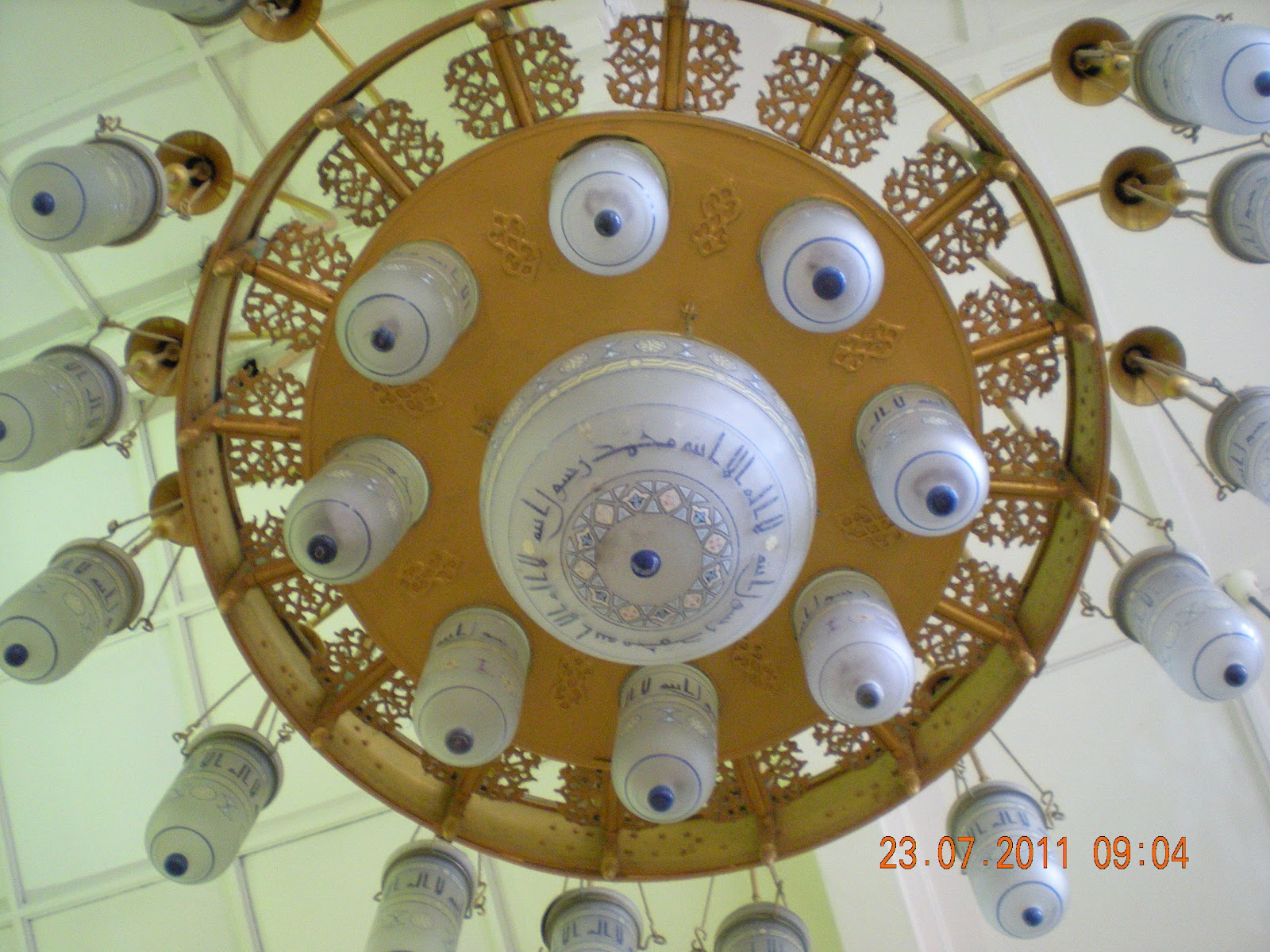
Enormous chandelier in the lobby. The white frosted light bulbs bear light blue Islamic calligraphy, accompanied by light pink floral motifs. This is the cover photo for the book, Biography of the Early Malay Doctors 1900-1957 Malaya and Singapore.
Different view of the same chandelier.
Front lawn and nursery
Map showing all the entrances (gates) of Masjid Sultan and the 4 roads that surround it. The main road where you see buses and traffic lights is North Bridge Road. Kandahar St separates the mosque from Istana Kampong Gelam. Muscat St separates the mosque rear from the shops. Arab St runs parallel to Kandahar St.
Entrance to Makam is closed off
Makam Sultan in front of Masjid Sultan. The last sultan of Singapore at the time of Raffles, Sultan Hussain, was not buried here. He was buried behind Masjid Tranquera (Masjid Tengkera) in Malacca. There are better photos in the Facebook album of Tengku Aziz, a descendant of the last Singapore Sultan.

Masjid Abdul Gaffoor (built 1907)
This is a big ornate mosque by the street. It was under repairs when I passed by it on 23 July 2011. I did not enter this mosque. I didn't know how to get to the other side or the main entrance/front side as it was being repaired. There were some labels but I couldn't make out what was written on them.

Masjid Abdul Gaffoor

Masjid Angullia
 This is an interesting mosque that I found using Google maps. It is small and the architecture is quite unique - looks like a small fort. I have not seen a mosque like this before. The name Angullia strikes me. So I went to the USM library in Penang to look up that word. I know there is an eel species that bears the same name as I had researched on the eels in the mid-1990s. It is named after its founder, Angullia or reflects his home country (India).


Second generation Ahmad Mohamed Salleh Angullia in The Who's Who in Singapore 1963. (Article  was obtained from USM library in Penang.)
Second generation AMS Angullia and family as featured in The Straits Times, Friday, 5 August 1988. From humble traders to rich land-owners. (This newspaper article was received from Dr Mohamed Tahir, who in turn received it from AMS Angullia. The article was e-mailed to me on 22 March 2012.)
Masjid Angullia (from Google Maps).

Masjid Abdul Aleem Siddique

http://www.aleemsiddique.org.sg/

This mosque was recently renovated in 2005. It is a beautiful mosque today. I passed by it once at night on 22 July 2011. I will try and visit it next time, in sya Allah. As for history of the mosque, Abdul Aleem Siddique was a sufi master who had worked closely with one of the early Malay doctors, Dr Mohamed Ibrahim bin Ismail. His son, Tan Sri Prof Ahmad Ibrahim had also worked with the sufi master. Abdul Aleem Siddique was also known as The Roving Ambassador of Islam, which is also a title of a book written about him by Tan Sri Prof Ahmad Ibrahim. I haven't seen the book yet. Some websites mentioned him but there is no mention of the book.


Abdul Aleem Siddique
Footprints on the Journey of Human Fellowship, written by Zainudin Mohd Ismail, Jamiyah Singapore. Download from: http://www.jamiyah.org.sg/Arabic/sharing%20file/footprint.pdf


Untitled
His Holiness Hazrath Maulana Shah Mohamed Abdul Aleem Saheb Siddiqui Al'quadri, etc., the well-known qualified theologian of Meerut City, India, addressed a large gathering at the Aljunied Islamic School, Victoria Street, last Sunday on the subject "How to understand the Holy Quran." Among those present were Mr Soon Kim, Syed Abdul Rahman Aljunied, Mr A.M.S. Angullia, Haji Manjoor Saheb, and many other prominent Mohammedans. Dr H.S. Moonshi also addressed the gathering.


Masjid Abdul Aleem Siddique (from Google Maps).
Masjid Abdul Aleem Siddique (via StreetView in Google Maps).


I was informed by Dr Mohamed Tahir that this mosque now has a beautiful interior. The front wall and the mihrab (prayer pulpit) have a lot of Islamic calligraphy relief and they were made by artisans from Morocco, who were specifically flown in just for the renovation of this mosque in 2005.

All photos below are from Masjid Abdul Aleem Siddique gallery which I found in 
Picasa. 
Interior of dome and spacious prayer hall
Qiblat, mihrab and front of mosque interior
Al-Asma al-Husna calligraphy all over on the walls. Syahadah calligraphy inside the mihrab. Even the mimbar/lecturn has Islamic geometric designs and objects.
Beautiful al-Asma al-Husna calligraphic relief on the back wall
Spacious prayer hall

Masjid Kassim
Can be found using Google maps. It is a "flat" mosque, with tiny steps leading up to the mosque. It is at a busy intersection. There are many Muslim eateries nearby. Parking is a problem. 

Masjid Ba'alawie
Can be found using Google maps. It is a small old mosque. Tan Sri Prof Ahmad Ibrahim used to come here. The Arabic Al-Attas (Alattas) family used this mosque. The Al-Attas families can be found in Indonesia, Singapore and Malaysia.

Masjid Chander Road 
http://pictures.nl.sg/SearchByTag.aspx?tag=Chander%20Road

The location can be found using Google maps - it points to an empty plot, just grassland with a blue zinc fence. This is an old mosque and has been pulled down. A 1984 photo can be found here:
http://pictures.nl.sg/2d8cc929-8e95-4dcd-9bfc-754ea116bdf5.aspx
Among the jemaah here were Ismail Ballah, Dr Mohamed Ibrahim bin Ismail and Tan Sri Prof Ahmad Ibrahim. When the newspapers published Ismail Ballah's demise, it could have pointed to the Muslim community here. "Arab" was used to refer to the Indian Muslims. Today, the Indian Muslims are grouped as Malay. The Chander Road mosque was within Little India.

Street scene in Little India
Masjid Haji Muhammad Salleh
http://www.hjmuhdsalleh.org.sg/Templates/1.html
Nearby is Makam Habib Noh which has an interesting history. The descendants of Habib Noh can be found in Penang and elsewhere. Habib Noh's close friend was Haji Muhammad Salleh @ Nakhoda Nan Intan, whose grave lies at the graveyard adjoining Masjid Batu Uban in Penang. Batu Uban was the first Malay settlement in Penang before Captain Francis Light arrived on the island.

Other mosques:
http://en.wikipedia.org/wiki/List_of_mosques_in_Singapore


Indian Convict Labour in Malaya and Singapore


INTRODUCTION

We all know our bitumen roads were not laid down by the locals; they were made by Indians. Who specifically laid down our roads? Indians or Indian convict labour? How did we get that labour to pave our roads? 

The British had taken the natives of India as convicts and brought them to Malaya and Singapore, in a similar manner they brought white British convicts to Australia and New Zealand. Who were these Indian convicts and what happened to them? Were they chained? Did they make the roads while still being chained? When were they freed? What happened to them right after they were freed? What happened to their descendants in the colony? Can we trace them? Are any of them our early Malay doctors? The answer is YES! Isn't that great?!

We know from history that the Indians who arrived in Malaya and Singapore never returned except to visit their families or to bring them here. The Indians stayed on. 

In a newspaper report, it mentioned, as convicts they built the Johore Causeway which was completed in 1924. it also mentioned the Indians were hired, preferentially over the locals as they were honest and worked earnestly.

From Isabella Bird's book, the Golden Chersonese, we know there were mainly 2 European groups - the British and Germans. We are interested in the Germans as they operated steamers (ships) that plied between Singapore and the European ports.


So far on TEMD record, we have only one highly educated Indian who worked his entire life as a free man with the German Embassy which opened in Singapore in 1892. We have difficulties tracing his origin in north India. His original Indian village is unknown.


There are 2 books that mention/illustrate Indians/Indian labourers in Malaya.


MALAYSIA. A Pictorial History 1400-2004.
Wendy Khadijah Moore
2004
ISBN 981-4068-77-2


Of note are pages 45, 56, 103 and 116.


Page 45 - Penang port, showing Fort Cornwallis in the far background; in 1860s. There is an Indian in loin cloth waiting at the water's edge.


Page 56 - The first hospital at Butterworth; circa 1869. There are a few Indians in knee-length cloth standing outside the hospital building.


Page 103 - There is an Indian in ankle-length cloth by the rail crossing near St Mary's church in Kuala Lumpur; circa 1891.


Page 116 - There are 2 Indians in loin cloth working on paving the road at the Esplanade in Penang; circa 1906.


MALAYA. 500 Early Postcards
Cheah Jin Seng
2008
ISBN 978-981-4155-98-4


This is a book of postcards and real photographs with captions. Of note are pages 228, 275 and 279.


Page 228 - Mentions Weld Quay, Penang was built in 1880s (photographed in 1924). Weld Quay housed many European companies: Boustead & Co; Schmidt Kustermann & Co; Behn Meyer & Co Ltd; Shiftman, Heer & Co; Behr & Co.


Page 155 - Before the Johor Causeway was ready in 1924, ferryboats were used to transfer people and food from Johor Bahru to Singapore. Even the train wagons were ferried to Woodlands in Singapore. The photo shows a ferryboat pulling a roll-on railway track. The vicinity was all jungle.

Page 275 - Shows the Johor Causeway in 1925. It was 1,056 metres long and was officially opened on 28 June 1924 by Sir Laurence Guillemard, in the presence of Sultan Ibrahim (Sultan of Johore). The photo was taken from the Johore end of the causeway, facing Singapore.


Page 279 - Mentions Phot Kleingrothe, Deli, Sumatera in a caption. My understanding is "Phot Kleingrothe" is Port Keling Roti in Dutch? Is Kleingrothe, keling roti? Were the Indians baking bread in Sumatera? Did it mean the Indians were already selling the Indian bread, roti chanai (roti canai) in Sumatera as they do all over Malaysia today?

Page ? - There is mention of Norddeutscher Lloyd in 1910 which exported tobacco to Europe. 


The Malays

INTRODUCTION

For my book, The Early Malay Doctors (TEMD), the word "Malay" is all encompassing. It includes all Muslims, regardless of ethnic origin. So, "Malay" would mean: a label to include all who eat mainly rice as their staple (nasi putih, nasi biryani) either with their right hand/fork & spoon/chopsticks, or breads as alternative (roti canai, roti jala, murtabak) and sometimes noodles (mi goreng, mi bandung, spaghetti) and wear clothes according to their various cultures and customs, covering most parts of their torso, that go to show modesty rather than revealing clothes. So a Malay may appear very Chinese, very Indian, very Orang Asli, very Mat Salleh, very Black, very Melayu, to the moderate not so Chinese, not so Indian, not so Orang Asli, not so Mat Salleh, not so Black, not so Melayu, to pan-Asian features.
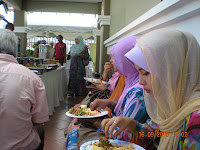
A Malay wedding reception

The JHEOA describes the Orang Asli (Orang Asal) here: Jabatan Hal Ehwal Orang Asli

The book by Isabella Bird, "The Golden Chersonese: Travels in Malaya" in 1879 is available online and is hosted by Digital Library at http://digital.library.upenn.edu/women/bird/chersonese/chersonese.html#IX.

There is mention of the people who make up the population in Malacca, Penang (Pinang) and Singapore at the time of her visit.


The Malays
She described the Malays as follows: "The people lead strange and uneventful lives. [....] They seclude their women to a great extent, and under ordinary circumstances the slightest courtesy shown by a European man to a Malay woman would be a deadly insult; and at the sight of a man in the distance the women hastily cover their faces.


Singapore Census 1881
For the Singapore census of 1881, the people were grouped as: Europeans and Americans, Eurasians, Chinese, Malays and other natives of the Archipelago, Tamils and other natives of India, and Other nationalities. The Arabs were not categorised with the Malays. Among the Europeans, the Germans were next largest after the British. It mentioned Manilamen instead of Filipinos.

Europeans and Americans     823
Eurasians     930
Chinese     32,194
Malays and other natives of the Archipelago     6,954
Tamils and other natives of India     637
Other nationalities     559

The European resident population, exclusive of the soldiers, is only 1,283. The Europeans comprise 19 nationalities, including the British (largest) and Germans (second largest).

The Chinese population is 86,766; the Malay, 22,114; the Tamil, 10,475; the Javanese, 5,881; and the Eurasian, 3,091.

"Malays and other natives of the Archipelago" included, Achinese, Boyanese, Bugis, Dyaks, Jawi-Pekans, and Manilamen.

"Other nationalities" included Arabs.

Settlement of Malacca Census 1881
The total population of the territory is 93,579 (52,059 males and 41,520 females), an increase in ten years of 15,823. The Chinese population has increased by 6,259 or 46.4 per cent., and the Malays by 11,264, or 19.3 per cent.

European 32 (23 males and 9 females)
Eurasian (mainly of Portuguese mixed blood) 2,213
Chinese 19,741 (4,020 being females)
Malay 67,488 (the females being 2,000 in excess of the males)
Tamils or Klings 1,781
Arabs 227
Aborigines of the Peninsula 308
Javanese 399
Boyanese 212
Jawi-Pekans 867
Other 174 (stray Achinese, Africans, Anamese, Bengalis, Bugis, Dyaks, Manilamen, Siamese, and Singhalese)

Natives of India 42%
Other nationalities 48.9%

The town of Malacca contains 5,538 houses, and the country districts 11,177. The area of the settlement is 640 square miles, and the density of the population 146 to the square mile; only twelve of the population are lunatics.

Penang Census
- there is mention -


Saturday, 5 November 2011

Queen's Scholarship


INTRODUCTION

There are 2 types of scholarships at different times: The Queen's Scholarship and the President's Scholarship.


The Straits Times, 16 November 1948, Page 4
Queen's scholars since 1885.


The Straits Times, 12 July 1980, Page 1
History of the President's scholarship

http://bit.ly/sm0qmE


  • History of the President's scholarship [Articles]
    History of the President's scholarship THE Presidents scholarship is today's equivalent of the Queen's and State's scholarships which were stopped in 1965. In 1959, Mr Vong Nyuk Lin, the then Minister for Education, explained that the Queen's scholarships and Queen's Research Fellowships were discontinued in view of the changed constitutional  (380 words)
  • QUEEN'S SCHOLARS SINCE 1885 [Articles]
    QUEEN'S SCHOLARS SINCE 1885 A PAPER entitled "Th« Queen's Scholarships of Malaya 1885-1948" written by Dr. Wu Lien Teh and Dr. Ng Tok Ting, was read at a meeting at Raffles College, Singapore, last night by Dr Wu Lien Teh. The President of the Raffles College Union, Mr. 8. Thiruchelvam,  (622 words)
  • The Queen's Scholars Since 1885 In Malaya [Articles]
    The Queen's Scholars Since 1885 In Malaya We give m this page today extracts from the paper by Dr. Wu Lien Teh and Dr. Ng Yok Hing on "The Queen's Scholarships of Malaya 1885-1948" which was read by Dr. Wu Lien Teh at a meeting of students of Raffles College  (1816 words)
    Page View | 
  • The Whiz Kids of Yesteryear [Articles]
    The Whiz Kids of Yesteryear BAILYNE SUNG By ARE THEY MAKING AS GREAT AN IMPACT IN THEIR FIELD OF WORK AS THEY ONCE DID AS STUDENTS? THERE pxlsts ln Singapore a small exclusive group of people who are the Al scorers, the star performers In national examinations. They are the  (1198 words)
    Page View | 
  • Are our most brilliant mem selected for training'? [Articles + Illustrations]
    Are our most brilliant mem selected for training Are mrholmruhip* being awarded f the tmomt U&muU* mm! de«erW»g> The t>— deney, umjm the •■thor ot thin article. has been to confine scholarship* and fellowships to a small circle of lucky Government servants and university graduates. The result is that promiwing  (1105 words)
  • Dr. Lim Boon Keng. [Articles]
    Dr. Lim Boon Keng. Cordial Tributes in Legislative Council. j Tributes to (he work of Dr. Lim Boon Keng, O. B. E., who has left the colony and resigned from the Legislative Council 'on taking up the presidency of the Amoy University, were made at the meeting of the Legislative  (1059 words)
    Page View | 
  • RAFFLES INSTITUTION [Articles]
    RAFFLES INSTITUTION THE distribution of the prizes took place on Tuesday afternoon, Lady Weld and Miss Weld, the Hon'ble J. F. Dickson, the lion'ble Mr. and Mrs. Shelford, Archdeacon Meredith, the Rev. V. H. Gomes, B. I)., and many others being present. In the Boys School, the Principal commenced the  (2912 words)
  • A CENTURY OF EDUCATION IN SINGAPORE [Articles + Illustrations]
    A CENTURY OF EDUCATION IN SINGAPORE H. R. CHEESEMAN BY Raffles The Pioneer Institution, Girls' School And College The Nucleus Of A University? ENGLISH, CHINESE, INDIAN AND MALAY EDUCATION (Inspector of Schools, Singapore and Labuan.) AS far as can be ascertained 100 years ago there existed m Singapore a number  (2967 words)
  • Colony Education From The Days Of Raffles. [Articles]
    Colony Education From The Days Of Raffles. ADVANTAGES REALISED BY ALL COMMUNITIES. The Nucleus Of A Future University. It will come as a surprise to many *o learn how deeply rooted is the educational system of the Colony but in a most interesting preface to the report on education in  (8623 words)
    Page View | 
  • Untitled [Articles + Illustrations]
    may have or that may be established through head offices at home). Much remains unsaid concerning the early European pioneers, but we must go on, however great a part they have played and however likable and brave and enterprising they prere. Chinese Pioneers. Equally important and immeasurably richer m detail  (13257 words)
    Page View | 


Singlish


INTRODUCTION

I have had to interview many people for my book, The Early Malay Doctors (TEMD). I was curious as to whether to conduct interviews in English or Malay. Considering Malaysians speak both Malay and English, I was prepared for both languages. 


Singapore was a totally different experience, quite unexpected. I have only had exposure to 3 Singaporeans and got 3 very contrasting language experiences. The first experience was with my Singapore neighbours - we spoke English to arwah Pakcik Hassan and KL Malay to Makcik Salmah, and English+KL Malay to their daughter, Rahila. From that experience I gathered Singaporeans are ok and language didn't bother me at all. The second exposure was when Ashikin came to my university to demo EBSCO databases at a workshop held in the library. This time I could sense a different form of English and I wondered whether it was just Ashikin or the community she worked in etc. I came out from her workshop dazed by a new form of English, a new sound of English. The third exposure was when I actually talked to a Singapore-born male. It was at this third encounter that I became fully aware that Singaporeans do not speak the international form of English but a different English that reflects Chinese lingo in their talk or speech pattern. I never fully understood what the word Singlish meant till the third exposure. Singlish is a strange form of English - it is fast-paced, with clear diction, English words but the intonation is definitely Chinese! I am amazed that Singlish exists and I never knew!

Singlish is English spoken by Singaporeans, which sounds Chinese but is nevertheless, English. It is a distinct form of English and only Singaporeans speak this form of English, regardless of race. Malaysians cannot speak Singlish however hard they fake it. If you close your eyes and just listen to a local-born Singaporean speak English, that's Singlish - like Phua Chu Kang's spoken English. It is very different from British English, American English, Australian English and Malaysian English. A better name for it is Chinese English. The speaker may not be aware but outsiders can tell if it's English or Singlish. Now, I too can tell the difference.

http://www.singlishdictionary.com/
P-words: http://www.singlishdictionary.com/singlish_P.htm
Dyslexia: http://www.youtube.com/watch?v=vp71xD3HWU4&feature=relmfu

Friday, 4 November 2011

Medical History of Kelantan 1900-1957


INTRODUCTION

It seems that from reading many history pages, travelling to many places in Kelantan, and after much asking around, that there is much we do not know about Malay history. There were so many sultanates and families that it leaves the impression, the Malay peninsula had so many fractal kingdoms, some limited by hills, sandy beaches and rivers. The names of many places have a history and some have links to the sultans or sultanates. There are still Malay people who have name prefixes that indicate their royal descent. The problem now is there are so many and there is no effort to computerise and present all these ancient kingdoms and sultanates as a multimedia production of some means where they can become useful learning objects for schools, universities and further research. Alongside sultanates and kingdoms, there are people and staff who were hired for work by rank. Ranks and files change with times and after treaties were signed. Keeping track of one hierarchy is fine but when there are so many kingdoms and each is managed separately, I think the administrative systems used in the past were complex and we will need computers to help map them properly. I would like to pull your attention to Dato Perdana. I wrote about Dato Perdana in an earlier post. Why I have chosen Dato Perdana is because I have a photo which I downloaded from a family in Genie.com. The family members identified only 3 men in the photograph but I can identify most people in the first row, just based on my TEMD research that I have done so far. 

Eight early Malay doctors have connections with Kelantan. They are, Dr Ali Othman Merican, Dr Abdul Wahab bin Muhammad Lal Khan, Dr Che Lah bin Md Joonos, Dr Abdul Wahab bin Mohd Ariff, Dr Abdul Aziz bin Omar, Dr Ezanee Merican, Dr Mohamed bin Taib (dentist) and Dr Raja Ahmad Noordin bin Raja Shahbuddin. Some worked as royal physicians.

This post highlights the Sultans, Dato' Perdana and his descendants who were instrumental for our Merdeka, and Dr Abdul Aziz bin Omar.


KESULTANAN KELANTAN
Raja and Sultans of Kelantan (names, style, reign)
http://en.wikipedia.org/wiki/Sultan_of_Kelantan

The Kelantan sultans are derived from the Terengganu prince, and from the Bugis Malay lineage.

A Raja assumes the Sultan title when he ascends to the Kelantan throne. The Raja name is no longer used once a Raja becomes a Sultan; the sultan's name remains for life. Another name replaces his sultan name when he dies - usually name of a place where he died or a description of how he died. All sultans and their families are buried at royal cemeteries, separate from the common folks.


MAKAM DIRAJA DI LANGGAR, KOTA BHARU, KELANTAN
http://artmelayu.blogspot.com/2011/07/makam-sultan-sultan-kelantan-abad-ke-19.html

Makam DiRaja Langgar, Kota Bharu, Kelantan

Many of the Kelantan Sultans are buried here. Dr Ali Othman Merican and his wife are buried here. The royal graves are quite close to Billion Shopping Centre and Renaissance Hotel Kota Bharu.


DATO' DR ABDUL AZIZ BIN OMAR
These 3 biographies of him were obtained from 3 different volumes of The Who's Who.

Dr Abdul Aziz bin Omar's biography in The Who's Who 1963: 30 (has no pic).
Dr Abdul Aziz bin Omar's biography in The Who's Who 1965 (his first published portrait).
Dr Abdul Aziz bin Omar's biography in The Who's Who in 1971-1972 (his second published portrait).

He was born in 1919 and grew up in Penang. He studied at the Chowrasta Malay School in Hutton Lane (now renamed to Jalan Hutton) in George Town. He then studied at Penang Free School in Green Lane (now Jalan Masjid Negeri) and passed Senior Cambridge. He went on to read Medicine at the King Edward VII College of Medicine in Singapore. He returned to Malaya but went to work in Kelantan. His close friend in Kelantan was Dr Ezanee Merican. Dr Ezanee Merican operated Merican Dispensary in front of Pasar Besar Kota Bharu (demolished in June-July 2011) while Dr Abdul Aziz operated Aziz Dispensary in front of the Kota Bharu bus station. They were probably good friends as when I went to interview the relatives of Dato' Dr Haji Abdul Aziz in Jalan Pintu Pong, they were asking about Dr Ezanee Merican and his wife. Dr Abdul Aziz married Wan Sharifah Ash'aari and they have six children.


CHOWRASTA MARKET, GEORGE TOWN
Chowrasta is an Indian/Sanskrit word for a crossroad (4-junction). There is a big old brick market block that has a 4-junction on the right and a 5-junction on the left (near KOMTAR side). Pasar Chowrasta (Chowrasta market) is in Penang Road (Jalan Penang).

Penang's landmarks - Pasar Chowrasta (brown building at left) and KOMTAR (Kompleks Tun Abdul Razak) (tower), Georgetown, Penang.


SEKOLAH MELAYU CHOWRASTA / SEKOLAH KEBANGSAAN SRI TANJONG, GEORGETOWN, PENANG
The school was at a previous spot (between Transfer Road and Phee Choon Road) which now houses the Penang Police Contingent. I have not seen the police venue after 2 visits to George Town. KOMTAR is in Penang Road (now renamed to Jalan Penang). Jalan Hutton opens into Jalan Penang. The Chowrasta Malay School has been renamed to Sekolah Kebangsaan Sri Tanjong. The big double/triple story old Malay-styled school is painted beige with a blue roof. From a distance it looks like an unused godown (store house).

Sekolah Kebangsaan Sri Tanjong, Jalan Hutton, Georgetown, Penang.

Sekolah Kebangsaan Sri Tanjung was formerly Sekolah Melayu Chowrasta.

Group photo with Tunku Abdul Rahman Putra Al-Haj, Dr Abdul Aziz bin Omar and his 2 male siblings. The date for this photograph was not stated. I worked it out to be a round 1965, based on two things - Tunku as first PM and the photo of Dr Abdul Aziz here matches his photo in The Who's Who 1965. So I have chosen to mark this photo as a 1965 production. Dr Abdul Aziz's family and relatives, my uncle Anwar of Singapore and myself, managed to identify some of the men in this photo.

I can take the photo above and go directly to Muzium Kelantan to ask and quickly get help with identification of the men in the photo with Tunku. 

Dr Abdul Aziz's two brothers are Abdul Rahim bin Omar (standing extreme left) and Abdullah bin Omar (standing extreme right). Seated from left are: unknown man, Dr Abdul Aziz bin Omar, unknown, Tunku Abdul Rahman, Abdul Aziz bin Ishak (Minister of Agriculture, brother of Tun Yusof bin Ishak, first President of Singapore), Dr Mohamed bin Taib (Pahang dentist) and unknown.

Dr Abdul Aziz bin Omar.

Abdullah bin Omar.

Abdul Rahim bin Omar.

If you take a close look at the man seated on Tunku's left, the face looks familiar but I don't know who he is. I think he also appears in another photo I found on the Internet. My uncle Anwar identified the man as Abdul Aziz bin Ishak, Minister of Agriculture when Tunku was Prime Minister.

Abdul Aziz bin Ishak, Minister of Agriculture.


TAN SRI DATUK HJ NIK AHMAD KAMIL BIN NIK MAHMUD
I had contacted Muzium Kelantan very early on in this research and Muzium Kelantan staff mentioned a name to me. They had asked me whether I knew Nik Ahmad Kamil and I replied no. They went on to describe his role (importance) in Kelantan history. I listened but I didn't know where to fit the information I had received from Muzium Kelantan. After meeting with Muzium Kelantan, I came across Nik Ahmad Kamil's name (or similar) many times. I thought to myself, maybe this is an important person after all.

 
Kelantan State Council 1935.

Tan Sri Datuk Hj Nik Ahmad Kamil bin Nik Mahmud, Yang di Pertua Dewan Rakyat 1974-1977. 

Nik Ahmad Kamil bin Nik Mahmud was a Malay lawyer from Kelantan, who was in the Working Committee that prepared the draft of the Constitution Proposal for formation of the Federation of Malaya (FoM).

He had authored a lot of books about Kelantan.


MENTERI BESAR KELANTAN (MB Kelantan)
http://newpaces.com/forum/topic/837

There are altogether 17 Menteri Besar (MB) Kelantan. MB used to be called Dato' Perdana Menteri. When Malaya gained Independence, Tunku Abdul Rahman Putra Al-Haj became the first Prime Minister. He was photographed (I think) in Kelantan around that time.


DATO' NIK MAHMUD BIN NIK ISMAIL @ DATO' PERDANA
http://ms.wikipedia.org/wiki/Nik_Mahmud_bin_Nik_Ismail

Dato' Nik Mahmud bin Nik Ismail merupakan seorang pembesar Negeri Kelantan yang mashor. Belau telah dilantik sebagai Menteri Besar Kelantan pada masa Sultan Ibrahim. Beliau adalah satu-satunya yang telah dianugerahkan darjah kebesaran negeri iaitu Dato' Perdana Menteri. Dato' Nik Mahmud bin Ismail ialah Dato' Perdana di Kelantan.


DATO' PERDANA
Tonight, I came across a student's MSc thesis on Menteri Besar Kelantan. I read through the online executive summary. It mentioned Dato' Perdana.

Dato' Nik Mahmud bin Nik Ismail as Dato' Perdana, Kelantan.
 
Who was Dato' Perdana? He was Dato' Nik Mahmud bin Nik Ismail. He was one of the earliest Perdana Menteri in Kelantan. Kelantan abolished the Perdana Menteri title and replaced it with Menteri Besar. Dato' Perdana was the first Menteri Besar of Kelantan. Dato' Perdana was taught Islam by his father. He became a knowledgeable man on Islam as he had studied in Makkah. He then worked at Istana Balai Besar. 

Istana Balai Besar, Kota Bharu, Kelantan.

What is interesting is Dato' Perdana died all of a sudden. It was suspected that black magic (sihir) was used to kill him mysteriously. Dato' Perdana died a mysterious death. There were a lot of speculations about how Dato' Perdana died. Dato' Perdana was buried at Kubur Banggol in a big graveyard, across from the grave plot belonging to Datuk Dr Abdul Aziz bin Omar.

How did I come to know of Dato' Perdana's grave? The person who guided us to the grave of Datuk Dr Abdul Aziz pointed out Dato' Perdana's grave and asked my husband and I whether we knew who he was. We said no.

The graveyard guide (Raja Sulaiman) told us about Dato' Perdana and pointed to his grave. Kubur Dato' Perdana is across the road from the family graves of Dato' Hj Ab Aziz bin Omar. Dato' Perdana was sohor (well-known, famous). He is the people of Nik Ahmad Kamil Nik Mahmood.- from Raja Sulaiman


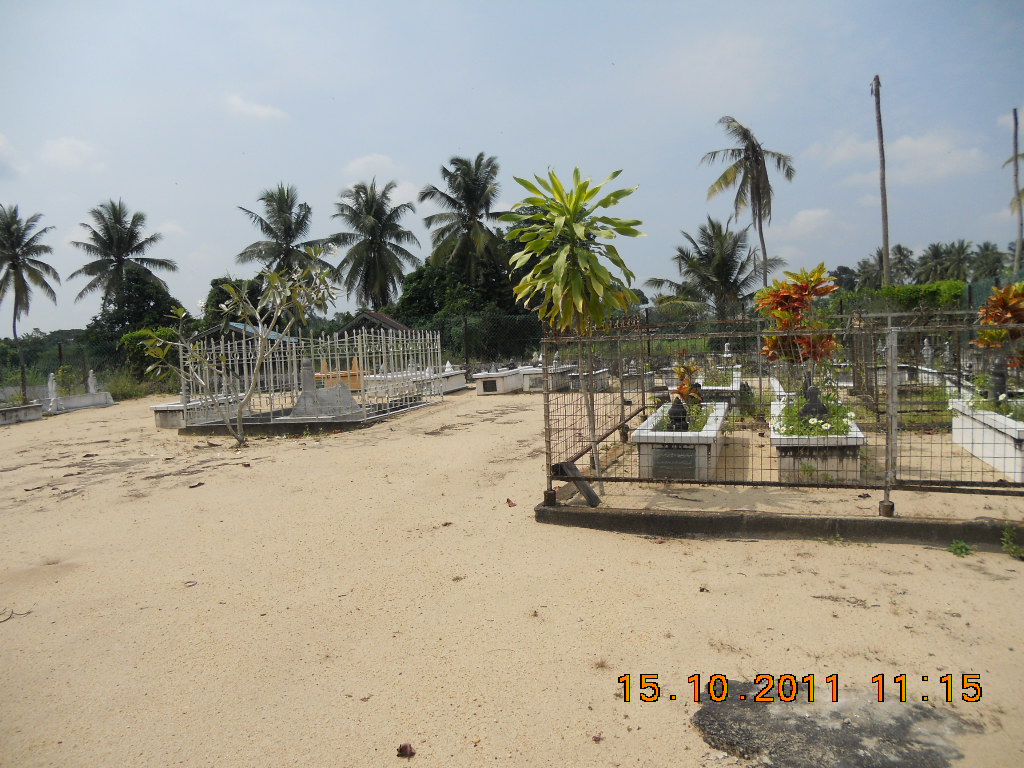
Dato' Perdana's grave and the graveyard of his clan at Kubor Banggol, Kg Banggol, Mukim Banggol, Kelantan.


SHEIKH ABDULLAH YAHYA FATHANI
I don't know who he was but his grave lies within that of Dr Abdul Aziz's plot. Either Dr Abdul Aziz was buried in Sheikh Abdullah's plot or Dr Abdul Aziz bought over the plot for his family. I know that one of the Fathani ulama' was a teacher to Dato' Perdana in Makkah.

Sheikh Abdullah's grave and his wife's grave in Dr Abdul Aziz's burial plot.