Saturday, 1 February 2014

Tok Nadhok @ Datuk Keramat of Penang

The eldest of the 12 siblings is Aladin bin Wan Nordin.

Datin Hajjah Wan Norseha bt Wan Nordin is the elder sister of Wan Naseruddin Wan Nordin @ Ayah Wan Nordin Merican in Facebook.

The Nordin Merican family are the third generation descended from Tok Nadhok @ Datuk Keramat of Penang. The real identity of Tok Nadhok and Datuk Keramat are unknown. Some said he was a Bugis sufi. Some said he was a famed Indian Muslim in the British military police that arrived in Penang.

The 5th and 6th generations of Tok Nadhok exist today. The Tok Nadhok family reunion was being planned for sometime in May 2014 or later. Interested family members could contact Ayah Wan in FB for more details. (Please note that Wan Mohd Nasseruddin bin Wan Noordin @ Ayah Wan is deceased in 2016.)

Wan Mohd Nasserudin bin Wan Noordin @ Ayah Wan.
 
Datuk Keramat is also the location of the famed tin smelting company of early Penang and where the tram lines ran from there to the pier at Weld Quay.

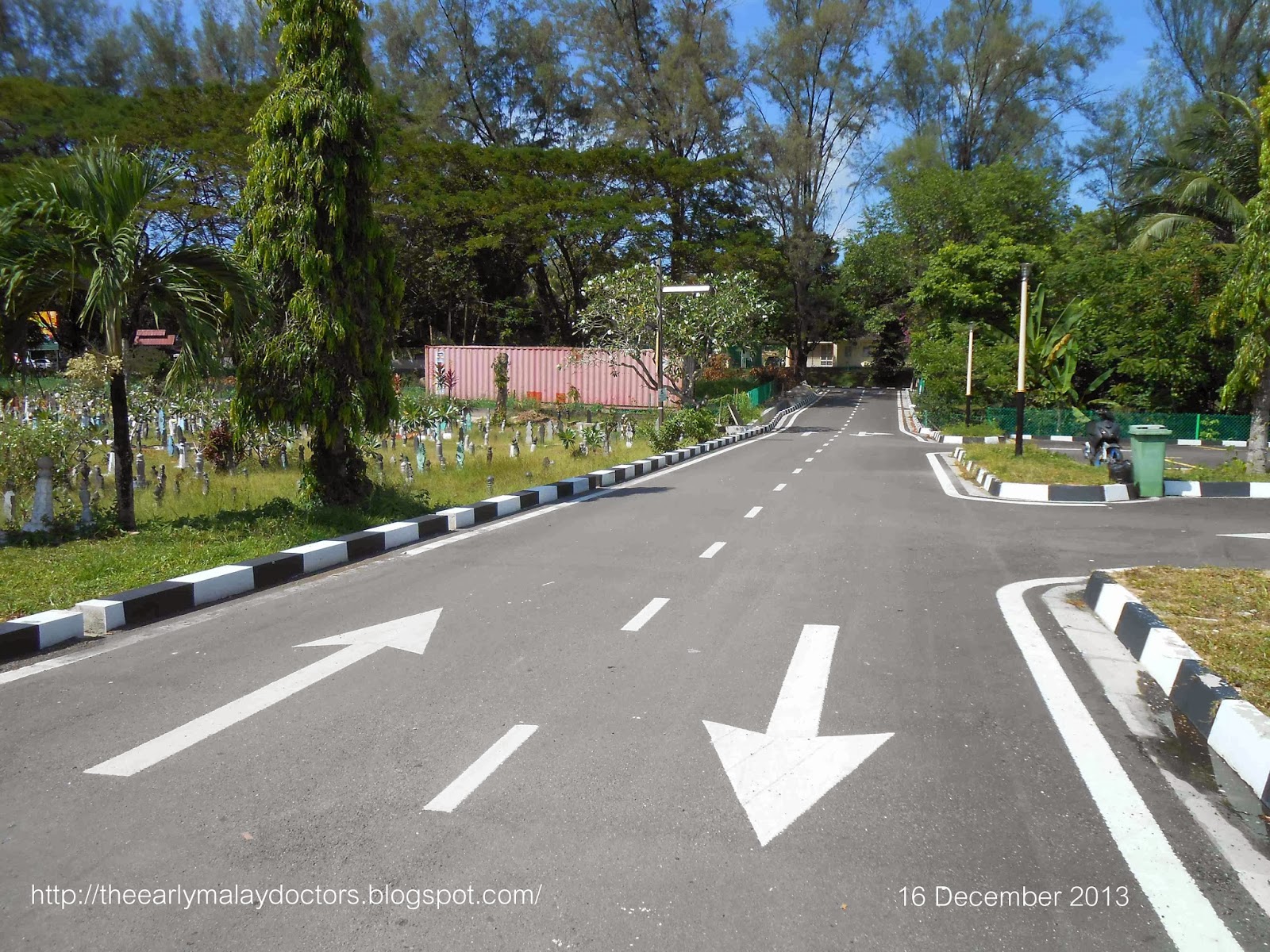
Datuk Keramat (the sufi saint) is interred at the Muslim cemetery in Jalan Perak, adjacent to Kampung Dodol. Jalan Perak graveyard and Kg Dodol are in mukim Datuk Keramat, and are not in Jelutong. The next nearest mukim is Jelutong, which is nearer to the sea.

A photo of Tok Nadhok is with the Penang Museum and in the FB of Malek Alhabshi (nama dalam tulisan Jawi).

Malek runs the Ben's Antique Toy Museum in Lebuh Aceh, in front of Masjid Melayu Aceh. He also has the Mohamedan Book that details the activities of the early Muslims in Penang. The book will be passed on to Ayah Wan, who will make copies for interested families. (Malik has made a copy for me, but I have not gone to pick it up from him.)

According to Ayah Wan, Tok Nadhok had a masjid on the site of the present Masjid Kapitan Keling. Nordin Merican then expanded the masjid and named it after his elder brother (Kader Merican, first Kapitan Keling), as Masjid Kapitan Keling. Despite this, all the imams of Masjid Kapitan Keling till today, are the descendants of Tok Nadhok.

The First Mayor of Shah Alam in Selangor

Datuk Abu Sujak Mahmud
Shah Alam was granted city status on 10 October 2000 with Dato' Haji Abu Sujak bin Haji Mahmud as the first mayor. He recently served as deputy Menteri Besar (Chief Minister) of Selangor. Abu Sujak declared the vision of making Shah Alam a modern city with a unique identity of "Bandaraya Melayu" or Malay City, showcasing the achievements of the Malays in all sectors. In line with this identity, Shah Alam was declared the first city in the world with no entertainment outlets to avoid any vice activities. http://en.wikipedia.org/wiki/Shah_Alam

Shah Alam was previously known as Sungai Renggam. Sultan Salahuddin bin Abdul Aziz Shah, then Sultan of Selangor, named it after his late father Sultan Alam Shah. Shah Alam was opened in 1963 with the purpose of making it the administrative centre of Selangor. It was proclaimed the capital of Selangor on 7 December 1978. Shah Alam was granted city status on 10 October 2000, with Datuk Abu Sujak bin Mahmud as the first mayor. Abu Sujak declared the vision of making Shah Alam a modern city with a unique identity of "Bandaraya Melayu" or Malay City, and in line with this vision, it was declared the first city in the world without entertainment outlets -- however, this is no longer true. NST 12 Sept 1989 and http://www.nst.com.my/opinion/columnist/shah-alam-used-to-be-a-place-to-call-home-1.203830

Shah Alam was once known as Sungai Renggam and was noted for its rubber and oil palm estates. Later, the same area was identified as Batu Tiga prior to Malaysian independence, and has been a centre of  rubber and palm oil trade for centuries. Its current name was chosen by the then state Sultan of Selangor, Sultan Salahuddin Abdul Aziz Shah, after his late father  Sultan Alam Shah. Many other monuments, buildings and even a street are named after the late Sultan. Shah Alam was granted city status on 10 October 2000 with Dato' Haji Abu Sujak Haji Mahmud as the first mayor. https://www.academia.edu/5533823/Green_Infrastructure_as_Medium_To_Enhance_Livable_Cities_in_Shah_Alam_Selangor#

Datuk Haji Abu Sujak was the Deputy Menteri Besar from 1986 to 1994.

He was the Deputy MB AFTER Tan Sri Muhammad Taib's case in Australia went public. He was not the Acting MB during the case; the late Dato' Dr Zainal Abidin Ahmad was the Acting MB then.
From Ayah Wan Merican Noordin in Facebook (21 May 2014): Datuk was the deputy MB from 1986 until 1994. He was never the acting MB of Selangor.

Datuk Haji Abu Sujak bin Haji Mahmud is married to Datin Hajjah Wan Norseha bt Wan Noordin. The couple has 8 children. Their daughter Dina Sujak is in Facebook.

From Ayah Wan Merican Noordin in Facebook (May 2014): Datuk Sujak tak menjadi Pemangku Menteri Besar Selangor semasa kes Tan Sri Muhammad Taib (bukan Taib Mahmud) di Australia. Yang menjadi pemangku semasa itu adalah arwah Dato' Dr. Zainal Abidin Ahmad. Panggilan saya ialah Ayah Wan Merican Noordin bukan Ayah Wan Nordin Merican. Kakak saya adalah Datin Hajjah Wan Norseha binti Wan Noordin, bukan Norsiha...

Sunday, 26 January 2014

En Abdul Rahman bin Haji Talib (1916-1968) [5], Minister of Health (1962-64)


Visit to Penang clinic, 1961.
En Abdul Rahman bin Haji Talib was the 4th Minister of Health Malaysia.
Matron Mariah Chong Nyet Lin @ Mariah Che Lah was a matron at the Maternity Hospital in Penang.

These photos are from the collection of my maternal grandfather, Dr MJ Che Lah.

Matron Mariah Che Lah (left) and En Abdul Rahman bin Haji Talib (right).
From left: 3 unknown gentlemen, En Abdul Rahman bin Haji Talib, unknown man and Matron Mariah Che Lah.
Group photo: Matron Mariah Che Lah (2nd left) and En Abdul Rahman bin Haji Talib (5th right).

External links

Sunday, 12 January 2014

Colonial Secretary: Mr E.S. Hose (1871-1946)

 Written by Walid on rear of ppc: Arrival of the Honorable Mr. E. S. Hose, C.M.G. 1916. Written by Bapak on rear of ppc: Colonial Secretary (was once Secretary for Agriculture Malaya). Photograph belonged to Walid and Bapak.

BIOGRAPHY

Mr Edward Shaw Hose (1871-1946)

Edward Shaw Hose (1871-1946) is the son of the Right Rev. George Frederick Hose, once Bishop of Singapore and President of the MBRAS. Hose was born on 25 November 1871 and entered the Civil Service of the Federated Malay States in 1891 as a Junior Officer in Perak. He served with distinction in several capacities in the F.M.S., mostly in Perak, before being appointed Colonial Secretary in 1924. Hose retired in the early 1930s. Like his father, he was a religious man and was deeply connected all his life with church affairs. - http://www.mbras.org.my/monograph22.html 

1891: Entered Civil Service in FMS as Junior Officer at Perak
         Acting Financial Assistant, Kuala Kangsar

1892: Secretary to H. H. the Sultan

1893: Demarcation Officer for Kinta and Assistant District Magistrate, Kuala Kangsar

1894: (additional appointment) Financial Assistant, Kuala Kangsar

        Collector of Land Revenue at Krian
        Acting Collector of Land Revenue at Larut
        Acting Magistrate, Larut
        Acting Magistrate, Batang Padang

1897: Member of the Royal Asiatic Society (22 Nov 1897)

1898: Assistant Secretary to the Government

Singapore

1904: Class III officer
         Acting Deputy Public Prosecutor
         Acting Second Magistrate and
         Acting Commissioner, Court of Requests Singapore

FMS

1904: Chairman of the Sanitary Board and Superintendent of Prisons  in October 1904

1912: Acting Commissioner of Trade and Customs
         Acting Auditor-General

1913: Acting Controller of Labour
         Acting Director of Agriculture

1916: District Officer of Lower Perak

1917: E.S. Hose, District Officer, Lower Perak (22 Nov 1897) .... refer JRAS 1917

1919: Class 1b officer, Director of Food Production F.M.S. and S.S. in addition

1919-20: Controller of Labour F.M.S. and S.S.
               retaining the Directorship of Food Production;
               then Deputy Food Controller of Malacca, in addition,
               and also Deputy Food Controller F.M.S.

1920: Food Controller in March 1920

1921: Acting Biritish Resident, Selangor and later Acting British Negri Sembilan

1922: Resident of Negri Sembilan on 4 February1922

1923: Chief Secreatry; bestowed C.M.G.


Sources:
Malayan Saturday Post, 29 March 1924, Page 9
The Hon. Mr. E. S. Hose, C. M. G.
http://newspapers.nl.sg/Digitised/Article/malayansatpost19240329.2.17.aspx

The Sarawak Gazette
Kuching, Monday, 2 August 1926, Vol. LVI, No. 875
Download from Pustaka Sarawak:
http://www.pustaka-sarawak.com/Pustaka-Sarawak/gazette_uploaded/1370908646.pdf

JOURNAL of the Straits Branch of the Royal Asiatic Society 
For the Year 1917.
Part 75. Proceedings pp. i — xxxvi; Journal pp. 1 — 54, published; April 28th, 1917.
Part 76. Journal pp. 55—168, published August 30th, 1917.
Part 77. Journal pp. 169 — 276 with title page, published December 29th, 1917.
SINGAPORE: Printed at the Methodist Publishing House. 1917.
http://archive.org/stream/journalofstra75771917roya/journalofstra75771917roya_djvu.txt

The Malaysian Branch of the Royal Asiatic Society
Monograph 22.. The MBRAS book of 1,600 Malay Proverbs with Explanations in English
Compiled by E.S. Hose. 195pp. Size: 140x220mm. Softcover.
http://www.mbras.org.my/monograph22.html


Friday, 10 January 2014

Malayan Union: Sir Shenton Thomas

I have an old photograph of Sir Shenton Thomas in 1939, before the Malayan Union was formed. This photo belonged to my late grandfather, Mohd Yusope bin Haji Mohd Sharif, who was called Walid by his children. Walid was then an entomologist in Kuala Lumpur, and was a keen photographer. He had photographed a lot of things and events during his lifetime (1897-1954). After WWII in Malacca, Walid and his Malay men were against the Malayan Union and they had set up UMNO Melaka, and elsewhere, to fight back and hold on to a Malay-owned Tanah Melayu. Unfortunately, he passed away before Merdeka, after UMNO was formed in 1946.

Jawi caption: Tuan Gabenor Shenton Thomas 1939.
Rear of ppc: Governor of SS & FMS.
Photograph and caption by Mohd Yusope bin Haji Mohd Sharif (Walid)
Enlarged portrait of Sir Shenton Thomas 1939.
Photograph by Walid.

BIOGRAPHY

Sir Thomas Shenton Whitelegge Thomas (1879-1962), GCMG, GCStJ, commonly known as Sir Shenton Thomas.

Shenton Thomas was born on 10 October 1879, in Southwark, London to The Rev Thomas William Thomas and his wife Charlotte Susanna (Susie) née Whitelegge. He was educated at St. John's School, Leatherhead and Queens' College, Cambridge.

Before he went to Malaya as the colonial administrator, Thomas was the Governor of Nyasaland from 1929 to 1932. He was made a Knight Grand Cross of the Most Distinguished Order of Saint Michael and Saint George (GCMG) in 1930.

He was the last Governor of the Straits Settlements. He served from 1934 to 1942 during which time World War II began.

Thomas was a prisoner-of-war during the Japanese occupation of Singapore, 15 February 1942 - 15 August 1945, having decided to stay in Singapore during the war. He was imprisoned in Cell 24 of Changi Prison along with Ernest Tipson.

After the war, Thomas remained as the 11th British High Commissioner in Malaya (9 November 1934 - 1 April 1946), until the Malayan Union was established and succeeded the British administration in the Straits Settlements (except for Singapore, which was created a separate colony), Federated Malay States and Unfederated Malay States, where the post of Governor-General of the Malayan Union was created.


Thomas established the King George V Park in Malaya (later renamed the National Park of Malaysia).

Today, Shenton Way, located in Singapore's business district, is named after him.

Thomas died on 15 January 1962, at his home in London. He was 82.

Family

He married Lucy Marguerite (Daisy) Montgomery on 11 April 1912 at St Jude's Church, Kensington, London, with issue.

His daughter, Mary Bridget Thomas (1914 - 1998), born in Nairobi, Kenya, married 1st Lt-Col Jack Leslie Harry Lotinga, and married 2nd in 1965 Nicholas Eliot, 9th Earl of St Germans.

External link:
http://en.wikipedia.org/wiki/Shenton_Whitelegge_Thomas

Thursday, 9 January 2014

Gamelan Music of Southeast Asia

Gamelan originates as a form of music to accompany deaths, funerals and burials. Today, gamelan has greatly evolved and is presented as a welcome repertoire. In countries of Southeast Asia (SEA), gamelan music is heard at almost every formal function involving community leaders. Most universities play gamelan at graduation ceremonies or convocations. Gamelan also accompanies traditional Malay dances such as in the Malay royal musical, Asmaradana and Mak Yong. Asmaradana depicts the fairytale marriage of a Malacca king to an underworld legendary princess, Puteri Gunung Ledang. Mak Yong was once a court performance, but is now performed for the public. Gamelan is taught at the universities in Malaysia. It is also taught at a local community hall in a rural village in Kelantan.

What does gamelan try to portray? Why is gamelan selected over other musical forms of the Malay communities in SEA? What is special about gamelan?

In today's health world, researchers are trying to use traditional music to overcome problems of depression. Gamelan is touted as one of those that can help patients to overcome depressive moods.

External links:
http://www.langensuka.asn.au/notation/

Wednesday, 8 January 2014

Javanese Wedding

I watched the YouTube video of a Javanese wedding and taught to share it here. The practice where the entire villagers come to offer help for a wedding reception is no longer a practice in modern Malay weddings. There are very few Malay weddings that still practise this very unique 'gotong royong' style of a Malay wedding and the Javanese wedding shows the best of this Malay spirit.

https://www.youtube.com/watch?v=FHx-nSEMoTU#t=33

The music is a fusion of Malay and Arab dance music. The Arabian guitar or gambus is a notable musical element in this kind of performance.

Here's a bit of the song lyrics given under the comments for the video:
nyewo khemah yo nyewo pinggan , kerusi mejo kanggo jagongan khemah ey gawe payungan, orak kenek panas orak kene uthan nek ni noman ngiris si bawang , kacang kacang ngoncek i kentang ngirisi daging ngirisi ayam,? masak nang njero wachan godong pisang yo disuek i, wes lemper yo ngukus koci, dikukus yo digenengi wes mateng yo dicicipi 
iki cerito kisah wong mantu wong jowo yo wong melayu sedulure kabeh di undhang tonggo tonggone yo di kon rewang dino setu kito sinoman dino minggu kito kondangan lepas mangan kito pamitan nek salaman ora kosongan kondangan - undhang mangan kondangan - undhang mangan kondangan

External links:
http://meganryan24.wordpress.com/2009/12/19/javanese-wedding/
http://www.dreamstime.com/stock-image-traditional-java-wedding
http://www.suaraindonesiadance.com.au/page/indonesian_wedding

Wednesday, 18 December 2013

Line Clear @ Penang Road 1930-2013

Penang Road was noted for tram lines that passed from Dato Keramat down to the pier or jetty. That was Penang in the early 20th century. Some parts of the tram lines are still visible on Penang Road. However, Penang Road today is different - it is now a much sought shoppers' delight and where normal people and gluttons stuff themselves 24 hours. Line Clear began in 1930, providing the fiery hot and spicy Indian cuisine - nasi kandar. You eat nasi kandar till your ears practically drop off your head. I can't take nasi kandar but I can eat a plate of nasi briyani, Penang style. Nasi briyani at Line Clear is tasty. It costs about RM6 per plate here. Other dishes that go with nasi briyani are fried cabbage in tumeric and fried chicken in red batter. Indian food here is tasty but a bit salty. Anywhere on Penang island, Indian food is tasty but salty. Papadom, vade and fried dhal cakes, are tasty but salty. Be careful if you have low grade hypertension like me (I'm on Twynsta for added protection).

How to get to Line Clear?

From Minden Heights, go down Jalan Sultan Azlan Shah to the roundabout at SEAMO-RECSAM. Take left into Jalan Masjid Negeri (Green Lane). Go down till Masjid Negeri Pulau Pinang then turn right onto Jalan Air Hitam, past Al-Mashoor School and Methodist Boys' School (MBS). Then take right at Jalan Dato Keramat and go down towards GAMA and KOMTAR. Go past KOMTAR and onward to Jalan Masjid Kapitan Keling. Turn back at Light Street till you meet the beginning of Penang Road (from the Fort Cornwallis side). Go down Penang Road slowly till you come to SAM's, stick right to enter the parking lot across from Line Clear and SAM'S. There is nowhere else to park nearby. Parking is RM4.00 for first hour and RM4.00 next 30 minutes, and thereafter. It will cost RM12 to park here and to have a decent meal at Line Clear and to wander around to nearby Chowrasta market (Pasar Chowrasta).

Alternatively, take the costal highway from Minden Heights to Weld Quay and down Light Street, turn onto Penang Road.

Crossing the road at Penang Road

Penang Road is a very busy road and I don't like it at all. But somehow you have to be daring enough to walk across and make it safely to the other side in one piece. J-walking or not, I didn't see a zebra-crossing nearby. Some cars have polite drivers who will wait for you to cross right in front of their cars, some are not that courteous. Be extra careful when you cross the road here.

Where is Line Clear?

Line Clear has a small unnoticeable signboard in between SAM'S signboards. Line Clear is situated in an alley between 2 of SAM's boutique shops. Line Clear is not near KOMTAR but before Chowrasta and Hutton Lane. You can't miss SAM's, so you can't miss Line Clear. Both SAM's and Line Clear are Indian enterprises and doing great business here.

What's special at Line Clear?

Line Clear operates 24 hours, so there is no such thing as a closing time. However, the Malaysian government has recently announced that 24-hour eateries must have a closing time for cleaning up. I will leave that topic alone. But for now, Line Clear is open 24 hours - which means you can come here and eat your favourite meals anytime. I like the idea. Yesterday (17 December 2013) was my second time eating at Line Clear. I only eat nasi briyani so I had nasi briyani here yesterday.

Nasi briyani - is it a glutton's delight?

I like nasi briyani and I can eat a plateful without talking to people next to me, including Affandi. "Why bother, why bother, why bother" as Azwan Ali's tagline has it. At Line Clear, the man serving (he is called Mamu or uncle) will put a lot of gravy on the rice. I had to tell him I didn't need that much curry but just a tablespoonful. Mamu said, people eat nasi briyani "banjir" style and I knew what he was referring to. But still I insisted mine is served with very little gravy as I cannot tolerate Indian curry. Mamu was confused rather than angry and tried to win me over but he understood what I meant. That is the limit I can tolerate Indian curry as it has been that way all my life - Indian curry is my limitation or I go to Klinik Aman with dehydration from full-blown diarrhoea. So I have to take extra care when it comes to Indian curry. I enjoyed my plate of tasty nasi briyani with little curry, a small piece of fried chicken drumstick, heaps of fried cabbage and cucumber. I had cold ais limau nipis drink to take down the oil and thirst on a hot afternoon. We paid about RM46 for 5 adults, which is reasonable.

What is after lunch?

There is no rush once one has dined at Line Clear. It pays to walkabout a little after a heavy lunch. We walked to Chowrasta market and went upstairs to first floor (tingkat atas). The shop lots were just opening and setting up shop for the afternoon. I guess they open after Zohor prayer. The Malay shop that sells batik and other Malay fabrics was closed - I guessed the old man there didn't want to open shop yesterday or he would appear later in the day. He sells very good quality batik and other fabrics and I don't have the nerve to bargain when a man that age sells me beautiful fabrics. We then looked around at the second-hand books and went down and out, back along Penang Road. We then stopped at Amoeba, next to Nasi Kandar near SAM's. This specialty shop sells very good clothes for youngsters and I bought a few clothes for my kids. Each piece is approx. RM29, not bad for an occasional shopper like me. It also sells good souvenirs.

We then returned to the parking lot and left Penang Road. It was a beautiful afternoon. I will return to Line Clear and to see Mamu again. I hope he lives long enough to serve me nasi briyani again.

Nasi briyani at Line Clear.

Update: 2015
Line Clear was ordered to shut down.


Tuesday, 17 December 2013

Cari Kepah @ D' Bayan Mud Flats in Penang

I had nothing much to do before dinner so I went down to the beach to see activities there. At the beach there were people bending and digging on the mud flats. Most were families--mothers with young children and fathers. Some were still in their work clothes. They were very absorbed in their digging activities. I asked one of the men to show me his catch and asked him what it was that he was digging. He replied "Kepah". I asked how do the people eat it and his wife replied, "Boil it with serai and salt and dip it in sauce". I asked whether it is worth digging for kepah here and she replied "Yes, especially on weekdays as there are many more people on weekends. I asked him for the price of kepah at the local market but the man said he doesn't know.

Where the sewage meets the sea...
... kepah grows aplenty.
Even kids help out their mothers to dig for kepah.
Little mounds of dug mud on the mud flats.
Mud flats and sandbank.
Digging on the sandbank at low tide.
... with Pulau Jerejak in the background.
Start in the centre and scoop 2-3 inches deep in a circular manner. Expand the periphery with your legs wide apart till you feel like falling in the mud. Then pull out the kepah.
Kepah from the mud flats..., a delicacy of the local Malays on Penang island.

Masjid Jamek Sungai Gelugor, Penang

This village had a low-lying old green mosque for a long time. Two years ago that old mosque was demolished to build a brand new brick mosque. The new mosque is a white and blue mosque with blue domes and golden spires. One early Malay doctor is buried here - Dr MJ Che Lah, along with his wife and son-in-law. There are many others buried here but I don't know them. This mosque and village behind the mosque and across the street up on the hill in front, all belong to the Rawa people (Orang Rawa) from Sumatra. The imams here were also from the Rawa people, for example the famous man Yusof Rawa, who also operated the Hajj pilgrimage company based near Masjid Jamek Melayu Acheh in George Town (Georgetown). The Rawa houses are small Malay village houses (rumah kayu kampung) found typically in all the Malay villages on Penang island, including the village at Jelutong. However, the houses at Kg Dodol at Jalan Perak are styled differently - they could be people who migrated there from Kedah or north Perak.


Main entrance
https://www.facebook.com/MasjidJamekSungaiGelugor
Right corridor, facing the graves

Left corridor
Additional women's prayer space upstairs
View towards Minden Heights side

Dr MJ Che Lah's grave under the frangipani tree (pokok kemboja) on the right
Viewed from Jalan Sultan Azlan Shah

Monday, 16 December 2013

Pulau Jerejak (2)

I get excited every time we approach Penang Brige toll house and Penang Bridge itself. I get even more excited when I see Pulau Jerejak. Penang itself is an island. These 2 islands have been in my mind since before I attended school, before I was 5 years old.

In the early 1960s, there was no Penang Bridge. Instead we took the ferry service from the Butterworth ferry terminal to the Penang ferry terminal. If I remember correctly, a 30-minute sail in either calm or choppy waters, with lots of splashes. Jelly fish swim aplenty in front of the ferry. Cars fill up the lower deck and pedestrians occupy the upper deck. The views were fantastic for a child my age.

Penang Bridge was built after I had completed my PhD and after I moved to work at USM in Kelantan. It stems from Seberang Perai on the mainland and lands on USM grounds near the USM Sports Complex (the ground here is cleaved to take the freeway down to Jalan Sultan Azlan Shah).

Pulau Jerejak can be viewed all the way from Penang Bridge right down to Jalan Sultan Azlan Shah, some 5 minutes of spectacular island views. I have never regretted taking photos of this magical island - an island embedded with history and adventure. If you like Pirates of the Caribbean and pirate tales, prisoners, Alcatraz, Robben Island, prison escapes, shark infested seas, and such horror stories, you will definitely like Pulau Jerejak. I have not read a storybook written about Pulau Jerejak. Someone should write.

I remember sitting up in bed near the window of my grandfather's home in Bukit Pemancar in Penang, and asking my mother about Pulau Jerejak. It was so fascinating, that an island lurks nearby and was full of mystery, very enchanting for a child my age - age 5. I have never been to the island but I hope to go there one day and take photos of Penang island. One thing matters though, Affandi is scared of the seas and sharks. So we have to wait for a time when he is calm enough to take a boat trip there. If I lose one leg to the sharks, then I become a female version of Long John Silver! LOL.


Sunday, 15 December 2013

Never Again, Over Again

I was looking back at Apartheid South Africa and Israel when I was growing up. I had my international passport made when I was 9 years old (Standard 3). In my passport, it says I can't visit South Africa and Israel. At that time I had no idea where Africa was nor where South Africa was. I didn't know Israel either. I remember asking my father why we weren't allowed to visit those 2 'places'. I don't remember what my father said but the memory lasted a lifetime. Now that I am old enough to understand Apartheid South Africa and Israel, I understand the problem why we weren't allowed to visit them back then and even now.

What is wrong with apartheid?

In my desire to understand the fuzzy word apartheid, I read many magazines when I was a teenager, mainly Times and Life. In any apartheid system, there is dominance of one party over the other. The dominant party is aggressive and oppresses the other presumably weaker party. There is transgression.

In Apartheid South Africa, the white minority was dominant over the majority Black Africans and other 'coloureds'. The Blacks and coloureds were bushed back into the inhabitable interior while the whites occupied once prime lands of the Blacks and coloureds.

In Israel since 1948, the migrant Israel is dominant where the Palestinians have resided since the times of the great prophets. Even though the Jews are mentioned in holy books including the Quran, people have mistaken the truths and manipulated their true deeper meanings. Now we get and see what we have today - such a great mess of non stop fighting and killing.

Who's wrong, who's right?

Apartheid is not limited to just the countries I mentioned above. It is evident in many other countries where fighting and killing continue today. In Apartheid Burma, they try to burn huts in villages and kill the Rohingyas. On the island of Mindanao, in Apartheid Philippines, they try to rid the Moro people from the island dominated by their ancestors since time immemorial. In Apartheid Thailand, the Pattani people are targeted. Elsewhere, the problem is suttle but people are marginalised in their own lands. The Aborigines of Australia have a hard time fighting back. The Maori of New Zealand seem to have assimilated well - I have not heard trouble from their quarters.

Till the last drop of blood

I remember 'ethnic cleansing' was a dirty phrase for a working academic in medical school. I had thought it was just about making skin whiter for an ethnic group. It's not; it was worst than what I had feared. It is actually getting rid of one race, an entire human race, by mass killing - genocide. All are terrible words which we must not pass on to the next generation. We all observed the ethnic cleansing that occurred between the people of Bosnia-Herzegovinia and Serbia. It was sure bloody and terrible. Aggressors raped and killed even their neighbours; worst still, rape occurred in front of family members.

War and apartheid

We all have observed so many wars in this century and last century. Losers become the oppressed, and the apartheid is born every time after a war 'is presumably over' - a war is never over; apartheid reigns after a war. The world's 2 worst oppressors are well-known to all of us. How can we tell oppressors to stop whatever they are doing and still plan to do? Can war ever be prevented? Will talks suffice? What do oppressors listen to? Do they ever listen to little voices like ours? Will they ever learn to be 'civilised' in the true sense of civilisation, and live with others peacefully? I don't know. I doubt people learn that quickly.

What can we expect?

Nelson Mandela was an exceptional person in what he did for Apartheid South Africa; de Klerk should be applauded for his part in the peaceful settlement.

Can we expect the same for Apartheid Israel and Palestine?

Can we expect the same for Apartheid Thailand and Pattani?

Can we expect the same for Apartheid Burma and Rohingya?

Can we expect the same for Apartheid Philippines and Moro?

Who's working on those issues for humanitarian reasons? How much longer do kids, mothers and the elderly have to hold on till they can see change?

Who will bring necessary change in such turmoil?

Me? You? Whom?

I think we all need to sit down and do muhassabah. Then hold talks as intelligent and responsible human beings. Then make changes for whatever demands there are, till we see warring parties compromise and come together as one. I know it is hard but never impossible. Then, we can hope to have some peace, in sha Allah.

Friday, 13 December 2013

The Hokkien Wangkang Festival: Message from the Gods in Heavens


A unique festival to send away evil spirits, the Wangkang festival in Malacca is rooted from 150 years ago during British colonial era (1863) when the British brought Chinese labour into the Straits Settlements. It is celebrated once in a few decades (1919, 1933, 2001 and 2012). It is important to the Peranakan Chinese migrant Hokkiens and their descendants who hold Taoist beliefs.

The Hokkien belief is that these evil spirits have caused worldwide epidemics and chaos, and must be sent away, so that man can live in health, peace and happiness.

It is only held when the temple deity (Ong Yah) receives a message from the Gods in Heavens to hold such an event.

The Chinese as well as the Malays and Indians, expel evil spirits from their respective communities by sending them off to water bodies (rivers, lakes and seas).

Participants gather at the Yong Chuan Tian Temple in Banda Hilir as early as 6am.

The Hokkien deploy the Wangkang (King Barge) festival with an early morning procession through 13 old city streets (totalling 20km) including Jalan Banda Hilir (now Jalan Parameswara), which finally ends up back at the temple.

In the morning parade are lion and dragon dancers, floats of small boats, Chingay performers, stilt walkers and 5 Ong Yah. The Ong Yahs are seated on sedan chairs (jiao). The barge cost RM80,000 with dimensions of 6m (length) x 2.5m (width) x 2.5m (height).

Supplies loaded onto the barge are rice, water, wine, joss paper, herbs, pots and pans, stoves, etc. The supplies must be in equilibrium for heaven, earth and sea.

A night parade of the Wangkang at Pulau Melaka then ends at the water's edge where the Wangkang is set ablaze and set sail, carrying along with it all the evil spirits.


Source and external link:
07 February 2012. Malacca cleansed of 'evil spirits'. By JASON GERALD JOHN AND KELLY KOH LING MIN. MALACCA. news@nst.com.my

Read more: Malacca cleansed of 'evil spirits' - Top News - New Straits Times
http://www.nst.com.my/top-news/malacca-cleansed-of-evil-spirits-1.43003#ixzz2nKcJ3ChV
http://www.nst.com.my/top-news/malacca-cleansed-of-evil-spirits-1.43003

Malacca Medical Mission, SS 1911-1933

1 April 1867: Straits Settlement
1911: St David's Hospital opened in Malacca by Dr Mildred Staley
1913: St Mary's School for Girls under Miss Eveleigh in KL
1929: A coconut fell on a Chinese boy who was brought to the Medical Mission
1933: Malacca Medical Mission closed due to lack of funds


In the Straits Settlement, there was a medical mission set up in Tranquerah, Malacca by the Anglican mission in 1911. It was named the St David's Hospital. It attended to the needs of the poor, women and children (Michael Poon, 2004).

A circa 1910-photograph of the medical mission appears on page 96 in the NUS book Historic Malacca Post Cards (Wong Yunn Chii, 2011). A sea-side view shows a double-storey brick building of mixed European and Malay/Indian architecture. Hemispheres appear above the windows and doors on the lower level and those on the upper floor have rectangles. The long narrow windows have half-louvers. A large verandah with chick blinds is atop the main part of the building (left half). Gutters and pipes can be seen. The roof is well designed and constructed. The other roof (right half) has small turrets and the columns have markings. A horse carriage (hackney, typical of the early 1900s) with a male rider (with songkok) carrying 3 people appears in front of the main door. A circular dry brick fountain appears in the foreground. Tall coconut trees surround the medical mission. Other buildings are nearby to the right of the medical mission. The photograph was probably taken late in the afternoon, judging from the long shadows of the coconut trees. The medical mission existed for 22 years and closed down in 1933 from lack of funds.


Sources and external links:
  1. Wong Yunn Chii. 2011. Historic Malacca Post Cards. National University of Singapore (NUS). ISBN 978-981-08-8400-0. www.arch.nus.edu.sg/ttcl
  2. Society for the Propagation of the Gospel Archives on Borneo Mission in Trinity Theological College, Singapore. A Guide. Michael Poon, October 2004. http://anglicanhistory.org/asia/sea/spg.html
  3. KILLED BY COCONUT. The Straits Times, 5 December 1929, Page 12

Thursday, 12 December 2013

Obituary: Nelson Mandela 1918-2013

I met a few Africans when I studied in California for 6 years. My first roommate was a Black American girl aged 23 (I was 17). I also liked US history, knew a bit about Abraham Lincoln, the US Civil War and the Alamo. But it was cotton fields and slavery that caught my attention. Slavery was covered in my US History class and US Political Science class, which were compulsory classes for graduation. At the time, I never knew that the African slaves brought onto US soil were Muslims. It was only when Malaysia did a TV documentary for a Malay man who wanted to learn Black American music to match our musical style, that I learned of the African Muslim slaves in USA.

I remember Nelson Mandela from my school days, university days, and when I first started working. I wasn't interested in African politics but I was interested in African live, culture, and cuisine. At the time I came to know about Nelson Mandela and African politics, the movie Roots was playing on Malaysian TV. Our family enjoyed that movie and its re-runs. My father even mimicked some of the dialogues of its main actor, Alex Hailey. At one point, I thought he could be Alex Hailey's double!

I was most attracted to Robben Island, something that brings back memories of English literature when I was in Form 3, and we read the book, The Black Tulip. I have never seen a live black tulip. There was a visit to the university by a South African ex-prisoner, a Muslim and a Hafiz, who was also at Robben Island with Nelson Mandela. It was through him that I learned about life as a prisoner at Robben Island. What amazes me more is the undying spirit of the African prisoners. This African Muslim prisoner became a Hafiz while in prison. He had nothing else to do and studied the Quran and memorised it, from cover to cover, for the 17 years he spent at Robben Island. He met Nelson Mandela while at Robben Island. I wrote a book about Robben Island prisoners from my research and before I met the African Hafiz. It was a good meeting and I didn't feel I was talking to a former prisoner. Now that it is Nelson Mandela's funeral, memories return and I have to find my previous notes so I remember the old stories of Robben Island.

I checked the postings in my Facebook and a few websites on Nelson Mandela. I stumbled on the BBC News Hausa website. I browsed the Hausa web pages, and to my surprise, there were many words similar to Malay and Arabic - words like Zahara, Allah, shukur, Thiembikile, etc. They may have different meanings though in Hausa.

Nelson Mandela is special in that he struggled very hard in what he believed in and succeeded. His achievements are remarkable from a political standpoint. It is amazing what a man can do for his people and nation - he abolished apartheid. He shared the Nobel Peace Prize with de Klerk. I'm most touched by his rhetoric and statements or quotes. We ought to remember him as a hero who stood for justice for all peoples, black and white.

http://en.wikipedia.org/wiki/Nelson_Mandela

Wednesday, 11 December 2013

Highland Towers Tragedy 1993: Coping after 20 years


The Highland Towers tragedy occurred on Saturday afternoon on 11 December 1993. A massive landslide forced 12-storey Block A to collapse and 48 people died. Block B and Block C were subsequently vacated for safety reasons. Three people were pulled out alive (all females) from the rubble but one Japanese lady Shizue Nakajima (50) later died in hospital. The survivors are a maid and her baby daughter.

Former federal CID chief Tan Sri Zaman Khan Rahim Khan hopes to meet the 18-month old baby girl Nur Hamidah Najib who would now be 21. Her mother Umi Rashidah Khoruman (then 22) would be 42 today. Baby Nur Hamidah was the first to be pulled out alive, and was first handed to Zaman Khan. Zaman Khan held up the baby for the crowd and TV viewers to see. It was such a relief and joy to see a baby being pulled out alive; I think the whole nation cried. Umi was pulled out later by rescue workers. I remember they wheeled Umi in a wheelchair; she did appear shocked but sat quietly. Later she told how she saved her baby and herself. I remember she said she tied her baby to herself using a traditional sarong for carrying babies (kain gendung anak).

Many managed to escape death before or while Block A was collapsing. They managed to free themselves and escaped from the tumbling block. One lucky baby girl is Marisa, whose maid Lati carried her out to safety after she received orders from Marisa's mother, Rosina Abu Bakar. Marisa's father Carlos Rashid was in the shower. Later the remains of Marisa's parents were found in the staircase of the collapsed tower. Former deputy prime minister and Sime Darby Foundation chairman Tan Sri Musa Hitam (79) spoke about losing his family members in the tragedy to Nation, The Star. He was in Kota Tinggi visiting villages at the time of the tragedy. He had rushed back to find his son and family. He had lunched with his son Carlos at his apartment in Block A, a week prior to the tragedy, and recalled seeing a bulldozer far away. That was the last time the father and son met. After the tragedy, baby Marisa was placed under the care of her aunt Rosana who had 2 children. Rosana was Tun Musa's youngest daughter. Marisa is now 20 years old and a second-year university student in psychology. She was informed of her real parents a few years ago, and took the news well. Tan Sri Musa has another son Hanif. He has 3 grandchildren - Marisa, Kaelan and __.

I also read about Dr PG George (72), an O&G consultant who lost his wife and 2 daughters aged 2 and 5 years in the tragedy. The family had just returned from a holiday in India and the tragedy happened day after their return while he was at work. He was terribly shocked and shaken but faith helped him to cope. He remarried and now dotes his 14-year old daughter.

I have only read a few stories and seen a few videos. There are many more painful stories that have not made it to the mass media.


Sources and external links:
Zaman: I wish to meet miracle girl. Nation, The Star Online. Tuesday, 10 December 2013.
Highland Towers: It still hurts - 20 years on. Nation, The Star Online. Wednesday, 11 December 2013. www.thestar.com.my/News/Nation/20...
YouTube: Highland Towers: Saving grace
The Highland Towers Tragedy 1/4
The Highland Towers Tragedy 2/4
The Highland Towers Tragedy 3/4
The Highland Towers Tragedy 4/4

Thursday, 5 December 2013

Penang Wedding

I came to office today and there was a wedding card in my pigeonhole. At first I had a hard time trying to remember names and people from 30 years ago when I worked at USM in Penang, The card is from my father's relative, Sharifah Hasnah Syed Aidid. I know her name but I can't recall when we last met. I know her eldest sister who also worked at USM and was in Persatuan Wanita USM with me. I remember attending her father's funeral rite at the family home in Ayer Itam. Her daughter's wedding is this Saturday, 7 December 2013; Affandi said we will try to make it (today is Thursday). My surgical wounds have healed and there should be no problem travelling by car, in shaa Allah. The East-West Highway should be safe even though it is the monsoon season here in Kelantan.

Father: Senator Syed Hassan Aidid
Mother: Sharifah Rahmah Aidid
Last known home address: 11, Mk. 1A, Ayer Itam Road, Penang
Children: 9
  1. Datin Dr Sharifah Mariam bte Tan Sri Syed Hassan Aidid married to Datuk Dr Adam Yee Abdullah @ Yee Thiam Sun. Their sons are Isa and Dr Ilias. 
  2. Sharifah Azizah Aidid married to Syed Taha bin Abdullah Sheikh Abubakar
  3. Sharifah Aminah Aidid (Singapore) married to Syed Salim Hassan Alkaff
  4. Sharifah Naemah Aidid married to Abdul Malik. They have 2 sons and a daughter.
  5. Sharifah Shipak Aidid married to Dr Razak Dali. They have 2 daughters and a son, Nazmi Hassan Razak.
  6. Sharifah Sheikhah Aidid married to Syed Ismail Al Wafa
  7. Sharifah Zahrah Aidid married to Roslie
  8. Sharifah Sakinah Aidid married to Dr Syed Mohamad Syed Sahil (Prof Syed Mohsin's brother)
  9. Sharifah Hasnah Aidid married to Prof Abu Hassan bin Abu Bakar*. She had worked at the USM Medical School before, 1984-1990. 

*There are 2 USM lecturers with the same name. I'm uncertain which one married Sharifah Hasnah.


Another Prof Abu Hassan is also known as Danker in his circle of close friends, including Prof Zairi Jaal (mosquito research). Prof Zairi Jaal is the brother of Zaiton Jaal, I think possibly an ex-TKCian. Prof Abu Hassan graduated from the University of Davies, California. I don't know his field of specialty (he is in Biology School, USM).

Tuesday, 26 November 2013

Dato Dr Sharom Ahmat


Dato Dr Sharom Ahmat was the Deputy Vice-Chancellor of Academic Affairs in 1979. He interviewed me in California when I was in 3rd year university in 1979. I then joined USM after I completed my MSc in 1982. He remembers me because I was late for my interview that day and was the last to be interviewed and he waited till I appeared, and said never mind because I had a class. I had informed him earlier before he arrived on campus that I had a class and maybe I could not make it to the interview. After I graduated with my MSc, I reported for duty to him at USM Penang campus on 28 june 1982. This is my first and last job, in shaa Allah. I met him again at the Penang Story Lecture at the E&O Hotel on 18 August 2013.


Penang Story Lecture 17-18 August 2013


Berita Harian, 10 September 1970, Page 2
Persaingan terbuka, menurut Dr. Sharom Ahmat
http://newspapers.nl.sg/Digitised/Article.aspx?articleid=beritaharian19700910-1.2.13&sessionid=4a65b0ae4e964e9da18a67db9d498f75&keyword=dr+che+lah&token=lah%2cche%2cdr

Public Lecture


PENANG STORY LECTURE:
Dr Albert Stanley McKern (1885-1945)-- a Penang Doctor in Myth and Reality

Date: Saturday, 30 November 2013
Time: 3.00pm to 5.00pm
Venue: Lone Pine Hotel, Batu Feringghi, Penang.

Invitation by donation only, PHT Member RM30 nett, non-member RM50 nett.  Tea will be served!
Proceeds to the Penang Heritage Trust. 
Contact +604-264 2631 or email info@pht.org.my before 26 November 2013. Open to 60 pax on first come, first serve basis!
Join PHT as member today to enjoy the special discount, visit www.pht.org.my to download the membership form.     


ABSTRACT
An announcement in 2008 that Sydney, Yale and Edinburgh Universities had received a multi-million dollar bequest from the estate of Dr A.S. McKern drew public attention to this Australian physician who spent the inter-war years in practice in Penang.  Dr McKern’s death in a Japanese internment camp in Sumatra contradicted the widely held belief that the popular doctor had remained hidden in his Tanjung Bungah house during the Japanese occupation. This talk draws on archival records and wartime internment diaries to lay to rest the myths surrounding Dr McKern’s final years while at the same time recalling his remarkable career and legacy.


SPEAKERS

Leslie James
Born in Scotland Leslie James is a retired Canadian diplomat with long experience in Asia Pacific, including two assignments at Canada's mission in Malaysia. A graduate in modern history and modern languages from the University of Toronto, he speaks Malay/Indonesian and has resided in Kuala Lumpur and Penang with his Malaysian-born wife for the past fifteen years. A writer and speaker on Malaysian historical subjects with an interest in local and regional military history, he is a member of PHT, Badan Warisan Malaysia, the Malaysian Branch of the Royal Asiatic Society and the British Association for Cemeteries in South Asia. He has been editor of the PHT Newsletter since 2005.

Michael Rawlinson
Born in England, Michael Rawlinson is a retired Hong Kong civil servant with experience in Asia. A graduate and instructor of what is now known as the Hong Kong Police Academy, he has resided in Penang with his Penang-born wife for the past eight years. A speaker on Asian historical subjects with an interest in local and military history, he is a member of Penang Heritage Trust, the Hong Kong and Malaysian Branches of the Royal Asiatic Society, the Royal Society for Asian Affairs and the British Association for Cemeteries in South Asia.

Organisers: Penang Heritage Trust & Think City  |  Venue Sponsor: Lone Pine Hotel, Penang
Description: cid:image001.png@01CEE064.46C1F1F0

PENANG HERITAGE TRUST
PHT ordinary membership RM50.00 admission fee RM60.00 annual fee
Life membership RM1,000.00 | New! Youth membership RM30.00 admission fee RM30.00 annual fee
Donations are tax exempted.
Penang Story Lectures and events, sign up for notifications here.