Monday, 7 March 2011

Milestones of the Faculty of Medicine, University Malaya 1949-1983

1948
-1960 – Malayan Emergency
1948
Ulu Yam Massacre by the British in Selangor
1949
University Malaya was formed by merger of KE VII College of Medicine and Raffles College.
1949
College of Medicine became the Faculty of Medicine when University Malaya was established in Singapore.
1950
University Malaya confers its first Degrees of Bachelor of Medicine and Bachelor of Surgery (MBBS) on 17 graduates. Dr Abdul Majid bin Ismail @ Coco was in this first batch.
1950
Queen’s Scholarship was introduced for KE VII graduates to pursue postgraduate studies at the London School of Hygiene and Tropical Medicine (LSHTM).
Natrah Incidence (Peristiwa Natrah). Natrah was Maria Hertogh (13), a Dutch girl born in Bandung who married Mansur Adabi (22). Dr Ahmad Ibrahim presided over the heart-breaking case that ensued. He is the son of Dr Mohamed Ibrahim bin Sheikh Ismail, an early Malay doctor (1892-1962).
1952
Construction of a 2-storey building behind the Tan Teck Guan Building for classrooms and labs.
1953
Housemanship was introduced.


1957
Department of Pharmacy, UM Singapore offered its first 3-year course.
1957
31 August – The Federation of Malaya was formed. This was the Malayan Independence or Merdeka. There were 53 Malay doctors with either LMS or MBBS medical degrees. LMS was issued from 1910 to 1949. MBBS was issued from 1950 onward.
1959
University Malaya became 2 autonomous divisions at 2 campuses, one in Singapore and another in Kuala Lumpur. The Faculty of Medicine operated as the Faculty of Medicine of UM in Singapore. An early Malay doctor, Dr Abdul Majid bin Ismail was Council Member of the University Malaya from 1 January 1959-14 May 1987.
1961
Set up of the Postgraduate Medical Studies Committee.
1962
The Singapore division became the University of Singapore and the Kuala Lumpur division became University Malaya. Prof T Danaraj became the first Dean of the medical faculty at University Malaya in KL.
1963
16 September – The Federation of Malaya became a larger country geographically when Malaya, Singapore, Sabah & Sarawak combined to form Malaysia. Malaysia had 2 big sister universities, one in Singapore and the other in KL.
1965
Singapore became an independent Republic of Singapore on 9 August 1965. The Ministry of Foreign Affairs (MFA) Singapore was formed in August 1965. Anwar Ibrahim was the Chief Protocol Officer at MFA Singapore. He was the son of Dr Mohamed Ibrahim bin Sheikh Ismail (1892-1962), an early Malay doctor.
1967
Professor Christiaan Neethling Barnard performed the first human heart transplant on 3 December 1967.
1969
School of Postgraduate Medical Studies was formed.
1969
13 May – riots (also referred to as the 13 May Incidences).  The riots occurred in Kuala Lumpur following the results of the election held then. Though political, the actual trigger of the riots remains unknown. A dark moment in Malaysia's history. The Deputy Prime Minister, also an early Malay doctor, Tun Dr Ismail (1915-1973) delivered his address to calm the nation and halt further bloodshed. The killings stopped and Malaysians continued to live as one.
1983
Hospital Universiti Sains Malaysia (HUSM) was officially opened by KDYMM Al-Sultan Kelantan Sultan Ismail Petra on 26 August 1983.


Citation: Milestones of the Faculty of Medicine - UM 1949-1983, The Early Malay Doctors, 2011, Faridah Abdul Rashid, online blog

Milestones of the King Edward VII College of Medicine in Singapore 1905-1948

1905
The Straits Settlement and Federated Malay States Government Medical School was established at Sepoy Lines in Singapore. It offered a full-time 5-year medical course to train doctors in medicine, surgery and midwifery.
1910
The pioneering class of 7 male doctors graduated from the Medical School with a Licentiate in Medicine and Surgery (LMS).
1911
The Tan Teck Guan Building opened. It housed a lecture theatre, a library and a museum.
1912
The first Professorial Chair of Physiology was established at the Medical School.
1913
The Medical School was renamed King Edward VII Medical School when it received an endowment by the King Edward VII Memorial Foundation.
1913
-1917 WW1
1916
The General Medical Council (GMC) of Great Britain recognizes the LMS and medical graduates were registered in the British Medical Register.
1917
Rumah Sakit Daerah was established in Kuala Krai, Kelantan.
1920
The London School of Tropical Medicine and Hospital for Tropical Diseases moved to Endsleigh Gardens in central London.
1921
The Athlone Committee created and named the London School of Hygiene & Tropical Medicine (LSHTM)
1921
The Medical School in Singapore was renamed King Edward VII College of Medicine as it offered tertiary education.
1923
The KE VII medical course became a 6-year course.
1924
The London School of Hygiene & Tropical Medicine (LSHTM) was made a Royal Charter
1926
The 3-storey College Building with Doric columns opens.
1927
The Dispensary was established in Kota Bharu, Kelantan by Dr Ali Othman Merican & Shaik Hussein Othman Merican (father of veteran athlete Tamin Merican)
1929
/1930 – 7 dental students were accepted by the Department of Dentistry for a 4-year course.
1930
Rumah Sakit Umum was established in Kota Bharu, Kelantan.
1930
The Great Depression in USA.
1939
The McLean Commission on Higher Education proposed the merger of the Medical College with the Raffles College of Arts and Sciences into a university college.
1941
-1945 WW2 (The Japanese Occupation in Malaya)
1942
College of Medicine ceased operation.
1943
The Japanese Military Administration established the Marei Ika Daigaku or Syonan Medical College at Tan Tock Seng Hospital.
1944
Syonan Medical College was shifted to Malacca General Hospital and it ended at the end of WW2. The Japanese used Maktab Perguruan Perempuan Melayu Melaka as their HQ.
1945
WW2 ended; Formation of Malayan Union; British Reoccupation. The Malays opposed the Malayan Union.
1946
College of Medicine reopened in the postwar period and ~200 students resumed medical studies at KE VII.
1948
The Carr-Saunders Commission proposed the formation of a university.
1948
GPMS was formed at KE VII, Singapore.

Citation: Milestones of KE VII, The Early Malay Doctors, Faridah Abdul Rashid, 2011 online blog
-

Sunday, 6 March 2011

Kampong Glam in Singapore

Under the British administration of the Straits Settlements, the community was separated and lived in different regions at each settlement, whether in Penang, Malacca or Singapore. While the Europeans lived in cooler areas such as hills, hillocks and foothills, the rest lived in the hot plains. 

The Muslims lived in their respective areas assigned - Arabs, Bugis, Javanese,  and Malay. The Chinese tended to farming, growing mainly vegetables and rearing pigs. The Indians lived alongside the Muslims, mostly near seaside villages where coconuts grow aplenty. 

The Malays are dependent on the coconut trees for nira (nectar) which is used for making palm sugar, gula Melaka or gulo keret in Kelantan accent. Palm sugar is a main ingredient for making a gooey Malay delicacy, dodol. Palm sugar is a rich source of vitamin B. The Indians need coconuts for coconut milk (santan) for making curry. 

The Malays and Indians use asam Jawa and asam keping to slightly sour their cuisines. Malay and Indian dominated areas are easily discernible to a passing tourist as they have mosques, tamarind trees (pokok asam Jawa) and pokok asam keping. Other trees are pokok cekur & keloh which are a rich source of iron. Keloh beans are used in curries. They are noted to stimulate forceful contractions which are advantageous  in maternal delivery.

While many Penang Muslims lived near Masjid (Melayu) Jamek  Lebuh Aceh in Kampung Melayu, and Kampung Dodol near Masjid Pawanchee along Perak Road, most of the Singapore Muslims live in Kampung Glam and around Masjid Sultan. 

"Gelam"or "Glam" after which Kampong Glam is named could refer to pokok gelam, a mangrove tree whose woods (kayu gelam) are used for firewood and for making charcoal (kayu arang or arang). Pounded charcoal has been used by the Malays for brushing teeth to make them white; this was before the invention of toothpaste.

Istana Kampong Gelam restored to its former grandeur. It now houses the Malay Heritage Centre of Singapore.
85 Sultan Gate (front entrance to Istana Kg Gelam)

The front of the palace with the fountain working. The palm trees look like pokok pinang. Pokok gelam is the one with small leaves.

Affandi at the side entrance to Istana Kampong Gelam
External links:
Kampung Gelam video from Heritage TV Season 2, Singapore
http://yesterday.sg/
http://kudaranggi.blogspot.com/2012/09/istana-kampong-gelam-kini-taman-warisan.html

Saturday, 5 March 2011

Negeri Jauhar @ Johor

How did Johor get its name?

Possibly from the Arabic word "jauhar", meaning gem or precious. What was Johor famous for? Did it have gems, gemstones and precious stones? No. It possibly referred to the strategic location of Johor with regard to sea trade routes frequented by the Arabs. Yes, most possibly. Why the Arabs and not the Indians, Chinese, or Europeans? No idea.

Source: http://johordt.gov.my/jkr/sejarahjohor.htm

In Kelantan, there is Istana Jahar (in local dialect) but it could be Istana Jauhar (in Arabic script).

The Malays also have a proverb, "Jauhari tak kenal manikam". What does it mean?

Transliteration becomes a problem for old Malay documents written in Jawi script as there is ambiguity in the vowels. Jawi has vowels but which can be omitted in normal writing - you read it without the vowels! Jawi also has vowels but with different pronunciation: a (alif as aa, ii, uu), ya (ya as ya, yi, yu), ya (ya as ee),  alif-wau (alif-wau as ou), hamzah (as short aa, ii, uu) and others. When, translating even the script alone, there's ambiguity and variation. For this reason, the proposed book is limited to documents written in romanised Malay and a few documents written in Jawi. The assistance of experts in 3 or 4 languages are needed at times for transliteration purposes, especially when the Jawi scripts are not the usual ones we see today.

Laksamana Bentan dan Puteri Dang Anum

This Sumatran warrior along with his wife forms a classic story in Malay court history.

Laksamana Bentan was a warrior and had served under Sultan Mahmud II of old Johor. He was away on duty (war against straits pirates) when his pregnant wife was murdered for having eaten a slice of jackfruit (seulas buah nangka) from the royal garden belonging to the young sultan (about 24 years). Her womb was cut open to reveal  her unborn child indeed had the jackfruit in its mouth. Of course upon his return from duty, the Laksamana was angry when he found out his pregnant wife (and child?) was murdered and wanted to revenge.

The opportunity to revenge arose when both were on the way to Friday prayers. The sultan was being lifted (dijulang) before his dais was brought down to the ground. The sultan was ambushed and the Laksamana stabbed the sultan while being held high (dijulang). Before the sultan fell he managed to stab the Laksamana, and cursed that the Laksamana's people would vomit blood should they step on Kota Tinggi soil, and that the curse would last for seven generations.

Both Sultan Mahmud II and Laksamana Bentan died but were buried separately in Kota Tinggi. Sultan Mahmud II was buried in a royal mausoleum named Makam Sultan Mahmud II Mangkat Dijulang while Laksamana Bentan and his wife were buried side-by-side in a lesser mausoleum in Kampung Kelantan by Sungai Kemang, Kota Tinggi, Johor. All their tombstones have yellow cloths to mark their royal ancestry.

Sultan Mahmud Shah II or the 10th Sultan Johor (Raja Mahmud; born 1675; reigned 1685-1699), grandson of Sultan Alauddin Riayat Shah II, the first Raja who opened Johor Lama (old Johor) in 1530. Raja Mahmud was only 10 years old when he became Sultan Mahmud. As such the administration was placed under the Bendahara. He died of stab wounds on Friday, August 1699. He was 24 when he died. His name after death was styled Marhum Mangkat Dijulang or Marhum Kota Tinggi. He was buried at Makam Sultan Mahmud Mangkat Dijulang in Kampung Makam, Kota Tinggi, Johor. 
Laksamana Bentan @ Megat Seri Rama also suffered from stab wounds and died. He was buried nearby in Kampung Kelantan, Sungai Kemang in Kota Tinggi. He hailed from Bentan, Sumatra. He had served as an admiral in Sultan Mahmud Shah II's fleet (1685-1699).

Map of locations of the tombs of Sultan Mahmud Mangkat Dijulang, Laksamana Bentan and Dang Anum in Kota Tinggi, Johor: http://goo.gl/maps/X2BUh


Map of locations of Pulau Bintan (Pulau Bentan), Riau Islands, Indonesia and Kota Tinggi, Johor: http://goo.gl/maps/ed8dF


Sources:
http://en.wikipedia.org/wiki/Jackfruit
http://www.youtube.com/watch?v=QK6lamSj39M&feature=related
http://www.youtube.com/watch?v=660Fk0vIFZ8&feature=related

Laksamana Bentan was Megat Seri Rama. Both he and wife were from Pulau Bentan and were of royal Bugis extraction.

A 7th generation male descended from Puteri Dang Anum had recently died outside Johor - he was an early Malay doctor; one is still surviving but not on Malay soil. Puteri Dang Anum is survived by males of her 8th and 9th generations today.

Jungle Trails and Jungle People

Why do the West think we lived on trees? Do they still think so?

The early Western people who came to study Malaya and other countries of southeast Asia were animal hunters - they were zoo keepers and circus owners. In their search of animals, they had come here, to Malaya (now Malaysia). We had tigers (harimau), elephants (gajah), monkeys (monyet), chimpanzees (beruk), snakes (ular), orang utan and gorillas. Some of these animals are arboreal (living in trees). 

Humans were also known to be living up on trees in Malaya but these were jungle tribes, not us. These jungle tribes had to live up high on the trees to avoid being attacked by wild elephants and tigers. Elephants are known to suddenly run amok. Tigers are known to attack humans even in the dark. Living up on trees was a means for safety. Robinson Crusoe also lived in a tree-top house while his Black slave, Man Friday lived below.

Source: http://www.erbzine.com/mag20/2006.html

In the early days where roads and cars were limited to big towns, on the west coast of Malaya, foot trails and elephants trails dominated most parts between these big towns and the hinterland of Malaya. One great elephant trail was the one from Kuala Lumpur to Kota Bharu (KL-KB elephant trail). This elephant trail is difficult to find nowadays since nobody knows of the exact GPS coordinates of that trail.

One account that was related to the author was by Matron Chong Nyet Lin @ Mariah, circa 1965. She had narrated about the KL-KB elephant trail. According to Matron Chong, she had travelled with a Malay doctor (Dr Che Lah bin Mohd Joonos) on elephant backs, carrying medicine for the hospital in Kota Bharu (I gather this would have been the Rumah Sakit Besar Kota Bharu; hospital is 'rumah sakit' in Malay). In retrospect, her story would be after the Japanese occupation, 1948 onward, where she had worked at the Bangsar Hospital in Kuala Lumpur.

Gajah (elephants). Photo from Penang Museum.

Bangsar Hospital was meant for the Europeans according to Coco (Tan Sri Abdul Majid, second Director-General of Health Malaysia). But later, Malay mothers also delivered their babies at Bangsar Hospital. Arasu's father was a gardener at Bangsar Hospital. I will  need more stories about Bangsar Hospital and life that surrounded that hospital before it was demolished. According to (click) Arasu (in his Facebook), only a few buildings of Bangsar Hospital complex remain today. Please contact Arasu in Facebook for pictures of Bangsar Hospital.

Serangoon Road in Singapore

One of the early Malay doctors was Dr Mohamed Ibrahim bin Sheikh Ismail who operated Selamat Clinic in Serangoon Road.
Serangoon Road in Little India, Singapore.
Serangoon Road is situated in Little India in Singapore. It is a main road much like Penang  Road in Georgetown, Penang, Malaysia. It has goldshops, spice shops, a wet market, garland shops, sarees shops,  temples, etc. Sometimes there are Chinese roadside operas. Thaipusm procession also use Serangoon Road.

Keppel Harbour in Singapore

Accounts from at least two early Malay doctors from 1910 to 1957 mentioned Keppel Harbour in Singapore.

Dr Pandak Ahmad had arrived at Keppel Harbour to go to the King Edward College of Medicine.

Keppel Harbour in Singapore

Keppel Harbout was also mentioned in an account of the surrender of the Japanese Army in Singapore in 1945.

Source: www.singas.co.uk

Map of Singapore (1)

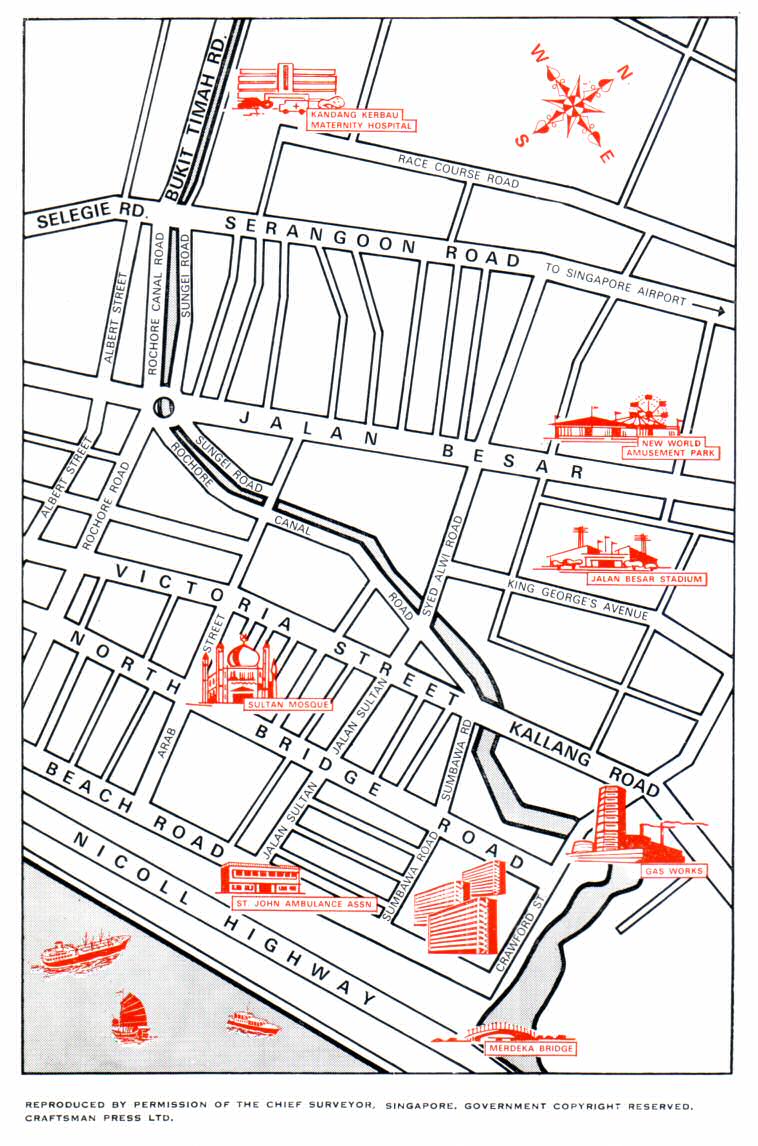
This map shows the locations of Masjid Sultan (Sultan's Mosque), Hospital Kandang Kerbau (HKK), Serangoon Road, and North Bridge Road.


Source: http://www.singas.co.uk/sits5/Image6.jpg

Thursday, 3 March 2011

Dr Ahmad Ibrahim and the Natrah Incidence 1950

Dr Ahmad Ibrahim had good parents and grew up in a religious environment, and was involved in the Jamiyah mission in Singapore, with his father (till he died in 1962 during the hajj). He had continued at the Jamiyah and was very active there. When the Natrah incidence occurred  in Singapore on 11-12 December 1950, he was the most capable Muslim attorney to defend the rights of the Muslims involved in the case, even though the case was lost to the Dutch authorities, against the grain of the new religion that Natrah had embraced (Islam). It was this incidence that opened the eyes of the Muslims, both in Singapore and Tanah Melayu, to see how the non-Muslim laws completely ignored the Muslim syariah laws which governed this specific case involving a revert to Islam.

The Natrah case is still relevant today. There are many such cases today as more Muslims get married to non-Muslims and have children. When a divorce occurs, the laws of the country of residence come into play. If the family resides in a non-Muslim country and Muslims laws are not respected, the non-Muslim father/mother takes the children regardless of the religion of the parents and children. In syariah law (Islamic regulations), the children follow the Muslim parent (father or mother), never the non-Muslim parent. This is to avoid the children from being mislead as non-Muslims.

Doctors today also have a big role to play as medical counsellors and they must know the syariah laws governing mixed marriages. Parents of mixed marriages too must try to learn and understand that mixed marriages involving a Muslim and a revert to Islam have to abide by syariah laws when a divorce occurs When we refuse to respect syariah laws, that is when the world turns upside-down and we hear a lot of grief coming from many quarters.

This passage below, written in Malay, is from a blog, and contains the opinions of Datin Seri Fatini Yaacob, author of "Natrah (1937-2009) - Cinta, Rusuhan, Air Mata". The book was published by Universiti Teknologi Malaysia (UTM) in 2010 and is available from Popular for RM75.00 (ISBN 978-983-52-0729-7; paperback)


Kes Natrah cetus semangat patriotik perjuangan martabat undang-undang Islam
6 July 2010
by Roslan88

Usaha Ahmad Ibrahim jadi landasan perundangan syariah diamal Singapura dan Malaysia. SELEPAS 60 tahun kes Natrah: Di mana Kita? adalah persoalan cuba dirungkai pada Muzakarah Pakar anjuran Institut Kefahaman Islam Malaysia (IKIM) bertujuan melihat impak peristiwa menjadi sejarah terus diperkatakan itu kepada perkembangan negara dalam bidang tertentu. 

Sebenarnya, tragedi menimpa anak kelahiran keluarga Belanda yang ditakdirkan menjadi anak angkat keluarga Melayu pada 1947 itu berjaya mengubah kehidupan masyarakat pada masa itu, terutama orang Islam dan membawa kepada kebangkitan perjuangan menentang penjajah. 

Karyawan Tamu Perpustakaan Sultanah Zanariah Universiti Teknologi Malaysia (UTM), Datin Seri Fatini Yaacob, berkata tragedi Natrah perlu dilihat dari perspektif yang luas dan penuh keinsafan kerana membangkitkan kesedaran sebuah negara.

Penulis buku Natrah – Cinta, Rusuhan dan Air Mata itu berkata, selain menyedarkan orang Melayu supaya tidak terus lena ditekan penjajah, peristiwa mengorbankan nyawa itu menjadi pencetus kepada perjuangan memartabatkan undang-undang Islam hingga ke hari ini. 

Bukan itu saja, sejak kes Natrah yang berkahwin dengan Mansor Adabi pada usia 13 tahun mendapat perhatian dan liputan besar, termasuk oleh media Belanda, undang-undang hak penjagaan anak di Britain dan beberapa negara di Eropah serta Amerika berubah secara drastik. 

“Saya selalu katakan tragedi Natrah unik dan istimewa kerana berjaya menimbulkan gelombang kebangkitan luar biasa dalam kalangan rakyat sehingga sanggup berkorban wang, harta benda dan nyawa selain menyatukan orang Melayu yang berpecah kerana fahaman politik. 

“Sementara kes perundangan yang menjadi berita dunia 1950 yang menempelak undang-undang Islam ketika itu membulatkan keazaman jiwa peguam muda, Ahmad Ibrahim memartabatkan undang-undang Islam,” katanya.

Beliau yang membentangkan kertas kerja melihat kesan peristiwa berlaku sebelum merdeka itu dari aspek sosial bagaimanapun mengakui, masih banyak perlu diberi perhatian terutama dalam usaha memastikan kelangsungan Islam.

Fatini berkata, walaupun ada kejayaan memartabatkan undang-undang Islam, tetapi perlu diakui masih banyak yang perlu diperkemaskan tambahan sekarang ini ada saja provokasi menyentuh kedudukan Islam dalam Perlembagaan selain isu menekan orang Islam. 

Justeru katanya, kuasa politik disokong pandangan cendekiawan Islam perlu berperanan menangkis serangan terhadap Islam dan pada masa sama memberi kesedaran serta berusaha membina benteng kekuatan agama bangsa. 

Natrah yang dilahirkan pada 24 Mac 1937 oleh ibunya, Adeline sebagai Hurbedina Maria Hertogh @ Bertha di Bandung sebagai Kristian dan diserahkan kepada Cik Aminah Mohammad yang berasal dari Kemaman, Terengganu, dibesarkan sebagai seorang Islam. 

Tragedi berlaku apabila mahkamah mengarahkan beliau dikembalikan kepada ibu bapa kandungnya dan dipisahkan daripada suaminya, Mansor Adabi, pada 12 Disember 1950. Inilah punca rusuhan Natrah di Singapura yang menyebabkan 18 orang maut dan beratus-ratus lagi cedera. 

Perbincangan mengenai Natrah tidak lengkap jika tidak mengiktiraf jasa peguam Natrah, Allahyarham Tan Sri Prof Ahmad Ibrahim yang menghabiskan banyak masa mengkaji perundangan Islam. 

Usaha kerja beliau mengangkat martabat undang-undang Islam, menyusun silibus pengajian di universiti, memperkemaskan pentadbiran Mahkamah Syariah, meningkatkan kualiti hakim dan pengamal undang-undang syariah serta memantapkan pelaksanaan undang-undang syariah. 

Ketua Pengarah dan Ketua Hakim Syarie, Jabatan Kehakiman Syariah Malaysia (JKSM), Tan Sri Ibrahim Lembut, berkata hasil usaha Ahmad Ibrahim menjadi landasan utama bagi perundangan Islam diamalkan di Singapura dan Malaysia. 

Katanya, kesedaran ditimbulkan tokoh itu terhadap penindasan dan kesilapan yang dilakukan penjajah kepada bangsa Melayu memungkinkan undang-undang Islam dilaksanakan di negara ini dengan tertubuhnya Mahkamah Syariah. 

“Walaupun masih ada undang-undang yang tidak mengikut nas Islam, kita mampu menjadikan undang-undang Islam sebagai undang-undang utama negara. Apatah lagi, kes seperti yang berlaku kepada Natrah berulang dalam versi berbeza hari ini. 

“Jika kes Natrah membabitkan ibu bapa bukan beragama Islam tetapi kes kali ini berlaku terhadap ibu bapa yang salah seorangnya memeluk Islam. Ada juga kes mereka yang memeluk Islam tetapi akhirnya keputusan menetapkan mereka tidak mengamalkan ajaran Islam,” katanya. 

Beliau yang melihat kes Natrah dari perspektif pelaksanaan undang-undang Islam berkata, sejak negara mencapai kemerdekaan bukan satu jangka masa singkat untuk melihat keadilan dimartabatkan sebagai penyelesaian kepada isu menyelubungi pelbagai lapisan masyarakat. 

Katanya, keadilan bukan menyamaratakan segala tetapi meletakkan yang hak pada tempatnya dan adalah tidak adil adil untuk menidakkan hak umat Islam mempraktikkan syariah seperti mana dituntut agama. 

Ibrahim berkata, situasi kontemporari memperlihatkan perkembangan positif meningkatkan kredibiliti institusi kehakiman termasuk mengharmonikan antara undang-udang sivil dan undang-undang syariah kerana wujud konflik bidang kuasa antara Mahkamah Sivil dan Mahkamah Syariah. 

Namun, beliau mengakui masih ada peruntukan undang-undang perlu diperkemaskan supaya keadilan dapat dilaksanakan bukan saja kepada umat Islam, juga yang bukan Islam menyedari undang-undang syariah turut membela kebajikan mereka. 

Sementara itu, Felo Kehormat Akademik Institut Antarabangsa Pemikiran dan Tamadun Islam (ISTAC), Muhammad Uthman El-Muhammady, berkata selepas 60 tahun kes Natrah, pemikiran umat Islam masih terbelenggu dengan pemikiran penjajah. 

Katanya, ramai orang Islam mempunyai pendidikan tinggi dan kepakaran dalam pelbagai bidang tetapi tidak berkongsi semangat kental Ahmad Ibrahim memperjuangkan kepentingan umat mengatasi keperluan peribadi. 

Malah, perpecahan semasa sendiri kerana kepentingan peribadi dan kelompok secara sempit disebabkan perkelahian serta tohmahan hasil kurang cermat pengamatan ilmu menyebabkan umat Islam rugi. 

“Oleh itu, keperluan kepada elemen mendatangkan pendidikan berkesan diambil daripada pengalaman sejarah terutama terbaik dalam Islam digabungkan dengan sejarah bangsa Melayu yang unggul perlu didedahkan. 

“Begitu juga memupuk pendidikan menguatkan negara dari semua segi termasuk isu baru zaman globalisasi demi kelangsungan ummah,” katanya yang membentangkan pemikiran mengenai kes Natrah daripada sudut pendidikan. 

Hakikatnya, peristiwa Natrah adalah pencetus dan bagaimana umat Islam mengambil iktibar penting kerana jika orang Melayu terus lena, usaha membangkitkan semangat patriotik serta memartabatkan undang-undang Islam tercetus dulu, gagal menghasilkan apa yang sepatutnya. 


Source: http://bit.ly/ge1YH0

Pierre-Alain Weiss & Rabiah's website

Source: http://sites.google.com/site/pierrealainweiss/whatisonthesite

Please be informed that the site no longer exists.

Singapore's Twiggy

Former S’pore ‘Twiggy’ Battles Lawyer Brother

Source : The New Paper, 14 Aug 2007

SIBLINGS SUE

.Former model sets up firm with brother to buy London properties
.Later, she accuses him of keeping poor records and misusing money
.She sues, but judge dismisses case


The spate of family fights over properties continues. This time it is between siblings - former top Singapore model Rabiah Weiss, 60, who was known as Asia’s answer to Twiggy in the ’70s, and her lawyer brother Salem Ibrahim.

Ms Rabiah Weiss in her heyday as a top model in the '70s. The enterprsing Singaporean was also a fashion designer, boutique owner and interior decorator. -- File Pictures:

All the properties are in London.

The high-profile family includes Singapore’s first attorney-general, a movie director in the US and several models.

The two siblings brought their fight over eight London properties to Singapore recently.

They had been involved in a joint venture to invest in the properties.

It was agreed that they would register offshore companies in Seychelles and the British Virgin Islands to buy the properties.

Mr Salem was the companies’ sole director and Ms Rabiah was a shareholder.

Ms Rabiah accused Mr Salem of not keeping proper accounts and of using the venture’s funds for his own purposes.

In 2003, she sued him, and asked the High Court to order that he account for his dealings in the venture.

She also wanted him to compensate her.

The lawsuit took four years to go to trial as Ms Rabiah amended the claims three times. Mr Salem then had to amend his defence.

Mr Salem, represented by Senior Counsel Jimmy Yim and Mr Kelvin Tan of Drew & Napier, denied pocketing the funds.

He claimed the siblings had agreed that for tax efficiency, his personal UK bank account would be used to receive money related to the venture.

He denied that he was a partner in the venture and owed his sister any duties as a director of their companies.

Mr Salem also countersued his sister for his share in the properties, after accounting for rent received, renovation and other work done on the properties.

In February, Justice Judith Prakash dismissed Ms Rabiah’s claim.

Mr Salem appealed against some aspects of the judgment, but dropped his application in June, when the deadline for his sister to appeal lapsed.

According to court papers, the dispute began in mid-1996, when Ms Rabiah and her second husband, Frenchman Pierre-Alain Weiss, stayed in Mr Salem’s house while on holiday here.

At the time, Ms Rabiah already owned six houses in London, and supported her family with the rent earned from properties.

CHAIN OF BOUTIQUES

She went into the fashion business in 1968, founding a successful chain of Trend boutiques.

The first boutique, started on North Bridge Road in 1968, sold flower power clothes she designed herself, including bell-bottom trousers and mini skirts. Her elder sister, Fatimah, was her business partner.

She used to put on her boots and dance like she was in a disco at the windows of her shop to attract the crowds.


That was her idea of promoting sales then. Eventually, in 1988, she sold her successful chain of 23 Trend boutiques to fellow Singaporean urbanista and entrepreneur Farah Khan.

She then switched to interior design, restoring period houses in Britain and France.
During her stay at Mr Salem’s house, the siblings had discussed entering the London property market.

Their talks resulted in an verbal agreement to buy and refurbish residential properties, intending to rent or sell them for profit.

Between October 1996 and February 1998, the siblings bought eight houses in London, in districts like Southwark, Dulwich and Peckham Rye.

The purchase price of one of the properties was not stated. The other seven were bought for a total of £556,000 ($1.7m at today’s rates).

Each sibling contributed £100,000 to the venture, while banks such as Hill Samuel Merchant Bank and Lloyds Bank extended loans.

Since then, the properties have been sold, with a profit of about £1million.

Despite the success of the venture, the siblings’ relationship soured.

She now owns an art gallery in Holland Village. -- File Pictures

TRUCE BUT NOT FOR LONG

In mid-2001, another sibling, Mr Victor Adam Ibrahim, brokered a truce between the two.

The estranged siblings signed a settlement agreement, agreeing to dissolve the venture, keep what each had put in and split the remaining equally.

But the settlement did not work, and the siblings ended up in court.

Dismissing Ms Rabiah’ case, Justice Prakash said Mr Salem did not owe his sister any duties as a trustee.

However, Justice Prakash found that contrary to Mr Salem’s claim, he was indeed his sister’s business partner, even in the absence of a partnership agreement.

This was so as the siblings had agreed to go into business for an indefinite period - there was no time limit for the properties to be sold.

While Mr Salem admitted to using the venture’s funds for personal purposes, he pointed out that his sister had done the same.

Justice Prakash noted that the siblings were used to mixing venture funds with their own money and were both content for this practice to continue while the venture continued.

In her judgment, Justice Prakash wrote: ‘It was only after the venture broke down that Ms Rabiah complained about the failure to segregate venture monies from personal monies.


‘In my view, that complaint was made far too late to found the ground of an allegation of breach of duty against Mr Salem.’

The year Ms Rabiah sued her brother was also the year she returned to Singapore with her second husband.

In 2004, she made another career switch, picking up the paintbrush.

Last year, she launched her first exhibition at the Fleming Gallery on the second floor of the Holland V Shopping Mall. The gallery is owned by her husband, Mr Weiss, 38.

It is named after her first husband British banker Ian Hues Fleming, who died in 2002.

The reason for that, Mr Weiss said in an earlier press interview, is that he is too shy to use his own name.

He also wanted to encourage her sons David, 34, and Angus, 31, both artists.

Ms Rabiah has another son Adam, 33, with Mr Fleming, whom she married in 1967. They divorced in 1987.

FAMILY OF 11 CHILDREN

Ms Rabiah and Mr Salem belong to a family of 11 siblings, children of a doctor and a midwife.

Their elder brother was Singapore’s first Attorney-General, Dr Ahmad Ibrahim. He was also a co-drafter of Singapore’s Constitution.

Their fourth sister, Ms Hawa Ibrahim, was a model for Pierre Cardin who went on to marry Lord Francis Russell, the youngest son of Britain’s Duke of Bedford.

Their third brother Cal Bellini (birth name: Khalid Ibrahim) is a movie director in the US, who also acted alongside Oscar-winner Dustin Hoffman in the 1970 Western Little Big Man.

Both Ms Rabiah and Mr Salem declined comment when approached by The New Paper.

Source: http://propertyhighlights.blogspot.com/2007/

Hawa Ibrahim

One of the early Malay doctors was Dr Mohamed Ibrahim bin Sheikh Ismail (1892-1962) who was born and raised in Singapore. Dr Mohamed Ibrahim had a daughter named Hawa.

Hawa is/was a British fashion model based in London and had used her celebrity model name, "Anak". When I first heard her name from my own mother, I was a teenager, about 14-15 in Form 2 (1972) or Form 3 (1973). I can recall her name and her fellow model, Twiggy. My mother would say "as thin as Twiggy". I was really a thin teenager.

I've tried searching for British fashion models in the late 1960s-1970s but could not find her. I've tried searching for other fashion models of her era like Twiggy. I found Twiggy but not Hawa. I tried this website today http://www.vogue.co.uk/ but failed to locate Hawa. I found Ms Hawa Ibrahim about the time of azan asar today:

"Their fourth sister, Ms Hawa Ibrahim, was a model for Pierre Cardin who went on to marry Lord Francis Russell, the youngest son of Britain’s Duke of Bedford."

Source: http://propertyhighlights.blogspot.com/2007/
----

... Lord Francis, OE - uncle of the present Duke - when he married the Malaysian model Faith 'Anak' Ibrahim in 1971.  


Lord Francis Russell and Hawa Ibrahim @ Faith 'Anak' Ibrahim, 1971
Photo by Popperfoto/Getty Images

Source: http://barimavox.blogspot.com/2010/07/get-wed.html

Wednesday, 2 March 2011

ASEAN

Association of Southeast Asian Nations (founded 8 August 1967)

Source: http://www.mfa.gov.sg/ASEAN_Anthem/ASEAN_Anthem.html


ASEAN Anthem
http://www.mfa.gov.sg/ASEAN_Anthem/The_Asean_Way.mp3

The ASEAN Way

Raise our flag high, sky high
Embrace the pride in our heart
ASEAN we are bonded as one
Look-in out-ward to the world.
For peace, our goal from the very start
And prosperity to last.
We dare to dream we care to share.
Together for ASEAN
we dare to dream,
we care to share for it's the way of ASEAN.

ASEAN Anthem (scoresheet)
http://www.mfa.gov.sg/ASEAN_Anthem/ASEAN_Anthem_Score.pdf

Wardah Books, Singapore

Wardah Books is owned by the great grandson of Dr Mohamed Ibrahim (1892-1962).
Dr Mohamed Ibrahim's eldest son is Allahyarham Tan Sri Professor Dr Ahmad Ibrahim.
Tan Sri Professor Dr Ahmad Ibrahim's eldest son is Dr Mohamed Tahir.
Dr Mohamed Tahir's younger son is Ibrahim.

Wardah Books
58 Bussorah Street
Singapore 199474

Opening Hours
Mon-Sat: 10am to 9pm
Sun: 10am to 6pm

Contact
tel: 6297 1232
email: books@wardahbooks.com

Source: http://wardahbooks.com/bookstore

Wednesday, 23 February 2011

Looking for Dr Khalid Hassan (Pasir Mas)

"Medical students (often senior ones) dominated the presidency and other positions for the greater part of the first 3 to 4 decades. Some of them included Mahmud Merican, Toh Ban Hock, John Ramanathan, Khalid Hassan, Maurice Choo, K Prabhakaran, Christie Tan, Peter Lee, Tan Chi Chiu, Eugene Sim, Fidah Alsagoff, Lee Hung Ming, James Hui, Lee Chiern Earn, Ruban Poopalalingam, and Shanker Pasupathy." 

Dr Khalid Hassan is from a village in Pasir Mas, Kelantan, Malaysia.

Dr Khalid Hassan had the following academic and professional qualifications:
MBBS (S'pore), MRCP (UK), MRCPath, DCP (Lond), DTM & H (B'kok)

Dr Khalid Hassan had served at three places (not in order):

  1. Dr Khalid Hassan, MBBS (S'pore), MRCP (UK), MRCPath, DCP (Lond), DTM & H (B'kok), Head, Department of Haematology, Institute for Medical Research, Jalan Pahang, 50588 Kuala Lumpur, Malaysia
  2. Dr Khalid Hassan, Ampang Puteri Specialist Hospital Suite 1-2, KL, Malaysia. Tel: +60-3-4270-2500. Specialisation: Haematology
  3. Dr Khalid Hassan, MRCP(UK) FRCP(Lond.) FRCPATH, Pakar Haematologi, PUSRAWI
There is no further update on Dr Khalid Hassan at the three places where he had served (last search on 21 January 2020).

Requests:
  1. There is a request from Singapore from a colleague of Dr Khalid Hassan who wishes to meet with him. [2011]
  2. There is a second request from his classmate who wanted to contact him. [2020]
Useful links:

  1. Mohd Azman bin Che Soh (Pasir Mas / Johor). He was Dr Khalid Hassan's patient in 1970s. Facebook
--------------
Feedback:
According to his son, his father is practising at Grimsby in England.

Found on LinkedIn:

Dr Khalid Hassan

Khalid Hassan
Consultant Haematologist
Medical Consultants (UK) Ltd
Greater Reading Area

----------------
I'm uncertain whether this is also him?

This is another link on Conflict of Interest Register:

Timestamp: 12/11/2019 15:01 
Your name: Khalid Hasan
Role: Consultant Anaesthetist/Head of Academy
Interests to declare: Yes
Declaration 1: type of interest: Outside employment
Declaration 1: dates: on going
Declaration 1: org/company: K&T Therapy
Declaration 1: description: Deliver healthcare to NHS and private
Declaration 1: mitigation: No impact
Declaration 2: type of interest: Outside employment
Declaration 2: dates: ongoing
Declaration 2: org/company: Private practice
Declaration 2: description: I do private practise at BMI Priory and Edgbaston Hospitals.
Declaration 2: mitigation: Total separation of NHS and private work. All declared in appraisals.

----------------
TQ
Prof Faridah

The Malaysian Homeopathic Medical Practitioners Association

Homeopathic Society in Malaysia


Homeopathic Society Malaysia

Name of Society
The Malaysian Homeopathic Medical Practitioners Association [ MRHP Malaysia ]
[A registered Society & Gazette in Parliament No 1048 / 84 ]


Status
National Homeopathic Society of Malaysia
Having branches all over Malaysia.

Office Address:
No.11, Bangunan Tabnung Haji Lama, Jalan Dato Pati, 15000 Kota Bharu, Kelantan, Malaysia.

Tel & E Mail
Tel: 09- 7440440 , Fax 09-7976948 E mail: fahom2@yahoo.com

Homepage: http://persatuanmrhp.freehomepage.com

Senior President
Prof Dr Nik Omar bin Haji Nik Daud
Home Address: No.122 Taman University, Kg Gelang Mas, Meranti, Pasir Mas, Kelantan, Malaysia. Tel: 019-9401915

Vice President
Prof Dr Mat Zin Hj Abd. Rahman
Lot 34, Taman Riong, Machang, Kelantan.
Tel:09-975 3797

Secretary General
Prof Mohd Nasir Hj Md Zain
Address: No.11, Bangunan Tabung Haji Lama, Jl Dato Pati, Kota Bharu, Kelantan.
Tel: 09-7440440

Source: http://homeopathicmedic.blogspot.com/2007_10_01_archive.html

Tuesday, 22 February 2011

Masjid Sultan in Singapore

Masjid Sultan
1 N Bridge Rd, Singapore
Tel: +65-6293 4405

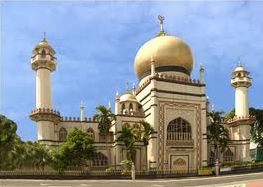
The original Masjid Sultan (Sultan's Mosque) was a single-storey building with a double-tiered roof, as other mosques in Tanah Melayu have been built. It was built by Sultan Hussain Shah of Johor. Built around 1824-1826, it was located near Sultan Hussain Shah's palace. The re-construction work to include an annexed double-storey building to house a large prayer hall and its characteristic large onion-shaped dome was completed in 1928. While the rich donated money, the poor collected bottles for the dome's construction. These donated bottles were arranged to form a visible dark ring beneath the dome. Watch the video.


Masjid Sultan, at Muscat Street and North Bridge Road
within the Kampong Glam district of Rochor Planning Area, Singapore.

Masjid Sultan is located in the heart of the Muslim district in Kampung Glam area. This mosque was entrusted to the Malays, Javanese, Bugis, Arabs, Tamils and Northern Indian Muslims who lived around the Kampong Glam area in the past. Owned and managed by Majlis Ugama Islam Singapura (MUIS) now, it became a preserved historical building in 1975 by the Preservation of Monuments Board Act, Singapore. It is now open to tourists.

Sultan Hussein did not pursue any active claim to his sovereignty rights over Johor, even after Temenggong Abdul Rahman died in 1825, and his successor, Temenggong Ibrahim was still a youth at the time of Temenggong Abdul Rahman's passing.

Sultan Hussein and Istana Kampong Gelam -> moved to Malacca -> died & buried in Masjid Tranquera

Sultan Hussein spent much of his time at his Singapore residence in Istana Kampong Glam until 1834, when he moved to Malacca. Reports cited that he was a dispirited man, apparently with the lack of power and authority that he should be accorded as the Sultan. Sultan Hussein later died in September 1835, and was buried in Masjid Tranquera at the wishes of his Sultanah and Abdul Kadir, a Tamil-Muslim Imam.

Istana Kampong Gelam


In Singapore today, only Sultan Hussain's palace and the palace gates remain of that glorious past (communicated to the author, Feb 2011). The palace now houses the Singapore Malay Heritage Society. His palace was relocated to Johor Baru and the Johor Sultanate continued (under the Temenggong Dynasty) at the new place while the British took over Singapore.

Stamford Raffles, Governor of Bencoolen in 1818

In 1818, Sir Stamford Raffles was appointed as the governor of Bencoolen on western Sumatra. He was to look for a better trading post for the British.

Raffles arrived in Singapore in 1819

Raffles' expedition arrived in Singapore on 29 January 1819. He discovered a small Malay settlement at the mouth of Singapore River headed by a Temenggung (governor) of Johor. Though the island was nominally ruled by the sultanate, the political situation there was extremely murky. The incumbent Sultan, Tengku Abdul Rahman, was under the influence of the Dutch and the Bugis and would therefore never agree to a British base in Singapore.

Raffles dealt with Hussein Shah

Upon learning of the political tensions in Johor, Raffles made a deal with Hussein Shah. Their agreement stated that the British would acknowledge Hussein Shah as the legitimate ruler of Johor, and thus Tengku Hussein and the Temenggung would receive a yearly stipend from the British. In return, Tengku Hussein would allow Raffles to establish a trading post in Singapore. This treaty was ratified on 6 February 1819.

Raffles selected Sultan Hussain Shah of Johor as the Ruler of Singapore. In 1819, Singapore was ceded to the British and in return, the Sultan and his Temenggong were each paid a stipend.

Anglo-Dutch Treaty 1824

With the Temenggung's help, Raffles managed to smuggle Hussein Shah, then living in exile on one of the Riau Islands, back into Singapore. The Dutch were extremely displeased with Raffles' action. Tensions between the Dutch and British over Singapore persisted until 1824, until they signed the Anglo-Dutch Treaty. Under the terms of that treaty, the Dutch officially withdrew their opposition to the British presence in Singapore. The treaty has the effect of carving the Johor Empire into two spheres of influence; modern Johor under the British and the new Sultanate of Riau under the Dutch. The treaty was concluded in London, between the British and the Dutch, effectively break up of the Johor-Riau Empire into two. - Wikipedia
Sources: