Monday, 17 December 2012

Datuk Abdul Mutalib

First meeting

I first met Datuk Abdul Mutalib at PJ Hilton on 30 December 2008, 8 days after Tan Sri Dr Raja Ahmad Noordin had passed away. At the time I only had the "purple hardcover draft" ready. I showed Datuk Abdul Mutalib the purple draft and he was amazed at the amount of work I had done and the information I had gathered organised into chapters! He provided a lot of assistance after that first meeting. I had sent many of the draft biographies and sections of text to him for checking especially those that had legal implications. I continued to consult him on all things legal especially for newspaper articles and photos. As chairman of the NSTP, he gave me the green light to proceed to use the ones that I have included in the final book. So I am very much grateful to him.

Going through the purple hardcover draft of The Early Malay Doctors
Second meeting

I met Datuk Abdul Mutalib a second time on 15 December 2012 when he came to pick up the 2 books at Hotel Putra KL. I wrote about this meeting with Datuk Abdul Mutalib in an earlier post on AIKOL in this blog. He is happy that the books on the early Malay doctors are now published.

With the 2 books on The Early Malay Doctors
Legal matters

Datuk Abdul Mutalib has been supporting and advising me on my writing about The Early Malay Doctors since 2008. He is a lawyer by profession. I heeded his advice especially concerning topics which were still active in the Malaysian court. So if you see things missing from my book(s), they are missing for a legal reason.

Newspaper articles

I have also not included some newspaper articles for the other biographies because I had difficulty sorting out whom to clear copyright approval with. Sometimes the text belonged to the local media (NSTP HQ in Singapore) but the photo was from another foreign country (eg Australia) and I didn't have time to clear copyright for the photo. Some of the newspaper articles came to my notice very late, after I had signed with my Australian publisher for the book galley to go to print in Great Britain. So there were many reasons why many newspaper articles did not make it to my book(s) as they have appeared in the early newspapers many years ago in our history.

Contact

Dato Anwar Fazal Mohamed (Penang) provided lead on the Ghows doctors and informed me to contact Datuk Abdul Mutalib for details. At the time, Datuk Abdul Mutalib was TV3 chairman. I contacted Datuk Abdul Mutalib and he assisted in the research on the early Malay doctors. However, writing and publishing the book took so long. The book was finally published but after Datuk Abdul Mutalib left TV3.

It was sad that I could not get any of my books published before Datuk Abdul Mutalib retired as TV3 chairman. I still have regrets for the delay but readers have to understand that the nature of this research was difficult. It was difficult to do this research, to speed up this research, to write and eventually to publish. I had to make a lot of sacrifices and difficult decisions to get the books published in 2012. - Faridah

The Ghows doctors

Datuk Abdul Mutalib is connected to two early Malay medical doctors, Dr Ismail Mohamed Ghows and his daughter Dr Latifah Bee Ghows. Dr IM Ghows was Datuk Abdul Mutalib's maternal grandfather. Dr Latifah Ghows was Datuk Abdul Mutalib's aunt. Datuk Abdul Mutalib's mother Datin Sharifah Bee was Dr Latifah's younger sister.

Dr IM Ghows was a legend for his alma mater, the King Edward VII School in Taiping. He graduated from the King Edward VII Medical School in Singapore in August 1917. He was the oldest practising doctor when he died in Taiping.

From my research on the early Malay doctors, Dr Latifah Ghows was the first female Muslim Malay doctor in Hong Kong and British Malaya. She had graduated with MBBS degree from the University of Hong Kong on 23 January 1942 (this was during WWII).

Dentist

Datuk Abdul Mutalib is also connected to an early Malay dentist, Dr Abdul Karim bin Nawab Din who was his granduncle.

Datuk Abdul Mutalib's parents are Dato' Seri Mohd Razak bin Akram and Sharifah Bee Ghows. His paternal grandparents are Akram and Zainab Bee bt Nawab Din.

Dr Abdul Karim was Datuk Abdul Mutalib's paternal grandmother's younger brother. The children of Dr Abdul Karim (Prof Datuk Dr Wazir Jahan Karim, Datuk Dr Raj Karim etc) are Datuk Abdul Mutalib's aunts and uncles.

The Bible and the Quran

I want you to listen to this video and then pick up a Quran to read before you say anything about Islam:
http://www.youtube.com/watch?v=IYMKQKSV0bY

Sunday, 16 December 2012

Pasar Chow Kit, KL

Photos are from Dr Lim Ju Boo, Gombak. I'm just putting up the fish section.


Chow Kit

The first time I heard the name Chow Kit I thought it was a Chinese name. I didn't know what it referred to. One of my aunts always mentioned that name.

What is Chow Kit?

Chow Kit is an area attached to Kg Baru, that is Chinese and has a wet market, Pasar Chow Kit. Chow Kit is a famous place where ladies would go to get cheap fresh produce for cooking. In the old days there weren't supermarkets and the wet market was where people shopped for food items.

Chow Kit history

There was once a Malay man (possibly a Johorian of Indonesian extract) who was the market supervisor at Pasar Chow Kit. His name was Muhamed Amin but was popularly known as Mat Amin Pasar or Mat Amin Chow Kit. A leader in his own right, Mat Amin participated at events and meetings at the Kelab Sultan Sulaiman. There was one meeting where Mat Amin was present at a meeting where 2 early Malay doctors were also present. One of the doctors was Dr Che Lah bin Md Joonos. The other doctor was Dr Mohamed Ghani. Chow Kit is famous for the night life and activities that it supports.

Chow Kit today

There are still surviving businesses in Chow Kit today. I have captured some activities at Chow Kit in the photos below. There is an Indian barber shop which is a rare representation of a thriving Indian business. There is an Indian restaurant that is famous for nasi briyani among others. I did not attempt to visit any of the brothels in Chow Kit. I have not been inside any of the shops at Chow Kit. Maybe I will do that next time.


Masjid Jamek Kg Baru, KL

Masjid Jamek Kg Baru is in Kg Masjid, along Jalan Raja Alang. The Petronas Twin Towers can be seen from Masjid Jamek Kg Baru.


Kampung Baru

When I interviewed Coco (Tan Sri Dr Abdul Majid bin Ismail) in May 2007, he said he was from Kg Baru. His parents also lived in Kg Baru. It was confusing trying to understand his description of Kg Baru and what I understood about Kg Baru from a child's perspective. But I swallowed whole whatever he said about Kg Baru. But a doubt always remained about what was Kg Baru.

When I wrote Tan Sri Salma's biography, she had a clinic in Kg Baru, that remained opened even during the violent days that followed the 13 May 1969 incidences. My doubt about Kg Baru grew bigger. I promised myself that I would one day take a walk to Kg Baru and explore it on foot.

On 15 December 2012, after having asam boi cold drink from the roadside hawker near the food court in front of Hospital Bersalin KL, my husband and I decided to visit Kg Baru on foot. We walked under the hot sun. It was probably 12 noon. We explored the area at Jalan Daud and reached the Kg Baru Mosque soon after azan Zohor.

Childhood memories of Kg Baru

I have heard about Kg Baru as a child. My father's ancestors lived in Kg Baru. His maternal grandfather (Mat Amin Pasar/Mat Amim Chow Kit) lived at 1 Jalan Stoner in Kg Baru. A Kg Baru man told us Jalan Stoner is now Jalan Puteri. My father often brought us to see his relatives in Kg Baru - the families of his mother's eldest brother and her sisters. Whenever we came to Kuala Lumpur, my father would try to visit his relatives in Kg Baru. At Kg Baru, we would have lunch Malay style, prepared and cooked by my father's aunts and uncle. Kg Baru lunch was simply delicious though simple.

What is Kg Baru?

Coco mentioned the nature of Kg Baru, and the sub-villages inside it. Kg Baru was an early Malay village, not the ordinary small Malay village, but a Malay village that was artificially created in the heart of Kuala Lumpur. And the villagers were transplanted from various parts of Malacca. So Kg Baru was practically a Malay village and about transplanted Malacca people.

Where is Kg Baru?

I didn't know too where it was till I visited the place with my husband. He was at one time a student of UKM and had lived at the students' hostel in Kuala Lumpur. For 4 years, he studied in KL, which became his second home. He walked from the Putra bus terminal to his UKM campus. He was on foot mostly and had explored Kg Baru on foot some 13-15 years ago. I trusted his memory and we walked into Kg Baru to have a look around and see Kg Baru for ourselves.

Kg Baru is on the other side of the Kg Baru stadium and the food court. It is across from the Pediatric Institute of Hospital Kuala Lumpur (HKL). It stretches from HKL right up to the Petronas Twin Towers and KLCC. It includes the major roads in KL such as Jalan Sultan Ismail, Jalan Dang Wangi and Jalan Daud. It is an old area of Kuala Lumpur, with tiny old Malay houses (very few of them left today) and a lot of small Malay businesses, which is typical of Malay dominated businesses as in Kota Bharu, Kelantan. There is Kg Baru Mosque tucked at one corner of the congested area.

Kg Baru is divided into sub-villages and each has a distinct name to indicate its status. The map at a corner and road junction shows the divisions and names of the sub-villages inside Kg Baru. There is an arch that says Kampung Baru. The Sultan Sulaiman Club is also in Kg Baru.


In the heart of Kuala Lumpur, a new Malay village called Kampong Baru was opened for relocation of Malays from Malacca to Kuala Lumpur. Initially, it had less than 600 houses and a population of approximately 3,000 people[1]. People traveled either by rickshaw (becha or beca) or bullock cart (kereta lembu).


[1] There were a number of sub-villages within Kampong Baru, namely, Kampong Ujong Pasir, Kampong Periok (near Sulaiman Club), Kampong Masjid (near the mosque), Kampong Baru Atas (near Prince’s Road), Kampong Paya, Kampong Hanyut and Kampong Chendana. Roads were not covered with bitumen in Kampong Baru, part of Batu Road and Jalan Tuanku Abdul Rahman. - Biography of the Early Malay Doctors 1900-1957 Malaya and Singapore (2012).

Coco had mentioned the above sub-villages within Kg Baru but there is no Kg Chendana on the Kg Baru map which I photographed. I'm unsure whether Kg Pindah today is the former Kg Hanyut that Coco mentioned to me. I'm unsure whether Kg Atas A is the one Coco referred to as "near Prince's Road" (Jalan Raja Muda Abdul Aziz?). The Kelab Sultan Sulaiman (Sultan Sulaiman Club) is within Kg Periok. Masjid Jamek Kg Baru is within Kg Masjid.

These photos were taken with the map mounted quite high.
Many photos were slightly rotated. I had to use a software to realign the images above.

Photo editing - photo alignment:
http://photo.stackexchange.com//software-for-auto-alignment-of-photographs

Arabic Manuscripts in Medicine

Today, these ancient Arabic manuscripts have been gathered and made available online at: http://wamcp.bibalex.org/home.

This online archive has been made possible by a pioneering partnership between the Bibliotheca Alexandrina, the Wellcome Library, and King's College London, with funding from the JISC Islamic studies programme.

JISC:
http://www.jisc.ac.uk/whatwedo/programmes/digitisation/islamdigi.aspx#

JISC Contact us:
http://www.jisc.ac.uk/contactus.aspx

Bibliotheca Alexandrina:
http://www.bibalex.org/Home/Default_EN.aspx

Wellcome Library:
http://library.wellcome.ac.uk/

Saturday, 15 December 2012

Tan Sri Datuk Professor Ahmad Ibrahim

AIKOL stands for Ahmad Ibrahim Kulliyyah of Laws

What's that? That was my question when I first saw the acronym. I went to visit UIAM (Universiti Islam Antarabangsa Malaysia) Gombak campus for the first time. I had visited my mother's grave in Selayang earlier and had nothing to do before check-in at Hotel Putra KL in front of IJN, Jalan Tun Razak.

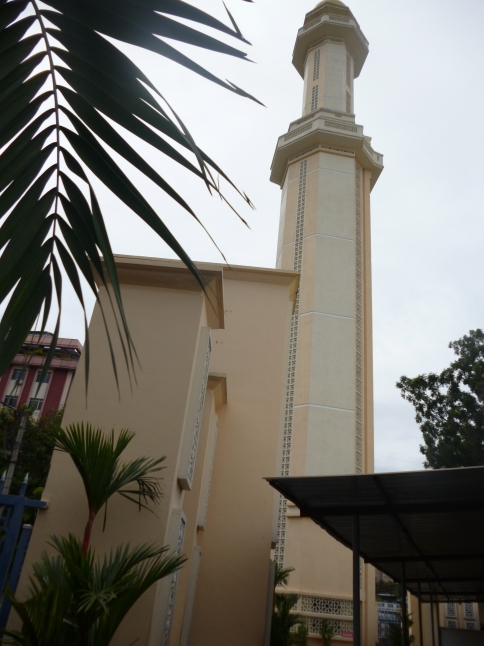
My husband and I were the only two visitors to AIKOL that morning. We passed through Sg Pusu and then came to the campus front entrance. It did look like Disneyland to me. I was happy that I was in "Disneyland", with castle and unpainted buildings. Not knowing the layout of the campus, we drove down the periphery road and landed at the bus depot/parking lot just before the stadium. We had passed the AIKOL roadsign and it was a one-way road (no turning back). We set out on foot back to where I spotted the AIKOL roadsign when we went past it.

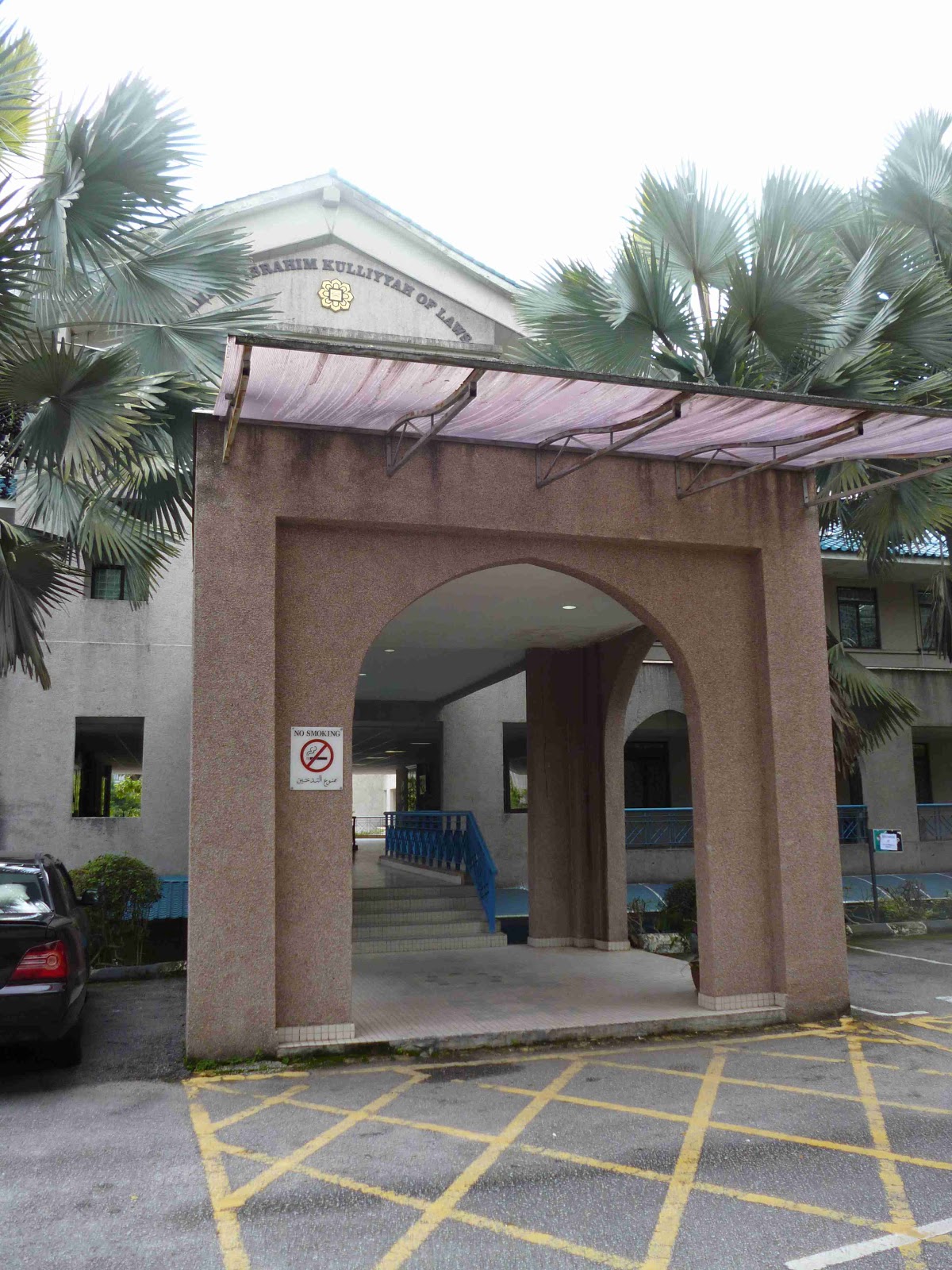
We went downhill and explored the parking lot first, trying to get a good clear view of the signage high on the roof that says "Ahmad Ibrahim Kulliyyah of Laws". We noticed each parking lot also bore his name on the parking lot signage. Here, every lecturer has a designated parking lot.

We walked and entered the building and reached the first courtyard where there were trees and tiny doors. We went to the next courtyard and there were more trees and the building formed a U-shape formation that opened towards the hills far away.

Then we went upstairs, past the AIKOL shop and reached second floor. The faculty main door says "Ahmad Ibrahim Kulliyyah of Laws Administration Office". I went round to the back door which was opened and it says the same "Ahmad Ibrahim Kulliyyah of Laws". So this must be the right place I thought. Then we went to the front (not knowing the front earlier) and I took some photos there. I discovered the dean's parking lot and saw the same words high up on the front facade of the AIKOL building. I climbed up the slope in front to get a good view and almost fell backwards on the road behind me. But it was worth it trying to get a good photo of AIKOL facade with the name.


Then we went to visit the graveyard in Sg Pusu. My husband called a man named Ujang and he informed us about the location of the grave for Prof Ahmad bin Mohamed Ibrahim. He said it was a "kayu cengkal" frame. There was only one that was made of teak. I guess this is it.


Dr Mohamed Ibrahim was an early Malay doctor in Singapore. In my research on The Early Malay Doctors, he turns out to be the first Malay doctor in Singapore. The other doctor at that time was Dr HS Moonshi who was born in Surat, India and came to live and study in Singapore. Both doctors graduated in 1916, Dr HS Moonshi graduated earlier than Dr Mohamed Ibrahim. They were close friends, so the families told me. 

Who was Prof Ahmad bin Mohamed Ibrahim?

Prof Ahmad was the elder son of Dr Mohamed Ibrahim. He was a lawyer for Natrah in the Natrah incidence that occurred in Singapore on 12-13 December 1950. Prof Ahmad was Singapore's first Attorney-General after Singapore separated from Malaysia in 1965. He was Singapore's Ambassador to Egypt before he resigned and came to live in Malaysia. Prof Ahmad served at Universiti Malaya before joining UIAM when it was built during deputy prime minister Anwar Ibrahim's time. He headed the law faculty as dean, a faculty that was named in his honour and now popularly known by its acronym AIKOL.

I knew about him back in 1997 when I was looking for a university to hop to. I had obtained the faculty application form to join UIAM but there were a few questions that held me back. They were questions on faith and honesty. It asked what is the one book that you read that changed your life? I knew nobody who would ever ask such a question to any prospective faculty member. That question set me thinking and for which I had to read up on Islam before I could try to answer. I never answered that question. And that was why I did not leave USM to join UIAM in 1997-1999. And I never met the person who created that question, whom I strongly believe could have been him. I still have the form with me and a portrait of me stuck to the application form.

The great man has gone but his legend lives on in those who knew him. I met with Dato Abdul Mutalib when he came to pick up my 2 books at Hotel Putra KL on 15 December 2012. We were talking about his new upcoming book and what I can possibly contribute when the topic changed to remembering the great men in our history. I asked him whether he knew Prof Ahmad and he instantly replied yes. In the Malay socio-historical context, when someone is remembered long after he is deceased, he is regarded as one who has done many good deeds for his people and community. So someone remembering Prof Ahmad 13 years after his demise goes to show how significant his contributions were to our lives and status as Malays and upholding Muslim rights, both in Singapore and Malaysia today. I can't think of any other great men who contributed as much as he did to our education and yet upholding Islam. So in this respect, he was very special. That's how I look at men who made our history.


External links:
http://www.zimbio.com/Kuala+Lumpur/articles/278/Tan+Sri+Datuk+Professor+Ahmad+Ibrahim
http://infopedia.nl.sg/articles/SIP_529_2005-01-07.html
http://infopediatalk.nl.sg/biographies/SIP_529_2005-01-07/
http://sezakiza.tumblr.com/post/37913263178/the-personal-side-of-ahmad-ibrahim-by-mohamed-sidek
http://www.youtube.com/watch?v=QIRYc96mClk
http://zulkiflihasan.wordpress.com/2010/12/28/tribute-to-the-late-professor-ahmad-ibrahim/

Thursday, 13 December 2012

Digital Museum of Life

I attended a meeting today on the proposed digital museum of life. I let my colleagues view my books. These pics tell the stories.


Assoc Prof Dr Col (R) Wan Pauzi Wan Ibrahim - he suggested a book launch for my books.
My books will help towards the setting up of the digital museum.
Dr Muzaimi Mustapha, heads the digital museum project for USM
Prof Sharifah Mastura Syed Mohamad heads the IT section for the digital museum
Prof Jafri Malim Abdullah, Head of Neurosurgery, USM medical school & hospital

Digital here means online or the Internet. The physical museum will be another project. Please provide ideas, suggestions, resources, comments, etc for the "Digital Museum of Life" under Comments for this post. Those of you who are interested in investing in the digital as well as the physical museum, can contact either Assoc Prof Col (R) Wan Pauzi or Dr Muzaimi.

Wednesday, 12 December 2012

Plan 2013


Australia
I may/may not travel to Perth in January 2013. In South Como, Perth I may get to meet Kak Rahimah, Megat Khas's adopted daughter. I don't know her address or contact. In Mandurah, I hope to meet Daisy Yvette, Dr Che Lah's youngest daughter. I don't know whether I will get to meet Anwar Ibrahim, Dr Mohamed Ibrahim's second or middle son. I will also drop a copy of my books at the Reid Library in University of Western Australia, my alma mater. I may drop by WAIMR (Western Australia Institute of Medical Research) and Royal Perth Hospital, to meet some old friends.

I also need some photos of Adelaide University Medical School for Dr Ruby's biogrpahy.

I also need some photos of Melbourne University Dental School for Dr Nuruddin Mohd Salleh's biography.

I have to be back in Kelantan as I have lectures on 7 January 2013 onward.

Middle-East
I may travel to the Middle East in March 2013 to get stories from that region for another book I plan to write and which I teach a class in first year medicine.

Europe
I may travel to Spain and Morocco. I have read about the nuts, oils and life there. I've seen documentaries of the oils and life there.

Great Britain
I may go up north to Great Britain to photo shoot institutions in London, especially the hospitals and the LSHTM (London School of Hygiene and Tropical Medicine). I asked around but nobody could supply good photos of the LSHTM.

I have to draft my manuscript before I travel. That way I don't waste time during my travel.

So that is my plan wrt my books and my travels for 2013.

Plans for 13 December 2012

It is not pay day yet even though Christmas is near. Since it is not pay day yet, my husband advised that we will only go to Kuala Lumpur and not down to Malacca. We will do Malacca another time when we don't have anything to do in KL.

Kuala Lumpur - Klang Valley
 I plan to go down to Kuala Lumpur this Thursday, 13 December 2012, insyaAllah. I have a meeting that afternoon from 2.30 pm to 4 pm. I will leave after the meeting and travel at night. I will try and bring down the books and deliver them to Nizam. You can collect your orders from Nizam. He lives in Serdang, opposite UPM campus, near the big pond. I will probably stay at Hotel Putra near Institut Jantung Negara (IJN) as it is near Perpustakaan Negara Malaysia (PNM) and I can deliver a copy at PNM. I will also stop by Arkib Negara Malaysia (ANM) to drop a copy there. I may have time to visit Universiti Malaya (UM) and I may get to meet Prof Jamaiah Ibrahim (Dr Pandak Ahmad's granddaughter). I will also need to deliver to Datuk Ariffin Ngah Marzuki as it is urgent and he's unwell. I will need to deliver the book to Tan Sri Dr Abdul Majid bin Ismail. I don't know if I can meet the son(s) of Tan Sri Dr Mohamed Din. I would also like to meet and deliver the books to Dato Abdul Mutalib Razak (ex-TV3 Chairman, grandson of Dr Ismail Ghows, nephew of Dr Latifah Bee Ghows) and Tan Sri Megat Najmuddin Khas (son of Dr Megat Khas).

NS
I don't know if I can leave the books for Dr Azlan (Seremban) and Dr Hamdan (Tampin). I may have time to visit Tampin as I plan to return to my hometown for the first time in many years.

Malacca
In Malacca, I hope to meet Dr Siti Fathimah bt Datuk Dr Haji Abbas and deliver the book to her. I have not met her.

Penang
After I return from KL, I will pick up more books from my house in Kelantan and travel to Penang. I will put up at my sister's house in Minden Heights, Jalan 7. I hope to deliver the books to many Penang residents who helped with the book. I hope to meet Kamaruddin Che Lah (Dr Che Lah's son), Assoc Prof Sr Azlan Raoffudin (HBP USM; Dr Nuruddin's son), Datuk Zubaidah CM Hashim (married to the son of Sir Kamil Ariff), Puan Rukiah Hanoum (Sir Kamil Ariff's granddaughter), Dato Anwar Fazal Mohamed, etc.

Singapore
I don't know if I can travel to Singapore. There are 3 doctors' families in Singapore. There is also Wardah Books near Masjid Sultan. I may just visit Singapore for nasi biryani and visit the hospitals and mosques there which I didn't get to see at my last visit in 2011.

Doa Ibubapa

Another theme that I blended into my writing for Biography of the Early Malay Doctors was the respect and prayer we must accord to our parents. For this I have included information about the parents of each doctor (where possible). That way you can see how parents brought up their children to become our early Malay doctors. From the accounts I wrote in the book, almost all the doctors had a hard life but they persevered and made it. Shouldn't they be grateful to their parents? The same with us today, we should be grateful to our parents for everything they have tried to do and have done for us.

This is the prayer for parents. I found it in Ustaz Don Daniyal's Facebook:


Ustaz Don Daniyal:

Like This Page · 1 November

Jom Aminkan doa ni... :)

"Ya Allah, Ampunilah bagiku segala dosaku dan juga dosa kedua ibu bapaku dan kasihanilah mereka keduanya sebagaimana mereka memelihara dan mendidikku di masa kecil."


This is the same prayer that my eldest daughter made which attracted me and I used it for class lectures.


Silaturrahim

One of the reasons for researching and writing on The Early Malay Doctors was the harmonious relationship between humans, a term referred to as "silaturrahim". When I first heard the term, it made me wonder what it was and why people mentioned in at family gatherings or when friends met. For a long time, I wondered and tried to search for the meaning of "silaturrahim".

Today, I found Mohd Nasir bin Ismail, a relative who wrote about the meaning and context of that word in Facebook. I'm copying it here for everyone to read. He is also following up on his relatives and therefore fulfilling the meaning of "silaturrahim".


Mohd Nasir Bin Ismail:
Dari Malik bin Rabi'ah as-Sa'idi Radhiyallahu 'anhu, katanya:
"Pada suatu ketika kita semua duduk-duduk di sisi Rasulullah Shallallahu 'alaihi wa sallam , tiba-tiba datanglah kepadanya seorang lelaki dari Bani Salamah.
Orang itu bertanya:
"Ya Rasulullah, apakah masih ada sesuatu amalan yang dapat saya amalkan sebagai kebaktian saya kepada dua orang tuaku setelah keduanya meninggal dunia?"
Baginda Shallallahu 'alaihi wa sallam menjawab:
"Ya, masih ada. Iaitu mendoakan keselamatan untuk keduanya, memohonkan pengampunan kepadanya, melaksanakan janji kedua orang itu setelah wafatnya, mempereratkan hubungan kekeluargaan yang tidak dapat dihubungi kecuali dengan adanya kedua orang tua itu serta memuliakan sahabatnya."
HR Abu Dawud [Riyadhus Solihin, Imam Nawawi, Bab42#342]

From the above text, I think we can safely say that "silaturrahim" is abount human relations and bonding of relatives and friends. So that is why I have added "Family" and "Friends" for each of the doctors' biography for my book, Biography of the Early Malay Doctors. And that is why this book is special. The element of "silaturrahim" is a strong theme throughout the book and is meant to bring family and friends together.

Tuesday, 11 December 2012

Biography of TEMD, paperback edition

Biography of TEMD
The order for paperback arrived today at lunch time, 11 December 2012, at 1.30 pm. Altogether 164 copies were received in 21 boxes (20 boxes of 8 books + 1 box of 4 books). These boxes traveled from Lightning Source, Milton Keynes in UK via Air Asia cargo to Subang Airport, Malaysia and onward to Kota Bharu, Kelantan. DHL handled the customs security check at the airport. 5 boxes were opened for checking and then resealed. One box was ripped opened at the side fold but the books were safe inside (none was damaged). The boxes were meant to travel from Subang Airport to the Kuantan HQ but they detoured direct to Kota Bharu. Thus, I received the 21 boxes today instead of 5 days time. Content Distributors only informed me late last night 11 December 2012, about 1.30 am, that it had shipped my books. So I am a bit shocked that the books arrived earlier than I thought.

The official DHL van broke down and is not repaired so this delivery man uses his own 4WD.

That's 21 boxes of my books, direct from the airport in Pengkalan Chepa. DHL cannot store any of the goods.
Downloading during lunch time. Altogether 21 boxes of books

Book Distribution
Now the work is distribution. How do I distribute my books? Please read my next post.

He's happy to hold my books (hardcover and paperback) for this pic. He carries them from the parking lot in the basement to half way to my office. And he carries them back to the car if he cannot find the person to deliver to (as in this pic).

Complimentary copies
Complimentary copies are meant for the main contributors, one per biography.
That's how I pack each book for sending as free complimentary copy to each contributor by PosLaju. Each paperback edition costs AUD39.99, weighs 1.370 kg and costs me RM11.25 to send. I do that for the elderly ones first, and then the younger contributors next week. I do that till I run out of copies to send. Then I need to find a new printer and print some more copies. These books are printed in Great Britain.

Institutions, libraries and lecturers who are teaching History of Medicine can write to Xlibris and ask there for complimentary copies.

Kobo Books

Research on the Early Malay Doctors 1900-1957 Malaya and Singapore is available at Kobo Books for £2.92 £2.63  (ebook edition).
http://www.kobobooks.com/ebook/Research on the Early Malay Doctors 1900-1957 Malaya and Singapore

Conversion rate:
£1 = MYR4.963

£2.63 = MYR13.05 (ebook)

HotBookSale

HotBookSale.com based in Florida offers reduced membership prices for one of the books:

Biography of the Early Malay Doctors 1900-1957 Malaya and Singapore:
Hardcover:
Your Price: $38.41
Member Price: $28.70
Paperback:
List Price: $23.99
You Save: $9.73 (41%)
Your Price: $21.95
Member Price: $14.26
http://www.hotbooksale.com/store/productslist.aspx?searchAuthor=Rashid+Faridah+Abdul

Contact info:
HotBookSale.com
PO Box 810365
Boca Raton, FL 33481 - 0365
Phone: 1-888-646-1662

Conversion rate:
USD$1 = MYR3.065

USD$21.95 = MYR67.28   (paperback Biography of TEMD, non member)
USD$14.26 = MYR43.71   (paperback Biography of TEMD, member price)
USD$38.41 = MYR117.73 (hardcover Biography of TEMD, non member)
USD$28.70 = MYR87.97   (hardcover Biography of TEMD, member price)

Note:
Research on the Early Malay Doctors 1900-1957 Malaya and Singapore is not currently available at the website:
http://www.hotbooksale.com/p10005048/Research-on-the-Early-Malay-Doctors-1900-1957-Malaya-and-Singapore.html

ebay

Research on the Early Malay Doctors 1900-1957 Malaya and Singapore is available at ebay for AU$41.99. International air courier from New York, USA to Australia. Delivery within Australia via Australia Post.
http://www.ebay.com.au/itm/Research-Early-Malay-Doctors-1900-1957-Malaya-Singapore

Conversion rate:
AU$1 = MYR3.198

AU$41.99 = RM134.28 (paperback)

Tower Books

Biography of the Early Malay Doctors 1900-1957 Malaya and Singapore is available at Tower Books for $23.99 (paperback):
http://www.tower.com/biography-early-malay-doctors-1900-1957-malaya-singapore-faridah-abdul-rashid-paperback

Research on the Early Malay Doctors 1900-1957 Malaya and Singapore is available at Tower Books for $34.99 (hardcover).

Both books are displayed here:
http://www.tower.com/faridah%20abdul%20rashid/quick-search/

Tower Books is an affiliate of Amazon.com. The book prices follow those at Amazon.com.

Conversion rate:
USD$1 = MYR3.065

USD$23.99 = MYR73.53 (paperback Biography of TEMD)
USD$34.99 = MYR107.24 (hardcover Research on TEMD)

Xlibris

Biography of the Early Malay Doctors 1900-1957 Malaya and Singapore is available at Xlibris website.
Paperback is AU$39.99 and hardback is AU$59.99.

Conversion rate:
AU$1 = MYR3.198

AU$39.99 = MYR127 (paperback)
AU$59.99 = MYR191.85 (hardback)

Monday, 10 December 2012

Google Books & Amazon

Information about Biography of the Early Malay Doctors 1900-1957 Malaya and Singapore is available at Google Books. You can preview 8 consecutive pages, some of the contents, common terms and phrases.
http://books.google.com.my/books/about/Biography_Of_The_Early_Malay_Doctors

It is available at Amazon.com.uk. Kindle edition is £2.63; paperback is £18.00; hardcover is £27.00:
http://www.amazon.co.uk/Biography-Doctors-1900-1957-Malaya-Singapore

Conversion rate:
£1 = MYR4.963

£2.63   = MYR13.05   (kindle)
£18.00 = MYR89.33   (paperback)
£27.00 = MYR134.00 (hardcover)